
Big news recently at the Ontario Medical Association (OMA). A new CEO. An announcement from the Board Chair that a mandate for negotiations has been set (hopefully one as strong as that grumpy old bugger suggested).
Which results in a bunch of chatter on Social Media expressing concern about how good a job the OMA is doing. Can the OMA deliver a fair PSA? Do they represent academics only? Specialists? Family Doctors?
Lost in all of this is that the OMAs election period will soon be coming up, and as part of that, we will be voting for leadership positions, particularly at the Board level. It has always been true that the best thing front line doctors can do is to ensure they vote in people to the Board who truly represent them. What’s not appreciated, is that it is much easier to do this now than ever before. (No really, bear with me on this one.)
A brief history lesson first. In 2016 the then OMA Board endorsed a tentative PSA to the membership for an approval. The tPSA was widely viewed by front line physicians as an attack on the profession. Despite this, the Board spent upwards of $3 million of members money in activities to endorse the agreement. They engaged in desultory practices like robo-calls, ads on social media feeds, hyper partisan emesis inducing emails and road shows to promote this dreck of an agreement. (The information about the $3 million was revealed at OMA Council before I joined the OMA Board so I’m not revealing any corporate secrets here).
The tPSA was soundly defeated by a wide margin. That particular Board never could wrap its head around the fact that by being so thoroughly trounced in the membership vote, despite them hyping the agreement at levels only seen by MyPillow guy (and ardent Trump supporter) Mike Lindell, this was a de facto vote of non-confidence in the Board. They continued to carry on trying to govern a profession that had thoroughly repudiated them.
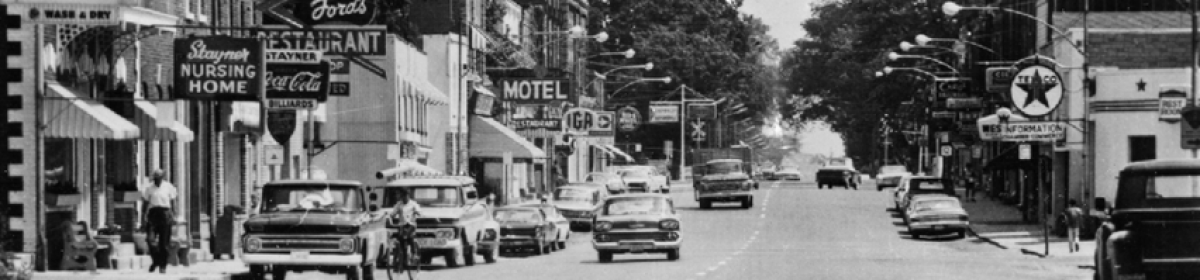
Eventually, a group of front line doctors (including a certain boorish loudmouth from Stayner) did a bunch of work reviewing the then bylaws, and discovered that it was possible to call a special meeting of Council for the purpose of having a vote of non-confidence in the Board Executive. That motion passed of course, but even still, the Board executive initially refused to do the honourable thing and resign. And the truth was, Council legally had no jurisdiction over the Board. (They eventually resigned about a week later).
Now that same group of front line doctors did run for various leadership positions at the OMA but the process was a mess (and in some cases actually contravened Ontario Law). Some members ran in district elections, others (like myself) got voted onto the Board by Council and so on. The convoluted process turned off many front line doctors and momentum was lost.
Having said that, what was accomplished was that there was a dramatic transformation of the governance at the OMA that does allow front line docs to have much more authority than they had before…….assuming they use it. While a many doctors contributed to this, I do need to give a huge shout out to Dr. Lisa Salamon and Dr. Paul Hacker for leading the charge on the transformation.

OMA Council, which was a collection of members that was voted through various means was sunset. Council supposedly had the authority to govern the Board, but it turns out that’s contrary to Ontario law. That’s why the Board Executive tried to stay on – they knew Council couldn’t enforce the non-confidence motion. Despite some members on various social media posts longing for the old days of Council, Council had its fair share of criticism too.
Now, the OMA Board is directly elected by the membership as a whole. Every member has the ability to vote on every Board Director. It’s smaller – only 8 physicians, and three non-physicians meaning it is easier for an activist group of front line docs (if they got organized) to promote a slate of candidates that can make meaningful changes. It’s one thing to get six docs elected to a Board of 27 like we did back in the day, but if you get 6 elected to a Board of 11 – well……(especially since members vote for half the Board every year).
Most importantly, the membership now has the authority to legally repudiate the Board if they wish. None of the byzantine process we used in 2017. The members decide.
Section 12.3 of the OMA bylaws clearly lays out that 5% of members in good standing (i.e. those who pay voluntary dues -not those who are RANDED) can sign petition demanding a special members meeting. The petition would need state specific which matters would be considered (e.g. a potential motion to remove one or more Board Directors). The special meeting would have to occur within 3 weeks of the petition being presented to the Board. Then whatever motions are the subject of the special meeting would be voted on by all members. Legally speaking, a 2/3 majority would be needed to remove one or more Board Directors, but the reality is that anything over 50% would likely make it impossible to govern.
So, should we immediately recall the Board? Of course not (unless they try to sell us a hard cap on the next PSA in which case I will lead the charge!). But, what it does mean is that as front line members, it has never been easier to organize, get a slate of candidates that agree with your views and influence the Board. Or, if necessary, for front line members to remove the Board.
The question is, do enough front line members have even that little amount of time and energy needed to direct the organization?

 justanoldcountrydoctor
One can only hope for the sake of the profession, particularly family doctors, that something good comes from the next round of negotiations. It would be hard to imagine the government being able to penny-pinch, considering the sorry state of things and the fact that the feds and other provinces have already started to loosen the purse strings.
Out of curiosity, is the makeup of the Board’s physician complement set with a split between specialists and family doctors?
LikeLike
There’s no specific split. There are both family docs and specialists on the Board. But no reserved spots per se.
LikeLike
With inflation where it is,Nurses asking for 19% and getting 11%, GM workers getting 20%, other groups clearly being acknowledged as fairly getting solid increases…;the notion of a 0.25-0.5% per annum increase is just insane. You can bet the OMA “a-gain” will roll over and end up accepting a pittance. Basically they don’t give a damn, and don’t have to…they just take our money and spend it on themselves…
But if Paul Conte is helping/ on board, I’m in. I was there at the 2016 AGM. A total fiasco. Whalley was on talk radio next morning spinning it as a win for the OMA…..it’s just sickening.
LikeLike