

Springing Forward Into Stupidity: How British Columbia Traded Science for Convenience

There’s a particular kind of modern arrogance required to look a room full of experts squarely in the eye and say: “Yes, yes, very interesting, but have you considered that people find it inconvenient?

The Government of British Columbia has that arrogance. In a bold act of democratic self-determination, BC has moved to lock in permanent Daylight Saving Time (DST), essentially agreeing, as a society, to spend half the year pretending the sun rises an hour later than it actually does. No more fussing with clocks twice a year! No more groggy Monday mornings in November! Progress, at last!

British Columbia Premier David Eby

In fairness, that decision is partially based on some good evidence that there is no need to change clocks twice a year. It does not reduce energy consumption as previously thought. It’s overall harmful to people’s health. BUT, in a trend that has been growing ever since the Covid Pandemic, there appears to be more and more ignoring of the actual science, in the name of convenience.

The scientific consensus on this is about as settled as it gets outside of climate change and vaccine safety. Study after study links permanent DST (as opposed to permanent Standard Time) to increased rates of depression, cardiovascular events, metabolic disruption, and a general dimming of the human spirit that no amount of “extra evening light” can compensate for. The medical community has been remarkably consistent: Standard Time is the one that actually aligns with human biology.

But BC picked the wrong one because the evenings feel nicer.

The 10,000 Lux Future We’re Sleepwalking Into

Here’s a prediction: within a decade, the market for bright light therapy lamps that blast 10,000 lux of artificial sunlight directly into your face, will quietly explode across British Columbia. Families will gather around them at breakfast, bathing in simulated dawn while the actual sun crawls reluctantly above the horizon sometime around 9 AM in December. It will become as mundane as having a coffee maker on the counter. A morning ritual for a society that engineered itself into needing one.

The irony is exquisite. They rejected a scientifically sound way of avoiding clock changes in the name of convenience. Now the next generation will be purchasing expensive medical devices to compensate for what their own circadian rhythms are desperately trying to tell them. The body, it turns out, doesn’t care what the clock says. It cares about the sun. When you spend six months of the year eating breakfast in the dark because a legislature decided that post work golden hours were more politically palatable than morning light, well your body will not be happy. Fatigue, depression, and the nagging sense that something is profoundly off will follow.

Where Were the Adults in the Room?

This, of course, raises the obvious question. Why didn’t anyone listen to the science? The honest answer is that our political culture has largely burned through its reserves of thoughtful, deliberate governance. This was exemplified by the Covid pandemic, when large swaths of people decided to reject the consensus that Covid was airborne , because they just didn’t like wearing masks. Political prices for following evidence that the general public didn’t like were paid. Politicians noticed.

Governments now seemingly use a cocktail of impulsiveness and ideology to make decisions. The boring, unglamorous work of actually reading the evidence, consulting experts, and acting accordingly is rejected. Into this vacuum has rushed something far less useful, the politics of framing. Instead of a straightforward public health question, “which system produces better health outcomes?”, we now have debate on what sells well with the general public. “But I like to golf at night!” “I want to sit on my patio till late!”

In that environment, experts might as well be speaking ancient Incan.

Governance today often seems to attract people operating at an almost feverish pitch. Rather than slow deliberate study of an issue, we have reactive, ideologically committed decisions allergic to nuance. Political culture now treats careful consideration as weakness and impulsiveness as authenticity. In that environment, it’s not surprising that a decision with clear scientific guidance instead got made on the basis of “vibes.”

How Did We Get Here?

That’s perhaps the most unsettling question of all. This is happening in all fields, not just public health. Urban planning, the aforementioned climate change, immigration policy, you name it. Experiences and facts say one thing. Politics, convenience, or ideology says another. Convenience wins. Our society absorbs the consequences.

This has been particularly fuelled by the rise of social media. At its worst, social media is well known to promote a culture of instant gratification. Which has profoundly impacted decision making. “Oh, I may get Covid tomorrow, but I don’t feel like wearing a mask today”. “Maybe I’ll be depressed in six months, but I want to golf tonight.” Etc.

The sad thing is that I think that deep down, most of us know this. We know that good governance requires scientific literacy, patience, and a willingness to accept inconvenient truths. We know that political culture has drifted away from those qualities. We know that we are, collectively, making ourselves worse off.

But we allow governments to do it again anyway.

The Clocks Are Wrong, and So Are We

There’s something almost poetic about using time itself as the canvas for this particular failure. Time is the one thing nobody can argue doesn’t affect them. Every person in British Columbia will experience the consequences of this decision in their own health, every dark winter morning, without exception. The evidence on that is pretty clear.

So go ahead and enjoy your long summer evenings. The light really is lovely. In November, when the alarm goes off and the sky outside is pitch black and your body is quietly staging a protest you can’t quite articulate, you might find yourself idly browsing light therapy lamps from online stores.

They work pretty well, actually. The science on that is solid.

Not that it’ll stop us from ignoring the experts next time.

Which Pharmacy Should You Use?

My patients are increasingly expressing unhappiness with their pharmacy. I’m not surprised. A recent study by JD Power  showed a 10-point drop in customer satisfaction with brick and mortar pharmacies in 2024 alone. This is attributed to problems with systemic pressures, health human resources challenges, burnout amongst pharmacists, increasing drug shortages, and competition from online pharmacies. (N.B. I know this was a US survey but I believe the results would be similar in Canada as many of the pressures are the same).

In the past, I would tell patients to choose whichever pharmacy they want. The College of Physicians and Surgeons (CPSO) has some pretty strict rules around who/what I can recommend to patients. They are particularly stringent if there is even a perception of a conflict of interest. This would be why I never insist patients use the pharmacy in the medical centre I work at. Most doctors are very reluctant to run afoul of their licensing body (and I’m no exception).

However, the actual CPSO rules around prescribing drugs states:

Respecting Patient Choice When Choosing a Pharmacy

13) Physicians must respect the patient’s choice of pharmacy.

14) Physicians must not attempt to influence the patient’s choice of pharmacy unless doing so is in the patient’s best interest and does not create a conflict of interest for the physician

It seems like I can give some advice to patients. The short version: Stay away from “Big Box” pharmacies.

To understand why I give this advice, it’s important to know what I think of the role of pharmacists. This will surprise those who have been critical of my position on expansion of pharmacists scope of practice, but I actually truly believe that pharmacists are an essential part of a patients health care team. In my area, the smaller, independent pharmacists and their staff all know the patients well. They feel very comfortable messaging me with issues. I often get updates from them about changes to medications a specialist has made (often before I hear from the specialist!). And I’ve always gotten great advice on what alternatives are out there for medications that aren’t unavailable (an increasing problem these days).

The smaller pharmacies always flag drug interactions well (for me and the patient), know which patients react to which medications (even the over the counter ones), have provided great individualized advice on how to take medications. If for some reason, I’m doing something “off label” – they have been very supportive of that.

I (and more importantly, my patients) get that level of support, because the small pharmacies have consistent staff, who have, over time, built up great professional relationships with our mutual patients.

In contrast, dealing with some of the big box pharmacies is getting worse all the time. Some issues are just plain annoying. For example, I generally give a one year supply of medications for patients of mine who have stable medical conditions (three months for diabetic patients). I cannot tell you how many times I’ll get a message from one of the big box pharmacies (the red ones in our area are particularly bad) asking for a renewal three months later, even though we clearly have an electronic record that shows those pharmacies got, and downloaded, a one year prescription. Essentially, the pharmacy refuses to give needed medications to my patients, because of their error inputting my prescription.

It’s gotten so bad that my replies to the pharmacies have, over the past couple of years, gone from informing them of their error, to asking them to fix their internal process, to being rude. I haven’t quite hit unprofessional yet – though the pharmacists may beg to differ.

The big problem with big box pharmacies is that their staff are under pressure to first and foremost, generate profits for their chain. Patient care is actually secondary.

Shot of a mature pharmacist expressing stress while working in a pharmacy

It’s been reported (by pharmacists and staff) that corporate pressure from Shoppers Drug Mart (SDM) head offices led to their pharmacists doing unnecessary MedCheck reviews (and billing the taxpayer $75 per review). Shoppers head office of course denied the accusation and stated all MedChecks were necessary. Yet just one month later the CBC wrote “Shoppers Drug Mart says it doesn’t have medication review targets, but records show it does.

The Toronto Star had an excellent report in November 2024 outlining just how much pressure corporate pharmacy staff were under. The report showed that:

  • pharmacists were asked to rush through minor assessments for their new expanded scope of practice in under 5 minutes (Kathleen Leach, a Hamilton pharmacist recognized that this would degrade care)
  • 85% of pharmacists felt compelled to meet service quotas
  • there was strong concern about how the big chains had stripped back support staff from pharmacists, affecting care
  • It also outlined how patients were encouraged to have health assessments, even when not necessary, to try and increase revenue

This appears to be a Canada wide problem. The Ontario College of Pharmacists is exploring legal options to address allegations of corporate pressure. The BC College of Pharmacist 2024 report on Workplace Practice clearly showed that pharmacists in corporate and franchise settings experience more time pressure than independent pharmacists. The Toronto Start article above also indicated the Saskatchewan Pharmacy College recognized that focusing on business targets leads to errors and increased patient risks. In New Brunswick a pilot program for expanding pharmacy care fell apart, in large part because a virtual care company that SDM had heavily invested in (Maple), overwhelmed pharmacies with referrals.

Kristen Watt, who’s the current Vice-Chair of the Ontario Association of Pharmacists, wrote a blog in the Medical Post strongly supporting expanded scope of practice for pharmacists. While I have, and will continue to, fundamentally disagree on that, I was struck by her comment in that blog:

“Granted, the government roll-out video, shot in a noticeable big box pharmacy, didn’t help us. There are lots of cries of foul about billings going to shareholders of large corporations.”

It’s the kind of statement that clearly suggests some awareness of issues, without getting oneself into hot water. And certainly left me wanting to know more.

As I mentioned previously, a good pharmacist, and their staff, are integral parts of your health care team. They need to know you as a patient. They need to know some of your medical history. Over time they need to develop a professional relationship with you to provide you with the best advice. At the Big Box pharmacies, you are often getting different pharmacists and different staff every time you visit. Due to some of the corporate pressures above, there is a lot of turnover in those pharmacies.

At a small local pharmacy, you’ll get someone who knows you and says “Dr. Gandhi always gives a one year supply of medications, so I’m sure you’ve got refills.” Whereas at a big box, you’ll get some new staff who mindlessly will tell you “Ok, I’ll message him, you’ll have to come back in 48 hours” because the previous person didn’t enter data properly. Or you’ll get advice from different people at different times, which is NOT the same as having a consistent relationship with one pharmacist.

So my advice, to you dear reader. Find yourself a nice small pharmacy. Make sure they are independently owned. Ensure they have a consistent staff. Build a professional relationship with them. Your overall health deserves it.

Bonus: Red Flags When Searching for a Pharmacy:

  1. Pharmacies that sell groceries.
  2. Pharmacies in department stores or grocery stores.
  3. Don’t fall for “points” schemes – not worth sacrificing good health advice for
  4. They have different pharmacy staff every time you go

Ten Lessons They Don’t Teach in Medical School (but should)

Dr. Ken Milne (pictured inset), an Emergency Room physician for almost twenty years and an associate professor of medicine at the Schulich School of Medicine and Dentistry (among many other things). He wrote an excellent X post recently, based on an interview with Dr. Ross Prager. He has graciously allowed me to republish here as a guest blog. I think the advice he gives is outstanding, and is a must read for all medical students (and frankly some of us older docs too).

For all the new medical students starting this fall there are 10 lessons they don’t teach in medical school (but should):

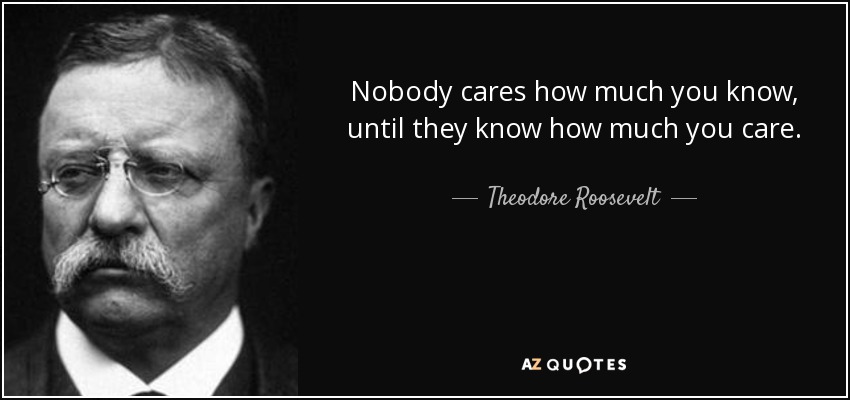
One – Patients don’t care how much you know, but how you make them feel.

Two – You’re remembered by your worst moments. When stress hits, your true self emerges…that is what people remember. Grace under pressure matters more than glory during routine.

Three – Stop trying to impress people with knowledge.

Four – Being keen is not a crime. Passion is a virtue, not a vice. Don’t hide your enthusiasm…it’s a sign you care.

Five – Medical School and Residency are long job interviews.

Six – Absence of evidence ≠ evidence of absence. Not everything is backed by RCTs (randomized control trials). That doesn’t mean it’s invalid. Clinical observation and physiologic rationale matter. As always, be skeptical of the lack of evidence, too.

Seven – Character is how you treat people who don’t supervise you.

Eight – Focus on diagnosis first, treatment second. Most medical harm arises from misdiagnosis, not mismanagement. Think ten times harder about “what’s going on” before “what should we do?”

Nine – Don’t postpone living until after residency.

Ten – Remember the spark. Recall your first patient: the awe, the uncertainty, the honour. When burnout creeps in, revisit that moment. Reconnect with your “why.” Medicine is not just about answers, it’s about presence. Our best tool is our humanity.

Educating the mind without educating the heart is no education at all. Aristotle quote

So, to all the new medical students…get ready for a great adventure. There will be times of joy and sorrow. If you are struggling at some point, remember, it is ok not to be ok. Reach out to friends, families, mentors or counsellors. Your attending physicians may look like they have it all together, but we have all struggled at some point & needed help. You can read my story here. This is another good episode for students and residents to listen to.

Old Country Doctor’s thoughts: On a personal note I want to welcome all of the new entrants to medical school this year. You will have experience incredible joys during your medical journey, and you will have your share of sorrow. To experience those sorrows is not a failure, it is life. But always remember, by being accepted to medical school, you have already proven you’ve go what it takes to succeed and to help others. You yourself may need help sometimes (we all do) but you’ve got this.

“Medicine cures disease, but only doctors can cure patients” – Carl Jung.