

It’s (Well PAST) Time to Review the Canada Health Act

The Canada Health Act (CHA).

Written by former Federal Health Minister Monique Begin, and passed into law forty (!) years ago, it transformed health care in Canada, and in many ways transformed the country.

Former Federal Politician and Health Minister Monique Begin

Viewed as sacrosanct by many pundits, it has now reached a status amongst politicians where health care is widely viewed as the “third rail” of Canadian politics. To question the reverential status of the CHA is to invite political ruin, and to be forever labeled as un-Canadian. I guarantee that I will be accused of being a proponent of “two-tier American style health care” simply for suggesting that the CHA should be reviewed.

Yet review it we must, because the reality is that a LOT has changed in health care in the past forty years. The CHA was written before the explosion of medical knowledge we have experienced. To expect it to still be appropriate is naive at best, willfully neglectful at worst. My much smarter friend Dr. Mathew pointed out: The CHA was written when health care was “episodic”. You got sick, you went to the doctor. You usually had a small co-payment. You got treated for the illness you had.

But since the CHA, health care has been massively transformed to focus on prevention. Whether with the explosion of screening tests for cancer, a focus on control of chronic illnesses, or a recognition of the benefits of being able to afford prescription medication, health care is different than 1984. In a big way. This is why the government is again promising pharmacare.

While there will always be a paper, or plan or policy on how to improve health care, very few people have the courage to address the root cause that is stagnating and impeding change, namely the CHA.

For example, Dr. Tara Kiran (Fidani Chair of Improvement and Innovation in Family Medicine at the University of Toronto) had a four part series on health care in the Medical Post where she compared Canada to Denmark. She looked at how Denmark organized their family doctors, how they pay physicians, their EXCELLENT health IT system and so on. All of which is wonderful and really should be emulated here in Canada.

Similarly, former federal Health Minister Dr. Jane Philpott has been in the news a lot with her new book “Health Care for All” in which she talks about the “right” to have a family doctor. In an interview with the Medical Post she glowingly references Norway, and how they build in health care infrastructure, much like they build schools, when planning developments. A lot to like about Norway’s health care system.

But, did you know that Denmark has a parallel private health care system (despite their high taxes) that allows faster access to care along with access to more specialists and other services? Did you know that in Norway, you actually pay for you health care at the point of service until you reach your deductible (2,000 Krone, about $250 Canadian)?

You mean Drs. Kiran and Philpott never mentioned that these countries whose health care systems they have been talking up had defacto co-payments for medical treatments (gasp!) and parallel private health care (gasp!). Gee, I wonder why….

Here’s the thing. EVERY single country that has a better health care system than Canada’s has TWO main features:

  1. A universal health care system that is funded by taxes
  2. An element of private care, usually some combination of a deductible for taxpayer funded services, and, a private system.

To deny the above is simply to deny the facts. To cherry pick what other countries do and to think we can do it here in Canada without also recognizing that much of what they do would contravene the CHA is naive at best, and disingenuous at worst.

Canada had a health care system that was ranked very highly in the mid-1980s. Ontario used to boast of having the “best health care system in the world”. It’s undeniable that since the CHA, health care in Canada has deteriorated markedly when compared to the rest of the world. This is not a coincidence.

What can be done? I believe the CHA should be changed to allow the federal government to have strong controls to ensure a fair universal health AND pharmacare program that functions like a true insurance plan (yes that means deductibles). It should also empower the feds to enforce a Canada-wide health IT system that allows patients to access their own data.

Why deductibles? Why not have the taxpayers pay for everything? Because without them you take away the responsibility for using a service properly. People feel as if it’s something they deserve as opposed to something they have a joint responsibility to manage and care for. By making deductibles illegal, the CHA has created a society of entitlement, instead of one of empowerment.

If you think I’m un-Canadian for suggesting that there should be a deductible on taxpayer funded health insurance, then I would ask that you be fair about it and also call the guy who said this un-Canadian:


“I want to say that I think there is a value in having every family and every individual make some individual contribution. I think it has psychological value. I think it keeps the public aware of the cost and gives the people a sense of personal responsibility.……there is a psychological value in people paying something for their cards……… We should have the constant realization that if those services are abused and costs get out of hand, then of course the cost of the medical care is bound to go up.

That fellow? Why none other than the “Greatest Canadian” himself, Tommy Douglas.
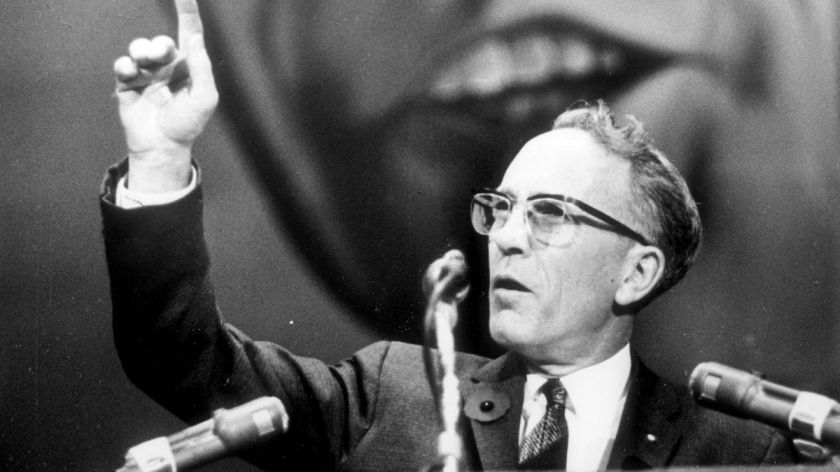
Tommy Douglas aka The Greatest Canadian

Health care in Canada is at crisis. Patients are suffering terribly. One third of physicians are thinking of leaving the profession in then next two years, just when Canadians need them most.

A crisis demands you look at all options. The first step is to revisit the CHA.
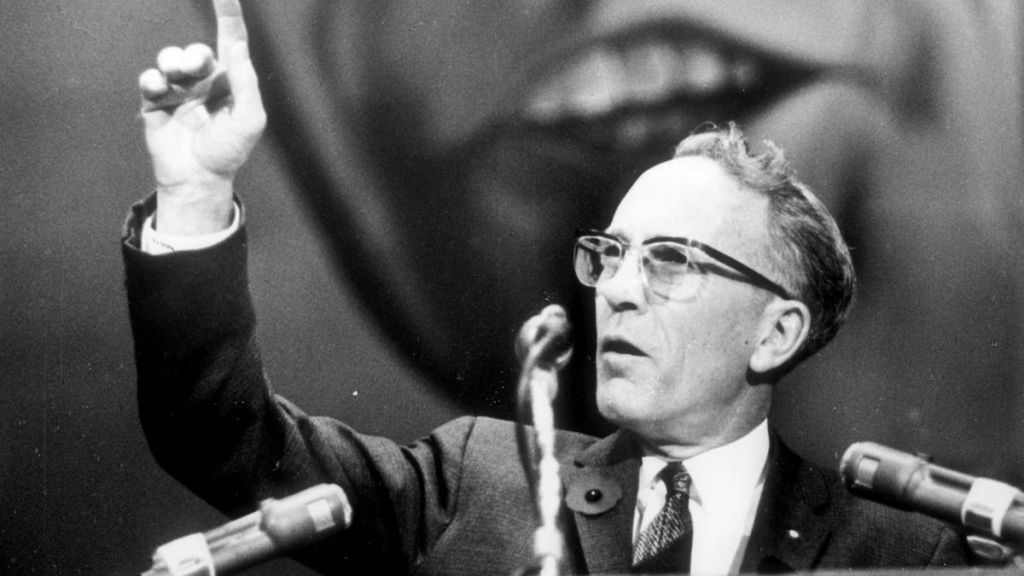
We Should Return to the Health Care Model Tommy Douglas Envisoned

In 2004, the CBC surveyed Canadians to see who would take the title of “The Greatest Canadian.” The winner was former Saskatchewan Premier Tommy Douglas. Douglas is widely, and correctly viewed as the founder of socialized health care in Canada.

His selection speaks not only to the dramatic impact he has had on this country, but just how much Canadians value health care. I will dispense with calling it “free health care” because that just isn’t true. Our tax dollars pay for it. But those dollars are supposed to provide care for all those who need it.

Tommy Douglas, the Greatest Canadian, and the founder Medicare.

As our health care system continues to collapse all around us, it’s worthwhile, I think, to look back at the type of health care that Douglas envisioned. The truth of the matter is, that it is quite a bit different than what we have today. And I think, is not at all what Douglas would want.

According to “The Canadian Encyclopedia“, Douglas’ views on health care were shaped by a number of events in his early life.

As a six year old, Douglas fell and cut his knee. Unfortunately, he developed osteomyelitis ( a bone infection) and the consequences hampered him for his entire life. He had numerous operations and at one point doctors in Winnipeg considered amputating his leg. Fortunately, a well know orthopaedic surgeon (Dr. R. J. Smith) offered to operate for free, so long as Douglas allowed medical students to watch. This saved Douglas’ leg, and helped convince him that health care should be readily accessible to everyone.

Later, as a young man, he moved to Weyburn Saskatchewan, and was dismayed by the complete lack of medical care. He buried a 14 year old girl who died of a ruptured appendix because she couldn’t get medical care. He also vividly told of burying two young family men in their 30s, who simply couldn’t afford to get medical care.

These experiences helped to shape his belief that we could do better as a country. I would suggest that all Canadian should share the belief that one should not have to choose between going bankrupt (or dying) and getting basic medical care.

As premier of Saskatchewan, he implemented the Saskatchewan Hospital Services Plan covering the needs of patients admitted to hospital. In 1961, he implemented the Saskatchewan Medical Care Insurance Act, that provided medical insurance for all residents of Saskatchewan. This of course eventually led to other provinces and the Federal Government adopting similar programs.

The wording is important, and I think speaks to what Douglas was trying to achieve, and frankly, where I believe we need to go back to. The plan was “Insurance”. With all the benefits, AND RESPONSIBILITIES that go along with insurance.

Here’s the thing. In Canada, ever since the Canada Health Act, we have really deviated far from what Douglas really envisioned. He never ever wanted a system where you could go to any health care provider and get assessed without any responsibility on your part. Indeed, he spoke to that quite eloquently in the Saskatchewan Legislature on October 13, 1961:

“I want to say that I think there is a value in having every family and every individual make some individual contribution. I think it has psychological value. I think it keeps the public aware of the cost and gives the people a sense of personal responsibility. I would say to the members of this House that even if we could finance the plan without a per capita tax, I personally would strongly advise against it. I would like to see the per capita tax so low that it is merely a nominal tax, but I think there is a psychological value in people paying something for their cards. It is something which they have bought; it entitles them to certain services. We should have the constant realization that if those services are abused and costs get out of hand, then of course the cost of the medical care is bound to go up.”

Douglas intuitively grasped that if people perceive something as “free” they will start to lose their sense of using it responsibly. That’s why the initial Medical Insurance Act was just that. A form of insurance funded by the taxpayer, and like all forms of insurance, there was a deductible and reasonable limitations.

People were able to now access health care, for a small fee that allowed them to recognize that they too had to take some responsibility for how they used the system. They also had to realize that not everything was covered. Basic health care yes. Options like wanting, say, a private room instead of a ward bed in hospital – well that would be an extra.

There are many problems with the Canada Health Act. But the most fundamental is that it is based on the premise that you can endlessly get something (in this case health care) for nothing. Gutless politicians (from all parties) continue to promote this mantra in never ending attempts to woo votes as opposed to, you know, actually telling the people the truth. Namely, that people should take some responsibility for how they use the health care system.

By continuing to perpetuate the the lack of accountability, our cowardly politicians have created a culture of entitlement instead of a culture of empowerment. Many (not all) people believe that they should be able to get all manner of testing because it’s “free”. I’ve been blessed to have a very pragmatic practice in general, but even I have had to tell people that I will not be ordering the serum rhubarb levels their naturopath wanted because it would be “free” if I ordered it instead of them, or the full body MRI that some “wellness consultant” asked for.

It’s time to bring some patient accountability back to health care. And the first step in that would be to go back to the model that Tommy Douglas had proposed all along.