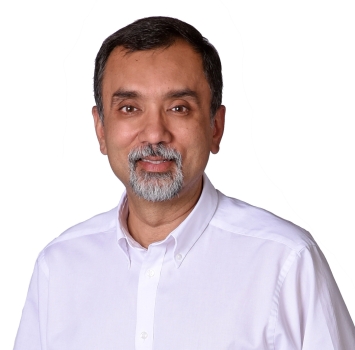


Dr. Julie Wilson (pictured inset) had a superb post on LinkedIN that she has kindly allowed me to reproduce here as a guest blog. A much smarter person than I, she is a family doctor,has been named one of Canada’s 100 Most Powerful Women, Top 40 under 40, 3 x Business award winner and much much more. I encourage you to follow her for more of her excellent insights.
There is a word for when the packaging stays the same but there is less inside. In groceries, we call it shrinkflation. In family medicine, the same process has been underway for years and we still do not have a proper name for it. The phenomenon is real, the consequences are significant, and the cause is structural rather than professional.
It deserves to be examined plainly.
What Family Medicine Was Designed to Do
When I completed my family medicine residency, the expectations were unambiguous. A graduating family physician needed to be able to deliver their own patients’ babies, follow them in hospital, suture lacerations in the office, perform biopsies and joint injections, insert IUDs, provide prenatal care, administer pediatric vaccines, conduct children’s wellness visits, and manage mental health from assessment through to ongoing treatment. You were trained to treat and manage every condition as though there were no specialists present, because in Canada, there often are not.
This was not an aspirational standard. It was the functional design of the role. Family medicine in Canada was conceived as the foundation of a system in which primary care would carry the load that specialist infrastructure could not be expected to cover across a country of this geographic scale and population distribution. Broad scope was not a luxury. It was a requirement.
What Has Changed Since the Pandemic
The erosion of that scope has been incremental and largely unremarked upon in public discourse. Since the pandemic, a substantial number of family physicians, including those whose practice is confined entirely to clinic-based work, have stopped performing procedures and providing services that were previously considered core to the role. Biopsies, suturing, contraceptive management, prenatal care, pediatric immunisation, children’s wellness visits, mental health assessments, and ongoing counselling have migrated out of the family practice setting into referral queues, specialist offices, and in many cases, emergency departments.
It would be tempting to attribute this to shifting training norms or changing physician preferences, and those factors are not entirely irrelevant. But they are not the primary explanation. Family physicians did not collectively decide to de-skill because they lost interest in comprehensive practice. The more accurate explanation is that the financial and structural conditions required to sustain comprehensive practice have deteriorated to the point where, for many clinics, broad scope is no longer economically viable.
The Economics of Comprehensive Care
Comprehensive care costs more to deliver than narrow care. It requires longer appointment slots, better equipment, more qualified support staff, more expansive insurance coverage, and considerably more time spent on coordination and documentation that does not generate a separate billing code. These are real costs that the clinic model must absorb, and for a significant proportion of BC primary care clinics, the current overhead structure cannot absorb them.
The 2025 Financial Review of Primary Care Clinics in Vancouver, produced by the Vancouver Division of Family Practice, provides useful context. Average operating expenses per physician run approximately $110,000 per year. A clinic operating at 25% overhead on a physician billing $450,000 generates $112,500 in revenue, leaving almost nothing above the average expense threshold and no margin whatsoever for the additional infrastructure that comprehensive practice requires. At overhead rates of 20% or below, which are increasingly common in recruitment conversations driven by alternative-revenue clinic models, the arithmetic becomes impossible well before extended scope enters the picture.
The result is a rational economic response to an irrational structural situation. Clinics on constrained margins contract their service offering to the minimum sustainable model. Services that require additional time, equipment, or staff are referred out. The physician’s role narrows not because of a change in values or training, but because the financial model of the clinic cannot support anything broader.
The Systemic Consequences
The consequences of this contraction do not remain contained within the family practice setting. They redistribute across the health system in ways that are cumulative, expensive, and in many cases preventable.
Canada operates on the stated premise of a primary care-based health system. The logic of that model is that a robust and comprehensive primary care foundation reduces the demand on specialist services, emergency departments, and acute care capacity. When the foundation contracts, the load it was carrying does not disappear. It transfers.
Every laceration that is no longer sutured in a family physician’s office becomes an emergency department visit. Every mental health presentation that no longer has a landing place in primary care adds to the demand on crisis services and inpatient psychiatric capacity that is already stretched beyond its design parameters. Every biopsy that moves from a family physician’s office into a specialist referral queue adds weeks or months to the interval between a patient’s first concern and a clinical diagnosis. Every prenatal patient who cannot access continuity of care through their family physician adds complexity to obstetric and hospital-based maternity services.
Specialty wait times lengthen not only because of specialist supply constraints but because specialists are now managing presentations that a well-resourced primary care system would have handled earlier and closer to home. Emergency departments are not simply overwhelmed by volume. They are absorbing a category of care that primary care has progressively stopped providing, without any corresponding expansion of emergency capacity to meet that transferred demand.
The diagnostic lag that results from this redistribution carries its own clinical cost. The interval between a patient identifying a concern and receiving a diagnosis has extended from days to months for an increasing range of conditions. In oncology, in cardiology, in neurology, earlier diagnosis consistently correlates with better outcomes. The compression of primary care scope is not a neutral administrative adjustment. It has clinical consequences that are difficult to measure at the individual encounter level but become visible at the population level in outcomes data.
Patients who have only ever experienced the contracted version of family medicine do not recognise what is absent, because they have no baseline for comparison. They do not know that the referral they received could have been managed in the same appointment by a physician who is fully trained and willing to do the work. The shrinkflation is invisible to those who have never seen the full product.
The Path Back
Restoring comprehensive family medicine will not happen through exhortation. Physicians who have adapted their practice to the structural constraints of their clinic model will not re-expand their scope because the profession asks them to. The conditions that made contraction rational need to change before expansion becomes possible.
Several directions are worth pursuing seriously. Funding models need to reflect the genuine cost of delivering comprehensive primary care, including the additional infrastructure, time, and staff that broad scope requires. The LFP billing model in BC represents progress in recognising longitudinal value, but it does not yet fully account for the procedural and extended scope work that a comprehensive practice involves.
Training culture matters as well. If residents observe that the physicians they are learning from no longer perform the procedures they are being taught, the implicit message is that those skills are aspirational rather than practical. Preserving broad scope in residency training requires that the training environment model it, which requires that the clinics where training occurs are financially equipped to sustain it.
Record transfer and cross-clinic infrastructure also warrant attention. A physician who might otherwise take on complex procedural or prenatal care is significantly less likely to do so if the clinical history required to do it safely is inaccessible because of the fragmented and non-interoperable state of EMR systems across BC. The administrative friction of comprehensive practice needs to be reduced, not compounded.
Finally, the conversation about what is being lost needs to happen at a scale and with a directness that it has not yet achieved. Policymakers, health system planners, and the public are not well positioned to advocate for the restoration of something whose disappearance they have not been clearly shown. Making the shrinkflation visible, naming it, costing it, and tracing its consequences through the system is a necessary precondition for addressing it.
The physicians are still trained. The capability is present. What is required now is a serious, sustained effort to rebuild the structural conditions that make comprehensive family medicine not only possible, but financially sustainable for the clinics and physicians who want to practice it properly.
Dr. Julie Wilson, MD, CCFP, FCFP


Everything you say is correct. In the present environment, it will not be possible to achieve. The main cause is a shortage of physicians of all specialties, including family doctors. There are lots of hurdles to overcome to remedy that. It will take a long time at best to fix.
LikeLike
Personally, I feel it is the opposite.
I work in a “full service” health team. We do everything you have listed above (personally, I do not deliver babies or do IUD insertions. But members of my group do and I do other things they do not, such as biopsies, palliative care and home visits, so we balance each other out). I have not done hospital care or ER since moving back to Ontario 20 years ago but did for the 10 years prior.
I feel the pressure of having to increase my scope to manage things I have not had to in the past. Complex psychiatric care, ongoing severe congestive heart failure, complex disease management covering several specialties. I get long consult letters from pain clinic giving me a list of things outside my scope as a menu of selections with a virtual “good luck” at the end. Instructions from neurology and cardiology as if I am their resident with nothing else to do but carry out their wishes.
I try to smush this in with my day with all of the comprehensive care that you describe above. And teach residents and students, supervise PAs, be a resource for NPs. Work on our mental health team. Manage the business that is medicine. I am cooked.
Where are we? Are family docs doing less? Not in my experience. I actually feel there is more down shifting from the specialties to family medicine. Honestly everyone is overworked and we need more bodies all round.
Full Disclosure: Finished residency 1996, have worked in Ontario for the past 20 years, with a year in NZ in the middle, prior to that Nova Scotia (4 years) and Ohio (5 years, thank you mike harris and bob rae) plus a year locuming in ON right after residency.
Watching the practice change over the years is demoralizing. But hearing that Family Medicine is not pulling its weight is even more so.
LikeLike
I think those are fair points. I do think the authour was pointing out that in order to do all of those things, Family Medicine needs to be supported and compensated fairly. I don’t think she was saying Family Medicine is not pulling its weight – although I am aware of many bureaucrats who accuse us of that.
LikeLike