Please Don’t Move to the Georgian Triangle (Collingwood, Clearview, Wasaga Beach)

Wait, doc, what’s this all about? You’re asking people not to move to where you live?!?

Yes. Please don’t move to this area.

But you always tell others how wonderful an area this is!

This is indeed true. I love living here. I consider myself very blessed for having come here 34 (!) years ago. We are a few minutes’ drive away from the world’s longest freshwater beach, a few minutes’ drive away from ski hills. There’s golf, boating, too many outdoor activities to list. I enjoy the trails myself and often bicycle to my office during the warmer months. A true four seasons resort area.

Is the problem the people?

Not at all. The people here are kind, generous and extremely supportive. Plus there’s an old farmers mentality in a lot of them (that’s a good thing). I’m grateful they have allowed me into their lives. It’s an honour to help them.

Is the problem the growth in the area?

I’d be lying if I said I was completely happy with the increase in the population over the past ten years. The towns have gotten quite crowded, and the roads are busy. Bicycling on the roads is now classified as a survival sport. And yes, I have seen traffic jams, which is something I never thought I’d see. But no, that’s not it exactly.

Okay, doc, you’ve got me really confused. What exactly is the issue then?

It’s the healthcare system.

That makes no sense. You’ve often talked about how proud you are of the fact that you were the inaugural chair of the Georgian Bay Family Health Team, and how closely the doctors in the area worked together to form a really cohesive medical community.

This is true. The Georgian Bay Family Health Team, under the leadership of their Grand Poobah (inside joke), Maria LaRose, is, in my opinion, the best health team in the province. The doctors and allied health care staff all work well together. We formed the first community wide Electronic Records system in the Province. It’s still the only one in Ontario that is integrated with other health care partners. It’s the best medical community in the province.

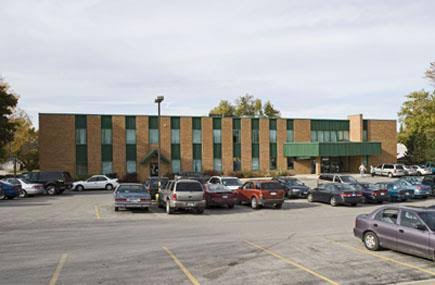
Building with the GBFHT Main office

Okay, so is it the hospital? Goodness knows you’ve had issues with administration in the past.

Actually, we’ve been very fortunate to have better administrators at the hospital the last couple of decades. The nursing staff and other allied healthcare professionals (physiotherapists, occupational therapists, pharmacists, respiratory therapists, and so on – apologies to those I missed) really are excellent and hardworking as a team. They really want to help patients. The problem, of course, is that they are overworked.

Collingwood General andMarine Hospital

So then your issue is with the capacity of the local healthcare system?

Exactly. You see, currently, we have seven thousand people in our neck of the woods who don’t have a family doctor. If you move to the area, you will be number 7,001. Therefore, you will wind up going to our after hours clinic, or the hospital emergency department, which will increase the stress on those facilities.

This is, of course, not the fault of the individual physicians, nurses, allied health care workers. The blunt reality is the health care infrastructure is not there.

But I thought you guys were building a new hospital?

We are. BUT. We’ve known we’ve needed a new hospital since the early 2010’s, and despite many pleas, won’t start digging until 2029. We are hoping to complete in 2032. Various layers of inept government bureaucracy at the Ministry of Health have thrown many roadblocks in the construction process. As a result, our over burdened hospital puts patients in “unconventional places.

You mean like hallway medicine?

Actually, I believe the term now is “chair care“because even the hallways are full.

Wonderful. Are the local townships not doing enough to recruit doctors?

It’s not really a township responsibility to look after the healthcare system. Now, there are some local efforts (with a bit of success) to get more family doctors in the area. However, that’s a slow process until the wider provincial problems are fixed.

You’re saying don’t come to the Georgian Triangle, but don’t these issues occur elsewhere?

Absolutely. I mentioned the Georgian Triangle just because it’s the area I know the best. Ontario has many beautiful areas for people to live in. Lots of different type of communities to suit all needs from small town, to large urban settings. But, if you currently live in an area where you already have a family doctor and you have a number of health issues, you really may want to reconsider moving until you can assure yourself of getting continuous, comprehensive, ongoing care in the community. Without a local family doctor, you will be getting itinerant care seeing different doctors at walk in clinics or Emergency departments, and that’s not good for your health.

So don’t move anywhere if you already have a family doctor?

Well look, people often have to move for many reasons. Work, family, retirement. I get it. BUT, I would encourage you, if at all possible, to scope out not just the amenities of the area you are thinking of, but also check the local health system out. That is something most people don’t do, they just expect health care to be there for them. That mentality needs to change.

And don’t move to the Georgian Triangle?

Yah, don’t move here. Our doctors (and hospital, and home care) are full.

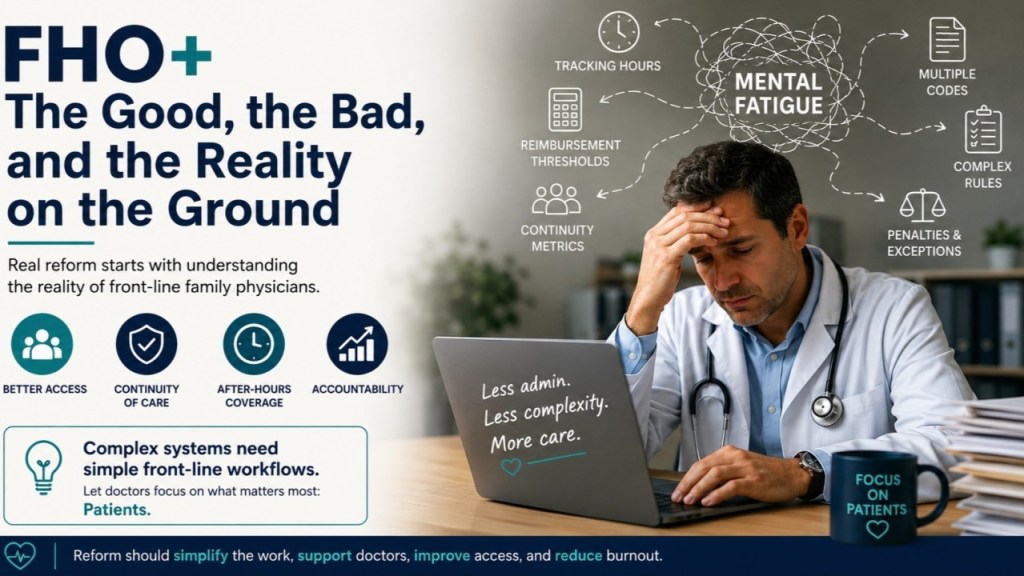
FHO+: The Good, The Bad, and the Reality on the Ground

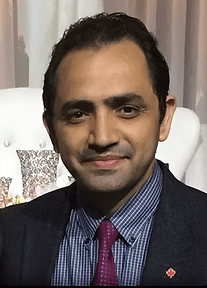
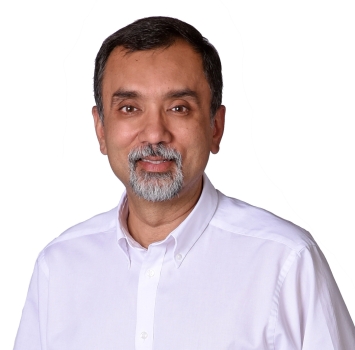
My thanks to Dr. Wael Guirguis, (pictured inset) who had a superb post on LinkedIN that he’s kindly allowed me to reproduce as a guest blog. Dr. Guirguis got his MD in Egypt in 2003 and has been practicing in Canada since 2011. He’s the lead physician for the Fairway FHO and provides comprehensive care for patients at the Danton Medical Centres. A thought provoking read which I hope you’ll enjoy.

Over the past couple of months, Family physicians across Ontario have started experiencing the reality of the new FHO+ model in day-to-day practice.The goals behind the reform are understandable.

Improve access. Support continuity of care. Encourage after-hours coverage. Create more accountability in primary care.

These are important goals, and family physicians should absolutely be part of improving the system. Some aspects of FHO+ deserve recognition. Organized after-hours coverage matters. Continuity of care matters. Accountability matters. But as implementation unfolds, many front-line physicians are beginning to identify operational consequences that may not have been fully appreciated during policy design.

The Efficiency Problem

One of the biggest concerns is the relationship between productivity and compensation efficiency. Under FHO+, physicians are now heavily constrained by hourly and monthly thresholds tied to direct patient care time. In practical terms, physicians can work harder, see more patients, and still experience a significant reduction in compensation efficiency. The unintended consequence is that the model may discourage efficiency during regular clinic hours.

A physician who develops efficient workflows, uses technology effectively, and safely improves patient throughput may actually feel penalized for doing so. That creates a concerning signal within primary care. Healthcare systems should reward:

  • safe patient access
  • continuity
  • quality
  • responsible innovation
  • sustainability
  • burnout prevention

Not unintentionally encourage physicians to slow down to remain within operational thresholds.

The Hidden Mental Burden

One of the least discussed consequences of FHO+ is the cognitive burden it creates for physicians throughout the day. Doctors are now not only thinking about patient care, they are also continuously tracking:

  • direct care hours
  • monthly hour accumulation
  • reimbursement thresholds
  • after-hours eligibility
  • continuity metrics
  • outside-use implications
  • whether additional work will still be compensated fairly

That constant background calculation creates mental fatigue. Family physicians already operate in an environment of nonstop decision-making: clinical care, inbox management, staffing issues, documentation, urgent requests, abnormal results, hospital follow-ups, and administrative work. Adding another layer of continuous operational tracking changes the psychology of practice itself. Instead of focusing entirely on patient care and clinic efficiency, physicians may begin constantly asking themselves:

“Am I crossing another threshold?” That is not a healthy foundation for sustainable primary care.

The Bigger Problem: Complexity Itself

This discussion is larger than FHO+ alone, It reflects a broader pattern in healthcare reform. With each reform cycle, the Schedule of Benefits seems to become increasingly complex rather than simpler.

New rules. New modifiers. New exceptions. New thresholds. New formulas. New tracking requirements. Yet very rarely do reforms focus on reducing front-line operational complexity for physicians. And complexity itself has consequences, It increases cognitive load, administrative dependency, billing anxiety, operational inefficiency, and eventually burnout. Complex healthcare systems may be unavoidable. But complex systems still require simple front-line workflows. That principle is often overlooked.

Continuity of Care Should Be Managed by the System, Not Punitive Billing Rules

Continuity of care matters. Family physicians understand that better continuity leads to better long-term outcomes, fewer fragmented records, reduced duplication, and safer patient care. But enforcing continuity through increasingly complicated physician payment penalties is not the right approach. A simpler and more effective solution already exists. If the Ministry of Health wants to strengthen continuity of care within capitation models, the responsibility should sit primarily with the system itself, not through constant billing complexity imposed on physicians.

For example: If a rostered patient repeatedly seeks care outside their enrolled medical home beyond a defined threshold, the Ministry could automatically review or remove the patient from the roster. The patient would be notified directly by the Ministry of Health not by the physician. This creates clear accountability while avoiding unnecessary tension between doctors and patients. Most importantly, it removes one of the major hidden burdens currently placed on family physicians: constantly monitoring continuity metrics, outside use calculations, and roster penalties while simultaneously trying to run busy clinics.

Continuity of care should be encouraged through smart system design and patient accountability  not by forcing physicians to navigate increasingly complicated billing formulas and penalties. Doctors should focus on delivering care. The healthcare system should focus on managing the system.

The Human Side Nobody Talks About

Most family physicians are not trying to maximize billing. They are trying to:

  • keep clinics financially sustainable
  • reduce patient wait times
  • manage inbox overload
  • supervise staff
  • complete documentation
  • respond to urgent patient needs
  • avoid burnout

When systems unintentionally penalize high-functioning clinics for being efficient, morale suffers quickly. And eventually, patients feel the impact.

A Better Path Forward

Primary care reform is necessary. But reforms work best when governments collaborate closely with front-line physicians who actually operate clinics every day. The goal should not simply be measuring physician hours. The goal should be:

  • maximizing safe patient access
  • improving continuity
  • reducing unnecessary administrative burden
  • supporting sustainable family medicine
  • encouraging innovation and operational efficiency
  • protecting physicians from burnout

Ontario has extraordinary family physicians who want the system to succeed. The question is whether the system is being designed in a way that allows them to succeed too.

The Shrinkflation of Family Medicine

Dr. Julie Wilson (pictured inset) had a superb post on LinkedIN that she has kindly allowed me to reproduce here as a guest blog. A much smarter person than I, she is a family doctor,has been named one of Canada’s 100 Most Powerful Women, Top 40 under 40, 3 x Business award winner and much much more. I encourage you to follow her for more of her excellent insights.

There is a word for when the packaging stays the same but there is less inside. In groceries, we call it shrinkflation. In family medicine, the same process has been underway for years and we still do not have a proper name for it. The phenomenon is real, the consequences are significant, and the cause is structural rather than professional.

It deserves to be examined plainly.

What Family Medicine Was Designed to Do

When I completed my family medicine residency, the expectations were unambiguous. A graduating family physician needed to be able to deliver their own patients’ babies, follow them in hospital, suture lacerations in the office, perform biopsies and joint injections, insert IUDs, provide prenatal care, administer pediatric vaccines, conduct children’s wellness visits, and manage mental health from assessment through to ongoing treatment. You were trained to treat and manage every condition as though there were no specialists present, because in Canada, there often are not.

This was not an aspirational standard. It was the functional design of the role. Family medicine in Canada was conceived as the foundation of a system in which primary care would carry the load that specialist infrastructure could not be expected to cover across a country of this geographic scale and population distribution. Broad scope was not a luxury. It was a requirement.

What Has Changed Since the Pandemic

The erosion of that scope has been incremental and largely unremarked upon in public discourse. Since the pandemic, a substantial number of family physicians, including those whose practice is confined entirely to clinic-based work, have stopped performing procedures and providing services that were previously considered core to the role. Biopsies, suturing, contraceptive management, prenatal care, pediatric immunisation, children’s wellness visits, mental health assessments, and ongoing counselling have migrated out of the family practice setting into referral queues, specialist offices, and in many cases, emergency departments.

It would be tempting to attribute this to shifting training norms or changing physician preferences, and those factors are not entirely irrelevant. But they are not the primary explanation. Family physicians did not collectively decide to de-skill because they lost interest in comprehensive practice. The more accurate explanation is that the financial and structural conditions required to sustain comprehensive practice have deteriorated to the point where, for many clinics, broad scope is no longer economically viable.

The Economics of Comprehensive Care

Comprehensive care costs more to deliver than narrow care. It requires longer appointment slots, better equipment, more qualified support staff, more expansive insurance coverage, and considerably more time spent on coordination and documentation that does not generate a separate billing code. These are real costs that the clinic model must absorb, and for a significant proportion of BC primary care clinics, the current overhead structure cannot absorb them.

The 2025 Financial Review of Primary Care Clinics in Vancouver, produced by the Vancouver Division of Family Practice, provides useful context. Average operating expenses per physician run approximately $110,000 per year. A clinic operating at 25% overhead on a physician billing $450,000 generates $112,500 in revenue, leaving almost nothing above the average expense threshold and no margin whatsoever for the additional infrastructure that comprehensive practice requires. At overhead rates of 20% or below, which are increasingly common in recruitment conversations driven by alternative-revenue clinic models, the arithmetic becomes impossible well before extended scope enters the picture.

The result is a rational economic response to an irrational structural situation. Clinics on constrained margins contract their service offering to the minimum sustainable model. Services that require additional time, equipment, or staff are referred out. The physician’s role narrows not because of a change in values or training, but because the financial model of the clinic cannot support anything broader.

The Systemic Consequences

The consequences of this contraction do not remain contained within the family practice setting. They redistribute across the health system in ways that are cumulative, expensive, and in many cases preventable.

Canada operates on the stated premise of a primary care-based health system. The logic of that model is that a robust and comprehensive primary care foundation reduces the demand on specialist services, emergency departments, and acute care capacity. When the foundation contracts, the load it was carrying does not disappear. It transfers.

Every laceration that is no longer sutured in a family physician’s office becomes an emergency department visit. Every mental health presentation that no longer has a landing place in primary care adds to the demand on crisis services and inpatient psychiatric capacity that is already stretched beyond its design parameters. Every biopsy that moves from a family physician’s office into a specialist referral queue adds weeks or months to the interval between a patient’s first concern and a clinical diagnosis. Every prenatal patient who cannot access continuity of care through their family physician adds complexity to obstetric and hospital-based maternity services.

Specialty wait times lengthen not only because of specialist supply constraints but because specialists are now managing presentations that a well-resourced primary care system would have handled earlier and closer to home. Emergency departments are not simply overwhelmed by volume. They are absorbing a category of care that primary care has progressively stopped providing, without any corresponding expansion of emergency capacity to meet that transferred demand.

The diagnostic lag that results from this redistribution carries its own clinical cost. The interval between a patient identifying a concern and receiving a diagnosis has extended from days to months for an increasing range of conditions. In oncology, in cardiology, in neurology, earlier diagnosis consistently correlates with better outcomes. The compression of primary care scope is not a neutral administrative adjustment. It has clinical consequences that are difficult to measure at the individual encounter level but become visible at the population level in outcomes data.

Patients who have only ever experienced the contracted version of family medicine do not recognise what is absent, because they have no baseline for comparison. They do not know that the referral they received could have been managed in the same appointment by a physician who is fully trained and willing to do the work. The shrinkflation is invisible to those who have never seen the full product.

The Path Back

Restoring comprehensive family medicine will not happen through exhortation. Physicians who have adapted their practice to the structural constraints of their clinic model will not re-expand their scope because the profession asks them to. The conditions that made contraction rational need to change before expansion becomes possible.

Several directions are worth pursuing seriously. Funding models need to reflect the genuine cost of delivering comprehensive primary care, including the additional infrastructure, time, and staff that broad scope requires. The LFP billing model in BC represents progress in recognising longitudinal value, but it does not yet fully account for the procedural and extended scope work that a comprehensive practice involves.

Training culture matters as well. If residents observe that the physicians they are learning from no longer perform the procedures they are being taught, the implicit message is that those skills are aspirational rather than practical. Preserving broad scope in residency training requires that the training environment model it, which requires that the clinics where training occurs are financially equipped to sustain it.

Record transfer and cross-clinic infrastructure also warrant attention. A physician who might otherwise take on complex procedural or prenatal care is significantly less likely to do so if the clinical history required to do it safely is inaccessible because of the fragmented and non-interoperable state of EMR systems across BC. The administrative friction of comprehensive practice needs to be reduced, not compounded.

Finally, the conversation about what is being lost needs to happen at a scale and with a directness that it has not yet achieved. Policymakers, health system planners, and the public are not well positioned to advocate for the restoration of something whose disappearance they have not been clearly shown. Making the shrinkflation visible, naming it, costing it, and tracing its consequences through the system is a necessary precondition for addressing it.

The physicians are still trained. The capability is present. What is required now is a serious, sustained effort to rebuild the structural conditions that make comprehensive family medicine not only possible, but financially sustainable for the clinics and physicians who want to practice it properly.

Dr. Julie Wilson, MD, CCFP, FCFP

It Appears Family Doctors are Giving Up…

Recently, I attended the Menopause Society’s Biennial National Scientific Conference. I’ve long felt that medicine as a whole has done a poor job on women’s health issues, and wanted to learn more about what I can do to better help my patients. The conference itself was packed (over 600 attendees). Half of them were family doctors like myself. As with all medical conferences, not only did I get the chance to learn some valuable information to benefit my patients, I got a chance to network with colleagues from across the country.

Sadly however, a rather large number of family doctors I met were in a similar state of mind. They were tired, burnt out, and were actively exploring ways to stop practicing family medicine. In short, they were all giving up.

A dear friend of mine is taking 6 months off her practice to re-evaluate her work (despite having helped countless numbers of people over the years). Another physician has found happiness working part time at a specialty clinic and occasionally doing locums (vacation relief work). Another is actively looking to find someone to take over his practice. Another is simply going to close her practice after two years of trying to find someone to take over. Another…….ah, you get the point.

About one -third of the family doctors I spoke to were all at some stage of quitting family medicine. Given that Canada has 6 million people without a family doctor – which is already a disaster- it’s safe to say our health care system won’t survive if this happens.

About the only part of the country where family doctors seemed to want to carry on was Manitoba. They cited a new contract that fairly compensated them for their work, and a reasonably positive working relationship with the government. I guess that’s why Manitoba set a new record for recruiting physicians last year. Paying people fairly and working with them co-operatively will attract new talent? Who knew?

(As an aside, Manitoba is also the only province I am aware of that has a specific billing code for counselling women on issues related to peri-menopause and menopause).

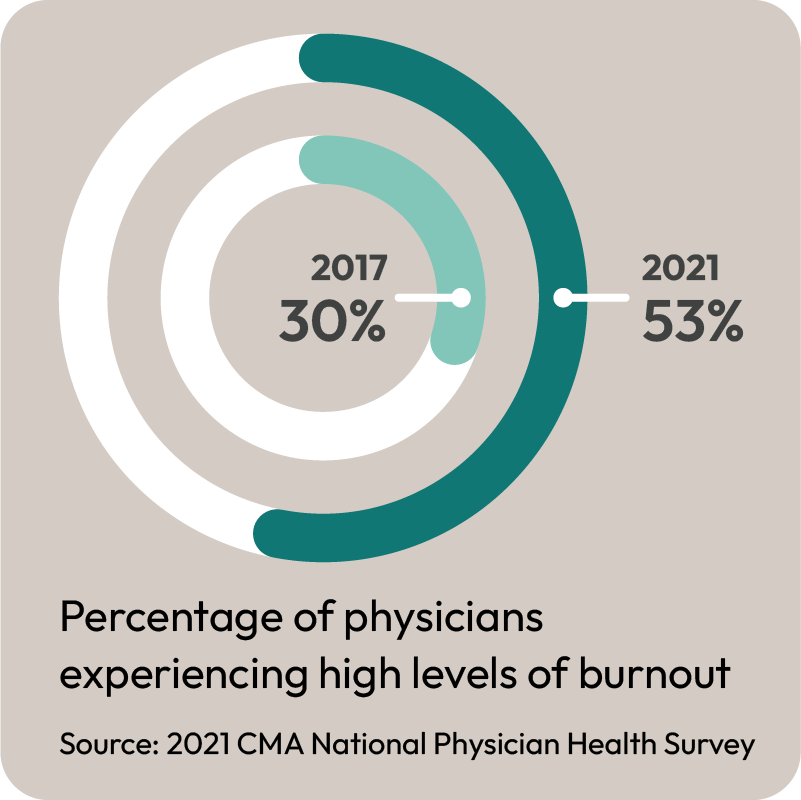
But I digress. The question becomes why are so many family doctors planning on giving up? I would suggest it’s a host of issues. There is an increasing level of burnout in the profession. It’s primarily driven by by the administrative workload which has gotten out of hand. For example, I recently went on vacation to Manitoulin Island, and while waiting for the ferry, I couldn’t help but pull out my laptop and check my lab work and messages. I knew that if I didn’t check my labs every day, the workload on my first day back would be crushing.

Me in my car, waiting to get on the Chi-Cheemon ferry to Manitoulin Island, checking my labs and messages on my Electronic Medical Record (dummy chart on screen)

There’s also the constant delays in getting patients tests and referrals to specialists. The most common message I get from my patients is something along the lines of “I haven’t heard from the specialist/diagnostic test people yet, do you know when it’s going to be?”

And of course there is the ever present “But my naturopath told me you could order my serum rhubarb levels for free” and “I did a search online and it told me I need a full body MRI”.

The worst part of it of course, is that the family doctor becomes the brunt of the frustration and anger that patients express when the health care system doesn’t live up to their expectations. I had to tell three patients (while I was on vacation) that, no, I couldn’t do anything to speed up the specialist appointment. Four more were told that I had in fact called the pharmacy with their prescriptions – and I had the fax logs/email logs to prove it. And so on…

So what can be done?

In the absence of anything else of course, the first thing is to pay family doctors more. Recently, the Ontario Medical Association (OMA) and the Ministry of Health (MoH) have rolled out the “FHO+” model of paying physicians. There is a slight bump in pay (about 4% for the next fiscal year over this year). There is also an acknowledgement that administrative work needs to get paid and some other tweaks. It’s perhaps a start, but in the current system, a 4% raise will not stop the haemorrhaging of family physicians.

What really needs to happen is for Ontario to forcibly, quickly and rapidly move to a modernized, province wide electronic medical records system. I’ve been talking about this for years and years and even presented on this to eHealth Ontario (in 2018!). But I have not been able to explain it as well as my colleague Dr. Iris Gorfinkel did in her recent Toronto Star Op-ed. (It’s a really good read and I encourage you all to read it). To shamelessly quote her:

“A fully integrated, province‑wide, patient‑accessible electronic health record system should no longer be viewed as a luxury, but an essential part of the solution to Ontario’s existing crisis…… It would free family doctors to do the work only we can do.”

Secondly, we need to rapidly move towards team based care with family physicians as the lead of the team. While the MoH is announcing teams proudly in the hopes of connecting patients with doctors, the rollout seems kind of uneven. They amount to a call for proposals as opposed to a specific evidence based structure of how these teams should run. There’s also no specific role guarantees for family physicians in these teams (beyond saying they are important). The process seems slipshod at best.

Finally, at the end of the day we must not shame or diminish those family physicians who have given up. Many of them have spent years, if not decades fighting for better care for their patients. The fact that the unrelenting bureaucracy of our cumbersome health care system finally got to them and made them give up should be cause to shame the people in charge of health care, not the individual physicians.

Let’s hope that message gets across.

Sunday Snippets: Nov 24, 2025

Another in a weekly series of brief snippets of health care stories that bemused, intrigued and otherwise beguiled me over the past week along with my random thoughts on the matter.

Item: Dr. Sarah Giles writes in the CBC about how she was forced to cut her hours because of the burnout.

My thoughts: Kudos to Dr. Giles for talking so openly about this. Alarmingly few of my colleagues are willing to talk about burnout and how the system is affecting them. Instead they suffer in private, and that’s not healthy for them OR the patients they serve. It’s an important story that needs to be told over and over again.

Item: “Involuntary medical treatment” for people with addiction issues seems to be all the rage. A great article in the “Conversation” shows that this won’t solve anything, and in fact will make things worse.

My thoughts: I really can’t believe we are even discussing this. It has been well known for…..well forever, that people will not get better unless they want to seek help. We have to focus on making seeking help easier, not forcing them.

Item: The always excellent Dr. Katelyn Jetelina, who most of my colleagues know as a superb voice of reason and information during the height of the Covid pandemic, writes about her feelings now that RFK junior has been nominated to lead Health and Human Services in the United States.

My thoughts: My heart goes out to her and all the hard work staff who have tried keep us all safe during the pandemic. They deserve better.

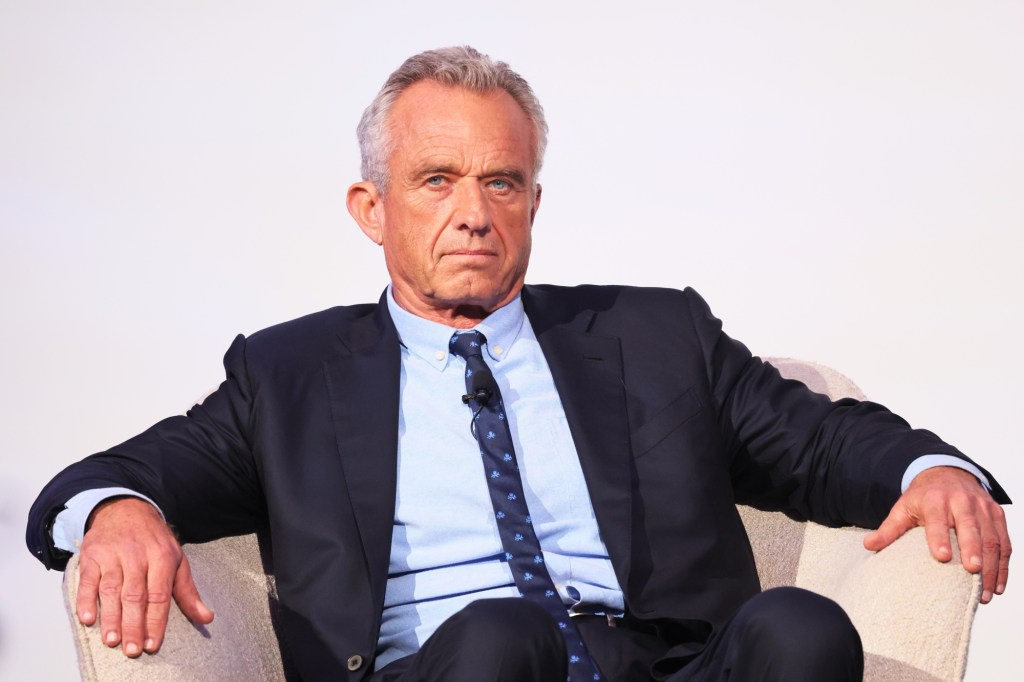
Robert F. Kennedy Jr., a leading American Anti-Vax conspiracy theorist, now tapped to head Health and Human Services in the United States

Item: TV Ontario had a segment suggesting that foreign trained physicians could help tackle Ontario’s physician shortage.

My thoughts: I’ll shout it out again, we already have enough family doctors in Ontario who are already licensed to practice medicine in this province and are familiar with the Ontario Health Care system. The number is approximately 6,000 or so (see the graphs in the linked blog for details). Can we just not make it easier to practice family medicine instead??? If we can get even 1/3 of those doctors already in Ontario to start a practice, we would end this crisis.

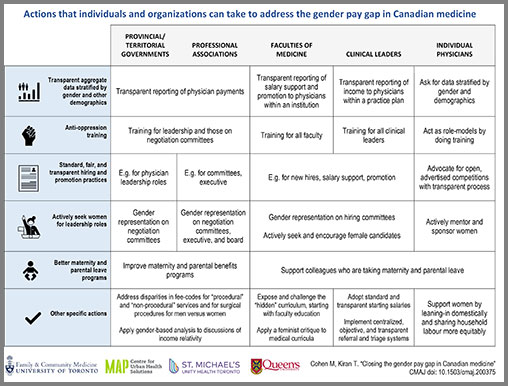
Item: Great article on the physician gender wage gap in Health Debate. Clearly shows that the gap is real and needs to be corrected.

My thoughts: One of the best accomplishments of the OMA Board when I was on it was to publish the gender pay gap report. It was arguably too late, but I believe we were the first PTMA to discuss this and to use that as a basis for future negotiations work. While I’ve had some issues with how negotiations have been handled since, I am quite comfortable in saying that positions of the OMA in negotiations would take this into account and that there is likely to be funds demanded to narrow this gap. The blame for the fact that there has been no progress on this lies mostly at the feet of the Ministry of Health. We don’t have an agreement yet on how to divide the arbitration award – and that means the Ministry is not responding to OMA proposals that would close this gap. Shame on them.

Item(s): Alberta announced that it hiring a large number of nurse practitioners to become “primary care providers” to patients who don’t have a family doctor.

My thoughts: The National Health System (NHS) in Britain is under fire for the fact that it too tried to replace the work done by fully trained physicians, with staff who were likely well intentioned, but had less qualifications. It turns out there is significant risk to this, and likely a markedly increase cost in providing health care. The article “My wife died because the NHS used cheap labour” should be, in my opinion, required reading for any politician/health care bureaucrat who thinks they can provide better care by using less trained people.

That’s all for this week. Back next week (probably) with more.

Sunday Snippets – Oct 13, 2024

Another in a weekly series of brief snippets of health care stories that bemused, intrigued and otherwise beguiled me over the past week along with my random thoughts on the matter.

Item(s): CBC new is reporting that with more food insecurity, physicians are being urged to be on the lookout for scurvy (!!). Similarly, Canada Health Network reports that ferritin (iron) levels are being re-visited to help better identify those with iron deficiency. More concerning studies on the link between erythritol and heart attacks. While there have been no randomized control trials, the number of studies correlating having too much of this very common artificial sweetener to blood clotting disorders (heart attacks, pulmonary emboli, strokes) is very concerning. And finally Medscape published a study showing eating Ultra Processed Foods leads to weight gain.

My thoughts: I’ve long maintained the North American diet is garbage. It’s embarrassing that first world countries like Canada and the US put so much crap in our food. The US for example has over 10,000 chemicals that it allows in its food. Compare this to Europe where they are much more stringent in their food standards – and of course, Europeans are slimmer. A good first step would be for Canada and the United States to immediately adopt European food regulations. The big multinational food companies already have to make products meeting European Union standards anyway. Just have them make all their products that way.

For more watch this (hilarious but salty) video of Comedian Leslie Jones on her trip to Europe, where it turns out a peach actually tastes like, you know, a peach.

Item: Doctors Manitoba issued a joint task force report on reducing admin burden for family physicians. The report not only include steps that need to be taken, but clearly lists the progress on each step.

My thoughts: I should move to Manitoba. The amount of progress they’ve made is impressive. Compare that to the utter and complete joke that is in Ontario. For the un-initiated: The Ontario Government and Ontario Medical Association formed a task force to reduce paperwork for family medicine. The result of said joint task force (after over a year of work)? An announcement made on Jan 29 of this year that hearing aid forms (which take about 10 seconds to fill out) no longer need to be signed by family doctors. With no announcement of any further progress. Worse it turns out that the College of Audiologists refused to let “hearing aid specialists” sign the hearing aid forms, it had to be only Audiologists. But most hearing aid clinics are run by hearing aid specialists.

I got four forms to sign last week….

Item: New Brunswick PC party leader Blaine Higgs insists that “business acumen” is needed to run health care and that efficiencies can be found in the system.

My thoughts: Yes, yes and more yes! I don’t know what the New Brunswick health care budget is, but we spend over $80 billion dollars on health care in Ontario. That’s more than enough. So much is wasted on bureaucratic silos and inefficient methods of care that it’s embarrassing. A hard business approach is needed.

Item: A study conducted by OntarioMD showed that there was a 70% reduction in time spent on patient encounter documentation when using an AI scribe (in this case the study was limited to Well Health’s software).

My thoughts: The AI scribe most commonly used in my neck of the woods (I don’t use one) is very very poorly received. It’s clunky, cumbersome and requires a lot of clicks. Can AI help? Of course it can and hopefully the Well Health one (which I have not seen) is better. But the software needs strong physician input to develop to ensure user friendliness – or it will wind up like EPIC – one of the main hospital IT systems, which, well, is best described by none other than Dr. Glaucomflecken himself:

Item: Ontario Medical Association President Dr. Dominic Novak spoke to the Standing Committee on Finance and Economic Affairs at Queen’s Park. While he talked about the admin burden driving physicians out of running a comprehensive care family practice, what people seemed to be talking about was the focus on eliminating sick notes.

My thoughts: I’m glad Dr. Novak is speaking about the admin burden. But seriously, can we move the focus off the sick notes? They take me one minute to do, and I get $25 for them. The real admin burden that is driving people out of family medicine is the constant reviewing of lab data, downloading reports, re-categorizing mislabelled reports (my personal feeling is EPIC is really a problem for this) and so on. I don’t get any money for doing that. Keep your eye on the big picture.

Item: Bill 121 the “Improving Dementia Care in Ontario Act” had more readings at various committees in provincial parliament. The bill seeks to help the estimated 315,000 people in Ontario with dementia right now (a number that is expected to triple by 2050).

My thoughts: It’s overall a good Bill. We certainly need to support and care for our elderly. The true measure of the strength of a society is reflected in how well they care for the weakest among them. I just hope that we look at some of the novel models of elder care in Europe as well, to give our seniors the compassionate, dignified care they deserve.

Item: Health Journalist Avis Favaro published on X (formerly Twitter) that there is a dire shortage of supplies in Home Care. Some sort of issue with the new supplier for the Home Care system. She mentions that the shortage is being described as a “crisis” internally. Without the supplies (syringes, needles) patients are unable to get needed medications and treatment at home.

My thoughts: I have not seen this personally myself. But I’ve heard some horror stories from my colleagues. I hope this gets resolved ASAP.

That’s it for this week. I’m away next week and will return with Sunday Snippets in two weeks.