
Actually, Ontario Does NOT Have a Shortage of Family Physicians….

You’re probably wondering if I’ve lost my mind. The media is currently littered with stories about how 2.3 million people in Ontario don’t have a family doctor and how that number is expected to double in two years. Family practices are closing down. In Sault Ste Marie – over 10,000 people are about to be orphaned (left without a family doctor). The Ontario Union of Family Physicians just held an event geared towards helping family doctors leave the profession.

How out of touch must I be to make the assertion, as I did on CTV news recently, that we don’t have a shortage of family doctors?

Yours truly on CTV News

Truth be told, there is an important distinction that has to made, which is key to solving the orphaned patient crisis. There are family doctors, and there are family doctors who are willing to work in a comprehensive care family practice like I do. 

According to the Ontario Medical Association (OMA) website, there are over 15,000 members of the Section of General and Family Practice. These doctors have got their medical licence, are qualified to practice in Ontario, and are able to practice family medicine without any further regulatory hurdles (like getting foreign doctors licensed would entail). There are likely many more as some doctors with a family practice billing licence don’t choose a section – but let’s go with 15,000.

What’s really telling is that only about 9,300 are in what’s called a PEM (Practice Enrolment Model – where a formal agreement exists to run a family practice). The number that are in Fee For Service alone (without an agreement) but still run a practice, is likely only a couple of hundred. So at most we have 9,500 comprehensive care family doctors. The other 5,500+ do something else (hospital only work, clinical associate work, walk in, etc).

From the OMA website. PEM + APP is about 9,300. This would be the number of docs with a formal agreement to run a family practice. 

There’s a myriad of reasons why comprehensive family practice is so unappealing, but let’s look at the two main ones.

1)Decreasing net incomes over the years. It is of course, unpopular to talk about the money doctors make. The OMA has historically felt that the general public views doctors as “fat cats” and “part of the rich elite.” So they’ve shied away from talking about physicians incomes or trying to positively frame that discussion – with predictable results.

As Boris Kralj (PhD in Economics, Adjunct Asst. Prof at McMaster and former Staff at the OMA) points out, net income for family physicians has fallen drastically over the past 20 years.

My thanks to Dr. Kralj for allowing me to share his graph.

2) Increasing Admin Burden. I think everybody has heard how family doctors now spend up to 19 hours a week doing administrative work, ON TOP of the time they spend seeing patients. This work is unpaid of course (there is no fee code for admin work). On a personal note, in about 2004, my office, which was already electronic, got a vpn (virtual private network). This allowed me to connect to he office from anywhere in the world. Initially, I thought it was great. I would go on vacation, spend 20 minutes a day taking care of messages and when I got back from vacation – I would not have the backlog of messages to deal with. 

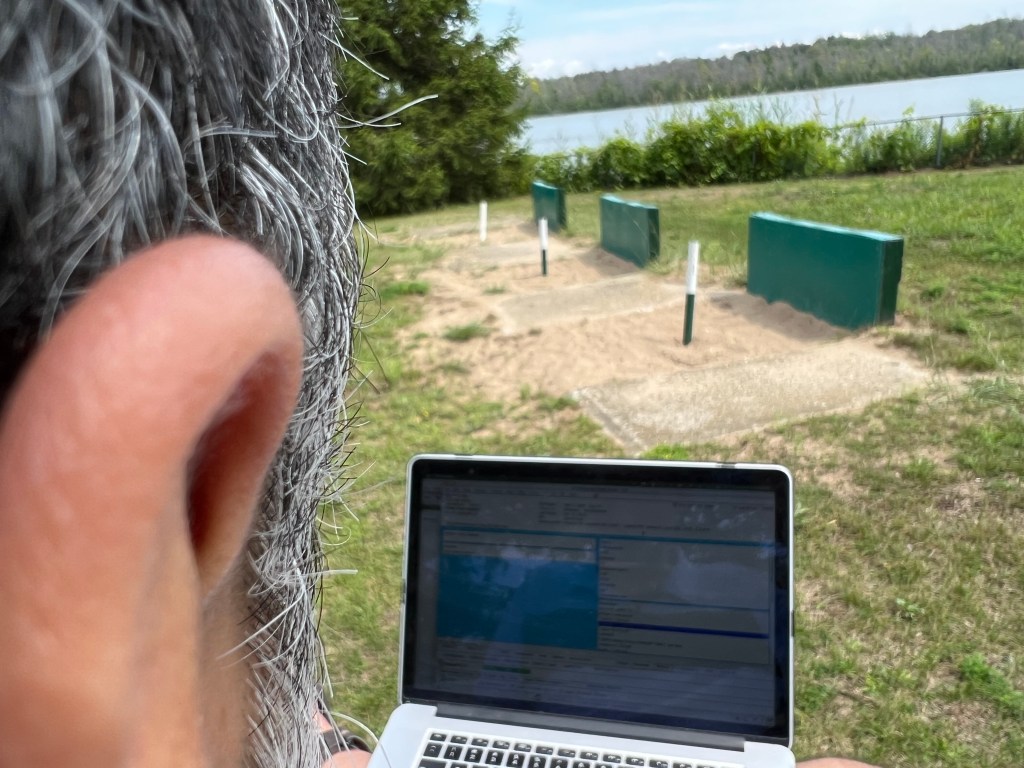
This past summer, I went on a hiking trip with one of my sons. He pointed out that I was now spending over two hours a day going through labs and messages. Essentially, family doctors don’t have any vacation now. I don’t care what your job is or who you are, a life without any breaks is unsustainable.

Me last summer, by a lake, on vacation, checking my office messages and lab work (dummy chart)

What can be done about this? How does one make family medicine more appealing? This may rub some people the wrong way but the first step is simple. Pay family physicians more. In Ontario, the most common fee billed by a family physician is about $37. (The last time I got a haircut, I paid $40). Out of that $37 the family doctor has to pay their nurse, receptionist, rent, cleaning, supplies and so on. Gets used up pretty quickly. 

Additionally, you need to pay physicians for admin work. If there is 19 hours of admin work that needs to be done – it’s only fair that work is paid for. There are people who are skeptical this will work. To them I would point out that British Columbia has gotten 700 more family doctors since increasing the pay to family physicians. 

You mean if you increase the income for a job, more people will apply for it? Who knew?

B.C. isn’t even the province that pays physicians the most. That’s arguably, as I have written before, Manitoba. Saskatchewans new deal is also much better than what Ontario offers.

The second aspect is to reduce the admin burden for all physicians. Many experts suggest this is a process that will take time. They are the same experts that oversaw the increase in Admin work for physicians with “oh it’s just one extra click or it’s just a simple form”. 

To reduce the Admin burden significantly, one needs to drastically revamp digital health care. Get rid of eHealth Ontario and OntarioMD, and run all decisions through the Digital Health Branch of the Ministry of Health. It’s too late to unify all of our electronic medical records, but you can approve one (and only one) patient app that will allow patients to access and transfer their records to the physician of their choice to reduce duplication and waste. That’s the kind of bold steps that we need to take, not just crowing about the fact that doctors don’t have to sign hearing aid forms any more.

Look we already have 5,500 licensed family physicians in Ontario able to open up a practice. If 40 per cent did so, it would end this crisis immediately without having to resort to years long plans of modifying licensing and training requirements for foreign graduates (who in fairness are generally very good).

Do our leaders have the boldness and vision to do the right thing?

OMA Needs to Communicate Better About Status of Negotiations

Negotiations between the Ontario Medical Association (OMA) and the Ministry of Health (MOH) on a new Physicians Services Agreement (PSA) began this past fall. The first set of bilateral meetings were in mid-October. This years negotiations present a particularly complex challenge as not only is the OMA trying to negotiate a new four year agreement for physicians, but it also has to determine how much of an increase physicians will get this year (more on that later).

Given that we are a few months into the process – I think the OMA as an organization is really not doing a very good job of communicating the status of the Negotiations with its members.  The OMA really needs to increase some of the transparency around the negotiations process.

In fairness, there are somethings about negotiations that simply can’t be divulged (and I fully support this and members do need to accept this):

  • The mandate for negotiations must be confidential, to prevent the other side from knowing what our bare minimum acceptable increase is
  • The detailed discussions between the Negotiations Task Force (NTF) and the MOH must also be confidential (a lot of stuff that goes back and forth is hypothetical – and to protect the integrity of the process – you can’t disclose this to 40,000 + people)
  • The briefings presented to the Board and the Section Chairs must stay confidential as well (for the same reasons above).
  • NB – If we wind up in arbitration, the asks at arbitration are public.

So what should the OMA be informing members about then, given what’s usually a “cone of silence” around negotiations? Well, put simply, there are a number of things that are part of the negotiations process, outlined in public documents readily available to all members. The OMA needs to recognize some members (not just me) will read and wonder about these. (Although I’m probably one of the few loudmouths who’ll publicly write about it).

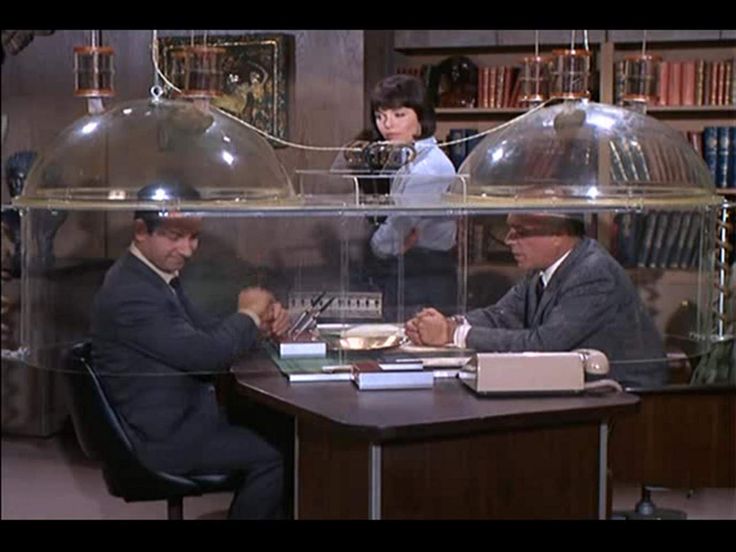
The Cone of Silence, from the classic series, “Get Smart”

For example, the Binding Arbitration Framework, under which negotiations are now held, is posted on the OMA website for all physicians to see. The framework is pretty clear. After 60 days of negotiations, either side can ask for mediation. They don’t have to, but they can. 

We are over 60 days. Perhaps mediation is not needed yet (which would be a good thing). But the OMA can, without compromising the negotiations tell members something like “while we have been negotiating for x number of days, at this time the process continues and we neither side has called for mediation.” It would at least let members who follow this closely know what the stages are.

Similarly, it would be quite reasonable for the OMA to list the dates of the meetings with he MOH and a general list of what they are talking about. Eg Oct 19 met with MOH to discuss Primary Care models, Oct 21 to discuss backlog in radiology etc. (I have no idea when the meetings with the MOH were or what they talked about btw – I’m just pointing out what could be said).

Finally, there appears to be radio silence about the part of the last contract that directly affects this year. This contract was completed and ratified by members and is public knowledge. The parts of concern are:

21. ….the parties will establish a committee that will meet on a quarterly basis…..to review the expenditure calculations. Through this committee, the parties will agree to a best estimate of the year 3 (2023- 2024) PSB expenditures in accordance with paragraph 6 by December 15, 2023.

22. Any agreements reached by the Government with respect to any new physician payment program or addition to an existing program which was not the subject of a proposal by the OMA during the negotiations leading to the agreement for the 2021-2024 PSA will not be included in calculating the total PSB expenditure …..”

It’s obviously past December 15, 2023. Which means we should have an agreement on the PSB expenditures by know. This information is critical to determining how much of an increase we get this year. The OMA had told us that:

“Conservative OMA projections indicate an expected Year 3 increase of 2.8 per cent, with a range of 2.1 per cent to 3.6 per cent”

But if the expenditures are too high, then we potentially get a zero percent increase. My friend Paul Hacker did an EXCELLENT job of explaining this here:

Paul Hacker’s Analysis

As an aside, some of you wondered why I endorsed him for OMA Board Director. It’s because of stuff like the above link. He knows the Board needs to provide proper oversight on the process and ensure it’s explained to members.

Anyway, perhaps this date got pushed back. This wouldn’t surprise me. The MOH Negotiations team was never able to get data on time in the past (there was always an excuse, except for the truth – that they are generally incompetent).

But the OMA should simply tell members this. Remember last year when it was announced to primary care docs that the repurposing of the preventative care bonuses couldn’t be mutually agreed on, and so was delayed for a year? Do the same thing and say the deadline couldn’t be met and you continue to work on it. But don’t just ignore the deadline and hope no one will notice.

Communicating better would also be beneficial for the NTF. There is no task force at the OMA that is more controversial, and gets more….attention…from members than the NTF. Yet what’s missed is that the NTF works really really hard. I remember some of the 18 hour days they put in when I was in various roles at the OMA. 

But when communication about the process, and the work they are doing is substandard, members won’t appreciate all that. They’ll simply blame the NTF for what goes wrong (e.g. if we were to get zero percent this year). It would be foolish in the extreme to suggest everyone will love the NTF if they just communicated better. But better communication would at least blunt some of the criticism that will come their way.

Hopefully, the OMA as an organization will recognize this.