CFPC Blows it AGAIN. Insults All Ontario Physicians.

Jeez. I thought the Board of the College of Family Physicians of Canada (CFPC) had learned its lesson following the ham fisted attempt to raise members dues and extend the residency to three years. In the aftermath of that debacle, CFPC President Dr. Mike Green promised a full review of the organization, and stated that the CFPC will be a “humbler and more transparent organization” going forward.

Turns out that letter was worth as much as an IOU from Donald Trump. The CFPC has once again insulted a good chunk of its members, and showed an incredible disconnect between those who run the organization, and the front line members whose dues pay them.

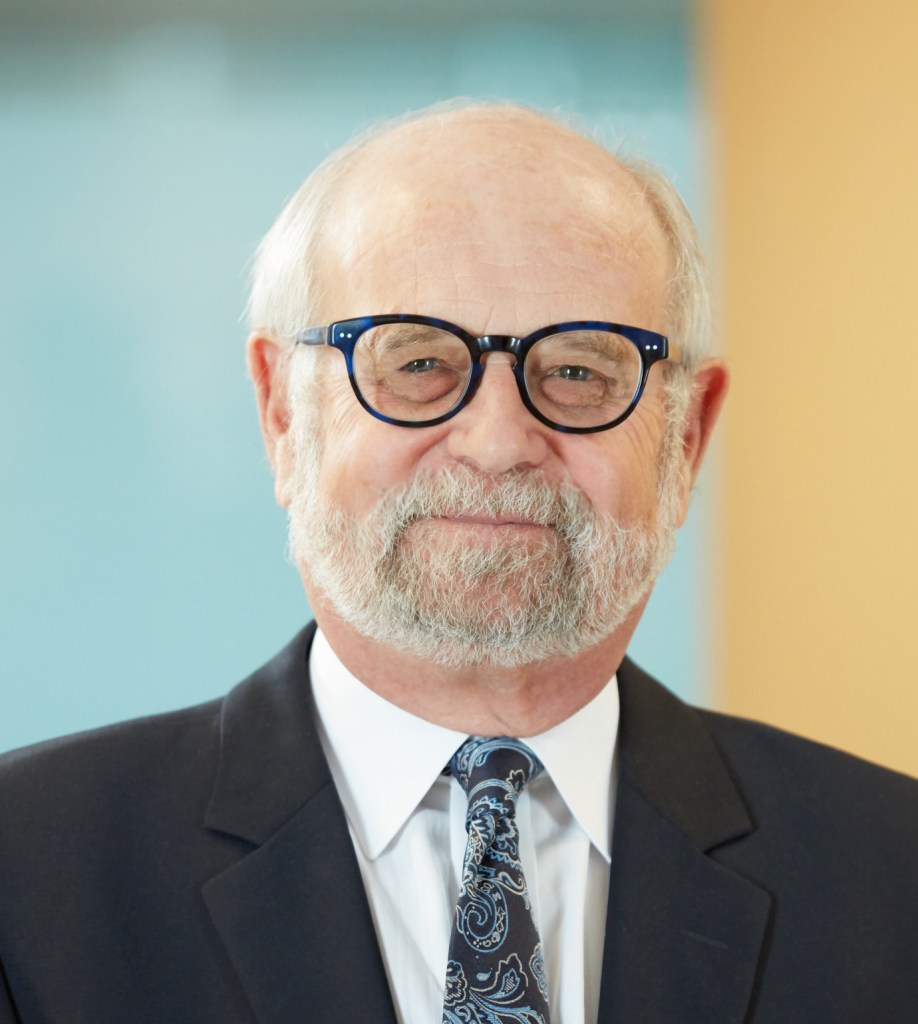
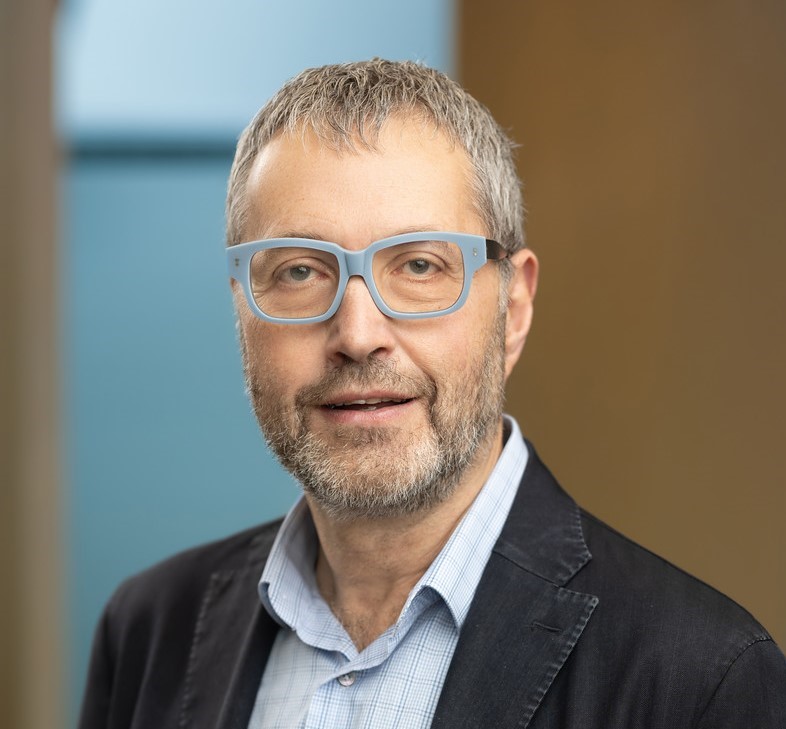
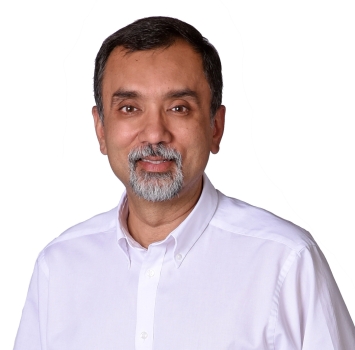
I’m referring of course, to the incredibly insensitive and frankly, downright insulting decision on the part of the CFPC to ask Dr. David Price to be one of the keynote speakers at the Family Medicine Forum (FMF). The FMF is their biggest continuing medical education event.

Screenshot

I will certainly agree that Dr. Price can be credited with a whole list of accomplishments. His resume alone would exceed the self imposed word count on my blogs. I would also completely agree that as someone who has done a lot work studying primary care models, he would, in fact provide some thought provoking ideas. While I wouldn’t agree with all of them, I would find them worth discussing.

But.

He is also a member of the Ontario Governments negotiations team. This is the team that has refused to provide a reasonable proposal for compensation for family doctors (and specialists) and has instead referred the matter to a protracted arbitration process.

Worse yet, the public proposal that the team put forth at the Arbitration hearing could very charitably be defined as inadequate. Not being in a charitable mood, I would rather describe their proposal as what it really is, insulting, out of touch with reality and frankly, downright offensive. Since Price has chosen to continue to be on that team, the blunt reality is that he is beholden to support the governments arbitration position. (Members of teams like this often will have varying view points internally – so who outside of him knows what he really thinks – but externally – he has to toe the party line).

The CFPC has taken the position that family doctors need to get paid more (good on them), and has lauded provinces like British Columbia who have chosen to do just that. Yet they invite someone whose team has told Ontario physicians that all they deserve (despite the runaway inflation of the past two years) is 3 per cent more.

The CFPC has also strongly advocated for a reduction in the admin burden and health system transformation (good on them). Yet the team Price is part of has essentially refused to acknowledge these as big issues. They’ve refused to pay for admin work. And those 2.5 million people without a family doctor in Ontario alone? The official position, which again, Price has to support as a team member, is that there is “no concern” about the supply of doctors in Ontario.

Yes, that’s correct. Publicly, Price has to say:

  • 3 per cent raise is enough for all doctors (despite inflation being 15% from 2020-2023)
  • no retention or recruitment bonuses
  • no payment for admin time
  • no recognition of the harm caused to physicians morale by such an offer
  • no significant investments in Primary Care
  • there are enough family doctors for Ontario

As I wrote previously, his position is a slap in the face to Ontario physicians.

It’s no secret to the general public that Ontario physicians are demoralized and burnt out. It’s no secret that more and more comprehensive care family physicians are closing their practices and that most are finding joy elsewhere. It’s no secret that many are leaving the province.

But apparently, all of this is either a secret to the CFPC Board and the FMF Team, or they just don’t care. By blindly ignoring the harm that the Ontario Governments Negotiations Team is doing, and inviting David Price to talk anyway, the CFPC and FMF team are basically giving the finger to all of their Ontario doctors.

It just amazes me that when even a young physician can realize that the position that Price’s team is taking is repugnant and shows disdain for family physicians, how can the CFPC Board not seen that??

What’s worse, usually keynote speakers at events get a stipend (having been a keynote speaker I can tell you it’s pretty nominal) and their travel/accommodations paid for. Well where does the CFPC get the money to pay Price? You guessed it, from the very dues collected by the members for whom Price’s negotiations teams has shown nothing but contempt.

Talk about rubbing salt in the wound.

It would be different if Price was not on the Negotiations Team. (If I was on that team and been forced to accept their proposals publicly, I would have resigned in disgust. Only Price can answer why he chooses to continue to stay on). Then, even though many will disagree with Price’s views, it would be fair to have a robust discussion about his ideas and why they may or may not work.

But to invite him to talk despite his association with the negotiations team shows that the complete disconnect between the Ivory Tower mentality of the CFPC and its hardworking frontline members persists despite the embarrassing fiasco of last year. One can only wonder what it will take for them to realize that as a membership driven organization, the CFPC really needs to be more sensitive to the feelings of their members.

Never Ending Arbitration a Sign Government Does NOT Want to Work with Doctors

News Item #1: Prince Edward Island agrees to a contract with its doctors. Amongst other things, the deal recognizes that family medicine is a specialty (finally!) and increases compensation to reflect that. It also introduces strong measures to reduce red tape and administrative burdens, and adds what appear to be retention bonuses. PEI joins British Columbia, Manitoba, Saskatchewan and even Alberta (!) in working co-operatively with their doctors.

Dr. Krista Cassell of Medical Society of PEI with Health and Wellness Minister Mark McLane and Health PEI CEO Melanie Fraser

News Item #2: Ontario Medical Association (OMA) Board chair Cathy Faulds announced last week that the Kaplan Board of Arbitration will not deliver a ruling on the fractious contract dispute between Ontario’s doctors and the Ministry of Health (MOH)at the end of August as expected. It is delayed until at least the end of September, if not longer.

Now you, dear reader, are probably wondering why I refer to a one month delay as “never-ending”. Firstly, because I’m not convinced it’s only one month. I don’t recall the Arbitrator ever giving us a timeline for when he was going to give a decision when I was on the OMA Board. Timelines for meetings and hearings, sure – but for the decision, no.

But more importantly, even if there is a ruling in September, it’s nothing but a mere step in a protracted, convoluted process that, at the end of the day, does nothing more than show that the government would rather not engage the OMA in providing solutions for our health care crisis. To understand why, one needs to first appreciate the prolonged nature of the current arbitration process, and just how tortuous it is. (I will do my best).

First, the current arbitration process is ONLY for one PART of the first year of what is supposed to be a four year contract. It will cover April 1, 2024 to March 31, 2025. BUT, it will only cover a percentage increase for that one year. It will not set specific fees for different specialties. Instead, there was general agreement (last I heard) that 70% of the increase would go towards fee increases and the other 30% would go towards targeted areas of high need.

Sounds simple enough to sort out right? If the deal is worth, say $2 billion (this number is totally made up and Mr. Kaplan, if you are reading, this number is much less than the increase should be), then $1.4 billion would go towards fee increases, and $600 million would be targeted towards areas of need.

The problem is that the fee increases are to be distributed along what’s know as a “relativity model”. Essentially lower paid specialists are to be given a bigger raise than higher paid ones. Unfortunately, the OMA and MOH can’t agree on how those raises are to be distributed amongst the various specialties. Worse, they can’t agree on how to distribute the 30% that was earmarked for “targeted funds”.

Which means…..you guessed it, ANOTHER round of arbitration with yet another set of decisions to be ruled upon by the arbitrator. This additional protracted process won’t begin until the arbitrators first ruling and further negotiations and mediations. The information on the OMA website suggests arbitration for those issues won’t happen until March 3, 2025.

But wait, didn’t I say that this was only for the first year of the four year contract? Why yes, yes I did. Which means that after this, we now start arbitration AGAIN for years 2-4 for the doctors contract. And yet again, not only do decisions needed to be made on the percentage increase, but on how that increase is divided up. Which means…….potentially many more rounds of arbitration.

I would concede the OMA websites suggests all of the year 2-4 arbitration, and left over issues from year one can be done at the same time (March 3-7, 2025). However, I will refrain from betting the mortgage on that actually coming to fruition. We are one early election from this timeline being thrown into chaos. The cynic in me thinks that by the time arbitration is all done for this supposed four year cycle, it will be time to start negotiating (and yes more arbitration!) for the next four year cycle.

The government will most likely abide by the initial arbitration award (it’s doubtful they would reject an award prior to an election call). Ontario Health Minister Galen Weston Sylvia Jones will frame this as part of the process for coming to an agreement. She will (probably) claim that by abiding by the award the government is “working with” physicians to benefit the health care needs of the province.

She will be wrong.

I’ve mentioned this before, arbitration is preferable to the days when governments could unilaterally cut physicians income at the whim of the health minister. However, that doesn’t change the fact that arbitration should be viewed as a necessary evil, with emphasis on the evil. Not only can it demoralize people who are going through it, the spill over effects have wide reaching consequences.

What does this mean for the general public? The OMA has come up with some solutions for the various crises our health care system is facing (2.5 million without a family doctors, worsening health care catastrophe in Northern Ontario, overwhelming bureaucratic burden etc). The reality is that many of the solutions require changes that need to be made in a contract with Ontario’s doctors. But we don’t have one, so none of these will be implemented.

Instead of working co-operatively with the OMA to come up with solutions in a fair contract, the current government seemingly prefers to leave it all to the arbitrator. And as a result, patients will continue to suffer.

The government of Ontario has a choice. Follow the lead of BC, Manitoba, PEI and so on and work with the doctors to help patients. Or set up a perpetual conflict with them.

Over to you Minister.

Ontario Health Minister Sylvia Jones, who can start to fix things tomorrow, if she wants.

Reflections on Leaving Family Practice

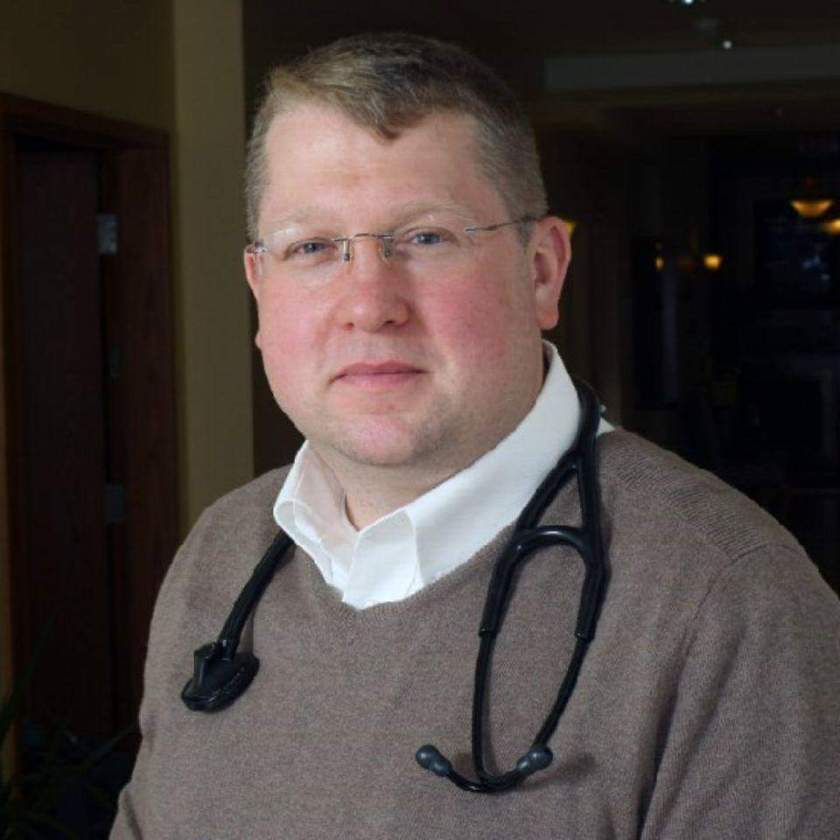
My thanks to Dr. Ramsey Hijazi, founder of the OUFP, and one of the strongest advocates for improving family medicine that I know, for guest blogging for me today. Unfortunately, the government didn’t listen to Dr. Hijazi, and as a result he left family practice earlier this year. In this blog he reflects on how his life has changed since.

It was a busy Saturday morning at my daughter’s dance competition in April 2024. The family had all got up at 5am to get ready for the day. The morning was hectic getting the kids and dog dressed and fed, making sure we didn’t forget supplies for the day, packing snacks and then rushing across the city to Hull for the competition.

My wife helped bring my daughter and her sister backstage to get dressed and prepare for practice. I watched my 2 year old son run tirelessly down the hall of the venue screaming in pleasure. I watched with a sense of calm and patience that I hadn’t felt in a very long time. More than I can remember I felt….present. The previous day I had left my family practice to pursue a position as a hospitalist. In less than 24 hours (and to my own disbelief) I noticed a distinct difference in my frame of mind.

Leaving family practice was not an easy decision. It is a rewarding and challenging career where you can make a positive difference in the lives of your patients. You get to know your patients better than anyone else in the medical system as you care for them from birth to old age. Their journeys in the medical system can remain with you forever. I became a family doctor because I loved family medicine and I am grateful for having had the opportunity to practice and take care of my patients. It is also part of the reason I started the Ontario Union of Family Physicians in July 2023 to help advocate for changes to improve the working conditions of family doctors. I had hoped to continue this work.

However, over the last several years the landscape of family practice has deteriorated significantly. The administrative or paperwork burden in family medicine has ballooned to almost 20 hrs/week. It is a constant barrage of work that is being downloaded or dumped on to family doctors from specialists, insurance companies and pharmacies. There’s also the extraordinary duplication of lengthy and sometimes irrelevant hospital reports that come in daily for review.

In essence, you supervise every single step all of your patients take in the medical system whether you have seen them recently or not. You ensure that tests and follow ups are completed and that nothing falls through the cracks. If my patients did not have me overseeing their journey in the system, countless tests and follow ups would get missed and never take place.

Like it or not, family physicians have been unofficially assigned the responsibility to make sure things actually get done when no one else will. It is mentally exhausting. There were days I would come home from work feeling so overstimulated I could do nothing more than sit on the couch and keep silently to myself for the rest of the night (although young kids make that a difficult reality to realize).

In an age where patients can simply email their family doctor you are never unplugged from your job. Despite trying to convince myself that I wouldn’t think or worry about work on vacation, I couldn’t help but have intrusive thoughts that occupied my mind. I would drift away from the present moment I was trying to enjoy. Often I would use the first and last days of my vacation as a desperate attempt to try and be caught up.

On weekends when not much was happening, such as watching TV with the kids or supervising them in the backyard I also couldn’t help but have the same intrusive thoughts of thinking my time could be better spent trying to catch up on the paperwork that was piling in. I very much resented having these thoughts.

Now add this to the stress of running a family practice. Business expenses have steadily increased with a dramatic spike in the last 3-4 years without any real increase in OHIP revenue. Running a business can be a stressful, but worthwhile endeavour. Unfortunately, this couldn’t be further from the reality of running a family practice. Revenue from OHIP continues to pay less year over year relative to inflation and expenses.

The OMA has kept track of OHIP rates relative to inflation to show current rates are only 37% of what OHIP used to pay physicians to run their practice. For the newer family doctors entering practice the future stability of the profession is truly grim. They enter practice with huge loads of debt and an almost guarantee they will take home less and less money every year despite the workload contrarily increasing year over year. With no pension, benefits, paid sick time or vacation to top it off, the reality for recent grads is that without significant changes to help the profession, it is no longer a viable career option.

Many family doctors work side jobs to help financially subsidize their practice. Granted, the entire medical system is plagued with poor working conditions, underfunding and increasing burdens of work, however, the situation is particularly magnified in family medicine. But you don’t need to take my word for it, just look around to see what is going on in your community and in our province. Despite the OMA showing statistics that we have more doctors trained in family medicine per capita than ever before, we are in one of the worst shortages ever.

Family doctors simply don’t want to do family medicine any more.

Changing my career path to work in the hospital as a hospitalist was a big risk and required a leap of faith (I hadn’t worked in a hospital since I finished residency). But unfortunately, in family medicine I had become increasingly unhappy professionally and personally. As it turns out, becoming a hospitalist was the best decision I could have ever made. Working in hospital means I am responsible only for the patients on my ward and not 1500 patients in the medical system. I must round on and see each patient to review their medical problems, perform examinations and order any tests or investigations. I follow up with family when needed and appropriate for medical updates. At the end of the day unless I am on call, I walk through the door to go home and my work is done until I arrive again the next morning. There is no appointment schedule to rigidly follow and I can take as much or as little time that is needed for each patient. If something unexpected occurs, I can deal with it and get back to my work without the worry or stress of being behind schedule and having irritated patients. It is also challenging and extremely rewarding.

No longer do I have all the stresses of running a business or see up to 40% of my OHIP billings go towards business expenses. No longer do I need to reconcile rushing several patients in and out of the clinic for appointments to stay on schedule and maintain a reasonable availability while also trying to give the appropriate time to address their concerns. No longer do I leave work at the end of the day, eat dinner with the family and go back to the computer to tackle the never ending pile of paperwork. No longer do I need to worry and stress while on vacation about all the work that is piling up in my absence. No longer do I have the intrusive thoughts of working on paperwork while watching the kids ride their bikes or to watch my son run down that venue hall aimlessly in pleasure.

I am more present and at peace. I am a better person, husband and parent because of my decision to leave family practice and that is perhaps the saddest and scariest thing about this entire journey.

Interview on Excess Deaths in Emergency

Was interviewed yesterday (July 23, 2024) by Greg Brady of am 640 News about the situation in Emergency departments and how the long wait times are causing deaths. I can’t post the link on certain social media (eg Facebook) so the link is put as a post in this blog. Please note the first 50 seconds or so are a commercial:

It’s (Well PAST) Time to Review the Canada Health Act

The Canada Health Act (CHA).

Written by former Federal Health Minister Monique Begin, and passed into law forty (!) years ago, it transformed health care in Canada, and in many ways transformed the country.

Former Federal Politician and Health Minister Monique Begin

Viewed as sacrosanct by many pundits, it has now reached a status amongst politicians where health care is widely viewed as the “third rail” of Canadian politics. To question the reverential status of the CHA is to invite political ruin, and to be forever labeled as un-Canadian. I guarantee that I will be accused of being a proponent of “two-tier American style health care” simply for suggesting that the CHA should be reviewed.

Yet review it we must, because the reality is that a LOT has changed in health care in the past forty years. The CHA was written before the explosion of medical knowledge we have experienced. To expect it to still be appropriate is naive at best, willfully neglectful at worst. My much smarter friend Dr. Mathew pointed out: The CHA was written when health care was “episodic”. You got sick, you went to the doctor. You usually had a small co-payment. You got treated for the illness you had.

But since the CHA, health care has been massively transformed to focus on prevention. Whether with the explosion of screening tests for cancer, a focus on control of chronic illnesses, or a recognition of the benefits of being able to afford prescription medication, health care is different than 1984. In a big way. This is why the government is again promising pharmacare.

While there will always be a paper, or plan or policy on how to improve health care, very few people have the courage to address the root cause that is stagnating and impeding change, namely the CHA.

For example, Dr. Tara Kiran (Fidani Chair of Improvement and Innovation in Family Medicine at the University of Toronto) had a four part series on health care in the Medical Post where she compared Canada to Denmark. She looked at how Denmark organized their family doctors, how they pay physicians, their EXCELLENT health IT system and so on. All of which is wonderful and really should be emulated here in Canada.

Similarly, former federal Health Minister Dr. Jane Philpott has been in the news a lot with her new book “Health Care for All” in which she talks about the “right” to have a family doctor. In an interview with the Medical Post she glowingly references Norway, and how they build in health care infrastructure, much like they build schools, when planning developments. A lot to like about Norway’s health care system.

But, did you know that Denmark has a parallel private health care system (despite their high taxes) that allows faster access to care along with access to more specialists and other services? Did you know that in Norway, you actually pay for you health care at the point of service until you reach your deductible (2,000 Krone, about $250 Canadian)?

You mean Drs. Kiran and Philpott never mentioned that these countries whose health care systems they have been talking up had defacto co-payments for medical treatments (gasp!) and parallel private health care (gasp!). Gee, I wonder why….

Here’s the thing. EVERY single country that has a better health care system than Canada’s has TWO main features:

  1. A universal health care system that is funded by taxes
  2. An element of private care, usually some combination of a deductible for taxpayer funded services, and, a private system.

To deny the above is simply to deny the facts. To cherry pick what other countries do and to think we can do it here in Canada without also recognizing that much of what they do would contravene the CHA is naive at best, and disingenuous at worst.

Canada had a health care system that was ranked very highly in the mid-1980s. Ontario used to boast of having the “best health care system in the world”. It’s undeniable that since the CHA, health care in Canada has deteriorated markedly when compared to the rest of the world. This is not a coincidence.

What can be done? I believe the CHA should be changed to allow the federal government to have strong controls to ensure a fair universal health AND pharmacare program that functions like a true insurance plan (yes that means deductibles). It should also empower the feds to enforce a Canada-wide health IT system that allows patients to access their own data.

Why deductibles? Why not have the taxpayers pay for everything? Because without them you take away the responsibility for using a service properly. People feel as if it’s something they deserve as opposed to something they have a joint responsibility to manage and care for. By making deductibles illegal, the CHA has created a society of entitlement, instead of one of empowerment.

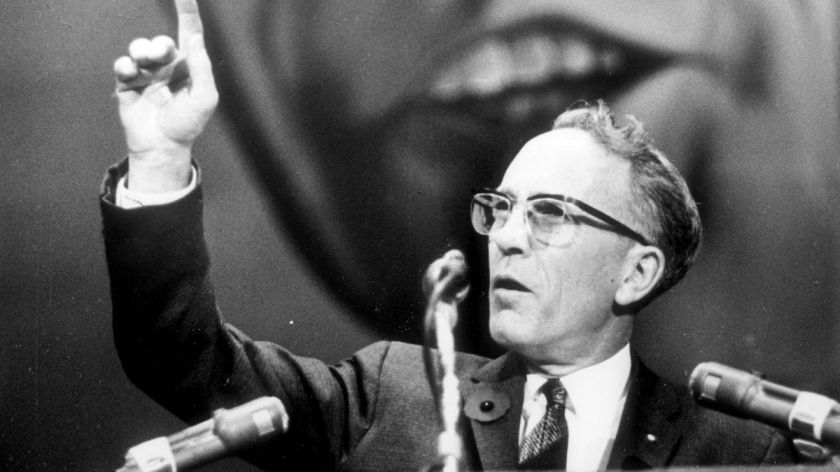
If you think I’m un-Canadian for suggesting that there should be a deductible on taxpayer funded health insurance, then I would ask that you be fair about it and also call the guy who said this un-Canadian:


“I want to say that I think there is a value in having every family and every individual make some individual contribution. I think it has psychological value. I think it keeps the public aware of the cost and gives the people a sense of personal responsibility.……there is a psychological value in people paying something for their cards……… We should have the constant realization that if those services are abused and costs get out of hand, then of course the cost of the medical care is bound to go up.

That fellow? Why none other than the “Greatest Canadian” himself, Tommy Douglas.

Tommy Douglas aka The Greatest Canadian

Health care in Canada is at crisis. Patients are suffering terribly. One third of physicians are thinking of leaving the profession in then next two years, just when Canadians need them most.

A crisis demands you look at all options. The first step is to revisit the CHA.

This Must Be the Health Care System Canadians Want

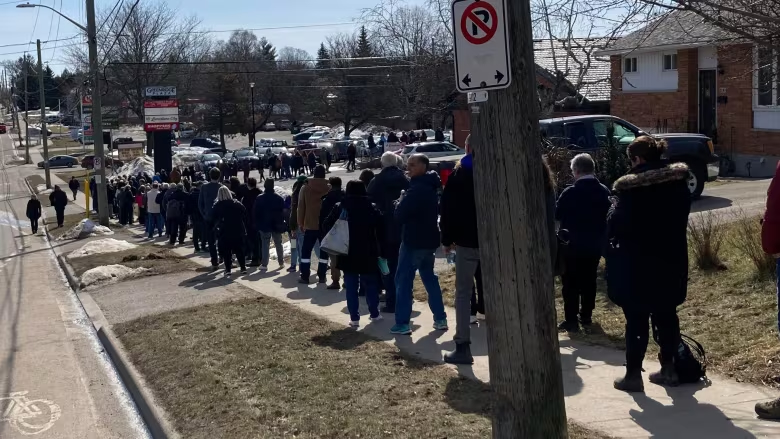
Patients lined up to register for a family physician in Kingston (image first published on CBC.ca)

For this blog, I will be telling some patient stories. They are not all my patients, but people in my area. The stories are real – the identities have been anonymized.

Last week, I received yet another rejection letter from a specialist, in this case a neurosurgeon. He declined to see my patient because his practice was “too busy to see the patient in a timely manner”. Which of course means more admin work for me as I try to find another neurosurgeon for my patient. I do a lot of procedures as a rural family physician, probably more than the average doctor – but neurosurgery is a bit beyond my skills.

All of which got me wondering (again) how our health care system, which in Ontario was once rated the best in the world (no really) came to fall so far that a certain grumpy curmudgeon has openly said if he gets sick, he would go to Turkiye. The only answer to my mind, would be that it’s because Canadians are okay with it.

LC, early 40s, seen in emergency for sudden abdominal pain. CT scan sadly shows advanced cancer. Specialist refuses to see her until she goes to a “screening clinic”. Three weeks to get to the screening clinic, that agrees it’s cancer. Refers to specialist who orders more tests. Treatment doesn’t begin until 12 weeks after the diagnosis.

Why do I say Canadians are ok with this? Because for all of the noise on social media, and for all of the news reports highlighting ER closures, delays, and lack of health care staff, I don’t really see people organizing to demand change.

Look, if ten years ago, someone had told me, hey, in 2023 in Ontario there would be over 800 times when an Emergency Department has a partial shutdown, 2.3 million people would no have a family doctor and wait times would be forcing people to consider leaving the country to get health care, well, my first thought would have been “I need to avoid Queen’s Park, there’s gonna be a protest there every day”.

KX, 85 years old, in good health, debilitated by arthritis pain in his hip. Can’t get a fluorscopic cortisone shot to his hip for 5 months, and a specialist who does this in office under ultrasound is over 100 miles away, and has not responded to a referral request yet. Has been limping and on addictive painkillers for 3 months with no appointment in sight.

I see people protesting and demanding change for any number of issues (and I stress many of these are important causes that I support). I have yet to see the kind of sustained pressure on government needed to force drastic change in Health Care.

I’m not the only one to suggest this. Dr. Stephen Major, now the President of the Newfoundland and Labrador Medical Association (NLMA) suggested that the public has become “complacent” about health care. He correctly points out that while fish harvesters protested and shut down Confederation Building in May, he has yet to see a protest about the fact Newfoundland has over 100,000 people without a family doctor.

ET, severe sciatic style back pain. First sees the family doctor who correctly diagnosed this clinically. MRI ordered – which took 5 months to get, confirms sciatica. Referral made to back surgeon. 6 months later – still no word from back surgeon. Currently 11 months of waiting in daily pain to be assessed by surgery – still no operative time booked.

Canadians have a well deserved reputation for being “nice.” The BBC implies we can teach the rest of the world to be nice. We are polite to each other, polite to tourists and we have a habit of saying “sorry” to just about everybody – regardless of whether it’s our fault or not.

Perhaps it’s this inherent niceness that keeps us from protesting daily at each and every one of our Provincial Parliament buildings. Perhaps it’s because of an attitude that “at least our health care is free” (even though it is definitely not – your taxes pay for it). I don’t know. But I do know that for those of us in health care it really seems like the general public is content about the state of the health care system.

DD, 4 years old. Significant behavioural issues compatible with Autism Spectrum Disorder. Referral to paediatric team for assessment. Message returned informing there is a two year wait to see the paediatrician.

But wait, aren’t doctors and nurses organizations advocating for better health care? Of course they are. But the blunt reality is that there are about 43,000 members of the Ontario Medical Association, and 190,000 or so nurses in Ontario. To truly enact change – millions of people need to demand it because millions of votes will matter to politicians.

I’m not seeing that happening.

BC, 40 years old. Complex psychiatric situation. Referred by family doctor to psychiatry. Two months later a message back that this is not suitable and should be referred to Ontario Structured Psychotherapy. Six months after that an intake assessment is finally done, and was told will be entered into the program, but wait time to start the program is twelve additional months.

Our health care system continues to collapse all around us. Governments across the country appear to be making mild to moderate changes to the health care system. But the kind of bold, truly transformative change to health care (like has been done in other countries) will require Canadians to stop being so complacent about health care and protest regularly, repeatedly and with perhaps a little less niceness.

Will they?

Dear Minister Jones – Fire Your Negotiations Team.

Dear Minister Jones,

Just me again, a certain crotchety and increasingly cantankerous geezer offering you advice in an open letter that you are not likely to take. But you would be better off if you did. More importantly, so would the people of Ontario.

Ontario Health Minister Sylvia Jones

First, I would once again suggest that you have done some good work in the health ministry. Moving surgical procedures to outpatient clinics, increasing the number of diagnostic testing facilities, starting a new medical school focused on training family doctors and more are all good moves. While the effects of some of those decisions will not be felt for many years – the reality is that somebody had to do this to help health care down the road and you’ve done that.

Unfortunately however, the past couple of weeks have been catastrophic for your Ministry’s relationship with Ontario’s doctors. It’s funny how one dumb decision or comment can completely wreck a relationship, but that’s exactly what happened when your Negotiations Team stated that there was “no concern” about a diminished supply of doctors. Therefore, they refused to negotiate money for retention of physicians or admin work, like other provinces have (cough BC, cough Manitoba, cough EVEN Alberta!)

In essence, your Negotiations Team has been a disaster, first by militantly dragging out negotiations into a very adversarial arbitration process (when all the other provinces above figured out a way to, you know, respectfully negotiate with doctors) – and then by making a statement about the supply of doctors that is so comically stupid and out of touch that Ontario has become a laughing stock.

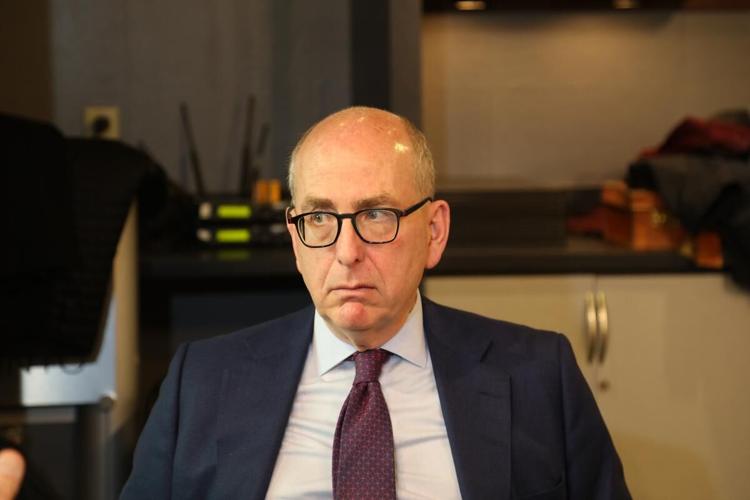
Three members of the Ministry’s Negotiations Team pictured above.

This will not bode well for health care in this province.

Look, I know there may be a temptation to say “Ok this was a mistake” and to try and walk back the comments.. While it’s abundantly true that the people of Ontario are a good and kind people who will forgive politicians if they own up to their mistakes (cough greenbelt, cough enhanced police powers and closing playgrounds during covid) – one thing that politicians can’t survive, is being made a laughing stock. Except Donald Trump of course. I still haven’t figured that one out and I don’t think I ever will. (N.B. Donald Trump is not someone you should try to emulate).

Anyway, the reality is that at this point you really only have one path left to turn this thing around. You have to fire your negotiations team. All of them. I’m not just talking about the seven who were appointed to lead that team, I’m talking about the multiple bureaucrats who give them supporting data and have influenced their position.

The only rational explanation I can think of for those bureaucrats promoting a position of “no concern” about physician supply, and saying doctors are not working hard enough, is that they hate doctors. Many of them were likely hired at a time when it was fashionable to bash doctors for billing “too much”. (BTW how did that attitude work out for the people of Ontario?) They’ve clearly carried on with that belief in the arbitration proposals.

I get that in arbitration, there will be some posturing. If your Negotiations Team had said “we’ll pay you $50 a month as a retention bonus” or “admin work doesn’t involve seeing patients, so we’ll pay you $20 an hour” – I honestly would have shrugged my shoulders, recognized it was part of the arbitration “game” and said nothing.

But to say retention and recruitment of physicians is not a major concern, when people line up for hours on end just for the faint chance of getting a family doctor?? That thought process can only be due to a pathologic hatred of physicians, or a delusional mindset totally divorced from reality. Either is a cause for termination. Can the whole team now.

A long line forms outside CDK Family Medicine and Walk-In Clinic in Kingston, Ont.. It was the first day of ‘rostering’ at the clinic, where four doctors will take as many as 4,000 new patients. (Jamie Corbett) – from CBC News

But what of negotiations with the OMA you may ask?

Actually, that’s not hard either. Your ministry has an appointee to the Arbitration Board, just like the OMA does. I believe your appointee is one Kevin Smith. The job of the appointee is to tell you and your team what the lead arbitrator, William Kaplan is thinking and how he is leaning. How they do that is beyond me. When I met Kaplan it was like talking to a Vulcan. There was absolutely no emotion or hint of what he was thinking – but apparently Kevin Smith is better than I am at figuring this out.

One of the above is William Kaplan, Arbitrator, and even after meeting him I’m not sure which is which.

What your appointee will tell you, and what the OMA appointee to the Board will tell the OMA is – Kaplan is wondering “this” or thinking “that” or leaning towards “X percent”. Find out what that X per cent is, offer it to the Doctors for the first year of the new Physicians Services Agreement (PSA). That solves things for one year, which gives you time to pick a brand new negotiations team for year 2-4 for the PSA.

Note to my three loyal readers, yes, this arbitration is ONLY for the percentage increase of the first year of the four year agreement. Worse, while the OMA and Ministry have generally agreed to a 70/30 split of whatever the amount is with 70% allotted to raises, and 30% to be given to targeted programs, they haven’t been able to agree on how the 30% is to be targeted. This means…..more arbitration for that piece. Then, it begins again next year for years 2-4 of the PSA. In essence, we appear to be locked in a perpetual, never ending antagonistic arbitration process (which is still better than unilateral government actions but really frustrating nonetheless).

As I told Premier Ford recently- if health care doesn’t get fixed – I don’t care what the polls say now, or how many by-elections you seem to have won, this is going to be a real problem in 2026. With health care in the crisis it is in now, you need all hands working together and co-operatively. Locking Ontario’s doctors into two more years of extremely adversarial arbitration shows that we are not co-operating and not working together. This is why graduates are leaving the province. And we can’t afford that.

It’s time for you to do the right thing for Ontario, and cut bait with your current negotiations team.

Yours sincerely,

An Old Country Doctor.

Perspectives on Ontario Health Care by a Recent Graduate

NB: My thanks to Dr. Tristan Brownrigg for guest blogging for me today. By his own admission, he never planned to be political, or seek out the limelight. But the situation in Ontario is such that he felt his perspective should be heard. I have a great deal of respect for people like Dr. Brownrigg, who are willing to step out of their comfort zone when necessary, and I commend him for doing so.

Dr. Tristan Brownrigg: I am a family physician, outdoorsman, and rural generalist currently working a mix of clinic, ER and inpatient care in the East Kootenays of British Columbia. I graduated from the University of Toronto Medical School, and did my Residency at Queen’s University (Kawartha site).

I completed family medicine residency in Ontario in 2022 and worked there for 6 months. Prior to this I completed medical school in Ontario, completed my undergraduate in Ontario, and had called Ontario home. Over the years I had watched my goal of working as a comprehensive rural family physician slowly become unsustainable amidst a collapsing system, decades of funding stagnation and poor planning, with a patchwork of good people on the ground trying to do their best in a system that doesn’t seem to value their input. Day after day the insidious march of the family medicine crisis grew closer to the forefront of peoples’ lives and garnered wider media attention, while the government either denied its existence or made no substantive changes that would realistically address it. This has not been the time for band-aids, let alone denial. 

Last year I moved to rural British Columbia to try something different for a year, cautiously optimistic about the significant changes to family practice on the back of the LFP model implementation in early 2023. The Longitudinal Family Physician (LFP) model significantly changed how family physicians billed and were compensated in BC, including the ability to bill for the many hours family physicians typically spend on previously unpaid administrative tasks.

My experience has been night and day. For the first time in my medical career I have felt hopeful about the future of family medicine and find my day to day life to be sustainable. These changes have been received positively amongst all other family physicians I have discussed it with. It is not perfect and there are still kinks to be ironed out, but I at least believe my provincial medical association and government are trying to improve things for family physicians. I am not left questioning if government actions are purely incompetent or malicious with the intent to drive privatization.  

I had retained my Ontario medical license until now, awaiting the May 2024 renewal deadline unsure if I would return home after a year of trying on a different life out west. Reading the recent government positions and negotiation briefs has been the final nail in the coffin for me. The disdain the Ontario government shows towards the hardworking family physicians who hold up the medical system is nothing short of repugnant. After more than a decade of training and education here, I will now be relinquishing my license to practice medicine in Ontario and stay in British Columbia.  

The minister of health thinks recruitment and retention is “not a major concern.” That’s the problem; it should be. If I am not a prime example of this, I don’t know what is. 

I wish all of my colleagues still in Ontario who do not have the luxury to vote with their feet the best of luck. If not this government, then I hope the next one learns to value your work and dedication.  

My Interview Regarding Recruitment and Retention of Doctors Not a Concern

My thanks to Greg Brady and 640 am News Toronto for interviewing me today (May 9, 2024) about comments from the Health Ministry that recruitment and retention of physicians is not a concern for Ontario. Posting a link to the podcast of that interview here, as some forms of social media will not allow the actual link to be posted.