
What Would I Do if I Got Sick? I Would go to Turkiye.

NB. I am a consultant for Medicte, a medical tourism firm that connects people with the Acibadem Health Group in Turkiye. I appreciate my two loyal fans may read this to be an “advertorial” – but it does represent how I feel. 

Yours truly at an Acibadem Hospital in Turkiye with their team and representatives from Medicte

Recently, Leger released the findings of a survey that polled Canadians on their thoughts about the health care system. 70% of Canadians worried about not being able to get high quality health care. Surprisingly, only 37% thought the health care system was poor – did 63% not need medical care recently? But the number that should demoralize all of us is that only 17% feel the system will improve.

Like everyone else of a certain age, I’m coming to the realization that the one fight I won’t win, is the battle against time. More of my friends and colleagues are developing health issues. While I’m blessed to be in good health, like 83% of Canadians, I realize that the current health care system (which doctors call horrific and inhumane ), will not provide the access and care we should expect as standard in this country. I can only see things getting worse in the near future.

It does not help that I live in the health system every day. I’ve watched patients I really care about suffer in ways that I would not have imagined possible. Young people with cancer not getting treatment for three months. People with joint pain waiting a year for surgery. Patients developing complication after complication while on wait lists to access necessary treatments. 

Most heartbreakingly, I see the toll that the burnout of working in such a hellishly damnable health care system is taking on doctors, nurses and other allied health care professionals on a daily basis.

That’s why I recently made the decision that if I, or someone in my family needed health care, I would seek care outside of Canada. I am not alone in this. The data is hard to get at, but going back as far as 2014, between 52,000 to 217,000 Canadians were seeking health care outside of Canada annually. 

There are a variety of reasons to seek care outside of Canada, and specifically Türkiye:

  1. Getting immediate care. I could get hip surgery next week, not next year. Cancer patients get all the tests they need done within a week, not three months like I’ve seen. 
  2. Getting treatments that are not available in Canada. Canada offers a host of great medical treatments, but many are not covered by government plans. Lap Band surgery is one. New, emerging radiation therapies for pancreatic cancer is another. There are more. All of these are available in Türkiye.
  3. Getting better allied health care support. Canada has GREAT nurses and other allied health care workers. But the system does not let them care for patients the best. Last time I was on call at my hospital, I overheard the nurses talking about how they each had 7 patients to look after for the shift. The safe number for an acute care hospital ward is 5 patients per nurse. We have excellent nurses but if you are constantly working at 40% over capacity, things are not going to go well. At the Acibadem hospitals in Türkiye, they have 4 nurses for 15 patients (3.75 patients per nurse).
  4. More cost effective care. I’m fortunate I can afford to pay out of pocket for care if needed. Worst comes to worst I’ll put off retirement for a couple of years to pay for things if necessary. But even I would have trouble with $200,000 (U.S.!) that B. C. resident Allison Ducluzeau spent on her cancer care. Costs in Türkiye for most procedures I looked at are generally less than half of what it costs in the U.S.
  5. First World Standards for Health Care Treatments. All of the Acibadem hospitals are JCI Accredited (the global leader in health care accreditation agencies). This puts them on par (and in some cases better) than top European hospitals.
  6. Türkiye is a well sought after Medical Tourism destination. Medical Travel Market recently highlighted 12 reasons why Türkiye was so well sought after including cost, world class facilities and cutting edge treatments. 1.2 million people went to Türkiye for medical tourism in 2022, mostly from Europe.

As part of my consulting work, I went on a fact finding tour to Türkiye and visited the Acibadem hospitals. To say my jaw dropped would be an understatement.
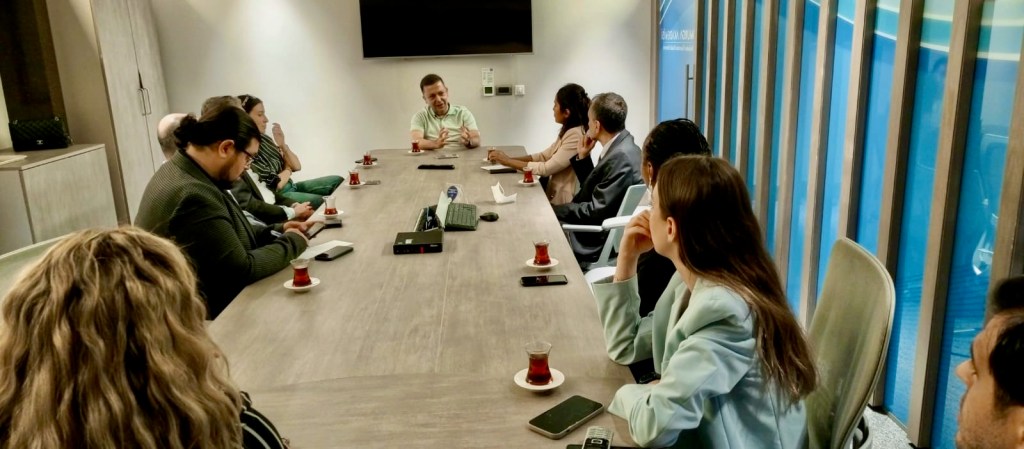
The team and I reviewing the process for orthopaedic care with their top spine surgeon.

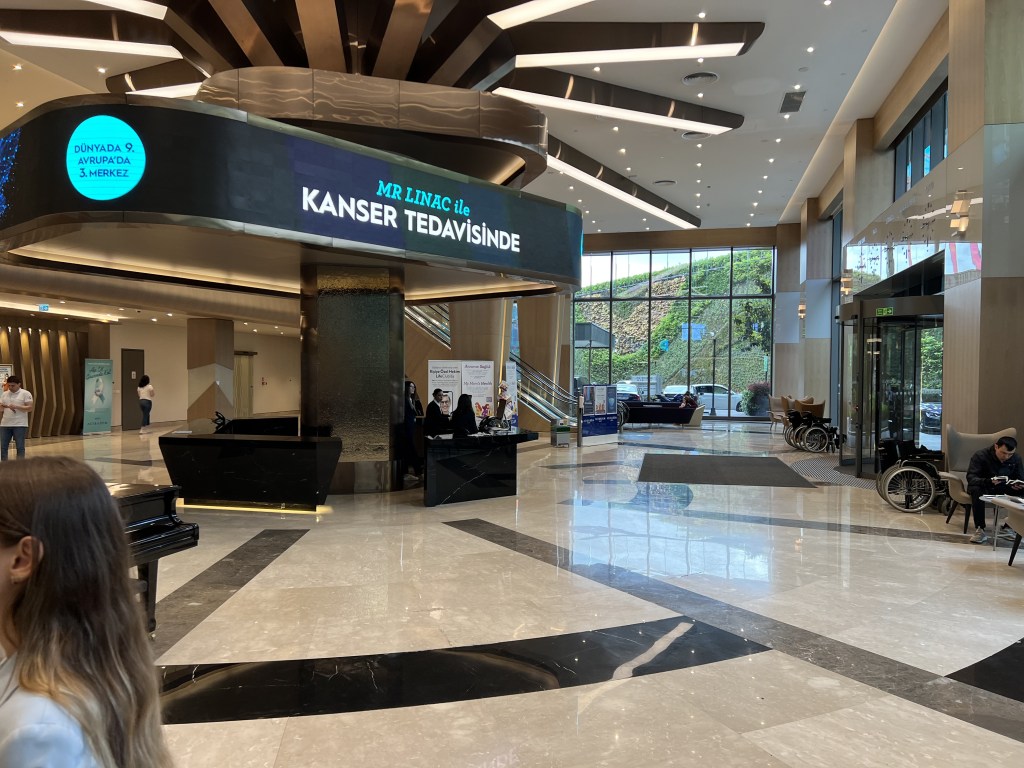
The hospitals (there are 21 in the Acibadem group) look like hotels. Each room is private. The wards are immaculate. All of the staff were incredibly attentive (and yes, spoke English). 

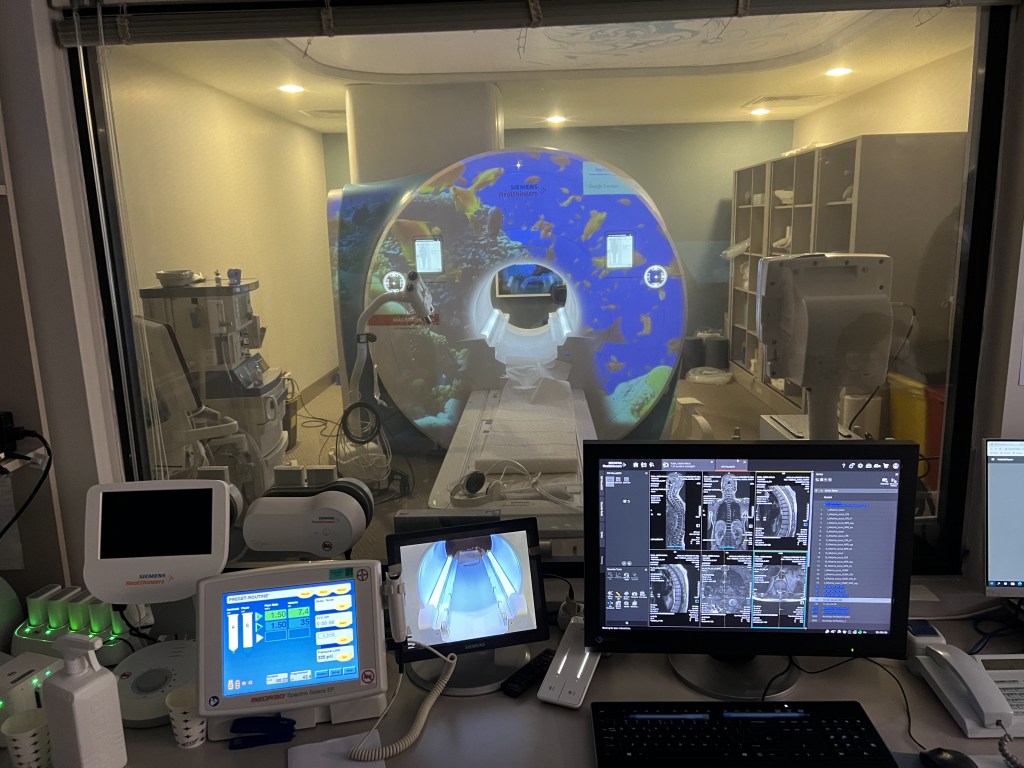
I asked to see the MRI, and the staff wanted to know which one (!). Their approximately 170 bed hospital had THREE MRIs, specialized for different conditions. This is on top of the CT scans, gamma knives (cancer treatment), PET scans etc etc. All of the equipment was brand new. I especially liked the MRI that projected a movie onto the equipment, to help children stay calm during the procedure.

I also ran into a couple of top ranked Turkish footballers (soccer players) while there. The Turks are as crazy about football as we are about hockey. Their top athletes go to the Acibadem group.

But what’s more impressive than the top ranked doctors, nurses and equipment is their philosophy of how to provide health care. If you were to sadly, get cancer, you would see all the specialists you need to see (surgeon, medical oncologist, radiation oncologists etc) on the same day. Any tests you need would be organized sequentially and rapidly over the next couple of days (if not the same day). You would have a full treatment plan within a few days.

Contrast this with Canada where you have to have an appointment with one doctor, then wait x number of weeks to see another then x to see another like my patients currently do. All while the cancer continues to grow.

Also, for the record, I did wind up getting care myself at Acibadem. Bad teeth run in my family, and so I went for a dental check up. The dentist examined me, put in two fillings, got the oral surgeon to come by and took out two teeth that were beyond hope, all during the same visit. This would have taken multiple visits in Canada. You could say I put my money where my mouth is. And yes, the care was excellent.

I appreciate this sounds like an advertorial. But the reality is that more and more Canadians are getting frustrated with the long waits for health care and seeking care outside of Canada. It may have started off with people seeking lower cost cosmetic surgery, but now things like orthopaedic surgery, cancer treatments, organ transplants, dental implants and even cutting edge infertility treatments can be had for those willing to travel. 

There is never a guarantee of a successful result with medical treatments anywhere (including Canada). If considering leaving the country for care, people should do their due diligence. Make sure you deal with a reputable firm and first rate hospital.

I’ve made my decision, and I know where I’ll go. 

If you or anyone else would like to explore options for out of country health care, contact Medicte for a free consultation.
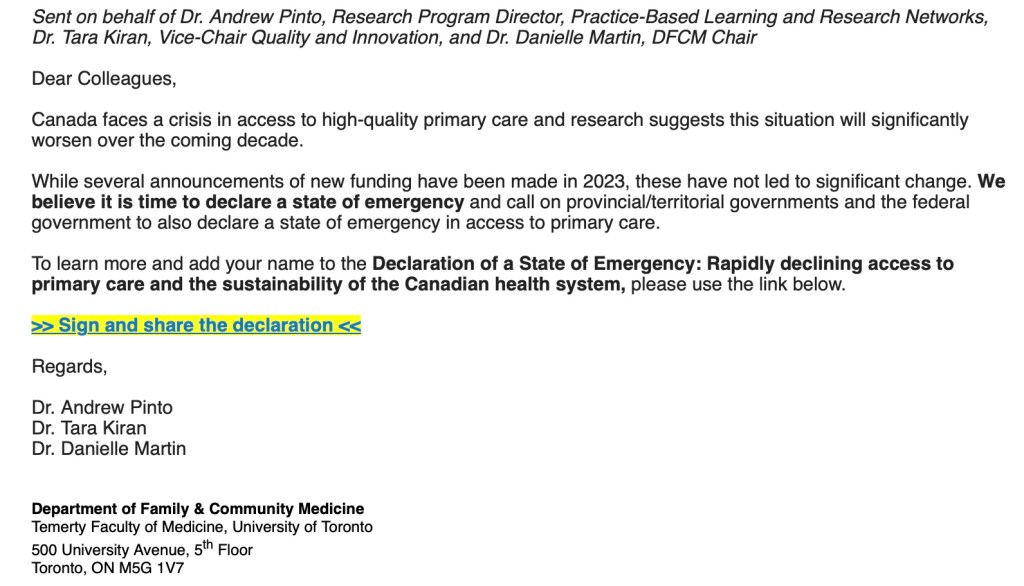
DFCM at Temerty Faculty of Medicine’s Stunt is DANGEROUS for Physicians AND Patients

I’ve been involved in medical politics for some time and in health care for much longer. I’ve seen a lot of foolish things. And yet, I confess, I’m still dumbfounded when some really smart people come up with a really stupid ideas. I guess I’m just a slow learner.

The most recent of these ideas comes from the Department of Family and Community Medicine (DFCM) at Temerty Faculty of Medicine. (Temerty is the name for the University of Toronto Medical School – and no, I have no idea when or why they changed their name to Temerty). In an attempt to address the crisis in Family Medicine, Drs. Pinto/Kiran and Martin would like the governments to declare a state of emergency in access to primary care.

Do I understand wanting to draw more attention to the crisis in Family Medicine? Of course I do. Family Doctors are planning to leave the field in droves. Compensation for family medicine has failed to keep up with inflation much less given them a raise. The admin burden makes one feel like Sisyphus (In Greek mythology Sisyphus was dammed by the gods to roll a boulder to the top of a hill only to have it roll suddenly back down to the bottom when it got close to the top and thus be forced to roll it up again. A more apt description of the family medicine paperwork burden I have never seen).

Heck across the country our whole health care system is in crisis, not just family medicine. Patients are not getting timely specialist care (some even choosing euthanasia as a result) as well as family practice care, resulting in worsening health care outcomes for all Canadians. We should be screaming about this.

But I honestly don’t think Drs. Pinto/Kiran/Martin (who combined have more letters after their name than the entire alphabet) could possibly have thought this recommendation through. Frankly, I’m genuinely left wondering if they even know what the government declaring “a state of emergency” means. The only way to enact this, is to invoke the Canada Emergency Act.

This Act clearly lays out what governments can do to solve a crisis in any particular area. And it’s not pretty. It includes:

  • giving the government the “ability to make orders or regulations that are believed, on reasonable grounds, to be necessary…”
  • Directing specified persons to render essential services…
  • Regulating the use of specified property, including goods…
  • The imposition of fines or imprisonment for contravening on any of the measures declared..

In short, having the government declare a state of emergency gives them a whole lotta power to do a whole lotta things. I guarantee you not all of those things will be smart.

No one in their right minds is going to argue with the issues identified in the letter three doctors wrote about:

The crisis in family medicine is real. There has been a lack of investment in primary care. This will get worse. This will cost the health system more money in the future if we fail to fix the problem. And yes, thank goodness somebody other than a cranky cynical old country doctor wants a significant overhaul and feels that “modest changes are not enough”.

But – to tell the government to enact a state of emergency, giving the same bureaucrats who have completely screwed up the health care system for the past thirty years almost unfettered power is not the solution. Let’s look at some of the goals of these three doctors:

If there is a state of emergency – do you know how these pointed headed bureaucrats will take “decisive action” to “ensure every person in their jurisdiction has equitable access”? You think they will licence more physicians? You think they will allow Ontario Health Teams (OHTs) to have strong physician leadership (which is the ONLY thing that has been proven to work in accountable care type organizations like these OHTs)?

I got news for you. The pointy headed bureaucrats will simply mandate zones, unilaterally determine how many patients a doctor must roster, and will make decisions in the interests of “urgency” given the new powers they just got from a state of emergency to show they are doing something.

Say for example the recent situation when Royal Victoria Hospital had to close down their obstetrics service. Hell that Gandhi fellow delivered babies 20 years ago, he probably hasn’t forgotten what to do – send him there to cover so it doesn’t close, he’s only 45 minutes away. Or a hospital about close their ER again – force a local doc who hasn’t worked in ER for 15 years to do so. 7,000 patients without a doctor in a certain town? Have each family doctor take a couple hundred more – even though those docs are already working night and day. (Trust me – these ideas will not sound outlandish to bureaucrats.)

Drs. Pinto/Kiran/Martin know that to make inroads into solving the primary care crisis you need to do three things:

  • increase the payment to family physicians to reflect the work they do. Decades of sub inflationary wage increases (cuts by another name) have made it untenable to run a family physicians office. Pay family docs more and don’t be afraid to say so.
  • The OHTs actually have potential for improving health care, but they need strong family physician leadership – not any other health care professional (and certainly not bureaucrats) – family physicians need to lead this. (The OMA has plenty of evidence on this and has shared with the government and will share with you).
    • Interchangeable IT technology that allows easy access to patient data and thus minimizes the admin burden.

The only reason I can think of for doing this is some sort of political stunt to embarrass the politicians. Heck I agree politicians should be embarrassed for how badly they’ve messed things up. But to do it in a way that gives them more power (not less) instead of demanding a true collaboration with family physicians doesn’t strike me as a very smart move at all.

OMA, CMA and CCFP Should put MEMBERS, not the Corporation, First

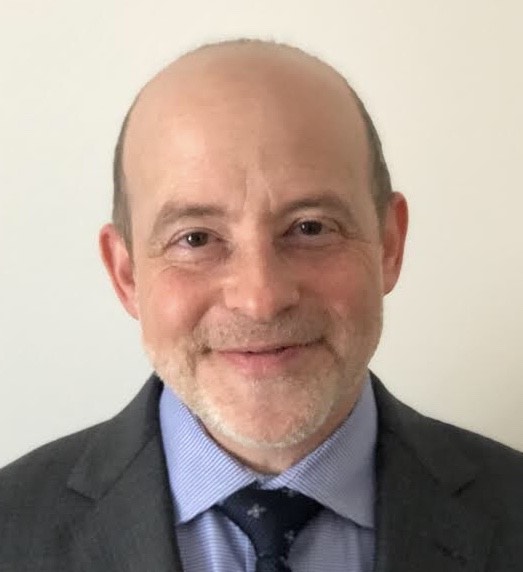
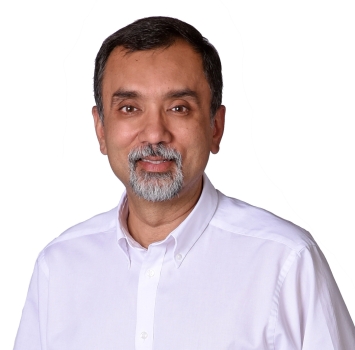
My thanks to Dr. Paul Hacker, pictured here, for his contributions to this blog. Dr. Hacker is a former Vice-Chair of OMA Council and a former member of the SGFP Executive. He’s a strong advocate for physicians interests, exceptionally well versed in governance and bylaws, and good friend.

As we approach election season for the Ontario Medical Association (OMA), many members have regularly brought up one issue to me. Is it true that the the Board Directors for the OMA are all asked to sign “an oath of loyalty to OMA central and not the members?”. The question is usually asked with incredulity and a tone suggesting a disappointing response.

The OMA is a corporation, as is the Canadian Medical Association (CMA) and the College of Family Practitioners of Canada (CFPC). There are many, many good reasons for these organizations to be incorporated, including preferential tax rates, some indemnification for members from assuming the debts of the corporation in case of financial difficulty and a requirement that bylaws and Boards adhere to certain standards.

If you think your membership fees are high now – just wait till you see what they would be if these organizations did not incorporate.

Good corporate governance demands that Board Directors of any corporation put the fiduciary interests of the corporation first. So yes, when I became an OMA Board Director, I did have to sign an agreement saying I would act in the best interests of the corporation. “Oath of loyalty” is a bit hyperbolic, but Directors are legally bound by their fiduciary duties.

In order to help educate Board members on their role, governance training is provided to them when they assume their role at the OMA. I assume this is also the case for the CMA and CFPC. The governance training is usually provided by some hot shot consultant (we got some guru from Rotman Management). Given the consultant’s list of degrees/publications after their name, there was an understandable (but still irksome) tendency for the staff at the OMA to value their opinions on Board matters over some Directors.

But this whole thing is frankly a crock when we are dealing with a membership representing organization (I told our consultant that). Fiduciary responsibility as Director of a for profit corporation whose goal is to increase share value is fine. But it’s quite another when the raison d’être of a corporation is to be a non-profit whose purpose is to advance the interests and needs of the members.

Let’s look at some examples.

I previously wrote about the atrocious 2016 tPSA between the OMA and the Ontario. What I didn’t mention is that that tPSA was actually really good for the OMA as a corporation.

No seriously. The agreement, if passed would have ended a period of internecine warfare between the dismal Kathleen Wynne Ontario government and the OMA, saving a bunch of money. More importantly, that agreement also created some bilateral tables where the OMA could be a joint partner and “co-manage” aspects of the health care system with the government.

There was to be a table on recommendations on physician supply and distribution. One to “co-manage” expenditures of the Physicians Services Budget. A commitment to work together on health reform and much more. In short, that agreement would have given the corporation of the OMA more power and a say in the health care system. All the OMA had to do was ruthlessly stab its members in the back.

Yet look what happened in the aftermath. The then Board was thoroughly repudiated in the ensuring vote. The first non-confidence motion in a OMA Board Executive occurred. Multiple special meetings were called. The resignation of the executive led to a protracted period where the OMA had no leadership or spokesperson. This is good for the corporation?

Want more? Let’s look at the Canadian Medical Association (CMA). In 2018 the CMA surprisingly announced that it was selling MD Management, which many of its members had relied on for their retirement planning. It’s hard not to see why they did it. The CMA got upwards of $2 billion dollars for the deal. The corporation of the CMA clearly benefited significantly and, unless it is financially managed by the same crew that ran Enron (remember them?) – will never go bankrupt and will live in perpetuity.

All it had to do is, you guessed it, stab its members in the back in a move that was widely viewed with a sense of betrayal. The outcome? In 2018 when Dr. Gigi Osler took over as president of the CMA, it boasted 85,000+ members. When Dr. Lafontaine took over in 2022, that number dropped to 68,000. I asked a friend of mine who is quite high up the chain at the CMA what that number is now and she told me she tried to find out, but apparently “they don’t give that number out any more.” Hmm.

NB: I realize correlation does not equal causation, but I find it interesting that the CMA stopped saying how many members it had after a grumpy miserable old coot pointed out the drop in numbers last year. The Medical Post often reprints my blogs – perhaps one of their intrepid reporters could ask the CMA how many members they have today.

Once again, the question needs to be asked, how does a drop in members truly benefit the CMA? How can they honestly say they “champion the medical profession” when they have fewer and fewer doctors as members?

We are seeing the same thing unfold with the College of Family Physicians of Canada (CFPC). They recently announced the truly idiotic suggestion that it was fair to raise their membership fees by 7 %, and the even dumber suggestion that the residency should increase to 3 years from two. They are now embroiled in a serious controversy over this and their annual meeting promises to be a mess. (Both of these moves would benefit the corporate CFPC of course – but not the members or the public).

The pattern is abundantly clear. When Directors of membership corporations don’t put members first (not the corporation), the corporation will suffer. I hope whoever runs for Director of the OMA has the intestinal fortitude to politely confront whatever “governance consultant” is brought on, and tell them just that.

We Should Return to the Health Care Model Tommy Douglas Envisoned

In 2004, the CBC surveyed Canadians to see who would take the title of “The Greatest Canadian.” The winner was former Saskatchewan Premier Tommy Douglas. Douglas is widely, and correctly viewed as the founder of socialized health care in Canada.

His selection speaks not only to the dramatic impact he has had on this country, but just how much Canadians value health care. I will dispense with calling it “free health care” because that just isn’t true. Our tax dollars pay for it. But those dollars are supposed to provide care for all those who need it.

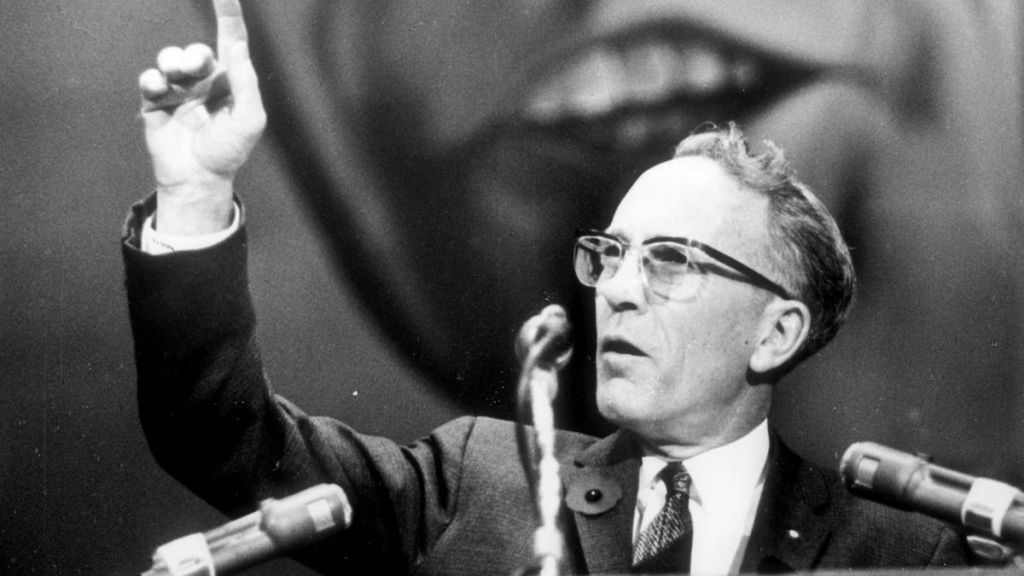
Tommy Douglas, the Greatest Canadian, and the founder Medicare.

As our health care system continues to collapse all around us, it’s worthwhile, I think, to look back at the type of health care that Douglas envisioned. The truth of the matter is, that it is quite a bit different than what we have today. And I think, is not at all what Douglas would want.

According to “The Canadian Encyclopedia“, Douglas’ views on health care were shaped by a number of events in his early life.

As a six year old, Douglas fell and cut his knee. Unfortunately, he developed osteomyelitis ( a bone infection) and the consequences hampered him for his entire life. He had numerous operations and at one point doctors in Winnipeg considered amputating his leg. Fortunately, a well know orthopaedic surgeon (Dr. R. J. Smith) offered to operate for free, so long as Douglas allowed medical students to watch. This saved Douglas’ leg, and helped convince him that health care should be readily accessible to everyone.

Later, as a young man, he moved to Weyburn Saskatchewan, and was dismayed by the complete lack of medical care. He buried a 14 year old girl who died of a ruptured appendix because she couldn’t get medical care. He also vividly told of burying two young family men in their 30s, who simply couldn’t afford to get medical care.

These experiences helped to shape his belief that we could do better as a country. I would suggest that all Canadian should share the belief that one should not have to choose between going bankrupt (or dying) and getting basic medical care.

As premier of Saskatchewan, he implemented the Saskatchewan Hospital Services Plan covering the needs of patients admitted to hospital. In 1961, he implemented the Saskatchewan Medical Care Insurance Act, that provided medical insurance for all residents of Saskatchewan. This of course eventually led to other provinces and the Federal Government adopting similar programs.

The wording is important, and I think speaks to what Douglas was trying to achieve, and frankly, where I believe we need to go back to. The plan was “Insurance”. With all the benefits, AND RESPONSIBILITIES that go along with insurance.

Here’s the thing. In Canada, ever since the Canada Health Act, we have really deviated far from what Douglas really envisioned. He never ever wanted a system where you could go to any health care provider and get assessed without any responsibility on your part. Indeed, he spoke to that quite eloquently in the Saskatchewan Legislature on October 13, 1961:

“I want to say that I think there is a value in having every family and every individual make some individual contribution. I think it has psychological value. I think it keeps the public aware of the cost and gives the people a sense of personal responsibility. I would say to the members of this House that even if we could finance the plan without a per capita tax, I personally would strongly advise against it. I would like to see the per capita tax so low that it is merely a nominal tax, but I think there is a psychological value in people paying something for their cards. It is something which they have bought; it entitles them to certain services. We should have the constant realization that if those services are abused and costs get out of hand, then of course the cost of the medical care is bound to go up.”

Douglas intuitively grasped that if people perceive something as “free” they will start to lose their sense of using it responsibly. That’s why the initial Medical Insurance Act was just that. A form of insurance funded by the taxpayer, and like all forms of insurance, there was a deductible and reasonable limitations.

People were able to now access health care, for a small fee that allowed them to recognize that they too had to take some responsibility for how they used the system. They also had to realize that not everything was covered. Basic health care yes. Options like wanting, say, a private room instead of a ward bed in hospital – well that would be an extra.

There are many problems with the Canada Health Act. But the most fundamental is that it is based on the premise that you can endlessly get something (in this case health care) for nothing. Gutless politicians (from all parties) continue to promote this mantra in never ending attempts to woo votes as opposed to, you know, actually telling the people the truth. Namely, that people should take some responsibility for how they use the health care system.

By continuing to perpetuate the the lack of accountability, our cowardly politicians have created a culture of entitlement instead of a culture of empowerment. Many (not all) people believe that they should be able to get all manner of testing because it’s “free”. I’ve been blessed to have a very pragmatic practice in general, but even I have had to tell people that I will not be ordering the serum rhubarb levels their naturopath wanted because it would be “free” if I ordered it instead of them, or the full body MRI that some “wellness consultant” asked for.

It’s time to bring some patient accountability back to health care. And the first step in that would be to go back to the model that Tommy Douglas had proposed all along.

Dear OMA Board Member, About That Mandate for Negotiations

Dear OMA Board Member,

I read, with interest Ontario Medical Association (OMA) Board Chair Dr. Cathy Faulds update last Friday. There’s the usual information in there about the goings on at the OMA (which sadly not enough members pay attention to, though they should). Critically for most members however, was this comment by Dr. Faulds:

“The board will hold a special meeting at the end of September to finalize the negotiations mandate for use by the Negotiations Task Force (NTF)..”

This is a big step in the negotiations process and to truly understand that, members need to understand what a “mandate” is. Allow me to briefly expand on what Dr. Faulds wrote. The short version is that a mandate is the minimum offer the NTF can accept from the government. If the government offers an increase that is equal to or exceeds the mandate, then the NTF will automatically accept that offer on behalf of the Board.

The corollary to that, which some Board members did not understand when I was on the Board, is that if the mandate is met, and the NTF accepts – then it will automatically mean that you as a Board have to accept the offer as well. As per Board rules, you will then have to endorse the government offer to the membership. You can’t very well tell the NTF “you must achieve XYZ”, and if they do achieve XYZ, turn around and say it’s not enough.

Therefore, it is incumbent on you as a Board, to make sure the mandate is sufficient for the membership as a whole, given the times we live in, and the environment around us.

To that end, without spilling specific secrets, I will state that there was quite a lot of discussion about what an acceptable mandate was during my time on the Board. There were some Board Members who wanted to be “reasonable” and some who wanted to take a hard line and keep the mandate high.

I would, respectfully, point out that for the most part, mandates are never met. Usually the NTF comes back to the Board with “we tried – but this is the best we could get” and presents that to the Board. To be clear, I’m referring to all labour negotiations in general, not just physician ones. Negotiations Legal Counsel told us this last time, just ask them. Whatever you (or any Board) sets as the initial mandate, there is a strong chance the NTF will come back to you later and ask you to lower that mandate.

You will need to keep that in mind when setting your mandate.

To that end, I would encourage you to recognize that the time really has never been better to set the bar extremely high for the NTF mandate. It’s not just that physicians are considering leaving the profession. It’s not just that health care is collapsing all around us. It’s not just the ongoing problems with not just recruiting, but retaining physicians. You already know about all of those issues in excruciating detail.

No, the reality is that we now also have some significant competition for physicians within Canada from other provinces. And I mean strongly significant.

Not sure how many of you have seen this summary form the recently approved Physicians Services Agreement (PSA) in Nova Scotia. On the surface there would appear to be a fairly minimal 10% raise over four years. A deep dive however shows significant add ons like improved parental benefits, funding for overhead, funding to hire allied health care professionals, funding for admin work, enhanced FTE and income stabilization for specialists and so on. That plus a retirement fund!

Similarly, in Manitoba, their recent agreement was widely hailed as a landmark and a game changer. I spoke to a friend of mine from Manitoba who confirmed that it too contains things like a retention bonus ($21,000 and higher for those in rural communities), funding for admin time, funding for new models of care, additional funding for those patients who are older and an equity lens applied to fees. In short, the increase is widely viewed to be in the double digits percentage wise per year.

Look, I know the NTF knows all the stuff I’m pointing out (but others who read my open letter may not). I also would acknowledge that Dr. Mizdrak is a fine chair for the NTF and is (in a very good way and said with total admiration on my part) a real pitbull on behalf of the profession. I also have full confidence that the NTF did it’s due diligence in reviewing the many asks by the leaders of all the specialties.

But at the end of the day, it is up to you, dear Board Member to set the minimum acceptable deal (mandate) and it is up to you dear Board Member to ensure that Ontario remains a competitive place to attract physicians.

To that end, you must ensure that if there is a negotiated agreement, it must at least equal the increase in Manitoba or Nova Scotia (whichever is higher). Anything less would, quite frankly, be rightly viewed as the Board selling the profession out. (If we wind up going to arbitration, that’s a different story – but at least we will have gone there because the Board refused to take a sub optimal deal).

All of which is a long way of saying that since it is quite likely that an initial mandate may not be met, it is incumbent on the Board to set a mandate for the NTF that is HIGHER than what was achieved in Manitoba/Nova Scotia. This will allow for the usual process of the NTF having to come back and say what parts can be achieved and what can’t, and allow some wiggle room.

If you set the bar lower, well, frankly, I have to wonder how you can justify saying that you are advocating for the Doctors of Ontario.

Yours truly,

An Old Country Doctor.

#Docxit on the Rise, Means More Trouble for Our Health System

Acknowledgement: I want to thank my friend Dr. Graham Slaughter for coming up with the term “Docxit”. Graham is not only a brilliant internist, but is incredibly talented at wordplay and music. Plus, he has really thick, lustrous wavy hair!

A bunch of stuff has come to my attention recently in my social life and on my social media feeds. I’m saddened by all of these and even more saddened by what this means for the residents of Canada.

Item 1: a friend of mine in her early 40s confided she is going to give up her family practice. She loves her patients, but the admin burden and the poor remuneration make it no longer feasible to do this work.

Item 2: two more friends of mine, also in their 40s, are actively making plans to leave medicine altogether. One of them told me she knew four family physicians (all in their 40s) who left this year alone, and two others in their 30s who have moved out of country.

Item 3: I came across a social media post from a friend of mine from my days in OMA leadership announcing he was now a real estate agent. Amongst the people congratulating him on passing his real estate exams were other physicians also saying they were look at ways of getting out of medicine.

Item 4: The family health organization I’m part of in the Collingwood area has gone from 52 family physicians to 47 as some have retired without finding a replacement, despite trying.

Provincially of course, there are many more such stories. Three family doctors in the Ottawa area left their practices earlier this year. Twenty per cent of family doctors in Toronto are planning on closing their practices in the next five years. The list goes on.

It’s not just Ontario. British Columbia is facing a “dire picture” when it comes to family physicians. Doctors Manitoba, through their excellent (now past) president Dr. Candace Bradshaw, pointed out the need for more doctors on more than one occasion. I could probably find articles from every province highlighting issues with recruiting and retaining physicians, but you get the point.

Doctors, it seems, are looking at leaving the profession (for either retirement or other jobs) in alarmingly high numbers. This phenomenon, dubbed Docxit by Dr. Slaughter, is happening at a time when our health system can arguably least afford it (if it ever really could).

This is particularly a concern as our younger physicians seem to be more likely to quit. A report by Statistics Canada suggested that up to 47% of physicians with less that 5 years experience are intending to leave or change jobs in the next three years. To be clear, they are not intending to retire, just do something other than what they’ve trained for.

From Statistics Canada

This phenomenon is not just present in Canada. The American Medical Association is concerned about “Medicine’s great resignation” as 1 in 5 physicians in the U.S. are also planning an exit in the next two years.

The situation in Europe would appear to be even more dire. The Politico article I linked to states that seven million people in France do not have a family doctor, with more family doctors retiring than setting up a practice. There is a shortage of two million health care workers in Europe. Brexit has badly worsened the shortage of doctors in the United Kingdom. Spain is running out of doctors. And so on.

Once again, those leaving appear to be over represented by younger physicians. It’s so bad that European Junior Doctors (an association of younger doctors in continental Europe) issued a press release warning the health care system there was going to collapse.

What’s going on then? Why are so many doctors leaving? I mean, despite the few (but loud) vociferous miscreants on social media, being a physician is still the most respected profession in the world (at 83% we’re tied with farmers and scientists). Studies show that Canadians trust their doctors to make the right choice for them and are afforded a measure of leeway that politicians and bureaucrats must surely be envious of. And you know that stereotype about first generation South Asian immigrants always wanting their kids to grow up to be doctors because of their status in society – it’s true (trust me, I and many of my friends lived it).

But the reality is that over the past ten years, practicing medicine has devolved to where it is no longer about caring for patients (which is what all good doctors want to do). In Canada, it’s been about fighting bureaucracy. With doctors now spending up to 19 hours a week doing paperwork (that’s a half a work week for most people) or fighting nameless, pointy headed, basement cellar cubicle dwelling bureaucrats to get them to actually pay for surgery that a patient needs, medicine is now more about who can do paperwork better than who can promote health care better.

In the United States, the rise of corporate entities eating up private medical practices has fuelled an explosion of a different kind of paper work, all with its own stresses. One study suggested that each physician spends almost $83,000 U.S. a year interacting with insurance companies.

Add to that the ludicrous number of options and waivers and liabilities and I sometimes think it’s easier to understand Einstein’s Theory of Relativity than it would be to understand U. S. Health Care. Dr. Glaucomflecken does an excellent job of explaining the frustration here:

I don’t know what the reasons for #Docxit are in Europe, but I imagine they are similar. The over bureaucratization of medicine is taking its toll everywhere. As was stated in the Politico article:

“At its core, it’s really that there is the perception that potentially medicine is no longer an attractive career choice, a choice for people to stay in for a whole career. And this will really endanger the sustainability of health care systems in future,” – Sarada Das, secretary-general for the Standing Committee of European Doctors (CPME)

There are so many crises in our health care system right now, it’s honestly hard to keep track. But two things are for certain. First, we won’t be able to fix health care without retaining doctors. Second, as more doctors opt for Docxit, we would appear to be doing a lousy job at retention.

Never Been a Better Time to Slash Bureaucracy, Inefficiency in Health Care

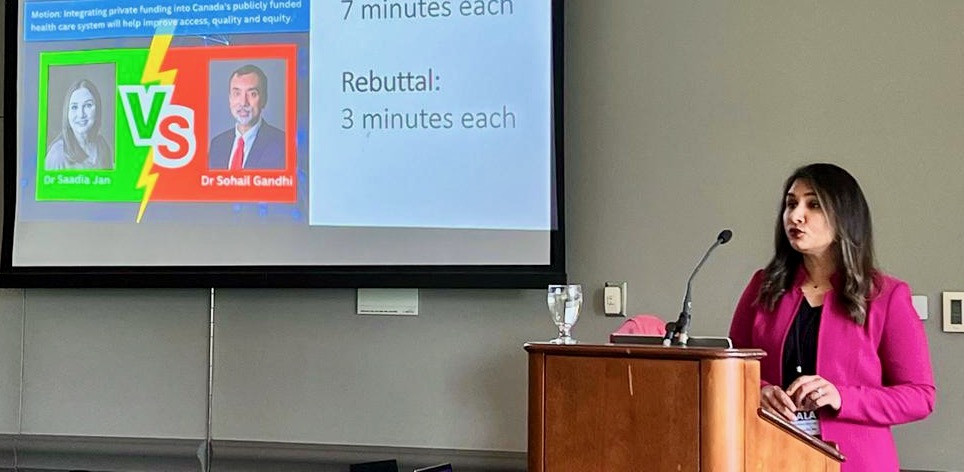
Recently, I was honoured to have been invited to participate in a debate hosted by the London and Area Muslim Healthcare Professionals group. The topic was a current hot button issue in health care:

 Integrating private funding into Canada’s publicly funded health care system will help improve access, quality and equity

I wound up having to speak against the motion, even though I actually do support the concept of increasing private sector involvement in health care with strong oversight. (I can already hear the usual suspects alleging I believe in “Two Tier American Style Health Care!”)

It’s a challenge to come up with ways to advocate for a position you don’t truly believe in, particularly when your opponent is the incomparable Dr. Saadia Hameed Jan. This woman is brilliant. Became a physician in an extremely patriarchal country (Pakistan), was an anchor on their national television service, then wound up doing more training in Canada and rose to the ranks of associate Professor at Western all the while maintaining a family practice. I had to be on my toes for this one.

Yours truly, and the amazing Dr. Saadia Hameed Jan

In the process of trying to figure out what to say, one fact continued to stand out in my mind. While one can argue about the merits of private funding, no reasonable person with any familiarity with our health care system could argue that it’s efficient.

During the debate I brought up the story of a patient of mine with cancer. She needed to see a surgeon, a medical oncologist and a radiation oncologist. When she got to the surgeon, the surgeon couldn’t access the actual imaging I had done (did have the written report, but any surgeon will tell you they want to see the pictures). The medical oncologist didn’t get the pathology report (fax machine blurred) and radiation oncology didn’t get a couple of things either.

All of which meant my patient had completely unnecessary delays in treatment. We all know that delays in treatment lead to worsened health care outcomes.

Yours truly desperately trying to hold his own at the debate.

Did the situation eventually resolve and my patient start treatment? Yes of course, after some running around and re-faxing of information and so on, but the point is that there was rather a lot of wasted time.

And that really was the genesis of my position in the debate. We have so many inefficiencies in our health care system right compared to other countries and all of that leads to waste.

Let’s look at a comparable patient in Turkiye. (Full disclosure – I do consulting work for Medicte, a medical tourism firm that provides cost effective health care services for Canadians in Turkiye). In Turkiye, my patient would have her entire health history accessible to her via eNabiz, an app on her phone that’s free to all citizens of Turkiye and allows them access to their health records. On going to see the surgeon, she would have been asked to consent to the surgeon looking at her health files, which would have allowed him, through his own software, to look at the images directly. The two oncologists could have gotten everything they needed right away as well.

Now take this patient, and multiple by 40 million Canadians, and just think of how much better everything in health care would work if we had such a system. No more specialists not getting full information. No more pharmacies losing prescriptions. No more need to repeat tests because you can’t access the tests that were done a short time ago.

Dr. Jan eloquently defending her position at our debate. (I cropped out the image of me sweating buckets!)

The really frustrating thing is that our politicians have known all along just how inefficient our health system is. Heck, Matthew Lister, a top health systems executive and now consultant wrote back in 2011 (!) that our health system had far too many bureaucrats. Back then we had 10 times as many health care bureaucrats per capita as Germany (!). Having watched health care devolve over the past decade, I dare say that ratio is worse now.

Just one example (albeit an important one) is the mess that is the digital health system in Ontario. The Ministry of Health has a digital health branch. Then you have a separate government funded arms length agency eHealth. But wait, there’s yet ANOTHER government funded agency, OntarioMD. This is complete nonsense. You don’t need three agencies to run digital health. Get rid of two of them already and have one unified vision for digital health.

I met with all three agencies during my term on the Ontario Medical Association Board and while it’s true that they are all staffed by nice people (except for one bureaucrat who’s a grade A prick), the reality is they often had competing visions for health IT and frankly, weren’t able to articulate a clear reason for their existence, or a vision for the province.

Now multiply this by all the other areas in health care and you get my drift. As Lister wrote:

Our current health-care processes are lethargic, inefficient and unproductive. Excessive approvals (“courage in numbers,” in the words of one health-care administrator) hinder decision-making. Overproduction of documentation was cited as a necessary waste to accommodate the whims of bureaucrats.

Health Systems and High Performance Operations Executive, Matthew Lister

This is why we have ridiculous situations in Canada like that of Christine Kaschuba, who’s had to wait years for badly needed scoliosis surgery, and now finds that she may not get it at all because the bureaucrats can’t decide whether or not to pay for the procedure.

Look, I realize that Canadians value our health care system and as such are always going to have strong opinions about the role of private companies in health care. But if we value health care so much, we should also hold our politicians to account, and ask them why we waste so much money on needless bureaucrats in the first place. Who would object to a more efficient health care system, where money is spent on doctors and nurses, as opposed to the loathsome bureaucrats who contribute to Ms. Kaschuba’s suffering.

Dr. Katherine Smart, past president of the Canadian Medical Association, said last year that the health care system is “collapsing all around us“. Surely if that’s the case, there has never been a better time for our politicians to show the courage, leadership and chutzpah needed to re-organize and reduce the health care bureaucracy and transform our health care system. Is that really too much to ask?

Dear CFPC Board, Provide Business Training to Family Physician Residents

Dear Board of the College of Family Physicians of Canada (CFPC),

There’s a whole lot of talk about the crisis in family medicine. Even the College of Physicians and Surgeons of Ontario felt compelled to do a cover story on this issue. I’m just a (not very) humble ordinary member of the CFPC, so I don’t need point out the ramifications to the health system to such learned members as yourselves.

I fully respect that it will take a multi-lateral approach to fix this. However, the impression one gets is that the CFPC is focusing on extending the family medicine residency to three years, from the current two.  This expansion has even been presented as a possible solution to recruitment woes.

Nancy Fowler, executive director of the CFPC, states that the current program is “way too compressed” to deal with increasing complexity of health needs in Canada, changing technologies, and greater awareness of the health impacts of racism. In the same article, she also notes that residents have told her they would like more opportunities in different kinds of practices and settings (basically that they want the extra year).

I think these arguments are weak. The most learning I ever got was in my first year of practice. There is simply no substitute for being out on your own.  Join a supportive group like I did, and you will be fine.

I do respect that the current training program may not be adequate. I’ve taught many residents myself over the past 25+ years. The amount of useless “clinic day backs” and forums, research days and “behavioural science modules” that the residents are asked to do has increased to the point where I wonder when the residents actually, you know, see a patient in real life. No wonder they may feel unprepared for having their own practice. 

University of Toronto and McMaster – I’m looking at you.

But the solution to that is, you know, fix the residency program. Not extend it with a year of the doing exactly the same nonsense that made residents feel inadequate to practice comprehensive family medicine to begin with. All that would mean is that after three years the residents will still feel unprepared.

Also, have you considered that if you do increase the residency by a year, you will have one year where NO family medicine residents graduate into practice? Would you care to explain to everyone how that will help the current shortage of family docs?

Anyway, if you do increase the CFPC residency to three years, would you at least add some practical training for our younger colleagues to the residency? I believe they would benefit from two months of their third year being dedicated to learning about the business of running a practice. How to hire people. Employment standards. Performance appraisals for staff. Negotiating leases. Finding the best prices for supplies. And yes, how to maximize your billings.

All of those above tasks (and more) are absolutely essential to running a comprehensive family practice. Yet NONE of those are taught in medical school or residency. In fact, in many universities, the feeling one gets when one brings up the idea that we should teach something as simple as billing is that you have spoken of that which shall not be spoken of, lest the appearance be created that your desire to practice medicine might even in the smallest part be less than altruistic and rather more about a hedonistic desire to generate a fair income.

The horror, the horror!

And yes, McMaster and U of T, I’m looking at you (again).

These are practical business skills all of us absolutely need to run a practice and isn’t the point of residency to, you know, make the residents comfortable running an actual practice in real life? Additionally, the reality is that we now face the existential threat of corporatization in family medicine.

This is how it works.  A corporate clinic, let’s call them  The Haleness Infirmary goes to a young family doc.  They whisper siren like inducements like “Let us do the business of medicine for you”.  “We do all the admin work so you can practice the medicine.” “We believe in high quality patient centred health care you can trust” and other alluring catch phrases.  These clinics are almost always owned by some large corporation. Let’s say in this case, a pharmaceutical chain called Buyers Pharmaceutical Bazaar. All to entice the young, business naive family doctor so sign up with their chain.

The Haleness Infirmary could care less about the doctor they hire, or the patients they serve.  What they want is the gold mine of patient data.  It allows them to create a digital profile of the patient to target you with ads to sell products, because, the patient is nothing more than a commodity to them to be exploited. 

It’s absolutely true that there are privacy laws that prevent individuals from collecting your personal information. Funnily enough, those laws don’t apply to software or AI.  Software can figure out a lot about you based on your spending habits (it’s why if you look up say mattresses on a website once, you get ads for mattress stores on your social media feeds for a week).

If you go to Haleness Infirmary, the software would identify you as someone who needs cholesterol pills, and therefore you would see targeted ads for cholesterol lowering products (all sold at a special discount at Buyers Pharmaceutical Bazaar) so you can buy more products (and get extra points if you enrol in their Choicest points program which collects even more of your personal data).  Nice ecosystem.

Don’t believe this is their goal? When I was OMA President, one of the pressing issues for OMA Legal was the fact that doctors who left (or were asked to leave) these fancy corporate owned clinics– suddenly found they no longer had any access to their notes or patients’ charts (“owned by us and only for use by our employees – and you are no longer one”).

The holier than thou types that haughtily profess that they are better than us for not teaching basic business skills of course would be the first to be horrified that patient data was being used for marketing (gasp!) and making money (double gasp!).  The irony that their own belligerent refusal to teach basic business skills drives physicians to these corporate clinics is, of course completely lost on them.  It’s hard to see irony why your head is constantly tilted upwards befitting your lofty altruistic ideals.

Extend the CFPC residency to three years if you must. But for the love of Allah/God/Yahweh/insert deity of your choice, at least give our future colleagues an appropriate education that teaches all aspects of running a comprehensive family practice.  You will be doing them, and patients, a huge service, whether you realize it or not.

The Admin Burden That’s Really Killing Family Practice

Recently, there’s been a lot of talk about the “administration burden” faced by family physicians. The Ontario College of Family Physicians estimates family doctors spend up to 19 hours a week on “paper work”. Given there are only so many hours in a week, the more hours spent doing paperwork, the less hours seeing patients.

It also contributes to situations where people just get too frustrated with family medicine, and quit. Twenty percent of Toronto family doctors are planning on leaving within five years. This bad karma is not lost on medical students, who, as I mentioned in a previous blog – are avoiding family practice like the plague, worsening a crisis that has been years in the making.

But what exactly is this “administration burden”? What’s the “paper work” that is driving us all to frustration? I would argue it’s not paper per se, it’s digital.

That’s not to say there isn’t paper. I frequently get asked for completely pointless sick notes from employers, impractical forms to return to work and seemingly useless – “we agreed your patient was permanently disabled, but we want a one year update to make sure your patient is still permanently disabled” forms from the pointy headed bureaucrats at insurance companies. But I’ve taken a somewhat mercenary approach to those forms in order to keep myself sane.

A sick note costs $20 and takes about a minute to write. A form the insurance company asks for usually takes a few minutes to fill out and I charge $40-$175 depending on the form. I reconcile the fact that these forms are a burden, with the fact that at least I make money out of them. While somewhat unscrupulous on my part, it keeps me from totally blowing my lid whenever I see one of these.

No the real admin burden comes from the completely absurd and unrelenting avalanche of reports/lab work/follow up notes – all of which present to me in a haphazard way, seemingly designed to drive me to psychiatric medications.

I took the Friday of Eid ul Fitr off to celebrate with my family. On Saturday, I logged into my Electronic Medical Record (EMR), correctly realizing that if I waited until Monday, the EMR inbox would crush my sorry soul.

Unsurprisingly, I had a total of 75 labs/reports/messages about patients to review. It wasn’t so much the number of items to take care of, (truly if they were straight forward it wouldn’t have been too bad). It was rather how badly and inefficiently the information came to me that sucked all of the happiness I had enjoyed on Eid from my spirit.

One method of getting information to me is via a system called Hospital Report Manager (HRM). I look at HRM in my EMR and see a report on a renal transplant patient from Sick Kids. But the note was “uncategorized” which meant that I had to go into the HRM software and enter the category “nephrologist” in the report. The VERY NEXT report in my HRM in box was……the exact same report on the exact same patient, but this time HRM had categorized the report as being from a cardiologist – so I had to go in, change the report once again to “nephrologist” and I now have two copies of the same report.

By the way – Sick Kid’s hospital provides exceptional medical and nursing care to my patients, but ever since they switched their hospital IT systems to a company called EPIC there has been no end of issues like this. The only thing that software is epic at is causing physician distress.

That’s not all. HRM has more goodies awaiting for me. There’s a report from my colleague Dr. Collings on his expert management of a wrist fracture on one of my patients. Thorough, comprehensive, and well done. Except HRM has auto-categorized him to be a gynaecologist So yes, I either have inaccurate information in my patients chart, or I go back and re-categorize the report to reflect that Dr. Collings is an orthopaedic surgeon.

Next up, HRM has a report from an Emergency Room physician about a patient who was seen and apparently had some abnormal bloodwork. Not life threatening, so asked to follow up with me. Only problem is the blood work from the hospital doesn’t come to me via HRM. Now I have to go to that patients chart, and access yet another system called OLIS, log into that and download the lab work from the hospital. But wait the note from the ER was unfortunately late getting to me (about 10 days out). OLIS is set up to auto download for the past seven days, unless I click more buttons, and back date – which I have to do.

Next up, a report from HRM that a patient of mine had a Covid swab done. But HRM won’t tell me if the swab was positive or negative. Just that it was done. Now I go back to that patient chart and access OLIS where the result is, adding yet more steps to my day.

Next come messages (yes, that’s on top of HRM and OLIS). I note a message from the local Shoppers Drug Mart asking for a renewal of blood pressure medications for a patient of mine. Only problem is that a brief look at the chart shows I sent a one year supply of that same medicine to the Shoppers three months ago, and they accepted this and downloaded it. I tell the pharmacy staff who tell me they “can’t find it” which leads to……well, let’s just say a deterioration in the conversation.

As an aside, while I’m not allowed to endorse any specific pharmacy, I will say I’ve generally found care to be much better when provided by smaller, independent pharmacists who build relationships with their patients, rather than big chains that just seem to fly in itinerant staff.

Anyway, you get the point. In total it took about 3 hours on Saturday to sort through this mess and it just doesn’t have to be this way. The reason I wrote a blog about Health IT in Turkiye was to show that other countries do a much better job of managing this burden. I’m sure there are other examples and we need to learn from them.

The vast majority of my family practice colleagues practice family medicine because they genuinely like their patients, like providing comprehensive care, value the relationships built over time and feel like they make a difference in peoples lives. But unless we do something about this administration burden, I fear more and more will leave the profession, because at some point, being human, they just won’t be able to take it any more.

Canada’s Health Care Landscape has Changed Since the Canada Health Act

I’m honoured to have Dr. Silvy Mathew guest blog for me today. She’s a former member of the OMA Board, former member of the Physicians Services Committee, has a Master’s in Health Policy and Economics, a Certificate in Global Health and is hands down one of the smartest people I know.

Health care in Canada is governed by the Canada Health Act, a federal act that essentially states that medically necessary care provided by physicians and hospitals, will be covered by public insurance and administered by each province. 

The Act was passed in 1984, and is reflective of the type of acute medical care practiced at the time. However, in 2023 (and for at least a decade prior), medical care, through technology, medical advancements and aging, has changed drastically. Publicly covered care now, however well intentioned, is sorely lacking. Ironically, because of that, it is also very expensive.

For exampe, we lack public pharmacare  for adults despite being promised this by 2006 by then Prime Minister Paul Martin. (There is some pharmacare for seniors and children).

We lack dental care. We lack appropriate home care in an aging population that is getting weaker and frailer. We lack coverage on physiotherapy. In an era of increasing mental health burdens we lack psychotherapy.

The list goes on and on, notwithstanding the severe social issues that contribute to many of these issues (healthy food, exercise, housing and all the other social determinants of health).

Because we have not invested upfront, we pay significant costs in expensive procedures, prolonged hospital stays, and medications much of which could be minimized or avoided.

Why does it matter?

McKinsey Global Institute published a prospective analysis of 200 countries, looking forward on the impact of 52 diseases over the next two decades to quantify the social and economic gains if health is made a priority by government and private sector.  They quantified the value of health to the economy and showed that if using the existing interventions we have today, we can reduce disease burden by 40% in the next 20 years and extend “active middle age by 10 years”. This translates to an economic return of $2-$4 for each $1 invested. That’s remarkable. 

What’s the hold up? The lack of foresight, upfront cost and political inertia is costing us.

We have a shortage of healthcare professionals, and we use the ones we have, in extremely inefficient ways. For example, the lack of a proper digital health infrastructure in Ontario (like they have in Turkiye!) results in duplication of services, poor coordination, and inconsistent delivery of health care. Even the electronic services we DO have don’t capitalize on Artificial Intelligence (AI).

Technology advancement is a double edged sword. There are benefits to patients in terms of ongoing updated guidelines for care. But health care workers are having to do more, monitor more and change practice styles more, all leading to more individual HCW time.

Each test, often results in further testing or reassessment down the line, which compounds the problem. It’s rare that physicians just close the door on one issue a day.

Again, at the time of the Canada Health Act, we were practicing acute, limited health care. Today’s world is focused on prevention and chronic illness with monitoring. That shift has placed a huge burden on physicians time to review, inform/educate, coordinate new referrals and remind individuals to do monitoring.  Much of the time, it seems like we still don’t know how much benefit we will get from this. Hopefully the data will show we were correct to do this.

To collect and review the data though, we would need better digital systems to capture the information, which we don’t have.

Some people imply this will be managed with more “healthcare team members”. I think a huge solution for this particular issue is investing in technology and AI solutions.

Right now, we are trying and failing at holding back an avalanche.  We have technological advancements, but limited access to those. We have lack of integration of our digital infrastructure. An ageing population is leading to increased needs. But an aging health care work force is seeing retirements and illness leading to less access. New providers are available but their impact is less clear due to lesser training and duplication of services leading to increased costs. Delayed diagnoses are leading to worsened health outcomes and more expensive care. There is less preventative care due to a shortage of family physicians which leads to delayed diagnoses, worsened health outcomes and more expensive care. Lack of care giver support and home care support means that people are leaving the workforce to care for ill relatives which leads to hospital dumping. Burnout is endemic in health care, due to a feeling of disrespect and an inability to practice best patient care.

And so, physicians are in all areas of the country are giving up and closing their practices.

In the meantime, while we wait for our wishes to come true, there is opportunity to push the envelope and to drive change. People are desperate and they want options.

When access to health care is inadequate, people will choose out of jurisdiction options for delayed procedures and even screening tests. There is a moral hazard involved. People are taking risks by going elsewhere under the assumption that they will be taken care of properly.

However, with any challenges, there are opportunities. Some “non-medically necessary” medical tests (eg. screening for vitamin D) are not covered by medicare. However, it’s increasingly viewed as an early intervention. We will only see technology increase these options as better screening methods become available, and governments delay paying for them. Perhaps instead of waiting for open heart surgery or stenting, there may come a day where preventative procedures can be used to dissolve plaque in the heart arteries.

Health care faces inescapable and exponential change. However, it is unlikely, at least in the near future, that Canada (or any country’s) public health system will be able to keep up with technology and demand.

Oh for some strong, principled leadership that can see these challenges and address them head on, without resorting to political sound bites.