

Preparing for the August Covid-19 Wave in Canada

We’ve learned much about COVID-19 since the first infection was announced in 2019. This has helped us develop better treatments and better prevention strategies. We’ve learned that COVID has settled into a fairly consistent annual pattern. There’s a smaller summer wave (end of July to mid-September) and a larger winter wave (November to January). The larger wave ends around the time flu season starts.

This year the summer wave has started in the United States. Wastewater concentrations of COVID are starting to increase in southern and western states (yes they are still low, but they are trending upwards). ER visits with proven COVID cases are also growing in the southwest. So the wave is beginning.

As I write this, the Canadian wave has not yet begun. In particular, the Ontario numbers are still low overall. Local fluctuations are occurring however, and if trends hold as they have done over the past few years, we can expect the COVID wave to start in August, and peak in early September.

The current U.S. wave is due to an Omicron strain of the virus designated as Nimbus. Thankfully, it appears that the Omicron strains cause less serious infections (though may spread more quickly). This means that existing immunity from prior infection and immunizations continue to provide some meaningful protection against severe disease.

With that in mind, what should Canadians do to prepare for this summer wave? For healthy people, I actually think we’ve reached a point where it’s unreasonable to say “avoid COVID at all costs.” With COVID being so widespread and so frequent, our goal should now be to take a risk-based approach.

What EVERYONE Should Do

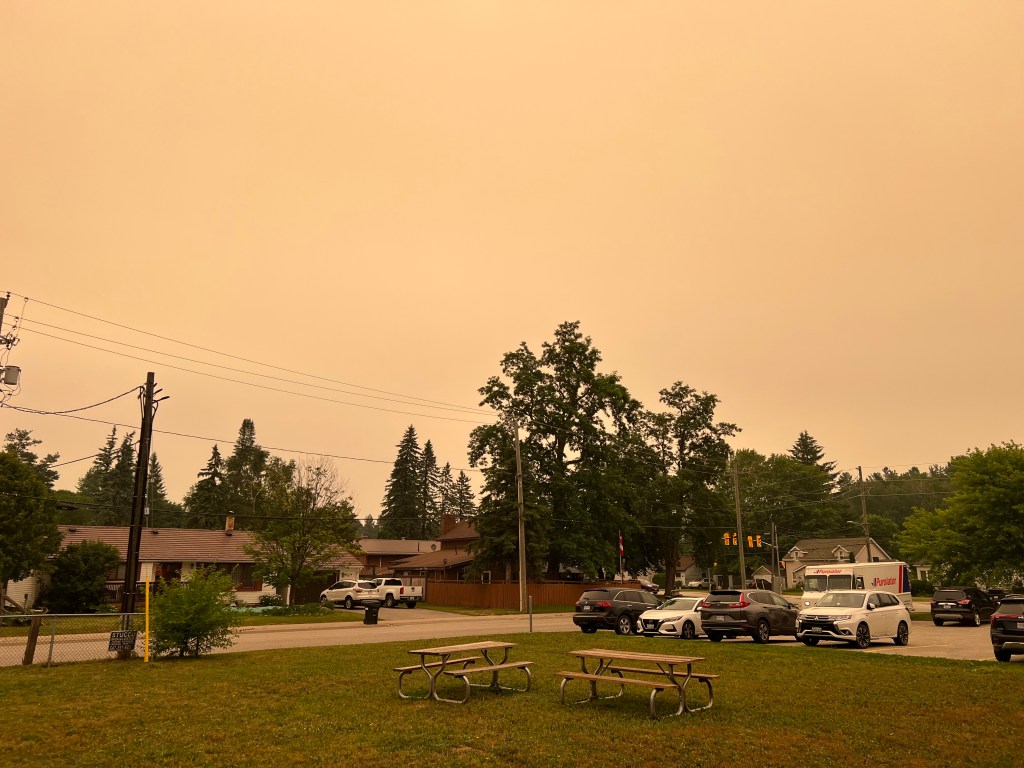
We all benefit from better air quality, particularly indoor air quality. While all of us love air conditioning, opening windows when practical really helps increase airflow circulation and is very beneficial. Now let’s be clear if it’s an exceptionally hot day, or if it’s a wildfire smog filled day where it looks like the surface of Venus , then obviously the windows should stay closed. But when practical, opening windows is good for air quality.

Make sure you have HEPA air purifiers. I have one in every room in my office. Putting an air purifier in high volume rooms in your home is a good idea.

Social gatherings should also be outside. Fresh air and sunshine – just what your grandmother ordered.

I appreciate this next bit of advice will go over like a lead stone for some people, but I think it’s important that you keep a few well-fitted N95 masks around as well. You can buy these online. I’m not suggesting you need to wear them all the time, I believe we’re past that. However, in the event that a wave hits and you have to go to a crowded environment, or you’re feeling unwell, it’s better to have these ready and available, rather than scrambling to find one at the last minute.

Similarly rapid antigen tests are also useful to keep at home. You can get these from most drug stores. They are unfortunately a little less sensitive for Omicron than they were against the early variants, but they’re still fairly useful. Again, I’m not suggesting you swab every day if you’re feeling well. But if you do develop flu-like symptoms in August, then it’s helpful to already have the tests at home. Please note that a negative test does not completely rule out an infection, especially during the first 24 hours of illness. Doing a second test a day or two after your first test will improve the accuracy of the test.

If you do become ill, then of course, I would hope that you would have the good manners to stay at home. Symptoms of a covid infection are generally the same as most other respiratory illnesses (sore throat, cough, low-grade fever, fatigue). Most physicians now do virtual visits, and so you can still arrange to speak to a physician or video call them if you’ve got these types of symptoms, without infecting their whole waiting room. If you are sick, please have the common decency to avoid visiting people who have significant health issues, as those people, if they get COVID, have a significantly higher chance of deteriorating rapidly.

Get immunized! Most patients should get a yearly Covid shot, generally in the fall. Enough of the clot shot/fakecine/frankenshot/globalist serum/fauci juice nonsense. By Aug of 2024 over 13.7 BILLION Covid Vaccines were given worldwide (including over a 100 million in Canada). None of overwrought, neurotic claims about how we’re all going to die if we got the Covid shots have come true. Protect your self and your loved ones and get an annual vaccine (click here to get your shot).

And of course, there is the same advice that grandmothers have been giving forever. Eat right, exercise regularly, maintain a healthy weight, control your diabetes, quit smoking, take your vitamins (2,000 international units of vitamin D daily and 500-1000 mg of Vitamin C daily would be a good start for Canadians). Doing all of that will not prevent you from getting COVID, but they certainly are associated with a much better outcome if you do get COVID.

What Those Who are Elderly or Have Significant Health Issues Should Do

In additions to the above, significantly ill or immunocompromised patients might benefit in getting a Covid vaccine twice a year. Please discuss this with your doctor. Additionally, knowing that they are at higher risk, they should be prepared to avoid indoor activities with the general public during the coming Covid wave. For example, many grocery stores deliver now, so there’s no need to go shopping. Avoid larger indoor events where possible. If travelling by bus or plane, just go ahead and wear a mask during a Covid Wave. Call your doctor when you first get sick as you may qualify for some of the newer treatments for Covid.

The last word.

This year appears to be trending for a moderate COVID wave as opposed to a severe one in August. If we all take reasonable, cautious precautions, we can hopefully keep it under control.

Critical Decisions Looming for Health Care

The past three months have seen us undergo a stress like we’ve never seen before in our lives. People have lost their jobs, been socially isolated, and, importantly, non COVID healthcare has been delayed significantly. It’s estimated that 12,200 hospital procedures are delayed each week in Ontario alone. (Back of napkin math suggests 125,000 procedures have been delayed since the start of the pandemic).

In Ontario, these sacrifices have had the desired effect. The number of patients with serious complications from COVID has been trending down. Because we are not able to test everyone, I look at the number of patients who are in hospital due to COVID, and especially those who are on a ventilator, as an indication of how widespread the disease is. Because Canadians did what was necessary to protect others, our hospitals have not been as overwhelmed as many had feared.

However, we are now facing another critical situation in healthcare. The complications that are arising in the people who had their healthcare delayed are reaching alarming proportions. Even at the best of times, our healthcare system was overburdened and overwhelmed. To add to all of that this additional backlog, and the fact that many of those patients have deteriorated and are sicker, and, well, you understand the dilemma we are facing.

I don’t have a degree in biostatistics, like current Ontario Medical Association (OMA) President Dr. Samantha Hill. I can’t crunch all the numbers and give you a statistically valid analysis of what we are facing. I can only speak to what I’m seeing in my own practice.

  1. a patient with significant stomach pain who had scans delayed for a month, only to discover cancer
  2. a patient who I diagnosed with melanoma, who still hasn’t gotten the required wide excision, and lymph node biopsy 8 weeks later
  3. a patient who sent me an email clearly indicating the desire to commit suicide because of the mental health effects of this pandemic (I got a hold of them and appropriate measures have been taken)
  4. a patient with a cough since January who still hasn’t seen a specialist
  5. a sharp increase in patients requesting counselling or medications for the stress and depression directly caused by the effects of the pandemic
  6. at least 5 patients who were already waiting for joint replacement surgery now delayed even more

Keep in mind that I am just one comprehensive care family in doctor in a province that has almost 10,000, and you get a sense of the scope of how much these delays are going to affect people.

This is why there is a real dilemma for those who make decisions about when and how to open up health care (and everything else). If we loosen restrictions, start opening the economy, and allow scenes such as what happened at Trinity Bellwood’s park, the number of patients with COVID will increase. But if we don’t, other people will die, or at least suffer life altering illnesses, from non-COVID related diseases.

In cold, unfeeling numbers, the worry by people like my esteemed colleague Dr. Irfan Dhalla is that we will accept between 10-40 deaths per day from COVID in Ontario. But the reality is that about 275 people a day die in Ontario from a myriad of causes (cancer, heart disease, stroke, suicide etc). What if the price of lowering the 10-40 numbers to zero, is to increase the 275 to 325? To be clear, I don’t know if we are at that point, and even more frankly, I doubt Ontario’s archaic health data systems could even help us figure it out. I just know that has to be a critical concern going forward.

So what can be done? The OMA has released a document on emerging from the lockdown, referred to as “The Five Pillars” paper. This is an excellent paper and it is worth reading. I would, however, add the following thoughts.

First, it’s obvious now, that wearing face masks going forward is essential. A look at Japan shows they did everything wrong, except wear masks, and they have one of the lowest COVID rates around. (And yes, I and others told people not wear masks before and in hindsight that information was wrong). This is particularly important to mitigate the expected second wave of COVID in the fall.

Second, we need to move procedures out of the hospitals where possible. Many procedures like colonoscopies, cataract surgeries, diagnostic imaging, minor surgeries and so on, can be done outside of hospitals. Ontario has an Independent Health Facilities Act which licences these premises and ensures that they follow a high level of standards. They tend to operate more efficiently than hospitals and can see more patients than hospitals (whole bunch of reasons why). Previous Ontario Health Minister, “Unilateral” Eric Hoskins stopped licensing them, and it’s a decision that desperately needs to be reversed.

Third, we need to get our health data collection done properly. In Ontario, the plan was to develop Ontario Health Teams (OHTs) throughout the province that would allow the different agencies that cared for a patient (hospital, home care, physicians etc) to co-ordinate care. As Drs. Tepper and Kaplan point out, “fighting this pandemic requires collaboration from every part of the system and the patient voice. That is the promise of OHT.” To do this properly requires seamless electronic integration of a patient’s health record, and this should also serve as the basis for collecting COVID data. A system like this could also aid with contact tracing if done properly.

For the sake of the health care of all Ontarians, we need to open up health care and the economy, and we need to do that sooner rather than later. With a little bit of vision and forward thinking, it’s possible to do this in a safe manner. Let’s hope that’s what we see in the next few weeks.

Better Contact Tracing Essential: Requires Improved Public Health Systems

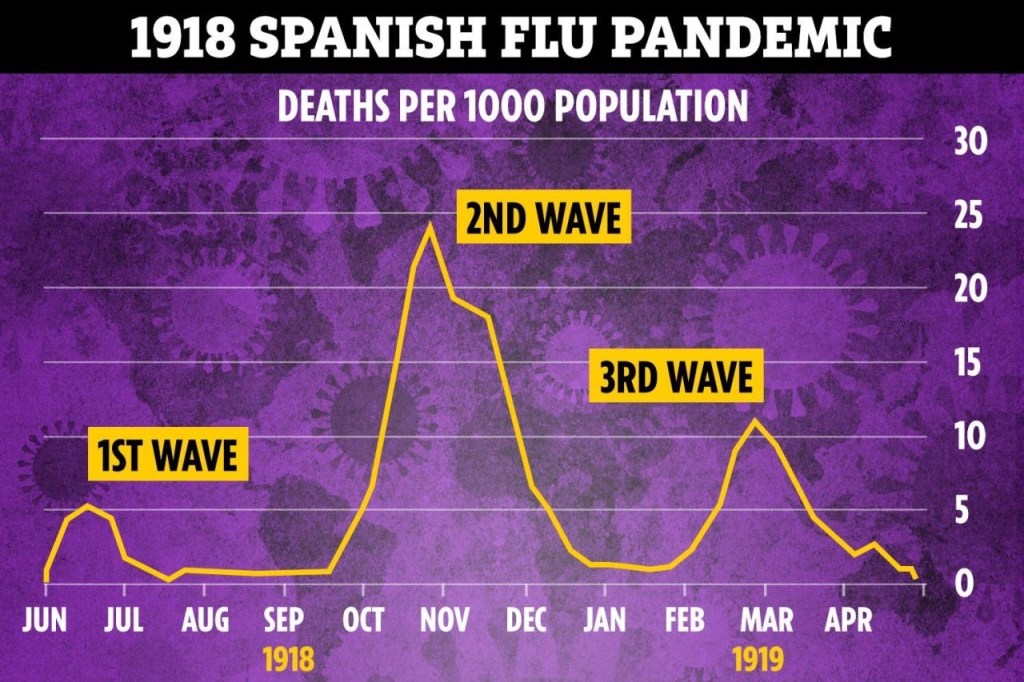
Recently, I came across the following graph of the waves of the Spanish Flu in 1918-1919. I don’t know the exact source of this graph. However, the information on the graph lines up exactly with what the Centre for Disease Control (CDC) describes as the three waves of the Spanish Flu.

To be clear, nobody at this time knows if the same pattern will be followed by COVID19. We know that the flu tends to have decreased transmission in humid weather, but we don’t know if COVID19 (caused by a different virus) will follow that pattern. Or even if that will make a difference during the first season of a pandemic. There’s a nice video explaining that here.

However, should this pattern be followed by the COVID19, suffice it to say that we are all in for a very long road ahead.

So what can be done to reduce the intensity of the second and third waves (if they come)? Physical distancing of course is number one on the list. While many physicians (myself included) suggested not wearing masks in public initially, we know know that doing so will keep YOU from spreading COVID19 if you are a carrier. So wear a mask. Finally, we need a robust tracking and isolating system (aka Contact Tracing) for people who test positive for COVID19, which frustratingly, we don’t have right now.

Widespread testing for COVID19 along with Contact Tracing is what the four most successful governments in the world have done to control the spread of COVID19. We need to learn from these governments. But for now it is something that we seem to be unable to do in Ontario, and there are multiple reasons why.

Piecemeal Structure of Public Health Units (PHUs)

The first is the piecemeal structure of PHUs in Ontario. Now to be clear, PHUs are manned by terrific doctors and front line staff. I had the pleasure of meeting many of them during my term as President of the Ontario Medical Association and they are all excellent, hard working people. But the infrastructure of PHUs, from the point of view of this family doctor, leaves a lot to be desired.

By my count, there are about 40 Public Health Units across the Province. To a large extent, they work somewhat independently from each other and use different referral forms. My office has patients from patients in both the Grey Bruce and the Simcoe Muskoka health units, and while the staff in both units is excellent, it’s frankly annoying to have two different sets of forms to refer patients (and have two different formats of reports come in).

Worse, not all of the Public Health Units are on an electronic records (seriously, some use paper), and there is not one consistent electronic record for PHU’s across the Province. This only complicates the collection of data and the ability to Contact Trace.

Curiously enough, addressing the disjointed nature of the public health units was something that the current provincial government tried to address early in it’s mandate. Part of the initial plans were to reduce the number of PHUs and standardize the processes. This was supposed to result in savings of 25% in the PHU budgets. (NB – personally I can’t see that much in savings, I’m thinking closer to 10% would have been achieved).

Of course given what happened with the COVID19 pandemic, and the “two second sound bite” nature of our media reporting, the story has become “Doug Ford cut spending – we have a pandemic – solution – spend more”. It’s a nice simple argument. “Hey we spent more money, problem solved.”

However, just spending more on public health (and to be clear again – I support wise investments in public health), isn’t enough. There’s no sense in spending more on a disjointed system. What’s needed is to get all the PHU’s across the Province to integrate into one standard electronic system of record keeping, so that they can more efficiently and effectively contact trace.

More Wide Spread Testing for COVID19

Next of course, we still need more wide spread testing, and ideally we need something called “point of care” testing. Once again, the four countries I referenced earlier led the way in testing as many people as possible. So this needs doing as well.

APP for Contact Tracing

Finally, we really should authorize a provincial app for Contact Tracing. Alberta already has one. Alberta has taken many precautions to ensure that patient privacy is protected (app does not use GPS, has a randomized non-identifiable ID, erases data every 21 days etc). We could just use that one, or a more Ontario centric one like this excellent one developed by physicians . It has some what more features and ease of use but uses GPS. Better yet, why not link and App to a patient’s own health care portal like MyChart, which already integrates COVID19 test results?

As the New York Times pointed out, Contact Tracing is hard. However, we need to get on with it. Without effective Contact Tracing, we can’t mitigate against the potential second and third waves of this pandemic. Without mitigation, the economic and health disaster will continue and untold millions more will continue to suffer.

Here’s hoping that instead of just throwing money at a problem, governments of all levels invest smartly at the right tools (standardized PHUs, contact tracing APPs etc.) to deal with the COVID19 Pandemic. The alternative is too frightening to consider.