It Appears Family Doctors are Giving Up…

Recently, I attended the Menopause Society’s Biennial National Scientific Conference. I’ve long felt that medicine as a whole has done a poor job on women’s health issues, and wanted to learn more about what I can do to better help my patients. The conference itself was packed (over 600 attendees). Half of them were family doctors like myself. As with all medical conferences, not only did I get the chance to learn some valuable information to benefit my patients, I got a chance to network with colleagues from across the country.

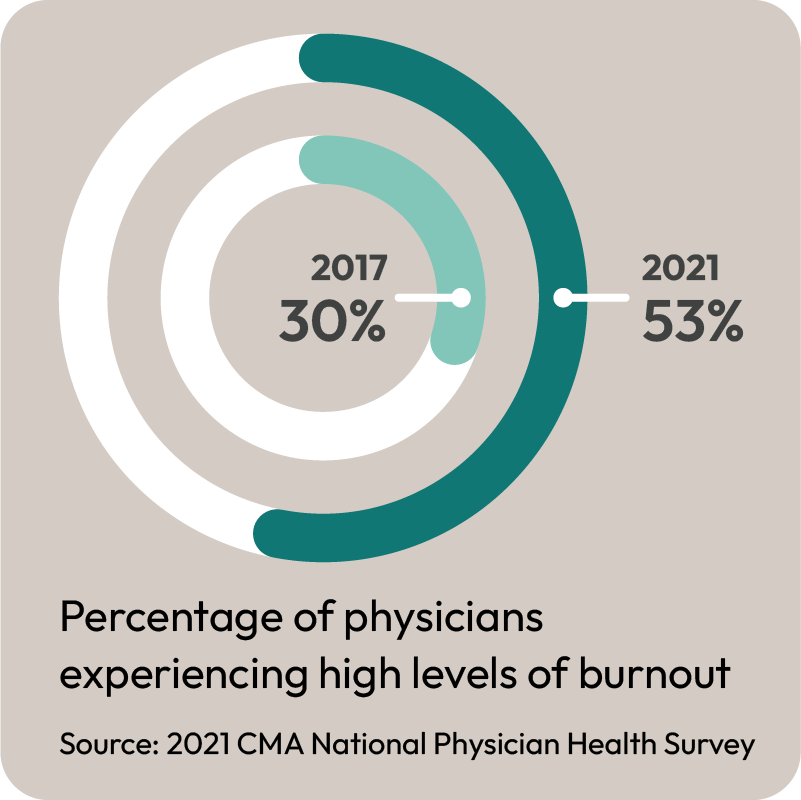
Sadly however, a rather large number of family doctors I met were in a similar state of mind. They were tired, burnt out, and were actively exploring ways to stop practicing family medicine. In short, they were all giving up.

A dear friend of mine is taking 6 months off her practice to re-evaluate her work (despite having helped countless numbers of people over the years). Another physician has found happiness working part time at a specialty clinic and occasionally doing locums (vacation relief work). Another is actively looking to find someone to take over his practice. Another is simply going to close her practice after two years of trying to find someone to take over. Another…….ah, you get the point.

About one -third of the family doctors I spoke to were all at some stage of quitting family medicine. Given that Canada has 6 million people without a family doctor – which is already a disaster- it’s safe to say our health care system won’t survive if this happens.

About the only part of the country where family doctors seemed to want to carry on was Manitoba. They cited a new contract that fairly compensated them for their work, and a reasonably positive working relationship with the government. I guess that’s why Manitoba set a new record for recruiting physicians last year. Paying people fairly and working with them co-operatively will attract new talent? Who knew?

(As an aside, Manitoba is also the only province I am aware of that has a specific billing code for counselling women on issues related to peri-menopause and menopause).

But I digress. The question becomes why are so many family doctors planning on giving up? I would suggest it’s a host of issues. There is an increasing level of burnout in the profession. It’s primarily driven by by the administrative workload which has gotten out of hand. For example, I recently went on vacation to Manitoulin Island, and while waiting for the ferry, I couldn’t help but pull out my laptop and check my lab work and messages. I knew that if I didn’t check my labs every day, the workload on my first day back would be crushing.

Me in my car, waiting to get on the Chi-Cheemon ferry to Manitoulin Island, checking my labs and messages on my Electronic Medical Record (dummy chart on screen)

There’s also the constant delays in getting patients tests and referrals to specialists. The most common message I get from my patients is something along the lines of “I haven’t heard from the specialist/diagnostic test people yet, do you know when it’s going to be?”

And of course there is the ever present “But my naturopath told me you could order my serum rhubarb levels for free” and “I did a search online and it told me I need a full body MRI”.

The worst part of it of course, is that the family doctor becomes the brunt of the frustration and anger that patients express when the health care system doesn’t live up to their expectations. I had to tell three patients (while I was on vacation) that, no, I couldn’t do anything to speed up the specialist appointment. Four more were told that I had in fact called the pharmacy with their prescriptions – and I had the fax logs/email logs to prove it. And so on…

So what can be done?

In the absence of anything else of course, the first thing is to pay family doctors more. Recently, the Ontario Medical Association (OMA) and the Ministry of Health (MoH) have rolled out the “FHO+” model of paying physicians. There is a slight bump in pay (about 4% for the next fiscal year over this year). There is also an acknowledgement that administrative work needs to get paid and some other tweaks. It’s perhaps a start, but in the current system, a 4% raise will not stop the haemorrhaging of family physicians.

What really needs to happen is for Ontario to forcibly, quickly and rapidly move to a modernized, province wide electronic medical records system. I’ve been talking about this for years and years and even presented on this to eHealth Ontario (in 2018!). But I have not been able to explain it as well as my colleague Dr. Iris Gorfinkel did in her recent Toronto Star Op-ed. (It’s a really good read and I encourage you all to read it). To shamelessly quote her:

“A fully integrated, province‑wide, patient‑accessible electronic health record system should no longer be viewed as a luxury, but an essential part of the solution to Ontario’s existing crisis…… It would free family doctors to do the work only we can do.”

Secondly, we need to rapidly move towards team based care with family physicians as the lead of the team. While the MoH is announcing teams proudly in the hopes of connecting patients with doctors, the rollout seems kind of uneven. They amount to a call for proposals as opposed to a specific evidence based structure of how these teams should run. There’s also no specific role guarantees for family physicians in these teams (beyond saying they are important). The process seems slipshod at best.

Finally, at the end of the day we must not shame or diminish those family physicians who have given up. Many of them have spent years, if not decades fighting for better care for their patients. The fact that the unrelenting bureaucracy of our cumbersome health care system finally got to them and made them give up should be cause to shame the people in charge of health care, not the individual physicians.

Let’s hope that message gets across.
Sunday Snippets: Nov 24, 2025

Another in a weekly series of brief snippets of health care stories that bemused, intrigued and otherwise beguiled me over the past week along with my random thoughts on the matter.

Item: Dr. Sarah Giles writes in the CBC about how she was forced to cut her hours because of the burnout.

My thoughts: Kudos to Dr. Giles for talking so openly about this. Alarmingly few of my colleagues are willing to talk about burnout and how the system is affecting them. Instead they suffer in private, and that’s not healthy for them OR the patients they serve. It’s an important story that needs to be told over and over again.

Item: “Involuntary medical treatment” for people with addiction issues seems to be all the rage. A great article in the “Conversation” shows that this won’t solve anything, and in fact will make things worse.

My thoughts: I really can’t believe we are even discussing this. It has been well known for…..well forever, that people will not get better unless they want to seek help. We have to focus on making seeking help easier, not forcing them.

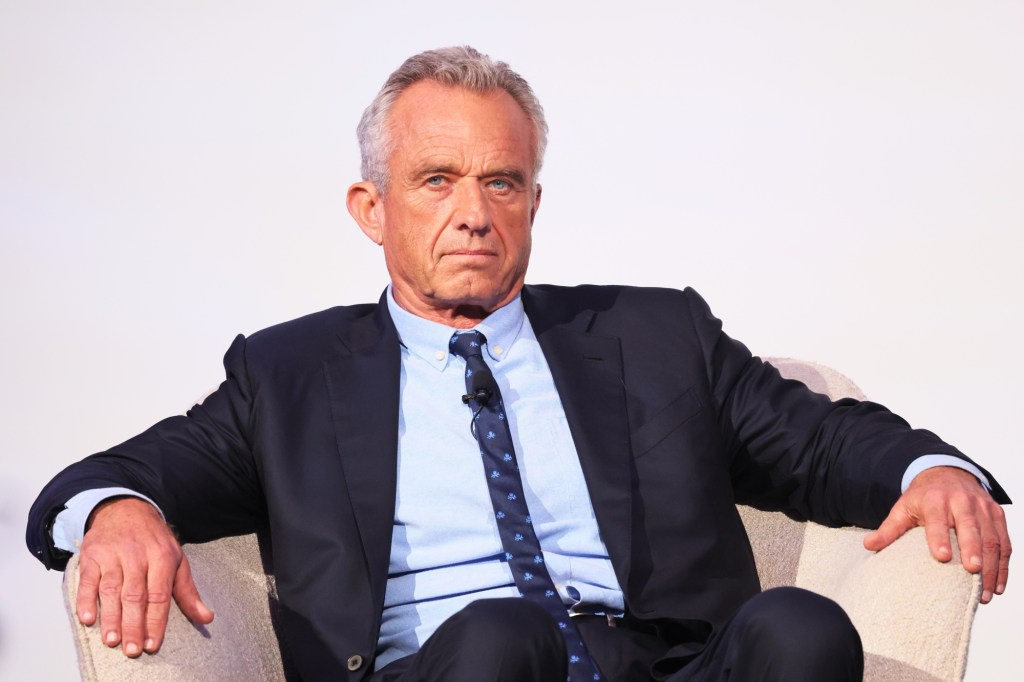
Item: The always excellent Dr. Katelyn Jetelina, who most of my colleagues know as a superb voice of reason and information during the height of the Covid pandemic, writes about her feelings now that RFK junior has been nominated to lead Health and Human Services in the United States.

My thoughts: My heart goes out to her and all the hard work staff who have tried keep us all safe during the pandemic. They deserve better.

Robert F. Kennedy Jr., a leading American Anti-Vax conspiracy theorist, now tapped to head Health and Human Services in the United States

Item: TV Ontario had a segment suggesting that foreign trained physicians could help tackle Ontario’s physician shortage.

My thoughts: I’ll shout it out again, we already have enough family doctors in Ontario who are already licensed to practice medicine in this province and are familiar with the Ontario Health Care system. The number is approximately 6,000 or so (see the graphs in the linked blog for details). Can we just not make it easier to practice family medicine instead??? If we can get even 1/3 of those doctors already in Ontario to start a practice, we would end this crisis.

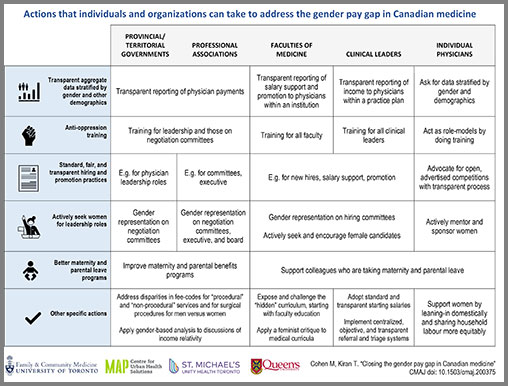
Item: Great article on the physician gender wage gap in Health Debate. Clearly shows that the gap is real and needs to be corrected.

My thoughts: One of the best accomplishments of the OMA Board when I was on it was to publish the gender pay gap report. It was arguably too late, but I believe we were the first PTMA to discuss this and to use that as a basis for future negotiations work. While I’ve had some issues with how negotiations have been handled since, I am quite comfortable in saying that positions of the OMA in negotiations would take this into account and that there is likely to be funds demanded to narrow this gap. The blame for the fact that there has been no progress on this lies mostly at the feet of the Ministry of Health. We don’t have an agreement yet on how to divide the arbitration award – and that means the Ministry is not responding to OMA proposals that would close this gap. Shame on them.

Item(s): Alberta announced that it hiring a large number of nurse practitioners to become “primary care providers” to patients who don’t have a family doctor.

My thoughts: The National Health System (NHS) in Britain is under fire for the fact that it too tried to replace the work done by fully trained physicians, with staff who were likely well intentioned, but had less qualifications. It turns out there is significant risk to this, and likely a markedly increase cost in providing health care. The article “My wife died because the NHS used cheap labour” should be, in my opinion, required reading for any politician/health care bureaucrat who thinks they can provide better care by using less trained people.

That’s all for this week. Back next week (probably) with more.

Sunday Snippets – Oct 13, 2024

Another in a weekly series of brief snippets of health care stories that bemused, intrigued and otherwise beguiled me over the past week along with my random thoughts on the matter.

Item(s): CBC new is reporting that with more food insecurity, physicians are being urged to be on the lookout for scurvy (!!). Similarly, Canada Health Network reports that ferritin (iron) levels are being re-visited to help better identify those with iron deficiency. More concerning studies on the link between erythritol and heart attacks. While there have been no randomized control trials, the number of studies correlating having too much of this very common artificial sweetener to blood clotting disorders (heart attacks, pulmonary emboli, strokes) is very concerning. And finally Medscape published a study showing eating Ultra Processed Foods leads to weight gain.

My thoughts: I’ve long maintained the North American diet is garbage. It’s embarrassing that first world countries like Canada and the US put so much crap in our food. The US for example has over 10,000 chemicals that it allows in its food. Compare this to Europe where they are much more stringent in their food standards – and of course, Europeans are slimmer. A good first step would be for Canada and the United States to immediately adopt European food regulations. The big multinational food companies already have to make products meeting European Union standards anyway. Just have them make all their products that way.

For more watch this (hilarious but salty) video of Comedian Leslie Jones on her trip to Europe, where it turns out a peach actually tastes like, you know, a peach.

Item: Doctors Manitoba issued a joint task force report on reducing admin burden for family physicians. The report not only include steps that need to be taken, but clearly lists the progress on each step.

My thoughts: I should move to Manitoba. The amount of progress they’ve made is impressive. Compare that to the utter and complete joke that is in Ontario. For the un-initiated: The Ontario Government and Ontario Medical Association formed a task force to reduce paperwork for family medicine. The result of said joint task force (after over a year of work)? An announcement made on Jan 29 of this year that hearing aid forms (which take about 10 seconds to fill out) no longer need to be signed by family doctors. With no announcement of any further progress. Worse it turns out that the College of Audiologists refused to let “hearing aid specialists” sign the hearing aid forms, it had to be only Audiologists. But most hearing aid clinics are run by hearing aid specialists.

I got four forms to sign last week….

Item: New Brunswick PC party leader Blaine Higgs insists that “business acumen” is needed to run health care and that efficiencies can be found in the system.

My thoughts: Yes, yes and more yes! I don’t know what the New Brunswick health care budget is, but we spend over $80 billion dollars on health care in Ontario. That’s more than enough. So much is wasted on bureaucratic silos and inefficient methods of care that it’s embarrassing. A hard business approach is needed.

Item: A study conducted by OntarioMD showed that there was a 70% reduction in time spent on patient encounter documentation when using an AI scribe (in this case the study was limited to Well Health’s software).

My thoughts: The AI scribe most commonly used in my neck of the woods (I don’t use one) is very very poorly received. It’s clunky, cumbersome and requires a lot of clicks. Can AI help? Of course it can and hopefully the Well Health one (which I have not seen) is better. But the software needs strong physician input to develop to ensure user friendliness – or it will wind up like EPIC – one of the main hospital IT systems, which, well, is best described by none other than Dr. Glaucomflecken himself:

Item: Ontario Medical Association President Dr. Dominic Novak spoke to the Standing Committee on Finance and Economic Affairs at Queen’s Park. While he talked about the admin burden driving physicians out of running a comprehensive care family practice, what people seemed to be talking about was the focus on eliminating sick notes.

My thoughts: I’m glad Dr. Novak is speaking about the admin burden. But seriously, can we move the focus off the sick notes? They take me one minute to do, and I get $25 for them. The real admin burden that is driving people out of family medicine is the constant reviewing of lab data, downloading reports, re-categorizing mislabelled reports (my personal feeling is EPIC is really a problem for this) and so on. I don’t get any money for doing that. Keep your eye on the big picture.

Item: Bill 121 the “Improving Dementia Care in Ontario Act” had more readings at various committees in provincial parliament. The bill seeks to help the estimated 315,000 people in Ontario with dementia right now (a number that is expected to triple by 2050).

My thoughts: It’s overall a good Bill. We certainly need to support and care for our elderly. The true measure of the strength of a society is reflected in how well they care for the weakest among them. I just hope that we look at some of the novel models of elder care in Europe as well, to give our seniors the compassionate, dignified care they deserve.

Item: Health Journalist Avis Favaro published on X (formerly Twitter) that there is a dire shortage of supplies in Home Care. Some sort of issue with the new supplier for the Home Care system. She mentions that the shortage is being described as a “crisis” internally. Without the supplies (syringes, needles) patients are unable to get needed medications and treatment at home.

My thoughts: I have not seen this personally myself. But I’ve heard some horror stories from my colleagues. I hope this gets resolved ASAP.

That’s it for this week. I’m away next week and will return with Sunday Snippets in two weeks.