Below is a link to a CBC News report that I was interviewed in about the large number of Ontario residents without a family doctor. Posting here, because the link won’t work on some SoMed sites….
Author: justanoldcountrydoctor
Dr. M. S. Gandhi, MD, CCFP. Practicing rural family medicine since 1992. I still have active privileges at the Collingwood Hospital. One Time President of the Ontario Medical Association. Follow me on Twitter: @drmsgandhi
This Must Be the Health Care System Canadians Want
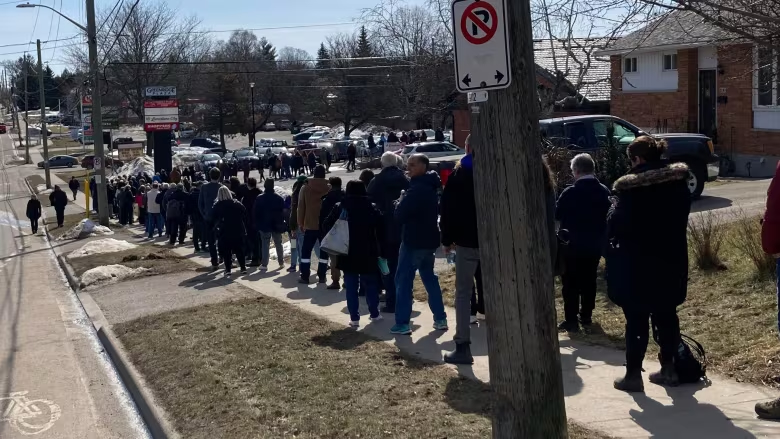
For this blog, I will be telling some patient stories. They are not all my patients, but people in my area. The stories are real – the identities have been anonymized.
Last week, I received yet another rejection letter from a specialist, in this case a neurosurgeon. He declined to see my patient because his practice was “too busy to see the patient in a timely manner”. Which of course means more admin work for me as I try to find another neurosurgeon for my patient. I do a lot of procedures as a rural family physician, probably more than the average doctor – but neurosurgery is a bit beyond my skills.
All of which got me wondering (again) how our health care system, which in Ontario was once rated the best in the world (no really) came to fall so far that a certain grumpy curmudgeon has openly said if he gets sick, he would go to Turkiye. The only answer to my mind, would be that it’s because Canadians are okay with it.
LC, early 40s, seen in emergency for sudden abdominal pain. CT scan sadly shows advanced cancer. Specialist refuses to see her until she goes to a “screening clinic”. Three weeks to get to the screening clinic, that agrees it’s cancer. Refers to specialist who orders more tests. Treatment doesn’t begin until 12 weeks after the diagnosis.
Why do I say Canadians are ok with this? Because for all of the noise on social media, and for all of the news reports highlighting ER closures, delays, and lack of health care staff, I don’t really see people organizing to demand change.
Look, if ten years ago, someone had told me, hey, in 2023 in Ontario there would be over 800 times when an Emergency Department has a partial shutdown, 2.3 million people would no have a family doctor and wait times would be forcing people to consider leaving the country to get health care, well, my first thought would have been “I need to avoid Queen’s Park, there’s gonna be a protest there every day”.
KX, 85 years old, in good health, debilitated by arthritis pain in his hip. Can’t get a fluorscopic cortisone shot to his hip for 5 months, and a specialist who does this in office under ultrasound is over 100 miles away, and has not responded to a referral request yet. Has been limping and on addictive painkillers for 3 months with no appointment in sight.
I see people protesting and demanding change for any number of issues (and I stress many of these are important causes that I support). I have yet to see the kind of sustained pressure on government needed to force drastic change in Health Care.
I’m not the only one to suggest this. Dr. Stephen Major, now the President of the Newfoundland and Labrador Medical Association (NLMA) suggested that the public has become “complacent” about health care. He correctly points out that while fish harvesters protested and shut down Confederation Building in May, he has yet to see a protest about the fact Newfoundland has over 100,000 people without a family doctor.
ET, severe sciatic style back pain. First sees the family doctor who correctly diagnosed this clinically. MRI ordered – which took 5 months to get, confirms sciatica. Referral made to back surgeon. 6 months later – still no word from back surgeon. Currently 11 months of waiting in daily pain to be assessed by surgery – still no operative time booked.
Canadians have a well deserved reputation for being “nice.” The BBC implies we can teach the rest of the world to be nice. We are polite to each other, polite to tourists and we have a habit of saying “sorry” to just about everybody – regardless of whether it’s our fault or not.
Perhaps it’s this inherent niceness that keeps us from protesting daily at each and every one of our Provincial Parliament buildings. Perhaps it’s because of an attitude that “at least our health care is free” (even though it is definitely not – your taxes pay for it). I don’t know. But I do know that for those of us in health care it really seems like the general public is content about the state of the health care system.
DD, 4 years old. Significant behavioural issues compatible with Autism Spectrum Disorder. Referral to paediatric team for assessment. Message returned informing there is a two year wait to see the paediatrician.
But wait, aren’t doctors and nurses organizations advocating for better health care? Of course they are. But the blunt reality is that there are about 43,000 members of the Ontario Medical Association, and 190,000 or so nurses in Ontario. To truly enact change – millions of people need to demand it because millions of votes will matter to politicians.
I’m not seeing that happening.
BC, 40 years old. Complex psychiatric situation. Referred by family doctor to psychiatry. Two months later a message back that this is not suitable and should be referred to Ontario Structured Psychotherapy. Six months after that an intake assessment is finally done, and was told will be entered into the program, but wait time to start the program is twelve additional months.
Our health care system continues to collapse all around us. Governments across the country appear to be making mild to moderate changes to the health care system. But the kind of bold, truly transformative change to health care (like has been done in other countries) will require Canadians to stop being so complacent about health care and protest regularly, repeatedly and with perhaps a little less niceness.
Will they?
Dear Minister Jones – Fire Your Negotiations Team.
Dear Minister Jones,
Just me again, a certain crotchety and increasingly cantankerous geezer offering you advice in an open letter that you are not likely to take. But you would be better off if you did. More importantly, so would the people of Ontario.
First, I would once again suggest that you have done some good work in the health ministry. Moving surgical procedures to outpatient clinics, increasing the number of diagnostic testing facilities, starting a new medical school focused on training family doctors and more are all good moves. While the effects of some of those decisions will not be felt for many years – the reality is that somebody had to do this to help health care down the road and you’ve done that.
Unfortunately however, the past couple of weeks have been catastrophic for your Ministry’s relationship with Ontario’s doctors. It’s funny how one dumb decision or comment can completely wreck a relationship, but that’s exactly what happened when your Negotiations Team stated that there was “no concern” about a diminished supply of doctors. Therefore, they refused to negotiate money for retention of physicians or admin work, like other provinces have (cough BC, cough Manitoba, cough EVEN Alberta!)
In essence, your Negotiations Team has been a disaster, first by militantly dragging out negotiations into a very adversarial arbitration process (when all the other provinces above figured out a way to, you know, respectfully negotiate with doctors) – and then by making a statement about the supply of doctors that is so comically stupid and out of touch that Ontario has become a laughing stock.
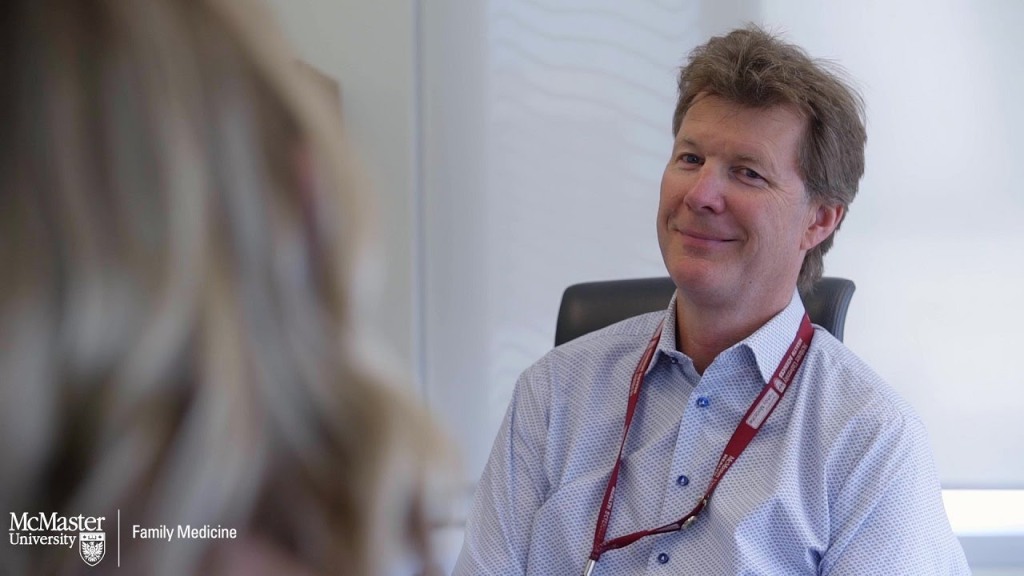


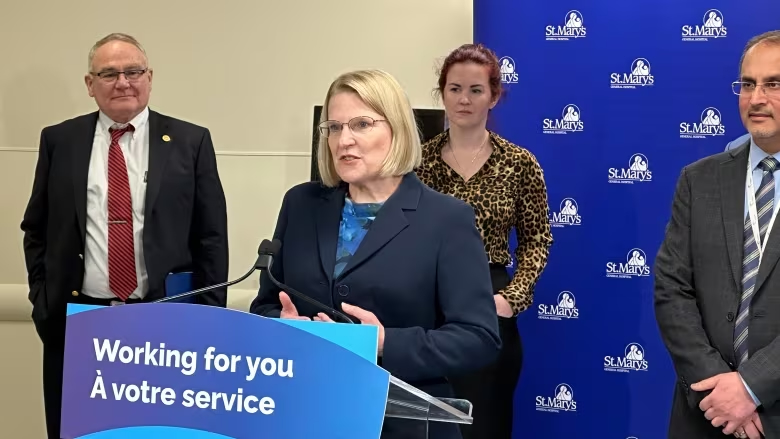
Three members of the Ministry’s Negotiations Team pictured above.
This will not bode well for health care in this province.
Look, I know there may be a temptation to say “Ok this was a mistake” and to try and walk back the comments.. While it’s abundantly true that the people of Ontario are a good and kind people who will forgive politicians if they own up to their mistakes (cough greenbelt, cough enhanced police powers and closing playgrounds during covid) – one thing that politicians can’t survive, is being made a laughing stock. Except Donald Trump of course. I still haven’t figured that one out and I don’t think I ever will. (N.B. Donald Trump is not someone you should try to emulate).
Anyway, the reality is that at this point you really only have one path left to turn this thing around. You have to fire your negotiations team. All of them. I’m not just talking about the seven who were appointed to lead that team, I’m talking about the multiple bureaucrats who give them supporting data and have influenced their position.
The only rational explanation I can think of for those bureaucrats promoting a position of “no concern” about physician supply, and saying doctors are not working hard enough, is that they hate doctors. Many of them were likely hired at a time when it was fashionable to bash doctors for billing “too much”. (BTW how did that attitude work out for the people of Ontario?) They’ve clearly carried on with that belief in the arbitration proposals.
I get that in arbitration, there will be some posturing. If your Negotiations Team had said “we’ll pay you $50 a month as a retention bonus” or “admin work doesn’t involve seeing patients, so we’ll pay you $20 an hour” – I honestly would have shrugged my shoulders, recognized it was part of the arbitration “game” and said nothing.
But to say retention and recruitment of physicians is not a major concern, when people line up for hours on end just for the faint chance of getting a family doctor?? That thought process can only be due to a pathologic hatred of physicians, or a delusional mindset totally divorced from reality. Either is a cause for termination. Can the whole team now.
But what of negotiations with the OMA you may ask?
Actually, that’s not hard either. Your ministry has an appointee to the Arbitration Board, just like the OMA does. I believe your appointee is one Kevin Smith. The job of the appointee is to tell you and your team what the lead arbitrator, William Kaplan is thinking and how he is leaning. How they do that is beyond me. When I met Kaplan it was like talking to a Vulcan. There was absolutely no emotion or hint of what he was thinking – but apparently Kevin Smith is better than I am at figuring this out.

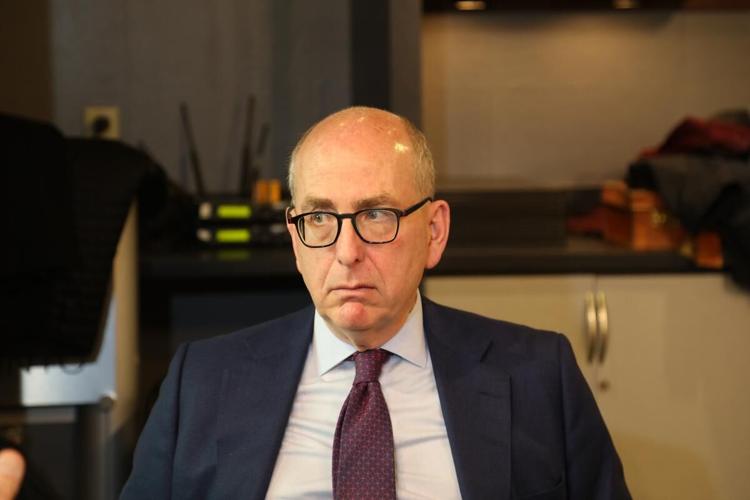
One of the above is William Kaplan, Arbitrator, and even after meeting him I’m not sure which is which.
What your appointee will tell you, and what the OMA appointee to the Board will tell the OMA is – Kaplan is wondering “this” or thinking “that” or leaning towards “X percent”. Find out what that X per cent is, offer it to the Doctors for the first year of the new Physicians Services Agreement (PSA). That solves things for one year, which gives you time to pick a brand new negotiations team for year 2-4 for the PSA.
Note to my three loyal readers, yes, this arbitration is ONLY for the percentage increase of the first year of the four year agreement. Worse, while the OMA and Ministry have generally agreed to a 70/30 split of whatever the amount is with 70% allotted to raises, and 30% to be given to targeted programs, they haven’t been able to agree on how the 30% is to be targeted. This means…..more arbitration for that piece. Then, it begins again next year for years 2-4 of the PSA. In essence, we appear to be locked in a perpetual, never ending antagonistic arbitration process (which is still better than unilateral government actions but really frustrating nonetheless).
As I told Premier Ford recently- if health care doesn’t get fixed – I don’t care what the polls say now, or how many by-elections you seem to have won, this is going to be a real problem in 2026. With health care in the crisis it is in now, you need all hands working together and co-operatively. Locking Ontario’s doctors into two more years of extremely adversarial arbitration shows that we are not co-operating and not working together. This is why graduates are leaving the province. And we can’t afford that.
It’s time for you to do the right thing for Ontario, and cut bait with your current negotiations team.
Yours sincerely,
An Old Country Doctor.
Perspectives on Ontario Health Care by a Recent Graduate
NB: My thanks to Dr. Tristan Brownrigg for guest blogging for me today. By his own admission, he never planned to be political, or seek out the limelight. But the situation in Ontario is such that he felt his perspective should be heard. I have a great deal of respect for people like Dr. Brownrigg, who are willing to step out of their comfort zone when necessary, and I commend him for doing so.

Dr. Tristan Brownrigg: I am a family physician, outdoorsman, and rural generalist currently working a mix of clinic, ER and inpatient care in the East Kootenays of British Columbia. I graduated from the University of Toronto Medical School, and did my Residency at Queen’s University (Kawartha site).
I completed family medicine residency in Ontario in 2022 and worked there for 6 months. Prior to this I completed medical school in Ontario, completed my undergraduate in Ontario, and had called Ontario home. Over the years I had watched my goal of working as a comprehensive rural family physician slowly become unsustainable amidst a collapsing system, decades of funding stagnation and poor planning, with a patchwork of good people on the ground trying to do their best in a system that doesn’t seem to value their input. Day after day the insidious march of the family medicine crisis grew closer to the forefront of peoples’ lives and garnered wider media attention, while the government either denied its existence or made no substantive changes that would realistically address it. This has not been the time for band-aids, let alone denial.
Last year I moved to rural British Columbia to try something different for a year, cautiously optimistic about the significant changes to family practice on the back of the LFP model implementation in early 2023. The Longitudinal Family Physician (LFP) model significantly changed how family physicians billed and were compensated in BC, including the ability to bill for the many hours family physicians typically spend on previously unpaid administrative tasks.
My experience has been night and day. For the first time in my medical career I have felt hopeful about the future of family medicine and find my day to day life to be sustainable. These changes have been received positively amongst all other family physicians I have discussed it with. It is not perfect and there are still kinks to be ironed out, but I at least believe my provincial medical association and government are trying to improve things for family physicians. I am not left questioning if government actions are purely incompetent or malicious with the intent to drive privatization.
I had retained my Ontario medical license until now, awaiting the May 2024 renewal deadline unsure if I would return home after a year of trying on a different life out west. Reading the recent government positions and negotiation briefs has been the final nail in the coffin for me. The disdain the Ontario government shows towards the hardworking family physicians who hold up the medical system is nothing short of repugnant. After more than a decade of training and education here, I will now be relinquishing my license to practice medicine in Ontario and stay in British Columbia.
The minister of health thinks recruitment and retention is “not a major concern.” That’s the problem; it should be. If I am not a prime example of this, I don’t know what is.
I wish all of my colleagues still in Ontario who do not have the luxury to vote with their feet the best of luck. If not this government, then I hope the next one learns to value your work and dedication.
My Interview Regarding Recruitment and Retention of Doctors Not a Concern
My thanks to Greg Brady and 640 am News Toronto for interviewing me today (May 9, 2024) about comments from the Health Ministry that recruitment and retention of physicians is not a concern for Ontario. Posting a link to the podcast of that interview here, as some forms of social media will not allow the actual link to be posted.
Ontario Government’s Arbitration Position a Slap in the Face for Physicians

On May 6, as part of a needlessly protracted negotiations process, the Ontario Medical Association (OMA) and the Ministry of Health (MOH) began public arbitration hearings to determine a compensation package for physicians for the fiscal year April 1, 2024 to March 31, 2025. Yes, arbitration has begun AFTER the last contract expired, and physicians will need to be given retroactive pay.
This is happening as part of the Binding Arbitration Framework (BAF) between the OMA and the MOH. When the two sides can’t agree on a compensation package after a defined period of time and negotiations, arbitration is invoked. The expectation is that arbitrator William Kaplan will issue an award sometime in August. It’s possible the two sides may reach an agreement before then as negotiations are allowed to continue during arbitration. It’s not unheard of that arbitration can sometimes pressure two sides to get a deal done before a decision is rendered.
One common misconception I hear from my colleagues is that Mr. Kaplan will have to pick one side or another. That’s not the case. The BAF we have is for something called Binding Interest Arbitration. Mr. Kaplan will likely award something in between.
Public arbitration, is just that. It means that the arbitration briefs submitted by the two sides are public, and the arbitration hearings are public. Which means that physicians across Ontario know exactly what the government thinks they are worth. And that knowledge will demoralize an already disheartened profession.
Having gone through this process as an OMA Board member in the past, let me acknowledge a few things right off the bat.
- Arbitration is still a lot better than the alternative, which would be unilateral government action. We’ve been down that road before during the Hoskins/Bell years and that was just plain awful for not just physicians, but patients as well.
- As part of the arbitration process, the government purposefully put a “lowball offer” forward. Basically they know the arbitrator will likely award more than they offer so of course they try to present a lower version than they normally would expect.
- In that vein, I would have expected the OMA to present a higher request. All physicians deserve a raise, and their proposal does address that. But the ask frankly just catches up (barely) for the last few years so calling their brief a “strong” demand is inaccurate.
- Our negotiations counsel, Messrs Goldblatt and Barrett, frequently told me that it is much better to have a negotiated settlement that both sides agree to, than one that was forced on them by an impartial third party. More chance of the two sides willingly implementing the many nuances in an agreement as complex as the physicians one.

However there is one thing that hasn’t been considered. Arbitration frequently leaves bad feelings amongst the two parties. In the sports world for example, one has to look no further than Toronto Maple Leafs goalie Ilya Samsonov. He took the team to arbitration last summer. The team clearly said some negative things about him to justify their offer to him. While the team has not exactly been forthright about what exactly was wrong with him mentally, there can be no doubt that he had a terrible first half of the hockey season. It was so bad he eventually got demoted (on paper) to the farm team – and his play was so bad no other team in the NHL wanted him (ouch).
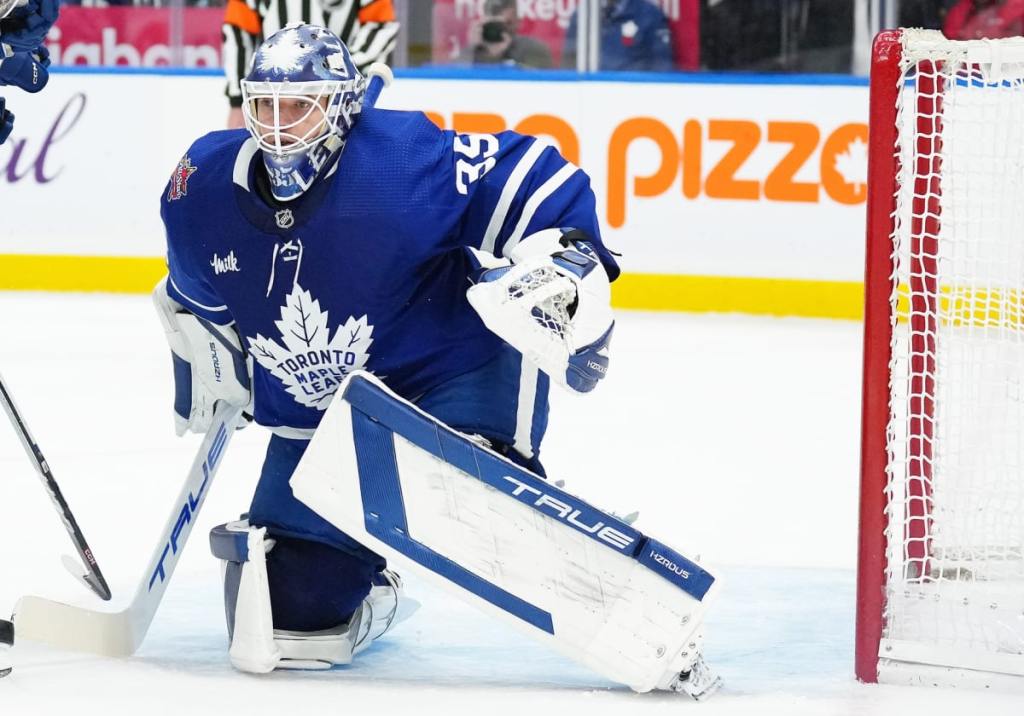
This is why sports teams try to avoid arbitration – they know that the process can be ugly, and can adversely affect the performance of their top athletes who have to listen to negative things said about them. For teams to succeed, the top athletes have to play their best.
Looking at the situation in Ontario, it’s frankly hard, as a physician, to feel anything but insulted and disrespected by how the MOH negotiations team has acted. It’s bad enough that they appear to have, for the most part, stalled the negotiations to the point where arbitration is needed. Contrast this with Manitoba, Saskatchewan and British Columbia, where the governments realized that they needed to retain their physicians due to the current crisis in health care, and made widely applauded agreements with their doctors. But Ontario’s arbitration position is so pathetically inadequate (even when considering they are low balling for arbitration) that one really has to wonder if they want to have good relationships with their doctors going forward.
From 2020 to 2023 – inflation has gone up by 14.8% (with another 2.9% for this year so far). Nurses were given an additional 6.75% (on top of their previous agreements) due to the unconstitutionality of Bill 124. And yet the MOH thinks physicians should only get three percent?? With no recognition of administrative burden? And the MOH claims there are no retention/recruitment issues?? Have they talked to the over 2 million people without a family doctor??
Does their negotiations team truly understand the harm they are doing by putting forward such an insulting and offensive proposal??
Here’s the thing, after a contract is agreed to or arbitrated, physicians and government will need to work together for the benefit of the people of Ontario. Yet how does any reasonable person expect physicians to work with a government team that on the one hand says that “physicians are valued and respected” but then, at the first chance they get, demean them with such a pathetic position.
Remember, many of the bureaucrats who provide supporting information to the MOH’s negotiations team have other roles. They’ll show up on other bilateral committees between physicians and the MOH. And after you denigrate people so badly with such an abhorrent brief, will there really be any trust between the two sides (and yes, they are now sides – this opening position makes it clear we are not on the same “team”).
Just like the Leafs needed Samsonov to, you know, make a few saves earlier in the season, the government needs physicians at their peak to deal with and give their best advice on the current mess that is health care. And while physicians, as is their nature, will genuinely try their hardest to do so – the blunt reality is that Samsonov tried his best to make more saves as well. But when your head is not in the right space……..
At this point there really is only one solution. The MOH negotiations team needs to formally apologize to all physicians for their incredibly repulsive offer. Then they need to look at BC, Manitoba and Saskatchewan, and put together a fair and competitive agreement so that more physicians don’t look elsewhere. This can be done tomorrow.
Otherwise, I genuinely fear that we are going to continue to lose physicians, not only in fields where they are desperately needed, but to other jurisdictions as well.
“Health Care for All” Policies Will HURT Physicians and Patients
Recently, physicians leaders have been in the media promoting the right to primary care. I generally refer to this as a “Health care for All” policy, as it is reflective of one of the tenets of former Health Minister (and current Dean of Queens Medical School) Dr Jane Philpott’s new book. Dr. Tara Kiran has also promoted the same through her “Our Care” project. These proposals seek to guarantee a family physician for everyone in a certain geographic area, just like children in an area are guaranteed a school.


While these policies sound nice (for reasons I’ll go over later) – they are doomed to failure. To understand why, let’s look at just two other situations – The Barer Stoddart Report and the move toward safe injection sites and decriminalization of illicit drugs. I appreciate my three loyal readers (I actually gained one!) might be wondering what this has to do with primary care. Bear with me, it hopefully will make sense later.
The Barer-Stoddart report is infamous in Ontario medical politics. It’s the report that is widely viewed as suggesting Ontario had too many (!) doctors in 1990s and led to the reduction of the number of medical school positions. However, what is not commonly appreciated is that was the last recommendation in the report. The first recommendations were to support the current supply of physicians by adding a large number of allied health professionals and making many health systems modifications. If and only if all those recommendations were carried out, then medical school enrolments could be cut. The bureaucrats and politicians looked at that, went through the report, decided that all the other recommendations were too expensive or complicated, and just cut med school enrolment. “The report told us to.”
Similarly, when it comes to drug decriminalization, the idea is best implemented in Portugal. The top line read is “addiction rates fall 40%” after Portugal introduced this policy. BUT a deep dive shows that before decriminalizing drugs, Portugal made a number of legislative changes, ensured that the court systems were educated, ensured that addiction therapy and counselling was available for addicts, and then implemented the decriminalization policy.
In Canada, our bureaucrats looked at Portugal, and figured all the rest of the changes were too complicated. But hey, maybe just decriminalizing will be enough without the other stuff! The result is a disaster when it comes to safe injection sites and an obviously failed policy.
So let’s look at the right to primary care that Drs. Philpott/Kiran and others propose. At their heart, ideas like this are reasonable, make sense and will help improve health care for the general population (I bet you didn’t think I’d say that did you?). They speak to a fairness that just isn’t apparent in the current system. One of the reasons that people pay taxes is so that those taxes can fund health care. How is it fair then, that one taxpayer has a family doctor, and another does not? How is it fair that one quarter of Ontarians can access team based health care, but the rest cannot? And so on.
Well then, what’s the problem and why do I think “Health Care for All” type policies will hurt physicians and patients?
Because I simply don’t believe that our politicians/health care bureaucrats will be able to implement all the work necessary to support this, prior to implementing this change.
Look at the other items I mentioned. Do you really think that the bureaucrats who mucked up so badly will get it right this time? Do you really believe that those bureaucrats are going to provide the admin support, the additional allied health workers, the organizational and structural backing first, before just writing out “everyone gets a family doctor” in the funding contracts?
Not a chance. Zilch. Zero. They will look at the need to invest in teams and say “too expensive.” They will look at the need to add administrative support first and decide that’s not feasible. They will look at the need to build healthcare infrastructure and be confused as to how to do it properly. They will be aghast when they come to the part that says for teams to be successful, they must be physician led. “But I’m the aide to the executive secretary of the assistant to the assistant deputy minister’s attache for the chief regional officer of the Primary Care Branch of the Ministry! I should run the team!”
Then they will come to the part of the policy that says ensure every patient in a geographic area has a family doctor. And those bureaucrats will say “oh that’s easy to do with just some changes and regulation”. And they’ll do just that without any of structural changes needed.
I did some rough calculations for my neck of the woods. Each family doctor in my area would have to take on 200 unattached patients to make this work. The problem is we’re all working at 110% capacity right now. There’s no way we can do that.
So, once “health care for all” comes in what’s going to happen? Physicians will stop doing comprehensive family medicine, myself included. You can only ask a person to work so hard before they get frustrated and quit. Which increases the burden on the remaining physicians, which will cause more of them to quit. And so on.
What’s worse, presenting these policies now deflects from the main issue. Basically, family medicine is no longer economically feasible. Without some immediate stabilization funding, family medicine will collapse. By the time people figure out how to implement “Health Care for All” and reduce admin burden, you won’t have any family physicians left. By introducing the “right to primary care” now, the laser like focus on just what is needed to make family practice economically viable is lost and this hurts everyone, patients included.
I genuinely have a great deal of respect for Dr. Kiran and Dr. Philpott in particular (she was the one who sacrificed her political career to warn us that our Prime Minister was an effete, vacuous ninny who for the sake of all Canadians needs to go back and teach drama classes). But as well intentioned and well thought out as “Health Care for All” may be, now is not the time to talk about it.
Economically stabilize and support family medicine first. Then let’s talk.
Re-Post: It’s Time To End The War On Drugs In Canada
NB: This blog originally appeared in Huffington Post Canada on Nov 3, 2015. With the demise of HuffPo it’s being reposted here for future reference.
As someone who had his formative years in the 1980s I can still vividly recall former First Lady Nancy Regan launching the ambitious “Just Say No” campaign. She championed this slogan as part of the “war on drugs.” This “war” was started by Richard Nixon in 1971. He declared that drug abuse was “public enemy number one” and that “the only way to fight this menace was on many fronts.” I can personally attest to having been a true believer in that policy myself, after having done some volunteer work in an emergency department as a teenager.
In recent years Canada of course, for the most part followed this policy. In our country, the main technique to fight this war appears to be conviction and incarceration of those caught with illicit drugs. For example, possession (not sale, but possession) is punishable by up to five years in prison. However, what’s clear is that this has failed to help the problem. Data from Statistics Canada (the most recent I could find) shows that while marijuana use in Canada has been relatively constant, the rate of cocaine and other drug use has gradually been increasing since 1977.
The drug trade itself has seemed to grow and is now considered to have a global value of over $300 billion (U.S.) per year. In Canada, as you can see below on this chart from Statistics Canada, drug offences continue to rise, while the total crime rate decreases. So certainly based on this data, it would be difficult to suggest that the “war” has been successful.
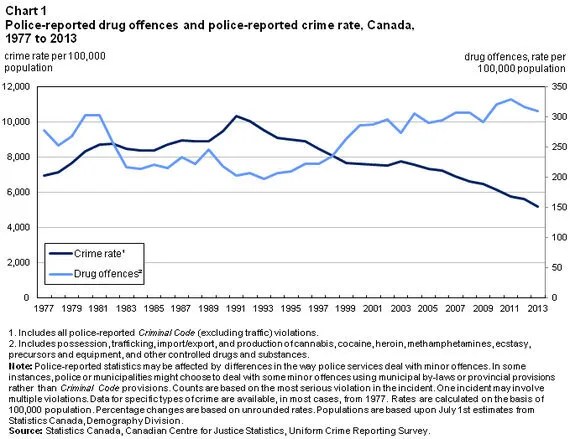
From an economic point of view, the costs of this war are even more staggering. It currently costs $117,000 a year to house a prisoner. Additionally, while the total overall rate of crime has decreased in the past twenty years, the incarceration rate is up, and 80 per cent of offenders have substance abuse problems. It’s clearly not hard to postulate that the main reason for the increased rate of incarceration is drug offences.
As a family physician, I have seen first hand the effects of untreated drug addiction. Far beyond the relatively easy to measure economic numbers, lives have been ruined, families torn apart, some young women forced into the sex trade to pay for their habit and more, are all part and parcel of this terrible disease. Clearly, the goal of any national policy should be to take proven effective steps to reduce the rate of addiction.
The newly elected Liberal government of Justin Trudeau plans to legalize marijuana. To that end, my hope is that Canada can go one step further and focus on what works to reduce addiction rates. While it is clearly counter intuitive to suggest this, it turns out that the best way to do this, is to decriminalize the possession of small amounts of drugs.
While about 25 countries have decriminalized drugs, the best example of how this policy works is seen in Portugal. They decriminalized the possession (not sale, possession) of drugs for personal use in 2001. The offence was re-classified to an administrative offence as opposed to a criminal one, punishable at most by a fine. At the time, may people, myself included I might add, predicted that this would lead to an explosion of drug use, and that children would be targeted, and the nation would decay. As an aside, this rhetoric is similar to what Stephen Harper alleged would happen if we were to legalize marijuana in the last election. However, a review of the results 14 years later suggest that quite the opposite has happened.
Among other benefits, Portugal has seen a reduction in “past year” and “past month” drug use; a reduction in a dramatic decline in HIV and AIDS in drug users, a reduction in crime; a reduction in addicts in prison and a reduction in drug deaths. This has clearly been an extremely successful policy.
So what happens in Portugal when you are caught with 10 or less days supply of an illicit drug? Your case is referred from the Ministry of Justice to the Ministry of Health (a huge shift in and of itself) and you appear before a drug dissuasion committee. You may be fined, but more often are not and you are offered treatment for your addiction, part of which included social re-integration. Their rate of drug addiction has fallen in half since the implementation of the policy.
Ah, but these programs are expensive aren’t they? Surely it would cost a lot to provide this service for addicts. You mean more than the $117,000 a year we currently pay to incarcerate them? Which, as is proven, doesn’t work.
As mentioned, I was a true believer in the war on drugs, but at the end of the day, as a physician, I have believe in an evidenced-based approach. The evidence shows that incarceration doesn’t work, and decriminalization with offers of treatment do. It’s time to ignore dogma and act in the best interests of Canadians. It’s time to end this war.
Dr. Soni Writes to her MP About the Recent Tax Law Changes

My thanks to guest blogger Dr. Deepa Soni, an Emergency Room Physician at Credit Valley Hospital. She has written a much more eloquent letter to her MP about the recent tax changes introduced by the federal government, and allowed me to reproduce here as an open letter.
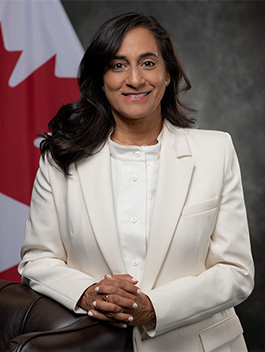
The Honourable Anita Anand,
MP, Oakville,
301 Robinson Street
Oakville, ON
L6J 1G7
April 20, 2024
Dear Minister Anand,
I’m writing to you as a constituent of your riding in Oakville regarding your government’s capital gains taxation measures introduced in this week’s budget.
As an emergency physician for the last 25 years, I and thousands of my colleagues in Ontario, were saving in our medical corporation to be able to fund benefits that many Canadians have available through their jobs: maternity leave, disability, and medical/dental benefits. In addition, and most importantly, incorporation allows us to save for our retirement as we do not have pensions (again, a benefit many Canadians, including government employees and civil servants have as part of their employment). Incorporation was a negotiated benefit that was given by the provincial government in lieu of increasing our fees, with the understanding that the structure would allow us to mitigate some of these factors about our career.


When planning for retirement under one set of assumptions, and then finding out that the federal government has moved the goal posts to extract revenue for its budget shortfall, you can understand why so many physicians are bewildered and disappointed by the Liberal government. This would be the equivalent of someone changing the terms of your pension or taking large chunks of it away. For many doctors, this will have profound impacts on their ability to retire when they thought they would.
In addition, as a daughter of first-generation immigrant parents, both of whom were physicians, I am certain you had a front row seat watching your parents work hard to obtain their medical degree, residency, and then establishing a practice. This is not to say that other Canadians don’t work hard: the one thing that makes doctors unique is that our fees are set by provincial governments and our fees have not risen to keep up with inflation. Unlike other incorporated professionals such as accountants, dentists, and skilled trades, physicians cannot increase their fees to make up for rising costs. We are locked into the fee schedule determined by provincial governments (who are always employing cost containing measures to balance budgets). The federal government is turning a blind eye to this important point as it does not fall under federal jurisdiction. Nevertheless, the impact cannot be ignored.
As a corporate lawyer prior to being elected an MP, I’m sure you would not have wanted your hard work and education to be characterized with the words ‘tax cheat‘ if you had been using a legal way to save for retirement. This is the narrative being circulated in the media and it is deeply disappointing. It is noteworthy that MPs receive an annual pay raise (this year ranging $8000-11900), along with pension and benefits. This makes an MP salary one of the highest earners in Canada, with guaranteed income through retirement.
Yet, it is doctors who are singled out as being in the wealthiest 1% and rhetoric implying that we are not doing our part for less fortunate Canadians. We pay into personal taxes and contribute to the economy like everyone else. As small businesses, doctors support the economy through employing staff (nurses, allied health, receptionists etc.), paying rent, and financially supporting many Canadian companies providing support services to our practices (electronic medical records, medical office supplies etc.).
We are also entrusted with caring for the population of Canada in the most sacred way. This taxation measure comes at a time when the medical profession in Canada is suffering unprecedented levels of burnout. Millions of Canadians cannot access a family doctor because they have closed their practises and left (in large part, due to rising costs and fixed fee schedules). Why in an era when attracting medical graduates to do family medicine is a priority, would your government eliminate one of the few advantages that help new grads set up comprehensive practices so they can care for Canadians from cradle to grave? Does your government understand the downstream effect this capital gains taxation will have on patients for decades to come?
From watching media interviews recently, it appears that the federal government’s solution to this is “we will just allow in more foreign doctors“. This is deeply hurtful on many levels: it devalues currently practising physicians who have put in their life’s work to bring excellent care to this country’s patients. In addition, it takes many years for a doctor to acclimatize to the healthcare system in Canada. What happens to patients in the meantime? The solution is not to “throw the baby out with the bathwater”. The solution is to step back and really take in the impact of these actions and the message that has been conveyed to the physicians of this country. I hope your government will rethink this and choose to act fairly regarding incorporation for medical professionals.
Sincerely
Deepa Soni MD CCFP(EM)
Blowin’ In The Wind
These lyrics were written by the incomparable Bob Dylan in 1963. Sad that they are still relevant today.
How many roads must a man walk down
Before you call him a man?






How many seas must a white dove sail
Before she sleeps in the sand?


Yes, and how many times must the cannonballs fly
Before they’re forever banned?




The answer, my friend, is blowin’ in the wind
The answer is blowin’ in the wind


Yes, and how many years must a mountain exist
Before it is washed to the sea?



And how many years can some people exist
Before they’re allowed to be free?



Yes, and how many times can a man turn his head
And pretend that he just doesn’t see?





The answer, my friend, is blowin’ in the wind
The answer is blowin’ in the wind


Yes, and how many times must a man look up
Before he can see the sky?




And how many ears must one man have
Before he can hear people cry?


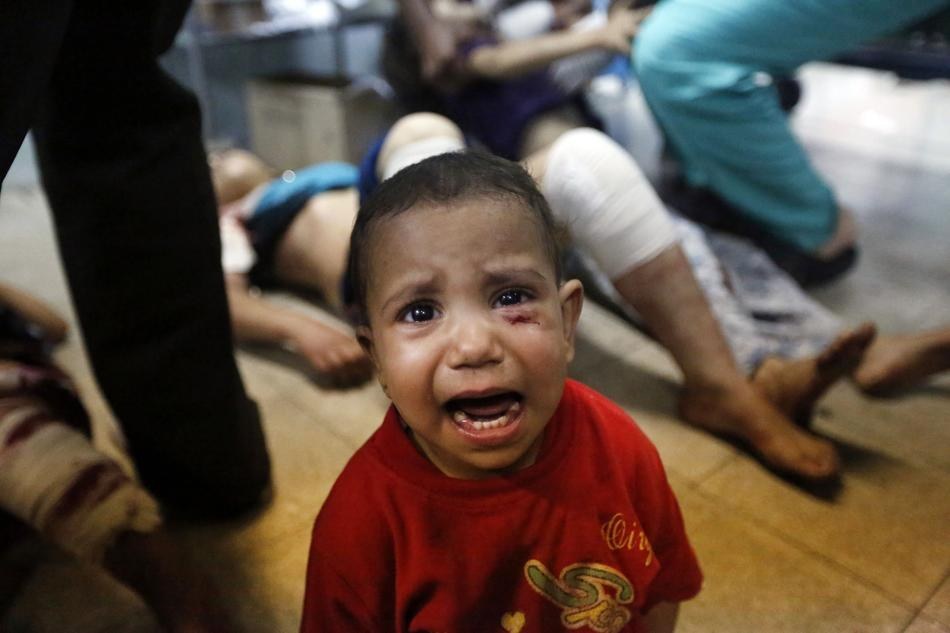





Yes, and how many deaths will it take ’til he knows
That too many people have died?


The answer, my friend, is blowin’ in the wind
The answer is blowin’ in the wind


 justanoldcountrydoctor