The Arbitration Award: The Good, The Bad, The Ugly

On Sep 12, Ontario Medical Association (OMA) Board Chair Dr. Cathy Faulds announced that the Kaplan Board of Arbitration awarded Ontario’s doctors 9.95% for the first year of their Physicians Services Agreement (PSA).  Sounds straightforward right? Nope – it’s actually ridiculously complicated.

I’ve looked at the award.  I may have some of this wrong (copious documents found on the OMA website induced catatonia, hypersomnolence and cluster headaches).  But this is my take.

A simplified (I have a small brain) set of numbers first:

Total award:  10%, approx value $1.6 billion dollars

Amount for general feel increases: 7% or $1.12 billion dollars

Amount for “targeted funding”: 3% or $480 million dollars.

In the past the OMA and Ministry agreed 1/4 of the raises would be across the board, the rest done with “relativity in mind”.  IF we do that again then $280 million (1/4 of $1.12 billion) will be in across the board increases.  Every specialty would get a 1.75% raise. The rest of the money ( $840 million) would be for raises based on relativity. So all specialties would get 1.75% + X as a raise.  The “X” would vary. It would be more for low income specialties, and the X would be lower or even zero, for the high income specialties.

The Good.
There’s a raise.  The MOH Team stated that Bill 124 should not impact the deal. The arbitrator disagreed and felt that we were unfairly treated because of Bill 124 stating:

“Bill 124 directly impacted the bargaining even though physician compensation was not subject to its terms.”

Hence, the MOH Team completely lost their argument that there should be no redress, and there was a 6.95% redress given.

There was a recognition that family practice is in crisis.  In his ruling the Arbitrator said:

“We accept on the evidence that there is a physician shortage. Somewhere between 1.35 million and 2.3 million people in the province are not attached to a family doctor. These are real numbers. The Ministry’s own documents – which we ordered disclosed–demonstrate that there is a problem to address.”

The arbitrator had to order the Ministry to disclose this?? Jeez. Additionally, the Arbitrator noted:

“Clearly, more family doctors are needed as are more doctors practising comprehensive longitudinal medicine…..it is obvious that the citizenry is ageing – the Government acknowledges this brings with it increased complexity…”

Contrast this with the Ministry’s absolutely laughable position that there is “no concern” about a shortage of doctors.  This is frankly a warning shot, and a welcome one, to the MOH’s negotiations team to not say such stupid things again, and to change their position in future rounds of negotiations.

In another shot to the now obviously inept MOH Negotiations Team, the Arbitrator agreed that admin burden also needed to be addressed with, you know, money. He stated:

“We have reached the conclusion that targeted increases – not necessarily baked in – should be allocated to the reduction and redeployment of administrative work that can best be performed by others or through digital or other measures.”

Finally, It was quick.  OMA Board Chair Cathy Faulds had told us not to expect an award until the end of September.  Who knows why Kaplan put the award out so quickly.

The Bad.

This will not be enough.  The OMA asked for a 22.9% increase. They got less than half of that. This is not really the big win the OMA is portraying it as.

A 10% increase in gross billings for family medicine will not be enough to stop the haemorrhaging of doctors from comprehensive family practice. The “X” for family medicine (see above) needs to be high, and much of the targeted funding needs to go to family medicine too.

And, while it’s true that the Arbitrator recognized there was a crisis in family medicine, the award given did not really do anything in and of itself to stabilize family medicine.  It’s true that was not part of the scope of the arbitrator for this round (this round was for a fee increase). The fact that some practical guidance in how to resuscitate family medicine is missing is still bad for all Ontarians.

The Ugly

The implementation of this award is going to be a nightmare.  As I write this, there is no indication that the MOH and OMA have agreed on how to divide up the $1.12 billion in general fee increases based on relativity.  In fact, indications are that the MOH will continue to fight the methodology, meaning it could be a very long time before fee increases for specialties are set.

Worse, the OMA and MOH have not been able to agree on how to distribute the $480 million in targeted funds.  Which means….more mediation and arbitration.  I continue to concede that the OMA states arbitration and mediation will be done by mid- March 2025. I continue to not hold my breath.

Even uglier is that one solution being proposed would be to give “everyone” a 9.95% increase right now, until the relativity and targeted funding is sorted out.  But that would mean that some of the higher paid specialties would see a 9.95% for a bit, only to have a relative cut once the final fees are sorted out (also to be arbitrated by March 3-7, 2025).  No matter how you message this to warn people – this will cause problems when people see a decrease in income after a rise.

All of which means that the retroactive pay for this year may not come for over a year. If you are a physician who has some decisions to make (eg do you renew the lease on your office at the higher rates the landlord is demanding) – you are going to be awash in uncertainty.

The ugliest part of all of course, is that a bunch of lawyers are going to get really rich as their billable hours go through the roof during this process.

There is a better way.

The government’s main concern should be about expenditures. That decision has now been made for them.  The PSB will go up by $1.6 billion.  That money will have to be paid one way or another.  

The government can now, especially after being told off by the Arbitrator back off from their polarizing and obstructionist path, accept the OMA proposals for implementing the award. They cover what the government states it wanted (pay lower paid specialist more of an increase than higher paid ones).  They also covers issues around admin burden which the Arbitrator acknowledged exist, and the shortage of family physicians (which the arbitrator also acknowledged). 

The total amount spent by the government is going to be $1.6 billion regardless. Getting rapid agreement on the distribution of those funds will decrease the uncertainty about how much goes where and will shorten the time it takes doctors to get paid, which will stabilize the health care system.

Then, for the love of Allah/God/Yahweh/Great Universal Consciousness – the government now needs to realize that you can’t fix health care without working co-operatively with your doctors.  Go look at other provinces. Copy them and get a fair deal for years 2-4 of this agreement.

Or the government can continue to obstruct, obfuscate, delay and impede any real progress towards working together with more protracted, internecine mediation and arbitration. The ball is in their court.

What should doctors do?

The above represent my personal interpretations of the documents I read. I encourage all Ontario physicians to register for the OMA live session on Tuesday Sep 17 from 7:30 – 8:30 pm to hear more details about this agreement.

CFPC Blows it AGAIN. Insults All Ontario Physicians.

Jeez. I thought the Board of the College of Family Physicians of Canada (CFPC) had learned its lesson following the ham fisted attempt to raise members dues and extend the residency to three years. In the aftermath of that debacle, CFPC President Dr. Mike Green promised a full review of the organization, and stated that the CFPC will be a “humbler and more transparent organization” going forward.

Turns out that letter was worth as much as an IOU from Donald Trump. The CFPC has once again insulted a good chunk of its members, and showed an incredible disconnect between those who run the organization, and the front line members whose dues pay them.

I’m referring of course, to the incredibly insensitive and frankly, downright insulting decision on the part of the CFPC to ask Dr. David Price to be one of the keynote speakers at the Family Medicine Forum (FMF). The FMF is their biggest continuing medical education event.

Screenshot

I will certainly agree that Dr. Price can be credited with a whole list of accomplishments. His resume alone would exceed the self imposed word count on my blogs. I would also completely agree that as someone who has done a lot work studying primary care models, he would, in fact provide some thought provoking ideas. While I wouldn’t agree with all of them, I would find them worth discussing.

But.

He is also a member of the Ontario Governments negotiations team. This is the team that has refused to provide a reasonable proposal for compensation for family doctors (and specialists) and has instead referred the matter to a protracted arbitration process.

Worse yet, the public proposal that the team put forth at the Arbitration hearing could very charitably be defined as inadequate. Not being in a charitable mood, I would rather describe their proposal as what it really is, insulting, out of touch with reality and frankly, downright offensive. Since Price has chosen to continue to be on that team, the blunt reality is that he is beholden to support the governments arbitration position. (Members of teams like this often will have varying view points internally – so who outside of him knows what he really thinks – but externally – he has to toe the party line).

The CFPC has taken the position that family doctors need to get paid more (good on them), and has lauded provinces like British Columbia who have chosen to do just that. Yet they invite someone whose team has told Ontario physicians that all they deserve (despite the runaway inflation of the past two years) is 3 per cent more.

The CFPC has also strongly advocated for a reduction in the admin burden and health system transformation (good on them). Yet the team Price is part of has essentially refused to acknowledge these as big issues. They’ve refused to pay for admin work. And those 2.5 million people without a family doctor in Ontario alone? The official position, which again, Price has to support as a team member, is that there is “no concern” about the supply of doctors in Ontario.

Yes, that’s correct. Publicly, Price has to say:

  • 3 per cent raise is enough for all doctors (despite inflation being 15% from 2020-2023)
  • no retention or recruitment bonuses
  • no payment for admin time
  • no recognition of the harm caused to physicians morale by such an offer
  • no significant investments in Primary Care
  • there are enough family doctors for Ontario

As I wrote previously, his position is a slap in the face to Ontario physicians.

It’s no secret to the general public that Ontario physicians are demoralized and burnt out. It’s no secret that more and more comprehensive care family physicians are closing their practices and that most are finding joy elsewhere. It’s no secret that many are leaving the province.

But apparently, all of this is either a secret to the CFPC Board and the FMF Team, or they just don’t care. By blindly ignoring the harm that the Ontario Governments Negotiations Team is doing, and inviting David Price to talk anyway, the CFPC and FMF team are basically giving the finger to all of their Ontario doctors.

It just amazes me that when even a young physician can realize that the position that Price’s team is taking is repugnant and shows disdain for family physicians, how can the CFPC Board not seen that??

What’s worse, usually keynote speakers at events get a stipend (having been a keynote speaker I can tell you it’s pretty nominal) and their travel/accommodations paid for. Well where does the CFPC get the money to pay Price? You guessed it, from the very dues collected by the members for whom Price’s negotiations teams has shown nothing but contempt.

Talk about rubbing salt in the wound.

It would be different if Price was not on the Negotiations Team. (If I was on that team and been forced to accept their proposals publicly, I would have resigned in disgust. Only Price can answer why he chooses to continue to stay on). Then, even though many will disagree with Price’s views, it would be fair to have a robust discussion about his ideas and why they may or may not work.

But to invite him to talk despite his association with the negotiations team shows that the complete disconnect between the Ivory Tower mentality of the CFPC and its hardworking frontline members persists despite the embarrassing fiasco of last year. One can only wonder what it will take for them to realize that as a membership driven organization, the CFPC really needs to be more sensitive to the feelings of their members.

Never Ending Arbitration a Sign Government Does NOT Want to Work with Doctors

News Item #1: Prince Edward Island agrees to a contract with its doctors. Amongst other things, the deal recognizes that family medicine is a specialty (finally!) and increases compensation to reflect that. It also introduces strong measures to reduce red tape and administrative burdens, and adds what appear to be retention bonuses. PEI joins British Columbia, Manitoba, Saskatchewan and even Alberta (!) in working co-operatively with their doctors.

Dr. Krista Cassell of Medical Society of PEI with Health and Wellness Minister Mark McLane and Health PEI CEO Melanie Fraser

News Item #2: Ontario Medical Association (OMA) Board chair Cathy Faulds announced last week that the Kaplan Board of Arbitration will not deliver a ruling on the fractious contract dispute between Ontario’s doctors and the Ministry of Health (MOH)at the end of August as expected. It is delayed until at least the end of September, if not longer.

Now you, dear reader, are probably wondering why I refer to a one month delay as “never-ending”. Firstly, because I’m not convinced it’s only one month. I don’t recall the Arbitrator ever giving us a timeline for when he was going to give a decision when I was on the OMA Board. Timelines for meetings and hearings, sure – but for the decision, no.

But more importantly, even if there is a ruling in September, it’s nothing but a mere step in a protracted, convoluted process that, at the end of the day, does nothing more than show that the government would rather not engage the OMA in providing solutions for our health care crisis. To understand why, one needs to first appreciate the prolonged nature of the current arbitration process, and just how tortuous it is. (I will do my best).

First, the current arbitration process is ONLY for one PART of the first year of what is supposed to be a four year contract. It will cover April 1, 2024 to March 31, 2025. BUT, it will only cover a percentage increase for that one year. It will not set specific fees for different specialties. Instead, there was general agreement (last I heard) that 70% of the increase would go towards fee increases and the other 30% would go towards targeted areas of high need.

Sounds simple enough to sort out right? If the deal is worth, say $2 billion (this number is totally made up and Mr. Kaplan, if you are reading, this number is much less than the increase should be), then $1.4 billion would go towards fee increases, and $600 million would be targeted towards areas of need.

The problem is that the fee increases are to be distributed along what’s know as a “relativity model”. Essentially lower paid specialists are to be given a bigger raise than higher paid ones. Unfortunately, the OMA and MOH can’t agree on how those raises are to be distributed amongst the various specialties. Worse, they can’t agree on how to distribute the 30% that was earmarked for “targeted funds”.

Which means…..you guessed it, ANOTHER round of arbitration with yet another set of decisions to be ruled upon by the arbitrator. This additional protracted process won’t begin until the arbitrators first ruling and further negotiations and mediations. The information on the OMA website suggests arbitration for those issues won’t happen until March 3, 2025.

But wait, didn’t I say that this was only for the first year of the four year contract? Why yes, yes I did. Which means that after this, we now start arbitration AGAIN for years 2-4 for the doctors contract. And yet again, not only do decisions needed to be made on the percentage increase, but on how that increase is divided up. Which means…….potentially many more rounds of arbitration.

I would concede the OMA websites suggests all of the year 2-4 arbitration, and left over issues from year one can be done at the same time (March 3-7, 2025). However, I will refrain from betting the mortgage on that actually coming to fruition. We are one early election from this timeline being thrown into chaos. The cynic in me thinks that by the time arbitration is all done for this supposed four year cycle, it will be time to start negotiating (and yes more arbitration!) for the next four year cycle.

The government will most likely abide by the initial arbitration award (it’s doubtful they would reject an award prior to an election call). Ontario Health Minister Galen Weston Sylvia Jones will frame this as part of the process for coming to an agreement. She will (probably) claim that by abiding by the award the government is “working with” physicians to benefit the health care needs of the province.

She will be wrong.

I’ve mentioned this before, arbitration is preferable to the days when governments could unilaterally cut physicians income at the whim of the health minister. However, that doesn’t change the fact that arbitration should be viewed as a necessary evil, with emphasis on the evil. Not only can it demoralize people who are going through it, the spill over effects have wide reaching consequences.

What does this mean for the general public? The OMA has come up with some solutions for the various crises our health care system is facing (2.5 million without a family doctors, worsening health care catastrophe in Northern Ontario, overwhelming bureaucratic burden etc). The reality is that many of the solutions require changes that need to be made in a contract with Ontario’s doctors. But we don’t have one, so none of these will be implemented.

Instead of working co-operatively with the OMA to come up with solutions in a fair contract, the current government seemingly prefers to leave it all to the arbitrator. And as a result, patients will continue to suffer.

The government of Ontario has a choice. Follow the lead of BC, Manitoba, PEI and so on and work with the doctors to help patients. Or set up a perpetual conflict with them.

Over to you Minister.

Ontario Health Minister Sylvia Jones, who can start to fix things tomorrow, if she wants.

Reflections on Leaving Family Practice

My thanks to Dr. Ramsey Hijazi, founder of the OUFP, and one of the strongest advocates for improving family medicine that I know, for guest blogging for me today. Unfortunately, the government didn’t listen to Dr. Hijazi, and as a result he left family practice earlier this year. In this blog he reflects on how his life has changed since.

It was a busy Saturday morning at my daughter’s dance competition in April 2024. The family had all got up at 5am to get ready for the day. The morning was hectic getting the kids and dog dressed and fed, making sure we didn’t forget supplies for the day, packing snacks and then rushing across the city to Hull for the competition.

My wife helped bring my daughter and her sister backstage to get dressed and prepare for practice. I watched my 2 year old son run tirelessly down the hall of the venue screaming in pleasure. I watched with a sense of calm and patience that I hadn’t felt in a very long time. More than I can remember I felt….present. The previous day I had left my family practice to pursue a position as a hospitalist. In less than 24 hours (and to my own disbelief) I noticed a distinct difference in my frame of mind.

Leaving family practice was not an easy decision. It is a rewarding and challenging career where you can make a positive difference in the lives of your patients. You get to know your patients better than anyone else in the medical system as you care for them from birth to old age. Their journeys in the medical system can remain with you forever. I became a family doctor because I loved family medicine and I am grateful for having had the opportunity to practice and take care of my patients. It is also part of the reason I started the Ontario Union of Family Physicians in July 2023 to help advocate for changes to improve the working conditions of family doctors. I had hoped to continue this work.

However, over the last several years the landscape of family practice has deteriorated significantly. The administrative or paperwork burden in family medicine has ballooned to almost 20 hrs/week. It is a constant barrage of work that is being downloaded or dumped on to family doctors from specialists, insurance companies and pharmacies. There’s also the extraordinary duplication of lengthy and sometimes irrelevant hospital reports that come in daily for review.

In essence, you supervise every single step all of your patients take in the medical system whether you have seen them recently or not. You ensure that tests and follow ups are completed and that nothing falls through the cracks. If my patients did not have me overseeing their journey in the system, countless tests and follow ups would get missed and never take place.

Like it or not, family physicians have been unofficially assigned the responsibility to make sure things actually get done when no one else will. It is mentally exhausting. There were days I would come home from work feeling so overstimulated I could do nothing more than sit on the couch and keep silently to myself for the rest of the night (although young kids make that a difficult reality to realize).

In an age where patients can simply email their family doctor you are never unplugged from your job. Despite trying to convince myself that I wouldn’t think or worry about work on vacation, I couldn’t help but have intrusive thoughts that occupied my mind. I would drift away from the present moment I was trying to enjoy. Often I would use the first and last days of my vacation as a desperate attempt to try and be caught up.

On weekends when not much was happening, such as watching TV with the kids or supervising them in the backyard I also couldn’t help but have the same intrusive thoughts of thinking my time could be better spent trying to catch up on the paperwork that was piling in. I very much resented having these thoughts.

Now add this to the stress of running a family practice. Business expenses have steadily increased with a dramatic spike in the last 3-4 years without any real increase in OHIP revenue. Running a business can be a stressful, but worthwhile endeavour. Unfortunately, this couldn’t be further from the reality of running a family practice. Revenue from OHIP continues to pay less year over year relative to inflation and expenses.

The OMA has kept track of OHIP rates relative to inflation to show current rates are only 37% of what OHIP used to pay physicians to run their practice. For the newer family doctors entering practice the future stability of the profession is truly grim. They enter practice with huge loads of debt and an almost guarantee they will take home less and less money every year despite the workload contrarily increasing year over year. With no pension, benefits, paid sick time or vacation to top it off, the reality for recent grads is that without significant changes to help the profession, it is no longer a viable career option.

Many family doctors work side jobs to help financially subsidize their practice. Granted, the entire medical system is plagued with poor working conditions, underfunding and increasing burdens of work, however, the situation is particularly magnified in family medicine. But you don’t need to take my word for it, just look around to see what is going on in your community and in our province. Despite the OMA showing statistics that we have more doctors trained in family medicine per capita than ever before, we are in one of the worst shortages ever.

Family doctors simply don’t want to do family medicine any more.

Changing my career path to work in the hospital as a hospitalist was a big risk and required a leap of faith (I hadn’t worked in a hospital since I finished residency). But unfortunately, in family medicine I had become increasingly unhappy professionally and personally. As it turns out, becoming a hospitalist was the best decision I could have ever made. Working in hospital means I am responsible only for the patients on my ward and not 1500 patients in the medical system. I must round on and see each patient to review their medical problems, perform examinations and order any tests or investigations. I follow up with family when needed and appropriate for medical updates. At the end of the day unless I am on call, I walk through the door to go home and my work is done until I arrive again the next morning. There is no appointment schedule to rigidly follow and I can take as much or as little time that is needed for each patient. If something unexpected occurs, I can deal with it and get back to my work without the worry or stress of being behind schedule and having irritated patients. It is also challenging and extremely rewarding.

No longer do I have all the stresses of running a business or see up to 40% of my OHIP billings go towards business expenses. No longer do I need to reconcile rushing several patients in and out of the clinic for appointments to stay on schedule and maintain a reasonable availability while also trying to give the appropriate time to address their concerns. No longer do I leave work at the end of the day, eat dinner with the family and go back to the computer to tackle the never ending pile of paperwork. No longer do I need to worry and stress while on vacation about all the work that is piling up in my absence. No longer do I have the intrusive thoughts of working on paperwork while watching the kids ride their bikes or to watch my son run down that venue hall aimlessly in pleasure.

I am more present and at peace. I am a better person, husband and parent because of my decision to leave family practice and that is perhaps the saddest and scariest thing about this entire journey.

Dear Minister Jones – Fire Your Negotiations Team.

Dear Minister Jones,

Just me again, a certain crotchety and increasingly cantankerous geezer offering you advice in an open letter that you are not likely to take. But you would be better off if you did. More importantly, so would the people of Ontario.

Ontario Health Minister Sylvia Jones

First, I would once again suggest that you have done some good work in the health ministry. Moving surgical procedures to outpatient clinics, increasing the number of diagnostic testing facilities, starting a new medical school focused on training family doctors and more are all good moves. While the effects of some of those decisions will not be felt for many years – the reality is that somebody had to do this to help health care down the road and you’ve done that.

Unfortunately however, the past couple of weeks have been catastrophic for your Ministry’s relationship with Ontario’s doctors. It’s funny how one dumb decision or comment can completely wreck a relationship, but that’s exactly what happened when your Negotiations Team stated that there was “no concern” about a diminished supply of doctors. Therefore, they refused to negotiate money for retention of physicians or admin work, like other provinces have (cough BC, cough Manitoba, cough EVEN Alberta!)

In essence, your Negotiations Team has been a disaster, first by militantly dragging out negotiations into a very adversarial arbitration process (when all the other provinces above figured out a way to, you know, respectfully negotiate with doctors) – and then by making a statement about the supply of doctors that is so comically stupid and out of touch that Ontario has become a laughing stock.

Three members of the Ministry’s Negotiations Team pictured above.

This will not bode well for health care in this province.

Look, I know there may be a temptation to say “Ok this was a mistake” and to try and walk back the comments.. While it’s abundantly true that the people of Ontario are a good and kind people who will forgive politicians if they own up to their mistakes (cough greenbelt, cough enhanced police powers and closing playgrounds during covid) – one thing that politicians can’t survive, is being made a laughing stock. Except Donald Trump of course. I still haven’t figured that one out and I don’t think I ever will. (N.B. Donald Trump is not someone you should try to emulate).

Anyway, the reality is that at this point you really only have one path left to turn this thing around. You have to fire your negotiations team. All of them. I’m not just talking about the seven who were appointed to lead that team, I’m talking about the multiple bureaucrats who give them supporting data and have influenced their position.

The only rational explanation I can think of for those bureaucrats promoting a position of “no concern” about physician supply, and saying doctors are not working hard enough, is that they hate doctors. Many of them were likely hired at a time when it was fashionable to bash doctors for billing “too much”. (BTW how did that attitude work out for the people of Ontario?) They’ve clearly carried on with that belief in the arbitration proposals.

I get that in arbitration, there will be some posturing. If your Negotiations Team had said “we’ll pay you $50 a month as a retention bonus” or “admin work doesn’t involve seeing patients, so we’ll pay you $20 an hour” – I honestly would have shrugged my shoulders, recognized it was part of the arbitration “game” and said nothing.

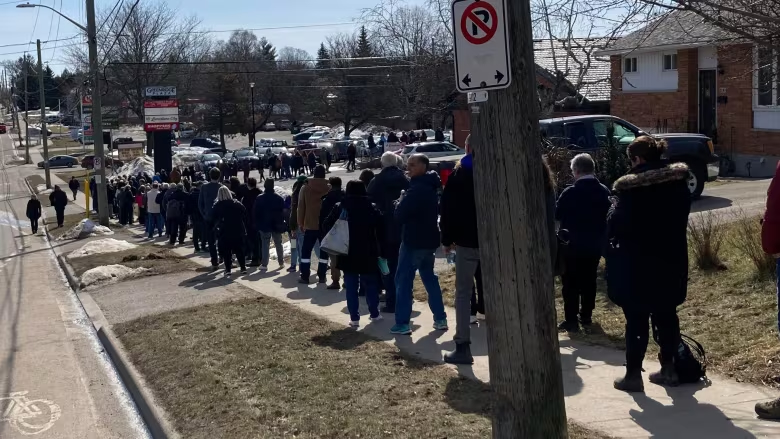
But to say retention and recruitment of physicians is not a major concern, when people line up for hours on end just for the faint chance of getting a family doctor?? That thought process can only be due to a pathologic hatred of physicians, or a delusional mindset totally divorced from reality. Either is a cause for termination. Can the whole team now.

A long line forms outside CDK Family Medicine and Walk-In Clinic in Kingston, Ont.. It was the first day of ‘rostering’ at the clinic, where four doctors will take as many as 4,000 new patients. (Jamie Corbett) – from CBC News

But what of negotiations with the OMA you may ask?

Actually, that’s not hard either. Your ministry has an appointee to the Arbitration Board, just like the OMA does. I believe your appointee is one Kevin Smith. The job of the appointee is to tell you and your team what the lead arbitrator, William Kaplan is thinking and how he is leaning. How they do that is beyond me. When I met Kaplan it was like talking to a Vulcan. There was absolutely no emotion or hint of what he was thinking – but apparently Kevin Smith is better than I am at figuring this out.

One of the above is William Kaplan, Arbitrator, and even after meeting him I’m not sure which is which.

What your appointee will tell you, and what the OMA appointee to the Board will tell the OMA is – Kaplan is wondering “this” or thinking “that” or leaning towards “X percent”. Find out what that X per cent is, offer it to the Doctors for the first year of the new Physicians Services Agreement (PSA). That solves things for one year, which gives you time to pick a brand new negotiations team for year 2-4 for the PSA.

Note to my three loyal readers, yes, this arbitration is ONLY for the percentage increase of the first year of the four year agreement. Worse, while the OMA and Ministry have generally agreed to a 70/30 split of whatever the amount is with 70% allotted to raises, and 30% to be given to targeted programs, they haven’t been able to agree on how the 30% is to be targeted. This means…..more arbitration for that piece. Then, it begins again next year for years 2-4 of the PSA. In essence, we appear to be locked in a perpetual, never ending antagonistic arbitration process (which is still better than unilateral government actions but really frustrating nonetheless).

As I told Premier Ford recently- if health care doesn’t get fixed – I don’t care what the polls say now, or how many by-elections you seem to have won, this is going to be a real problem in 2026. With health care in the crisis it is in now, you need all hands working together and co-operatively. Locking Ontario’s doctors into two more years of extremely adversarial arbitration shows that we are not co-operating and not working together. This is why graduates are leaving the province. And we can’t afford that.

It’s time for you to do the right thing for Ontario, and cut bait with your current negotiations team.

Yours sincerely,

An Old Country Doctor.

Perspectives on Ontario Health Care by a Recent Graduate

NB: My thanks to Dr. Tristan Brownrigg for guest blogging for me today. By his own admission, he never planned to be political, or seek out the limelight. But the situation in Ontario is such that he felt his perspective should be heard. I have a great deal of respect for people like Dr. Brownrigg, who are willing to step out of their comfort zone when necessary, and I commend him for doing so.

Dr. Tristan Brownrigg: I am a family physician, outdoorsman, and rural generalist currently working a mix of clinic, ER and inpatient care in the East Kootenays of British Columbia. I graduated from the University of Toronto Medical School, and did my Residency at Queen’s University (Kawartha site).

I completed family medicine residency in Ontario in 2022 and worked there for 6 months. Prior to this I completed medical school in Ontario, completed my undergraduate in Ontario, and had called Ontario home. Over the years I had watched my goal of working as a comprehensive rural family physician slowly become unsustainable amidst a collapsing system, decades of funding stagnation and poor planning, with a patchwork of good people on the ground trying to do their best in a system that doesn’t seem to value their input. Day after day the insidious march of the family medicine crisis grew closer to the forefront of peoples’ lives and garnered wider media attention, while the government either denied its existence or made no substantive changes that would realistically address it. This has not been the time for band-aids, let alone denial. 

Last year I moved to rural British Columbia to try something different for a year, cautiously optimistic about the significant changes to family practice on the back of the LFP model implementation in early 2023. The Longitudinal Family Physician (LFP) model significantly changed how family physicians billed and were compensated in BC, including the ability to bill for the many hours family physicians typically spend on previously unpaid administrative tasks.

My experience has been night and day. For the first time in my medical career I have felt hopeful about the future of family medicine and find my day to day life to be sustainable. These changes have been received positively amongst all other family physicians I have discussed it with. It is not perfect and there are still kinks to be ironed out, but I at least believe my provincial medical association and government are trying to improve things for family physicians. I am not left questioning if government actions are purely incompetent or malicious with the intent to drive privatization.  

I had retained my Ontario medical license until now, awaiting the May 2024 renewal deadline unsure if I would return home after a year of trying on a different life out west. Reading the recent government positions and negotiation briefs has been the final nail in the coffin for me. The disdain the Ontario government shows towards the hardworking family physicians who hold up the medical system is nothing short of repugnant. After more than a decade of training and education here, I will now be relinquishing my license to practice medicine in Ontario and stay in British Columbia.  

The minister of health thinks recruitment and retention is “not a major concern.” That’s the problem; it should be. If I am not a prime example of this, I don’t know what is. 

I wish all of my colleagues still in Ontario who do not have the luxury to vote with their feet the best of luck. If not this government, then I hope the next one learns to value your work and dedication.  

My Interview Regarding Recruitment and Retention of Doctors Not a Concern

My thanks to Greg Brady and 640 am News Toronto for interviewing me today (May 9, 2024) about comments from the Health Ministry that recruitment and retention of physicians is not a concern for Ontario. Posting a link to the podcast of that interview here, as some forms of social media will not allow the actual link to be posted.

“Health Care for All” Policies Will HURT Physicians and Patients

Recently, physicians leaders have been in the media promoting the right to primary care. I generally refer to this as a “Health care for All” policy, as it is reflective of one of the tenets of former Health Minister (and current Dean of Queens Medical School) Dr Jane Philpott’s new book. Dr. Tara Kiran has also promoted the same through her “Our Care” project. These proposals seek to guarantee a family physician for everyone in a certain geographic area, just like children in an area are guaranteed a school.

While these policies sound nice (for reasons I’ll go over later) – they are doomed to failure. To understand why, let’s look at just two other situations – The Barer Stoddart Report and the move toward safe injection sites and decriminalization of illicit drugs. I appreciate my three loyal readers (I actually gained one!) might be wondering what this has to do with primary care. Bear with me, it hopefully will make sense later.

The Barer-Stoddart report is infamous in Ontario medical politics. It’s the report that is widely viewed as suggesting Ontario had too many (!) doctors in 1990s and led to the reduction of the number of medical school positions. However, what is not commonly appreciated is that was the last recommendation in the report. The first recommendations were to support the current supply of physicians by adding a large number of allied health professionals and making many health systems modifications. If and only if all those recommendations were carried out, then medical school enrolments could be cut. The bureaucrats and politicians looked at that, went through the report, decided that all the other recommendations were too expensive or complicated, and just cut med school enrolment. “The report told us to.”

Similarly, when it comes to drug decriminalization, the idea is best implemented in Portugal. The top line read is “addiction rates fall 40%” after Portugal introduced this policy. BUT a deep dive shows that before decriminalizing drugs, Portugal made a number of legislative changes, ensured that the court systems were educated, ensured that addiction therapy and counselling was available for addicts, and then implemented the decriminalization policy.

In Canada, our bureaucrats looked at Portugal, and figured all the rest of the changes were too complicated. But hey, maybe just decriminalizing will be enough without the other stuff! The result is a disaster when it comes to safe injection sites and an obviously failed policy.

So let’s look at the right to primary care that Drs. Philpott/Kiran and others propose. At their heart, ideas like this are reasonable, make sense and will help improve health care for the general population (I bet you didn’t think I’d say that did you?). They speak to a fairness that just isn’t apparent in the current system. One of the reasons that people pay taxes is so that those taxes can fund health care. How is it fair then, that one taxpayer has a family doctor, and another does not? How is it fair that one quarter of Ontarians can access team based health care, but the rest cannot? And so on.

Well then, what’s the problem and why do I think “Health Care for All” type policies will hurt physicians and patients?

Because I simply don’t believe that our politicians/health care bureaucrats will be able to implement all the work necessary to support this, prior to implementing this change.

Look at the other items I mentioned. Do you really think that the bureaucrats who mucked up so badly will get it right this time? Do you really believe that those bureaucrats are going to provide the admin support, the additional allied health workers, the organizational and structural backing first, before just writing out “everyone gets a family doctor” in the funding contracts?

Not a chance. Zilch. Zero. They will look at the need to invest in teams and say “too expensive.” They will look at the need to add administrative support first and decide that’s not feasible. They will look at the need to build healthcare infrastructure and be confused as to how to do it properly.  They will be aghast when they come to the part that says for teams to be successful, they must be physician led.  “But I’m the aide to the executive secretary of the assistant to the assistant deputy minister’s attache for the chief regional officer of the Primary Care Branch of the Ministry!  I should run the team!”

Then they will come to the part of the policy that says ensure every patient in a geographic area has a family doctor. And those bureaucrats will say “oh that’s easy to do with just some changes and regulation”. And they’ll do just that without any of structural changes needed.

I did some rough calculations for my neck of the woods. Each family doctor in my area would have to take on 200 unattached patients to make this work. The problem is we’re all working at 110% capacity right now. There’s no way we can do that.

So, once “health care for all” comes in what’s going to happen? Physicians will stop doing comprehensive family medicine, myself included.  You can only ask a person to work so hard before they get frustrated and quit.  Which increases the burden on the remaining physicians, which will cause more of them to quit.  And so on.

What’s worse, presenting these policies now deflects from the main issue. Basically, family medicine is no longer economically feasible. Without some immediate stabilization funding, family medicine will collapse.  By the time people figure out how to implement “Health Care for All” and reduce admin burden, you won’t have any family physicians left.  By introducing the “right to primary care” now, the laser like focus on just what is needed to make family practice economically viable is lost and this hurts everyone, patients included.

I genuinely have a great deal of respect for Dr. Kiran and Dr. Philpott in particular (she was the one who sacrificed her political career to warn us that our Prime Minister was an effete, vacuous ninny who for the sake of all Canadians needs to go back and teach drama classes).  But as well intentioned and well thought out as “Health Care for All” may be, now is not the time to talk about it.  

Economically stabilize and support family medicine first.  Then let’s talk.

Dr. Soni Writes to her MP About the Recent Tax Law Changes

My thanks to guest blogger Dr. Deepa Soni, an Emergency Room Physician at Credit Valley Hospital. She has written a much more eloquent letter to her MP about the recent tax changes introduced by the federal government, and allowed me to reproduce here as an open letter.

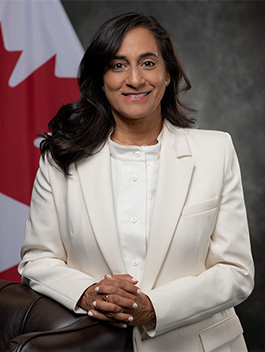
The Honourable Anita Anand,

MP, Oakville,

301 Robinson Street

Oakville, ON

L6J 1G7

 
April 20, 2024

Dear Minister Anand,

I’m writing to you as a constituent of your riding in Oakville regarding your government’s capital gains taxation measures introduced in this week’s budget.

As an emergency physician for the last 25 years, I and thousands of my colleagues in Ontario, were saving in our medical corporation to be able to fund benefits that many Canadians have available through their jobs: maternity leave, disability, and medical/dental benefits. In addition, and most importantly, incorporation allows us to save for our retirement as we do not have pensions (again, a benefit many Canadians, including government employees and civil servants have as part of their employment). Incorporation was a negotiated benefit that was given by the provincial government in lieu of increasing our fees, with the understanding that the structure would allow us to mitigate some of these factors about our career.

When planning for retirement under one set of assumptions, and then finding out that the federal government has moved the goal posts to extract revenue for its budget shortfall, you can understand why so many physicians are bewildered and disappointed by the Liberal government. This would be the equivalent of someone changing the terms of your pension or taking large chunks of it away. For many doctors, this will have profound impacts on their ability to retire when they thought they would.

 
In addition, as a daughter of first-generation immigrant parents, both of whom were physicians, I am certain you had a front row seat watching your parents work hard to obtain their medical degree, residency, and then establishing a practice. This is not to say that other Canadians don’t work hard: the one thing that makes doctors unique is that our fees are set by provincial governments and our fees have not risen to keep up with inflation. Unlike other incorporated professionals such as accountants, dentists, and skilled trades, physicians cannot increase their fees to make up for rising costs. We are locked into the fee schedule determined by provincial governments (who are always employing cost containing measures to balance budgets). The federal government is turning a blind eye to this important point as it does not fall under federal jurisdiction. Nevertheless, the impact cannot be ignored.

 
As a corporate lawyer prior to being elected an MP, I’m sure you would not have wanted your hard work and education to be characterized with the words ‘tax cheat‘ if you had been using a legal way to save for retirement. This is the narrative being circulated in the media and it is deeply disappointing. It is noteworthy that MPs receive an annual pay raise (this year ranging $8000-11900), along with pension and benefits. This makes an MP salary one of the highest earners in Canada, with guaranteed income through retirement.

Yet, it is doctors who are singled out as being in the wealthiest 1% and rhetoric implying that we are not doing our part for less fortunate Canadians. We pay into personal taxes and contribute to the economy like everyone else. As small businesses, doctors support the economy through employing staff (nurses, allied health, receptionists etc.), paying rent, and financially supporting many Canadian companies providing support services to our practices (electronic medical records, medical office supplies etc.).

We are also entrusted with caring for the population of Canada in the most sacred way. This taxation measure comes at a time when the medical profession in Canada is suffering unprecedented levels of burnout. Millions of Canadians cannot access a family doctor because they have closed their practises and left (in large part, due to rising costs and fixed fee schedules). Why in an era when attracting medical graduates to do family medicine is a priority, would your government eliminate one of the few advantages that help new grads set up comprehensive practices so they can care for Canadians from cradle to grave? Does your government understand the downstream effect this capital gains taxation will have on patients for decades to come? 

From watching media interviews recently, it appears that the federal government’s solution to this is “we will just allow in more foreign doctors“. This is deeply hurtful on many levels: it devalues currently practising physicians who have put in their life’s work to bring excellent care to this country’s patients. In addition, it takes many years for a doctor to acclimatize to the healthcare system in Canada. What happens to patients in the meantime? The solution is not to “throw the baby out with the bathwater”. The solution is to step back and really take in the impact of these actions and the message that has been conveyed to the physicians of this country. I hope your government will rethink this and choose to act fairly regarding incorporation for medical professionals. 

Sincerely

Deepa Soni MD CCFP(EM)

Are You Accepting New Patients?

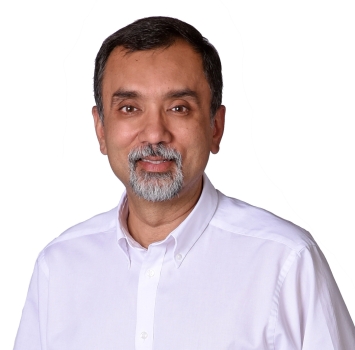
Dr. Madura Sundareswaran guest blogs for me today. She’s a community family physician who’s resume is too long to print here. She helped found the Peterborough Newcomer Health Clinic and is a recipient of the CPSO Board Award which recognizes outstanding Ontario Physicians. This article originally appeared on her LinkedIn page.

The day people stop asking this question is the day we have fixed the primary care crisis.

I’m a family physician doing community-based comprehensive family practice in Peterborough, Ontario. I currently work in three different primary care models in our community – fee-for-service, a team-based family health organization, and nurse-practitioner led clinics. All of my colleagues work very hard providing excellent care to their patients.

Despite this, the latest figures suggest that 32,000 people living in the Peterborough region do not have a family doctor.

What does that look like?

A woman in Peterborough notices a breast lump today and is very worried about it. She frantically searches google and reddit to learn that there are no walk-in clinics here. She calls a number late in the afternoon for a local clinic for unattached patients, but all the spots are full for the day. Her options are a virtual doctor who will never conduct a physical exam – but she thinks an exam is important – how will they ever know what this lump feels like virtually? She wants someone’s expertise, she wants reassurance. She decides to go to the emergency department for this problem…but leaves after waiting for 9 hours. She is guilt-ridden as she waits there – she is not as sick as the others in the waiting room. No physician or nurse practitioner will have enough of a relationship with this woman to know that she recently lost her best friend to breast cancer and the impact this has on her illness experience. She is freaking out about this lump…alone.

Or…

A 68 year old male has seen a few pharmacists and virtual family doctor for his hemorrhoids over the last year. He decides that he just has to live with hemorrhoids. A google search says his symptoms are classic for the problem; he’s reassured. As a doctor, I know that this gentleman needs a physical exam but this man cannot find someone to do it. After a few months he winds up in the emergency department with terrible pain – a physical exam very obviously demonstrates rectal cancer. It’s had a year to grow.

Or…

George is a 58 year old man who has never had a family doctor. He has been on Health Care Connect for four years but no one has ever called him to say they have found him a family doctor or nurse practitioner. He is in “perfect health” so he does not need a doctor. He has never had his blood pressure checked, never been counselled on smoking cessation, and has never had bloodwork done. What he doesn’t know is that his Hemoglobin A1c is 7.4 (he has Type II diabetes but too early for symptoms), he has hypertension (high blood pressure – which in its most common form has no symptoms or signs), and his cholesterol is really high. George will probably have a heart attack in the next 10 years. The potential consequences of a heart attack are death. This was entirely preventable.

What we know: attachment to a regular primary care provider (family physician or nurse practitioner) leads to more preventative care, better chronic disease management, and lower rates of hospital admission (ref)

We need a solution ASAP

I eagerly watched as Ontario announced $110 million that will “connect up to 328,000 people across Ontario to primary care teams.” For my community this also translated to a promise for a community health centre (CHC) to connect 11,375 people to primary care. This is much needed but not enough.

Ontario Health Minister Sylvia Jones announcing expansion of primary health care teams

In order to develop a community health centre – a building must be built or set up, policies will need to be implemented, and several primary care providers including physicians, nurse practitioners, social workers, pharmacists, dieticians, etc. will need to be hired. Even if this could be set up within 12 months, where does that leave the other 20,625 in the region without a family doctor? I’ll tell you – scrambling door to door and still knocking asking if anyone is accepting new patients.

But wait! There are other options. A single full-time family physician working in one of Peterborough’s existing family health organizations can roster approximately 1300 patients and join an existing team-based model. We currently have job openings in every one of our five existing multi-disciplinary teams for family physicians. A clinic could be up and running in a matter of weeks. There are family doctors in this community who are very eligible to take on this job – and would likely consider it if they were fairly and adequately compensated.

Learning from British Columbia

I am a firm believer in learning what works and never reinventing the wheel.

In 2023, British Columbia completely revamped its pay structure for family doctors. They paid their doctors better and restructured compensation models – and apparently within a year they got 700 more doing comprehensive, community-based family medicine.

Dr. Ramneek Dosanjh, Past President of Doctors of BC, who called the new funding formula for family physicians in BC a “seismic shift”

I am going to make a few assumptions but I want to illustrate and oversimplify something here.

  • In the new BC payment model, the pay per full time doctor increased by $135,000/year (assume per full time equivalent). It wasn’t just a pay raise – it involved a few critical changes regarding what doctors could bill for and some restructuring. But the end result was a pay raise.
  • This resulted in an increase of 700 family physicians (assume full time equivalent) practicing comprehensive family medicine over one year.
  • Let’s say 1 full time doctor rosters 1300 patients.
  • If Ontario could get 700 new full-time family doctors to provide comprehensive, community-based family medicine, 910,000 people could now have a family doctor.
  • The entire rollout for the BC program is budgeted at $708 million over three years but this would include complete restructuring from fee for service care. Ontario already invests over $1 billion annually in interdisciplinary primary care teams and we have a significant head start compared to BC a year ago.
  • In contrast, Ontario plans to spend an additional $110 million to connect up to 328,000 people across Ontario to primary care teams.

Providing family doctors with the financial support and resources to set up their own practices is the best bang-for-your-buck approach if the goal is patient attachment to a primary care provider.

We need an all hands on deck approach. Support community health centres, nurse practitioner led clinics, but please also support family physician’s practicing family medicine. That is the only way you will achieve attachment for all Ontarians.

Your most obvious solution is pay family physicians better today – so they will hold off retiring for a couple more years and may actually sign on to take a practice.

British Columbia just proved that fair and competitive compensation for family physicians may result in more of them doing it.

Why do I care?

I have been in family practice for five years. I have a roster of patients who have access to a whole range of team-based primary care services – a pharmacist, a social worker, a nurse practitioner, an RPN and multiple other service through our family health team. Every day I get asked if I can take on a friend or family member as they do not have or just lost their family doctor. This simple ask creates a great deal of stress and guilt for me. I know what happens when someone does not have a family doctor or nurse practitioner. They will be sicker, they may die sooner, they will be alone trying to “doctor” themselves.

The moral distress of being made to feel like I am determining people’s fate – giving some people a high standard of care while others are left to fend for themselves will be what ultimately leads to my exit from this profession in this province. Why do I get to give a small handful of people comprehensive team-based care, while the rest (often marginalized, more vulnerable patients) get nothing? It is not fair.

What next?

We are all eagerly awaiting the next negotiation between the Ontario Medical Association and the Ministry of Health.

If we do not see a pay raise for physicians, or worse, we pay them less – everyone in Ontario can accept the reality that they may have a lovely multidisciplinary medical home with a diverse range of primary care providers – but a family doctor probably will unlikely be part of it.

The next time a leader or politician is raving about their new model for care – or pitch a strategy that does not include a family doctor I urge every tax payer and journalist to ask them:

1.     Do you have a publicly funded family doctor? (Do you truly understand what it means not to have one? Have you ever had to endure the struggle?)

2.     If you are so confident in your plan, would you be willing to give up your family doctor to one of the 2.3 million people in Ontario without one?

3.     Why is fair and competitive financial compensation of family physicians not part of your multi-pronged approach?

We are listening to politicians and leaders sell us on an idea of a fully-funded, glorious renovation. Meanwhile the house is on fire. Your family doctors are a dwindling number of people who cannot contain the flames. What are they worth?