Will the OMA Continue to Restrict Their Elections Process?

Ontario Medical Association (OMA) Election season is upon us again. The nomination period for people interested in running for leadership positions ended recently. This included a video promo in which a certain cantankerous old geezer contributed his two cents. But, will the OMA allow a proper elections process this time round, or will the OMA continue to impose stringent controls on the election process, thus ensuring banality, dullness, and an advantage for mediocre candidates (no really).

In the past, while campaigns for positions at the OMA have hardly been edge of the seat exciting (with many positions either acclaimed or unfilled), there at least was a spectre of campaigning that created some interest in the OMA and the elections process. However, that all started to change a few years ago, due to what I call the Nadia Alam rules. Unlike the real Nadia Alam, those rules desperately need to go the way of the Dodo bird.

Former OMA President Dr. Nadia Alam, the most widely beloved OMA leader in recent memory.

I actually remember when the controversy started. There was to be an election for President Elect. As part of that there was going to be a virtual Town Hall with the candidates. At the town hall, each candidate was asked some pre-selected questions. But then, some random questions were tossed in. And……the complaining began almost instantly after the fact.

“It wasn’t fair to toss random questions in.” “We weren’t prepared to be asked surprise questions” “It was designed to make us look bad.” Etc. The fact that answering unexpected questions might be a skill worth evaluating for a position that entailed a lot of media work, didn’t matter to the complainers. (I mean surely the media would never ever toss unexpected questions your way).

Immediately after my own induction as President, there was a minor controversy that popped up that I had to deal with, completely unprepared. Even the usually benign Medical Post tossed tough questions my way. This happens when you are the spokesperson for the profession (i.e. the actual job of President). Newsflash for those who complained – you didn’t look bad because the “process was unfair” – you looked bad because, well, you sucked at handling the unexpected.

But that wasn’t enough. The next rule that got put in place was to prevent former OMA Presidents from running for the Board, even if they have less than the six year maximum term limit. The reason was ostensibly that “we put our Presidents up on a pedestal and publicize them so much that they have so much name recognition”. Therefore it gives them an “unfair advantage” against others who would run.

To which I say, quoting former Toronto Mayor Mel Lastman – EL TORO POO POO!

There’s a whole bunch of ex-Presidents who, if they ran for something at the OMA, would get completely trounced because of their name recognition. This works both ways people. Do excellent people get positive name recognition? Of course they do. But it’s positive because they are excellent. They are exactly the type of people we need in leadership positions. The…..suboptimal people will get name recognition, just not the kind they want.

It gets worse. In recent years the Board election process has become so restrictive that candidates for Board are basically banned from campaigning. All they can do is have a statement and video message and, well, that’s about it. Heck they are all given a tool kit with “approved” messages to distribute on social media. Once again, this is to ensure “transparent, open and fair election” or some such thing.

Forgetting about the hackneyed nature of the “approved” messages, is it really to much to expect that people running for leadership might actually, you know, have the ability to communicate on their own? And would not the members be better able to judge candidates if they come up with their own messages, rather than some bland, inefficacious template from the OMA?

The problem with this of course is that the only candidates that benefit are the ones who haven’t, through their own hard work, built up their reputation amongst their peers or have the ability to effectively communicate with their colleagues. The mediocre candidates, who don’t have these skills are actually given a leg UP over better candidates because this process brings excellent people down to a mediocre level.

The result is an insomnia curing election process that resulted in barely 10 per cent of all members voting last year.

Why put all these rules in effect?. I’ll be blunt. In my opinion it’s because many OMA physician leaders (including Board Directors) were running scared of Nadia (in medical politics, she’s basically a one name rockstar like Beyonce ). They all knew that if she ran for anything, she would beat whoever she ran against. This is why I call these the Nadia Alam rules. They are designed to minimize the opportunity for someone who through perseverance and inherent excellence has become a great candidate. These rules were put in place to make it easier for the mediocre candidates (like themselves) to win.

I notice with interest that a few candidates for Board (whom I happen to think are excellent) have already announced on some well read physician social media pages that they are running for Board positions. I wonder if some of the usual complainers will be calling the OMA to say that this was “unfair”. This “gives them an unjust head start!”

Look, the reality is that life isn’t fair. Some people are better at being leaders than others. They should be allowed to promote their excellence as it is these excellent people that we need in leadership positions.

As for those candidates who seem to think they “deserve” to be put on an equal footing with those who are clearly better suited for leadership positions? I leave you with some thoughts from one of my favourite, satirists, George Carlin:

OMA, CMA and CCFP Should put MEMBERS, not the Corporation, First

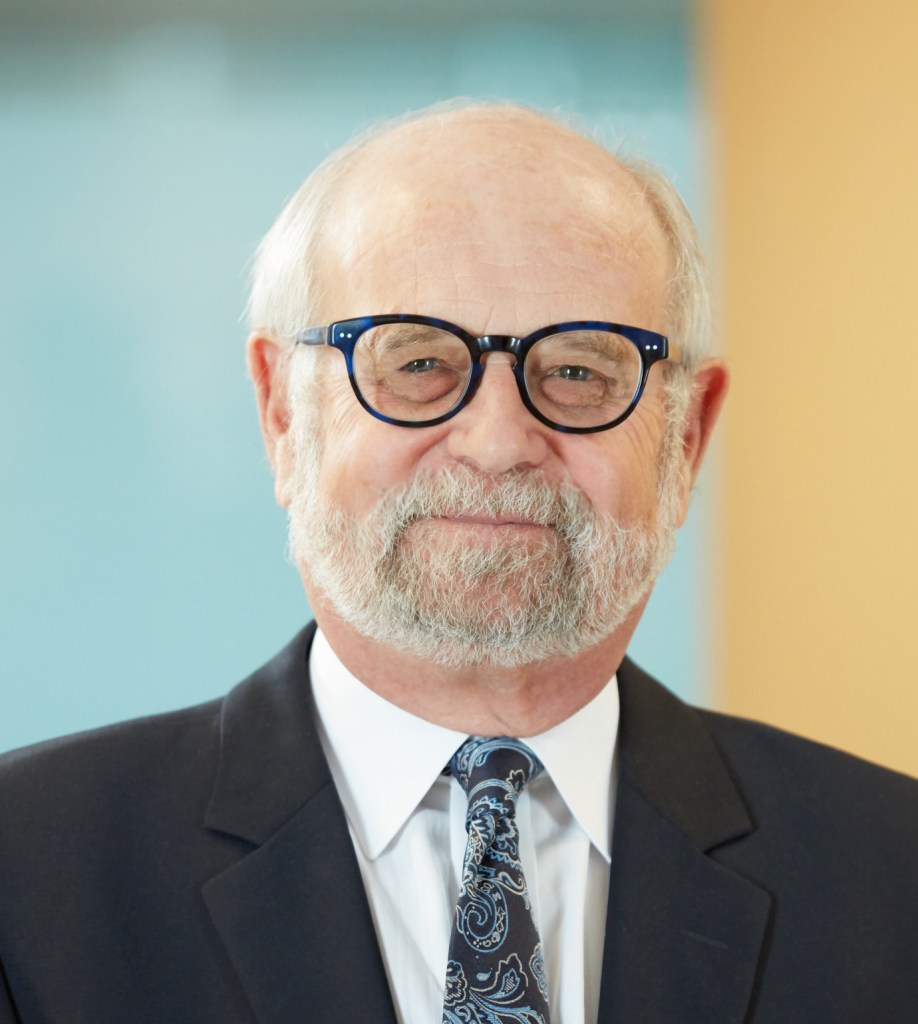
My thanks to Dr. Paul Hacker, pictured here, for his contributions to this blog. Dr. Hacker is a former Vice-Chair of OMA Council and a former member of the SGFP Executive. He’s a strong advocate for physicians interests, exceptionally well versed in governance and bylaws, and good friend.

As we approach election season for the Ontario Medical Association (OMA), many members have regularly brought up one issue to me. Is it true that the the Board Directors for the OMA are all asked to sign “an oath of loyalty to OMA central and not the members?”. The question is usually asked with incredulity and a tone suggesting a disappointing response.

The OMA is a corporation, as is the Canadian Medical Association (CMA) and the College of Family Practitioners of Canada (CFPC). There are many, many good reasons for these organizations to be incorporated, including preferential tax rates, some indemnification for members from assuming the debts of the corporation in case of financial difficulty and a requirement that bylaws and Boards adhere to certain standards.

If you think your membership fees are high now – just wait till you see what they would be if these organizations did not incorporate.

Good corporate governance demands that Board Directors of any corporation put the fiduciary interests of the corporation first. So yes, when I became an OMA Board Director, I did have to sign an agreement saying I would act in the best interests of the corporation. “Oath of loyalty” is a bit hyperbolic, but Directors are legally bound by their fiduciary duties.

In order to help educate Board members on their role, governance training is provided to them when they assume their role at the OMA. I assume this is also the case for the CMA and CFPC. The governance training is usually provided by some hot shot consultant (we got some guru from Rotman Management). Given the consultant’s list of degrees/publications after their name, there was an understandable (but still irksome) tendency for the staff at the OMA to value their opinions on Board matters over some Directors.

But this whole thing is frankly a crock when we are dealing with a membership representing organization (I told our consultant that). Fiduciary responsibility as Director of a for profit corporation whose goal is to increase share value is fine. But it’s quite another when the raison d’être of a corporation is to be a non-profit whose purpose is to advance the interests and needs of the members.

Let’s look at some examples.

I previously wrote about the atrocious 2016 tPSA between the OMA and the Ontario. What I didn’t mention is that that tPSA was actually really good for the OMA as a corporation.

No seriously. The agreement, if passed would have ended a period of internecine warfare between the dismal Kathleen Wynne Ontario government and the OMA, saving a bunch of money. More importantly, that agreement also created some bilateral tables where the OMA could be a joint partner and “co-manage” aspects of the health care system with the government.

There was to be a table on recommendations on physician supply and distribution. One to “co-manage” expenditures of the Physicians Services Budget. A commitment to work together on health reform and much more. In short, that agreement would have given the corporation of the OMA more power and a say in the health care system. All the OMA had to do was ruthlessly stab its members in the back.

Yet look what happened in the aftermath. The then Board was thoroughly repudiated in the ensuring vote. The first non-confidence motion in a OMA Board Executive occurred. Multiple special meetings were called. The resignation of the executive led to a protracted period where the OMA had no leadership or spokesperson. This is good for the corporation?

Want more? Let’s look at the Canadian Medical Association (CMA). In 2018 the CMA surprisingly announced that it was selling MD Management, which many of its members had relied on for their retirement planning. It’s hard not to see why they did it. The CMA got upwards of $2 billion dollars for the deal. The corporation of the CMA clearly benefited significantly and, unless it is financially managed by the same crew that ran Enron (remember them?) – will never go bankrupt and will live in perpetuity.

All it had to do is, you guessed it, stab its members in the back in a move that was widely viewed with a sense of betrayal. The outcome? In 2018 when Dr. Gigi Osler took over as president of the CMA, it boasted 85,000+ members. When Dr. Lafontaine took over in 2022, that number dropped to 68,000. I asked a friend of mine who is quite high up the chain at the CMA what that number is now and she told me she tried to find out, but apparently “they don’t give that number out any more.” Hmm.

NB: I realize correlation does not equal causation, but I find it interesting that the CMA stopped saying how many members it had after a grumpy miserable old coot pointed out the drop in numbers last year. The Medical Post often reprints my blogs – perhaps one of their intrepid reporters could ask the CMA how many members they have today.

Once again, the question needs to be asked, how does a drop in members truly benefit the CMA? How can they honestly say they “champion the medical profession” when they have fewer and fewer doctors as members?

We are seeing the same thing unfold with the College of Family Physicians of Canada (CFPC). They recently announced the truly idiotic suggestion that it was fair to raise their membership fees by 7 %, and the even dumber suggestion that the residency should increase to 3 years from two. They are now embroiled in a serious controversy over this and their annual meeting promises to be a mess. (Both of these moves would benefit the corporate CFPC of course – but not the members or the public).

The pattern is abundantly clear. When Directors of membership corporations don’t put members first (not the corporation), the corporation will suffer. I hope whoever runs for Director of the OMA has the intestinal fortitude to politely confront whatever “governance consultant” is brought on, and tell them just that.

How To Stop the CFPC’s Plan to Increase Residency to Three Years

PLEASE NOTE: This blog has been updated with new information, and to remove an unfortunate aspersion that was cast on the administrators of the PFI Facebook group.

Recently, the College of Family Physicians of Canada (CFPC) announced plans to increase the Family Practice residency to three years. This is, in my opinion, the stupidest decision they have made in my 31 years of practice. They should fix the current residency program instead. They also announced plans to increase the fees that family doctors pay by 7%, at a time when most family doctors are struggling to stay afloat. This would be the second stupidest decision the CFPC has made in my 31 years of practice.

There is, however, some hope. Some members have gotten some private members motions onto the agenda for the CFPC Annual General meeting. If enough ordinary members vote for those motions, it will pressure the CFPC Board into doing the right thing and stopping the implementation of these changes. In typical Ivory Tower fashion, the CFPC has made the voting process exceptionally convoluted. It’s so labyrinthine that it made we wonder if it was done on purpose to discourage members voting. Ivory Tower types don’t usually like listening to the masses.

However, a step by step detailed set of instructions on how to vote down these proposals were posted by Dr. Liz Zubek on her Facebook page. Dr. Zubek stresses that this is an accumulation of information gathered by many doctors and she herself has copied and pasted much of it to form the final set of directions.

Dr. Liz Zubek, family physician from Maple Ridge BC. Dr. Zubek posted instructions on how to vote at the CFPC Annual General meeting.

Dr. Zubek forwarded to me the detailed instructions that the CFPC doesn’t want you to see on my blog. Here’s how to vote ONLINE and IN ADVANCE of the Annual General Meeting. You do not have to attend in person and can do it from your comfy (?) office chair.

From Dr. Zubek’s Facebook page:

There is an ability to vote down the 3rd year of residency with private member motions buried in the agenda for the upcoming CFPC AGM, plus the ability to vote for transparency asking the CFPC to post something as simple as board and committee minutes, so we can actually see how they come to their decisions that make no sense to us …..and we can also vote on their wish to increase our yearly fees. But it isn’t easy to vote!

These are instructions for how to vote by proxy in advance in the CFPC annual member meeting taken from another post: How To Vote, CFPC 2023

1. Find the two emails from Oct 11th called “1 of 2” and “2 of 2” (search “Participate CFPC” if you’ve already deleted them). Click where it says “Register here”:

2. That will take you to a new page. The “control number” to enter here is in the “2 of 2” email from October 11th . You may have to type it in because copy and paste hasn’t worked for a number of people.

3. Once you hit “Login”, it will take you to a new screen. Here, select “Yes, I wish to appoint a proxy”. This means you are registering your vote ahead of the meeting and don’t have to attend the meeting. (If you do end up attending, you are allowed to change your vote):

4. After you press “continue”, it will thank you and then send you two more emails that will take 20-30 minutes to arrive. NEW INFORMATION: Despite doing this 12 hours ago (as of this writing), I have yet to get a second email. Some physicians have told me it is now taking up to 24 hours to get an email. Many are complaining that they are having difficulty logging in in the first place.

5. Open the new “1 of 2” email and click on the weird looking “lumimeet” link and use the password that’s in the new “2 of 2” email to log in. Again, you may have to type it in because copy and paste hasn’t worked for a number of people.

6. You’re almost there! On this page, you can now click to read all the motions if you like. When you’re ready, you click the “Voting” tab at the top and you can…vote!

7. In the interest of democracy, I will not tell you how to vote. However I will tell you that I voted “no” to the fee of increase and “yes” to the next four motions for greater transparency, information as to how the 3rd yr decision was made, a financial impact report of the 3rd year, and to put a hold on 3rd year implementation. Hope this is useful! Now go and vote!! It’s so important.”

You MUST vote by MONDAY OCTOBER 30, 2023 at 5:00 pm!

My two cents:

This grumpy old country doctor intends to vote exactly like Dr. Zubek did. No to the fee increase. Yes to the next four motions. It’s unclear at this time whether these motions are binding on the CFPC Board. But at the very least, us ordinary members have to say our piece.

My initial blog, which I do believe was factual, commented on the fact that this post had been deleted from the Facebook group PFI by the administrators. The author had also been removed from the group. The way I wrote about it unfortunately cast aspersions on the administrators of PFI. That was inappropriate on my part and for that I am truly sorry. My goal was to comment on the fact I felt (and do still feel) it was inappropriate to remove a member without warning, but the initial way it was written suggested something more. That was wrong of me. My apologies again.

But one thing at time. Vote to stop the 3 year residency and fee increases first. Then let’s find out how the situation became so unseemly so quickly.

Easier Than Ever for Front Line Doctors to Control the OMA – But Will They?

My thanks to former OMA Board Chair Dr. Paul Conte for his input into this blog. Dr. Conte is one of the strongest advocates for physicians I have ever met, and doesn’t get nearly the credit he deserves for some of the major work he’s done at the OMA on our behalf.

Big news recently at the Ontario Medical Association (OMA). A new CEO. An announcement from the Board Chair that a mandate for negotiations has been set (hopefully one as strong as that grumpy old bugger suggested).

Which results in a bunch of chatter on Social Media expressing concern about how good a job the OMA is doing. Can the OMA deliver a fair PSA? Do they represent academics only? Specialists? Family Doctors?

Lost in all of this is that the OMAs election period will soon be coming up, and as part of that, we will be voting for leadership positions, particularly at the Board level. It has always been true that the best thing front line doctors can do is to ensure they vote in people to the Board who truly represent them. What’s not appreciated, is that it is much easier to do this now than ever before. (No really, bear with me on this one.)

A brief history lesson first. In 2016 the then OMA Board endorsed a tentative PSA to the membership for an approval. The tPSA was widely viewed by front line physicians as an attack on the profession. Despite this, the Board spent upwards of $3 million of members money in activities to endorse the agreement. They engaged in desultory practices like robo-calls, ads on social media feeds, hyper partisan emesis inducing emails and road shows to promote this dreck of an agreement. (The information about the $3 million was revealed at OMA Council before I joined the OMA Board so I’m not revealing any corporate secrets here).

The tPSA was soundly defeated by a wide margin. That particular Board never could wrap its head around the fact that by being so thoroughly trounced in the membership vote, despite them hyping the agreement at levels only seen by MyPillow guy (and ardent Trump supporter) Mike Lindell, this was a de facto vote of non-confidence in the Board. They continued to carry on trying to govern a profession that had thoroughly repudiated them.

Eventually, a group of front line doctors (including a certain boorish loudmouth from Stayner) did a bunch of work reviewing the then bylaws, and discovered that it was possible to call a special meeting of Council for the purpose of having a vote of non-confidence in the Board Executive. That motion passed of course, but even still, the Board executive initially refused to do the honourable thing and resign. And the truth was, Council legally had no jurisdiction over the Board. (They eventually resigned about a week later).

Now that same group of front line doctors did run for various leadership positions at the OMA but the process was a mess (and in some cases actually contravened Ontario Law). Some members ran in district elections, others (like myself) got voted onto the Board by Council and so on. The convoluted process turned off many front line doctors and momentum was lost.

Having said that, what was accomplished was that there was a dramatic transformation of the governance at the OMA that does allow front line docs to have much more authority than they had before…….assuming they use it. While a many doctors contributed to this, I do need to give a huge shout out to Dr. Lisa Salamon and Dr. Paul Hacker for leading the charge on the transformation.

Drs. Salamon and Hacker who led the governance transformation

OMA Council, which was a collection of members that was voted through various means was sunset. Council supposedly had the authority to govern the Board, but it turns out that’s contrary to Ontario law. That’s why the Board Executive tried to stay on – they knew Council couldn’t enforce the non-confidence motion. Despite some members on various social media posts longing for the old days of Council, Council had its fair share of criticism too.

Now, the OMA Board is directly elected by the membership as a whole. Every member has the ability to vote on every Board Director. It’s smaller – only 8 physicians, and three non-physicians meaning it is easier for an activist group of front line docs (if they got organized) to promote a slate of candidates that can make meaningful changes. It’s one thing to get six docs elected to a Board of 27 like we did back in the day, but if you get 6 elected to a Board of 11 – well……(especially since members vote for half the Board every year).

Most importantly, the membership now has the authority to legally repudiate the Board if they wish. None of the byzantine process we used in 2017. The members decide.

Section 12.3 of the OMA bylaws clearly lays out that 5% of members in good standing (i.e. those who pay voluntary dues -not those who are RANDED) can sign petition demanding a special members meeting. The petition would need state specific which matters would be considered (e.g. a potential motion to remove one or more Board Directors). The special meeting would have to occur within 3 weeks of the petition being presented to the Board. Then whatever motions are the subject of the special meeting would be voted on by all members. Legally speaking, a 2/3 majority would be needed to remove one or more Board Directors, but the reality is that anything over 50% would likely make it impossible to govern.

So, should we immediately recall the Board? Of course not (unless they try to sell us a hard cap on the next PSA in which case I will lead the charge!). But, what it does mean is that as front line members, it has never been easier to organize, get a slate of candidates that agree with your views and influence the Board. Or, if necessary, for front line members to remove the Board.

The question is, do enough front line members have even that little amount of time and energy needed to direct the organization?

We Should Return to the Health Care Model Tommy Douglas Envisoned

In 2004, the CBC surveyed Canadians to see who would take the title of “The Greatest Canadian.” The winner was former Saskatchewan Premier Tommy Douglas. Douglas is widely, and correctly viewed as the founder of socialized health care in Canada.

His selection speaks not only to the dramatic impact he has had on this country, but just how much Canadians value health care. I will dispense with calling it “free health care” because that just isn’t true. Our tax dollars pay for it. But those dollars are supposed to provide care for all those who need it.

Tommy Douglas, the Greatest Canadian, and the founder Medicare.

As our health care system continues to collapse all around us, it’s worthwhile, I think, to look back at the type of health care that Douglas envisioned. The truth of the matter is, that it is quite a bit different than what we have today. And I think, is not at all what Douglas would want.

According to “The Canadian Encyclopedia“, Douglas’ views on health care were shaped by a number of events in his early life.

As a six year old, Douglas fell and cut his knee. Unfortunately, he developed osteomyelitis ( a bone infection) and the consequences hampered him for his entire life. He had numerous operations and at one point doctors in Winnipeg considered amputating his leg. Fortunately, a well know orthopaedic surgeon (Dr. R. J. Smith) offered to operate for free, so long as Douglas allowed medical students to watch. This saved Douglas’ leg, and helped convince him that health care should be readily accessible to everyone.

Later, as a young man, he moved to Weyburn Saskatchewan, and was dismayed by the complete lack of medical care. He buried a 14 year old girl who died of a ruptured appendix because she couldn’t get medical care. He also vividly told of burying two young family men in their 30s, who simply couldn’t afford to get medical care.

These experiences helped to shape his belief that we could do better as a country. I would suggest that all Canadian should share the belief that one should not have to choose between going bankrupt (or dying) and getting basic medical care.

As premier of Saskatchewan, he implemented the Saskatchewan Hospital Services Plan covering the needs of patients admitted to hospital. In 1961, he implemented the Saskatchewan Medical Care Insurance Act, that provided medical insurance for all residents of Saskatchewan. This of course eventually led to other provinces and the Federal Government adopting similar programs.

The wording is important, and I think speaks to what Douglas was trying to achieve, and frankly, where I believe we need to go back to. The plan was “Insurance”. With all the benefits, AND RESPONSIBILITIES that go along with insurance.

Here’s the thing. In Canada, ever since the Canada Health Act, we have really deviated far from what Douglas really envisioned. He never ever wanted a system where you could go to any health care provider and get assessed without any responsibility on your part. Indeed, he spoke to that quite eloquently in the Saskatchewan Legislature on October 13, 1961:

“I want to say that I think there is a value in having every family and every individual make some individual contribution. I think it has psychological value. I think it keeps the public aware of the cost and gives the people a sense of personal responsibility. I would say to the members of this House that even if we could finance the plan without a per capita tax, I personally would strongly advise against it. I would like to see the per capita tax so low that it is merely a nominal tax, but I think there is a psychological value in people paying something for their cards. It is something which they have bought; it entitles them to certain services. We should have the constant realization that if those services are abused and costs get out of hand, then of course the cost of the medical care is bound to go up.”

Douglas intuitively grasped that if people perceive something as “free” they will start to lose their sense of using it responsibly. That’s why the initial Medical Insurance Act was just that. A form of insurance funded by the taxpayer, and like all forms of insurance, there was a deductible and reasonable limitations.

People were able to now access health care, for a small fee that allowed them to recognize that they too had to take some responsibility for how they used the system. They also had to realize that not everything was covered. Basic health care yes. Options like wanting, say, a private room instead of a ward bed in hospital – well that would be an extra.

There are many problems with the Canada Health Act. But the most fundamental is that it is based on the premise that you can endlessly get something (in this case health care) for nothing. Gutless politicians (from all parties) continue to promote this mantra in never ending attempts to woo votes as opposed to, you know, actually telling the people the truth. Namely, that people should take some responsibility for how they use the health care system.

By continuing to perpetuate the the lack of accountability, our cowardly politicians have created a culture of entitlement instead of a culture of empowerment. Many (not all) people believe that they should be able to get all manner of testing because it’s “free”. I’ve been blessed to have a very pragmatic practice in general, but even I have had to tell people that I will not be ordering the serum rhubarb levels their naturopath wanted because it would be “free” if I ordered it instead of them, or the full body MRI that some “wellness consultant” asked for.

It’s time to bring some patient accountability back to health care. And the first step in that would be to go back to the model that Tommy Douglas had proposed all along.

Dear OMA Board Member, About That Mandate for Negotiations

Dear OMA Board Member,

I read, with interest Ontario Medical Association (OMA) Board Chair Dr. Cathy Faulds update last Friday. There’s the usual information in there about the goings on at the OMA (which sadly not enough members pay attention to, though they should). Critically for most members however, was this comment by Dr. Faulds:

“The board will hold a special meeting at the end of September to finalize the negotiations mandate for use by the Negotiations Task Force (NTF)..”

This is a big step in the negotiations process and to truly understand that, members need to understand what a “mandate” is. Allow me to briefly expand on what Dr. Faulds wrote. The short version is that a mandate is the minimum offer the NTF can accept from the government. If the government offers an increase that is equal to or exceeds the mandate, then the NTF will automatically accept that offer on behalf of the Board.

The corollary to that, which some Board members did not understand when I was on the Board, is that if the mandate is met, and the NTF accepts – then it will automatically mean that you as a Board have to accept the offer as well. As per Board rules, you will then have to endorse the government offer to the membership. You can’t very well tell the NTF “you must achieve XYZ”, and if they do achieve XYZ, turn around and say it’s not enough.

Therefore, it is incumbent on you as a Board, to make sure the mandate is sufficient for the membership as a whole, given the times we live in, and the environment around us.

To that end, without spilling specific secrets, I will state that there was quite a lot of discussion about what an acceptable mandate was during my time on the Board. There were some Board Members who wanted to be “reasonable” and some who wanted to take a hard line and keep the mandate high.

I would, respectfully, point out that for the most part, mandates are never met. Usually the NTF comes back to the Board with “we tried – but this is the best we could get” and presents that to the Board. To be clear, I’m referring to all labour negotiations in general, not just physician ones. Negotiations Legal Counsel told us this last time, just ask them. Whatever you (or any Board) sets as the initial mandate, there is a strong chance the NTF will come back to you later and ask you to lower that mandate.

You will need to keep that in mind when setting your mandate.

To that end, I would encourage you to recognize that the time really has never been better to set the bar extremely high for the NTF mandate. It’s not just that physicians are considering leaving the profession. It’s not just that health care is collapsing all around us. It’s not just the ongoing problems with not just recruiting, but retaining physicians. You already know about all of those issues in excruciating detail.

No, the reality is that we now also have some significant competition for physicians within Canada from other provinces. And I mean strongly significant.

Not sure how many of you have seen this summary form the recently approved Physicians Services Agreement (PSA) in Nova Scotia. On the surface there would appear to be a fairly minimal 10% raise over four years. A deep dive however shows significant add ons like improved parental benefits, funding for overhead, funding to hire allied health care professionals, funding for admin work, enhanced FTE and income stabilization for specialists and so on. That plus a retirement fund!

Similarly, in Manitoba, their recent agreement was widely hailed as a landmark and a game changer. I spoke to a friend of mine from Manitoba who confirmed that it too contains things like a retention bonus ($21,000 and higher for those in rural communities), funding for admin time, funding for new models of care, additional funding for those patients who are older and an equity lens applied to fees. In short, the increase is widely viewed to be in the double digits percentage wise per year.

Look, I know the NTF knows all the stuff I’m pointing out (but others who read my open letter may not). I also would acknowledge that Dr. Mizdrak is a fine chair for the NTF and is (in a very good way and said with total admiration on my part) a real pitbull on behalf of the profession. I also have full confidence that the NTF did it’s due diligence in reviewing the many asks by the leaders of all the specialties.

But at the end of the day, it is up to you, dear Board Member to set the minimum acceptable deal (mandate) and it is up to you dear Board Member to ensure that Ontario remains a competitive place to attract physicians.

To that end, you must ensure that if there is a negotiated agreement, it must at least equal the increase in Manitoba or Nova Scotia (whichever is higher). Anything less would, quite frankly, be rightly viewed as the Board selling the profession out. (If we wind up going to arbitration, that’s a different story – but at least we will have gone there because the Board refused to take a sub optimal deal).

All of which is a long way of saying that since it is quite likely that an initial mandate may not be met, it is incumbent on the Board to set a mandate for the NTF that is HIGHER than what was achieved in Manitoba/Nova Scotia. This will allow for the usual process of the NTF having to come back and say what parts can be achieved and what can’t, and allow some wiggle room.

If you set the bar lower, well, frankly, I have to wonder how you can justify saying that you are advocating for the Doctors of Ontario.

Yours truly,

An Old Country Doctor.

Meditech Expanse – How Do I Hate Thee?

Authour’s Note: After another frustrating time of dealing with our hospital’s health information (?) system, Meditech, I felt compelled to re-publish my altogether horrid attempt at poetry.

Meditech Expanse – How Do I Hate Thee?

How do I hate thee?  Let me count the ways.
I hate thee to the depth and breadth and height
My soul does retch when my eyes see your sight
Beginning to end, Expanse does torment
I will despise thee all my living days
Most un-needed code, for us a true blight
I hate thee truly, you dim all good light
Hate thy order entry, makes my mind craze
I hate thee with passion I will not excuse
In my Nuance, errors show up like wraiths
I hate thy med rec so I turn to booze
With my lost joy, I hate thee with the death
and anguish of soul, wrought by those who choose
This Expanse that shall surely take my last breath

– with profuse apologies to Elizabeth Barrett Browning, authour of the original “How Do I Love Thee?”

Screenshot of the highly cluttered and remarkably UN-intuitive Meditech Expanse Home Screen found on the web, presumably from one of their training modules. Patients listed are fake.

RePost: Inside Ontario’s Bloated Health Care Bureaucracy

NB: This is a copy of a column I originally wrote for Postmedia in October of 2015. It’s copied here so that I can access it easily in the future. And a sad reminder that as of 2023, things haven’t changed for the better. If anything, they are worse.

Ontario’s health-care bureaucracy has exploded over the past 12 years, mostly because the government has set up a series of arm’s-length agencies it can scapegoat.

I’ve experienced this bureaucratic mess first-hand.

From 2013 to early 2015, I was the lead physician for the South Georgian Bay Health Links. I took the position because I was told the goal was to co-ordinate care between various health-care agencies to better help patients with the most complex illnesses.

Then-health minister Deb Matthews said there were too many “silos” in the health-care system and anointed her then-associate deputy minister the “silo-buster.” The ADM told us to develop a local solution — because each area is different — and focus on our strengths to help these patients.

Our area is very fortunate to have an advanced IT infrastructure. Virtually all 60,000 residents have an electronic medical record (EMR) in a joint database. We are also one of only two regions in Ontario with electronic prescriptions. This process requires the pharmacy to have a portal that allows it to communicate securely, in real time, with the physician to discuss issues of clinical importance.

My patients have benefitted significantly from this technology, so our thought was to set it up with other allied health-care providers (home-care nurses, retirement and nursing homes, community support workers, etc).

The Ministry of Health funded Health Links through the Local Health Integration Network (LHIN). So we put a proposal together and took it to the LHIN. The LHIN’s IT department liked the idea, but wanted to get input from the ministry. The ministry liked the idea, but wanted us to get the input of eHealth Ontario, the independent agency trying to create electronic health records. eHealth told us to come to a “regional network meeting.”

At the meeting, they thought the idea was good, but asked for the ministry’s eHealth liaison to comment. The liaison referred it to the ministry’s IT group (yes, the ministry has both an eHealth liaison group and an IT group) who wanted to ensure compatibility with a “provincial solution” — even though we were told to develop a local one — and suggested we review with the LHIN IT department.

After a year of “circling back” (a phrase I learned from these guys that I came to detest) we finally gave up, funded the project ourselves for $70,000 — less than a salary on the province’s Sunshine List — and my complex patients are now starting to see the benefits.

As I have come to appreciate, the government set up these various arm’s-length agencies, such as the LHINs, eHealth, Health Quality Ontario, Community Care Access Centres and so on, rather than simply have the ministry accept responsibility for these tasks. From a politician’s point of view, this gives them the ability to deflect criticism by saying such and such agency is “independent.” For the most part, this has worked for the Liberals. They’ve won four elections in a row. But it certainly hasn’t helped the patients any.

My colleague, Dr. Shawn Whatley, posted a superb blog piece that looks at how many bureaucrats work in Canada’s health-care system. It shows Canada has three times as many bureaucrats as other countries with advanced universal-care systems. Even worse, Ontario has only 1.7 acute-care hospital beds per 1,000 people, which is about HALF the average for other OECD countries. Ontario got to this number by closing 17,000 acute-care beds — and laying off the nurses needed to staff them — between 1990 and 2013.

But at least the bureaucrats are producing meaningful reports and are happy to be helping with moving health system transformation forward, right? Not so, according to a recent survey of health leaders conducted by Quantum Transformation Technologies. Most respondents said they aren’t happy with Hoskins or the LHINs.

It’s dramatic just how badly health leaders feel the system is working. The comments at the bottom of the survey are equally telling. There are repeated calls to cut the number of LHINs and reduce the size of the bureaucracy.

So in summary, Ontario is burdened with a bloated, ineffective, and demoralized health-care bureaucracy.

Wynne and Hoskins’ solution to this? Lay off nurses and start a fight with doctors over their fees.

Franz Kafka couldn’t have come up with something this convoluted.

— Mohammad Gandhi, MD, CCFP, FCFP, is an assistant clinical professor at McMaster and Queens universities. 

* More than 1,000 doctors recently joined a Facebook group to complain about how the Ontario Medical Association, which represents them, isn’t sticking up for them in their fee fight with the province.

Earlier this month, the province cut funding for doctor services by $235 million, chopping doctor fees by 1.3%.

******************************

GROWING HEALTH-CARE BUREAUCRACY

* There are 0.9 health-care bureaucrats per 1,000 people in Canada, compared to 0.4 per 1,000 in Sweden; 0.255 in Australia and 0.23 in Japan. Germany has 0.06 bureaucrats per 1,000 people.

* Ontario has only 1.7 acute-care hospital beds per 1,000 people, which is about half the average for other OECD countries. 

*****************************

A recent Canadian Institute for Health Information (CIHI) report — the one Premier Kathleen Wynne and Health Minister Eric Hoskins say shows “Ontario has the best paid doctors in the country” — also says 12,000 Ontario nurses left the profession this past year.

* It also shows Ontario has only 176 physicians per 100,000 people (ranking 7th in Canada).

* Ontario has the fewest family doctors per 100,000 people out of all the provinces. Only 10% of family doctors in the province are accepting new patients.

* A recent Quantum Transformation Technologies survey of Ontario health leaders found 55% think Hoskins is doing a poor to fair job, 62% think the LHINs are doing a poor to fair job, and 50% feel the government has a poor track record of helping those with mental health issues.

Dear Premier Ford, You Know You’re a Conservative, Right?

Dear Premier Ford,

I’m not exactly your harshest critic. I actually support some (not all) of what what you’ve done in health care. Moving procedures from hospitals to outpatient clinics, building new hospitals, enhanced funding for paediatric mental health, are good steps. I hope there will be more commendable steps in the future.

Ontario Premier Doug Ford makes a health care spending announcement

However, I would be remiss if I didn’t point out that the health care system is going to be under a lot of fiscal pressure in the next couple of years. The remuneration that taxpayers pay for front line health care workers is about to increase drastically.

You will note, I hope, that I said “taxpayers” pay. I, like you in the past, try to avoid saying “government money”. The money to pay for health care and other services comes from the pockets of the little guy as a certain politician once put it. Calling it “government money” is just a way to deflect the public from the truth.

At any rate, you are no doubt aware that the nurses in Ontario got a well deserved 11 % arbitration award. You are probably aware that negotiations for a Physicians Services Agreement in Ontario are about to begin. Given that Manitoba just negotiated a record overall funding agreement with their doctors, and Nova Scotia doctors got a significant increase, you will not be able to hold the line against physicians getting an increase in Ontario.

Which of course means that many more health care workers will want an increase too. In short, there is going to be a lot of fiscal pressure on the taxpayer in the near future.

With that in mind, I will confess that my biggest disappointment in your management of health care is that I can’t honestly see that your government has reigned in the bureaucratic bloat that has so hampered the ability of front line physicians (and other health care workers) to look after patients properly.

Bureaucratic bloat is common in all government agencies. I greatly admire politicians who’ve made comments about needing to “end the gravy train” that provides jobs for bureaucrats and a myriad of consultants at the Provincial Government. Perhaps it’s because I live it daily, but no where does this gravy train seem to be so prevalent as health care.

Let’s look at digital health in Ontario for example. You have Ontario MD, which is an arms length agency that claims to be “the only truly provincial digital health network in Canada”, whatever that means. When I was on the OMA Board, OntarioMD was funded by taxpayers around $18 million a year.

But wait, you also have eHealth Ontario, that claims to be “creating a secure electronic health record information system so that all your medical information can be safely shared and accessed by your health care providers“. If I can decipher their audit statements correctly, they get a further $234 million dollars in revenue.

But that’s not all. The Ministry of Health has not one but TWO separate departments that appear to deal with health IT issues. Their organizational chart clearly shows a bureaucrat in charge of Health Services for an Information and IT cluster. She has her own team of well paid bureaucrats. Yet there is another bureaucrat in charge of Digital and Analytics strategy all with his own team of well paid bureaucrats. The Digital Health Branch of the Ministry of Health had a budget of almost $324 million in 2021/22.

And this is where the waste comes in. You have three agencies (one with two departments) to deal with one field, all reporting separately, none of whom necessarily agree with the other on what to do next. I saw this a lot at government when I was with the OMA. So progress was significantly impaired in digital health because not only was there not one vision amongst the agencies, but because every single issue went back and forth between the three agencies to try to get alignment (to cover the asses of the Sunshine List bureaucrats in case something went wrong). As a result, we are far behind every developed country (except the United States) when it comes to digital health.

I remember a politician who said:

What drives me crazy is when you have a supervisor in government, and they report into 12 other supervisors. That’s unacceptable.

That’s exactly what happens with the digital health care strategy in Ontario.

But moreover, the same thing happens in every single branch of the health care system. I mean seriously, if you already have a Clinical Care and Delivery Branch of the Ministry (see organizational chart) why do you need a separate arms length agency like Cancer Care Ontario? Or Ontario Drug Benefit? Or a myriad of others? They should be rolled up into the Ministry. There are many more examples but you get the point I hope.

If you were to simply stop funding OntarioMD (which in my opinion is no longer useful) and the scandal plagued, eHealth Ontario (which completely failed in its mission anyway), that would represent a savings of $250 million. At $100,000 each, that could pay for 2,500 front line nurses. Clearly nurses who provide front line care are more needed than bureaucrats who go around in circles.

The bureaucrats will no doubt fight you if you tried to do this. They will produce reams of power points and glossy manuals (all on the taxpayers dime of course) saying their work is important. But seriously, what would you expect from those who are accustomed to the gravy train?

Conservatives are supposed to be about reducing government waste, decreasing bureaucracy and efficient delivery of services. These are age old principles that, to be honest, I have yet to see from you as Premier.

If you don’t want to heed my advice, might I suggest that you instead take to heart the advice of the politician I mentioned above who wanted to end the gravy train and reduce the reporting to 12 other supervisors nonsense. That politician? A guy by the name of Doug Ford.

Respectfully submitted,

An Old Country Doctor.

#Docxit on the Rise, Means More Trouble for Our Health System

Acknowledgement: I want to thank my friend Dr. Graham Slaughter for coming up with the term “Docxit”. Graham is not only a brilliant internist, but is incredibly talented at wordplay and music. Plus, he has really thick, lustrous wavy hair!

A bunch of stuff has come to my attention recently in my social life and on my social media feeds. I’m saddened by all of these and even more saddened by what this means for the residents of Canada.

Item 1: a friend of mine in her early 40s confided she is going to give up her family practice. She loves her patients, but the admin burden and the poor remuneration make it no longer feasible to do this work.

Item 2: two more friends of mine, also in their 40s, are actively making plans to leave medicine altogether. One of them told me she knew four family physicians (all in their 40s) who left this year alone, and two others in their 30s who have moved out of country.

Item 3: I came across a social media post from a friend of mine from my days in OMA leadership announcing he was now a real estate agent. Amongst the people congratulating him on passing his real estate exams were other physicians also saying they were look at ways of getting out of medicine.

Item 4: The family health organization I’m part of in the Collingwood area has gone from 52 family physicians to 47 as some have retired without finding a replacement, despite trying.

Provincially of course, there are many more such stories. Three family doctors in the Ottawa area left their practices earlier this year. Twenty per cent of family doctors in Toronto are planning on closing their practices in the next five years. The list goes on.

It’s not just Ontario. British Columbia is facing a “dire picture” when it comes to family physicians. Doctors Manitoba, through their excellent (now past) president Dr. Candace Bradshaw, pointed out the need for more doctors on more than one occasion. I could probably find articles from every province highlighting issues with recruiting and retaining physicians, but you get the point.

Doctors, it seems, are looking at leaving the profession (for either retirement or other jobs) in alarmingly high numbers. This phenomenon, dubbed Docxit by Dr. Slaughter, is happening at a time when our health system can arguably least afford it (if it ever really could).

This is particularly a concern as our younger physicians seem to be more likely to quit. A report by Statistics Canada suggested that up to 47% of physicians with less that 5 years experience are intending to leave or change jobs in the next three years. To be clear, they are not intending to retire, just do something other than what they’ve trained for.

From Statistics Canada

This phenomenon is not just present in Canada. The American Medical Association is concerned about “Medicine’s great resignation” as 1 in 5 physicians in the U.S. are also planning an exit in the next two years.

The situation in Europe would appear to be even more dire. The Politico article I linked to states that seven million people in France do not have a family doctor, with more family doctors retiring than setting up a practice. There is a shortage of two million health care workers in Europe. Brexit has badly worsened the shortage of doctors in the United Kingdom. Spain is running out of doctors. And so on.

Once again, those leaving appear to be over represented by younger physicians. It’s so bad that European Junior Doctors (an association of younger doctors in continental Europe) issued a press release warning the health care system there was going to collapse.

What’s going on then? Why are so many doctors leaving? I mean, despite the few (but loud) vociferous miscreants on social media, being a physician is still the most respected profession in the world (at 83% we’re tied with farmers and scientists). Studies show that Canadians trust their doctors to make the right choice for them and are afforded a measure of leeway that politicians and bureaucrats must surely be envious of. And you know that stereotype about first generation South Asian immigrants always wanting their kids to grow up to be doctors because of their status in society – it’s true (trust me, I and many of my friends lived it).

But the reality is that over the past ten years, practicing medicine has devolved to where it is no longer about caring for patients (which is what all good doctors want to do). In Canada, it’s been about fighting bureaucracy. With doctors now spending up to 19 hours a week doing paperwork (that’s a half a work week for most people) or fighting nameless, pointy headed, basement cellar cubicle dwelling bureaucrats to get them to actually pay for surgery that a patient needs, medicine is now more about who can do paperwork better than who can promote health care better.

In the United States, the rise of corporate entities eating up private medical practices has fuelled an explosion of a different kind of paper work, all with its own stresses. One study suggested that each physician spends almost $83,000 U.S. a year interacting with insurance companies.

Add to that the ludicrous number of options and waivers and liabilities and I sometimes think it’s easier to understand Einstein’s Theory of Relativity than it would be to understand U. S. Health Care. Dr. Glaucomflecken does an excellent job of explaining the frustration here:

I don’t know what the reasons for #Docxit are in Europe, but I imagine they are similar. The over bureaucratization of medicine is taking its toll everywhere. As was stated in the Politico article:

“At its core, it’s really that there is the perception that potentially medicine is no longer an attractive career choice, a choice for people to stay in for a whole career. And this will really endanger the sustainability of health care systems in future,” – Sarada Das, secretary-general for the Standing Committee of European Doctors (CPME)

There are so many crises in our health care system right now, it’s honestly hard to keep track. But two things are for certain. First, we won’t be able to fix health care without retaining doctors. Second, as more doctors opt for Docxit, we would appear to be doing a lousy job at retention.