
Lettre ouverte au premier ministre François Legault

L’honorable François Legault, député
Premier ministre du Québec
Édifice Honoré-Mercier, 3e étage
835, boul. René-Lévesque Est
Québec (Québec) G1A 1B4

Monsieur le Premier Ministre,

Vous ne me connaissez probablement pas, et vous vous demandez sans doute ce qui m’a poussé à vous écrire une lettre ouverte. J’ai pris cette décision après avoir fait une entrevue à la radio avec Greg Brady, dans son émission Toronto Today. Durant l’entrevue, Greg m’a demandé de commenter la chicane entre vous et les médecins de votre province. Il a mentionné que, dans les dernières semaines, 263 médecins québécois ont fait une demande de permis pour pratiquer en Ontario.

Je ne prétends certainement pas être un expert du fonctionnement du système de santé au Québec. Je ne me permettrais pas non plus de dire que je comprends toutes les subtilités du projet de loi 2, la législation que vous avez déposée et qui met vos médecins en colère. Et non, je vais le dire d’emblée : je ne sais pas comment se déroulent vos négociations avec les organismes représentant les médecins du Québec (la FMSQ et la FMOQ).

Mais je peux vous dire que mon tout premier billet de blogue (dans le Huffington Post) était une lettre ouverte adressée à l’ancien ministre de la Santé de l’Ontario, le Dr Eric Hoskins. J’avais écrit ce billet parce que son gouvernement parlait d’imposer des mesures unilatérales contre les médecins (ça vous rappelle quelque chose?). Dans ce texte, j’avertissais le Dr Hoskins que des actions unilatérales allaient engendrer le chaos dans notre système de santé :

On ne peut pas retourner à un système où trois millions de personnes et plus n’ont pas de médecin de famille, ou encore à des délais pour consulter un spécialiste (déjà trop longs chez nous) qui deviennent carrément intenables.

J’avais aussi prévenu qu’il y aurait un prix politique à payer en allant de l’avant de façon unilatérale, et que cela nuirait aux libéraux lors de l’élection de 2018. Vous savez peut-être qu’ils ont été complètement anéantis à cette élection-là. Même si une bonne partie de leur défaite s’explique par l’impopularité de la première ministre Kathleen Wynne, je maintiens encore aujourd’hui que les libéraux auraient au moins pu conserver leur statut de parti officiel s’ils n’avaient pas magané le système de santé à ce point.

La raison pour laquelle j’ai pu écrire ces avertissements avec autant d’assurance — et avoir raison au final — ce n’était pas de la clairvoyance de ma part. C’est simplement que j’ai suivi le conseil de Santayana :
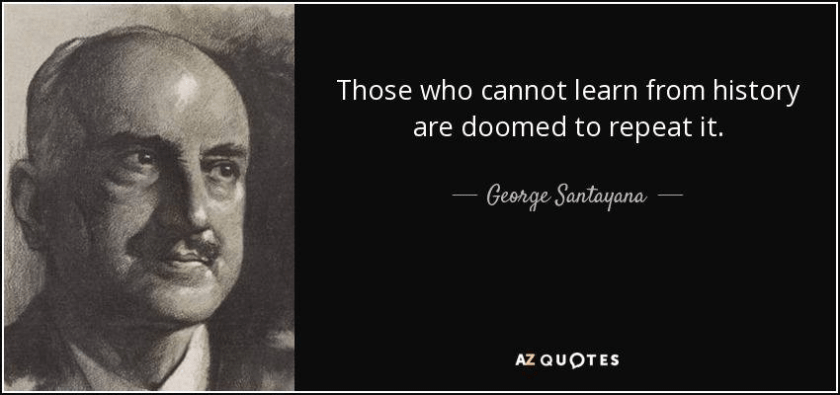
A picture of George Santayana, Spanish American philosopher with his famous quote "Those who don't learn from history are doomed to repeat it"

Ceux qui ne peuvent apprendre de l’histoire sont condamnés à la répéter.

Regardez : je comprends que les détails précis des politiques et du projet de loi que vous déposez ne sont pas identiques à ce que le Dr Hoskins tentait de faire. Mais au bout du compte, le message est le même : votre gouvernement affirme qu’il sait mieux que tout le monde comment gérer le système de santé. Vous n’avez pas besoin de l’avis ni de la collaboration des médecins. Vous allez imposer les changements que vous voulez.

Je vous encourage à retourner lire la lettre que j’avais envoyée au Dr Hoskins. Je lui avais souligné qu’il répétait les erreurs (les gestes unilatéraux) du gouvernement néo-démocrate de Bob Rae dans les années 1990. Ils ont détruit le système de santé avec ces actions-là et ont été balayés lors de l’élection de 1995, sans jamais reprendre le pouvoir depuis.

Jetez un œil au gouvernement progressiste-conservateur de Jason Kenney en Alberta, en 2019. Ils se sont mis en guerre avec l’Alberta Medical Association en 2020. La seule façon pour eux d’éviter une défaite à l’élection suivante a été de sacrifier leur chef, Jason Kenney. (Oui, c’est vrai que le mécontentement lié à sa gestion de la pandémie a joué — mais l’essentiel, c’est qu’il n’y avait rien pour le sauver. S’il avait gardé un système de santé fonctionnel…)

Vous en voulez d’autres? Regardez le gouvernement de Gordon Campbell, en Colombie-Britannique. En 2001-2002, ils ont unilatéralement déchiré une entente d’arbitrage conclue entre le gouvernement et les médecins. Cela a été suivi par des années de conflit, un recours fondé sur la Charte (que le gouvernement a perdu), du tumulte politique, un vote de grève des médecins et une majorité gouvernementale passablement réduite. Finalement, devant un système de santé en déroute — un échec dû à leur propre arrogance — le gouvernement a dû conclure une entente avec les médecins en 2002, puis en 2006, rétablissant l’arbitrage exécutoire dans des conditions jugées très généreuses à l’époque.

Comme je l’avais dit au Dr Hoskins, le message est simple :


Tout gouvernement qui agit unilatéralement court le risque de perdre des médecins.

Et quand ça arrive, le système de santé en souffre. Les patients en souffrent. Les délais augmentent. Les soins se détériorent. Et dans ces situations-là, les gens ne blâment pas les médecins. Ils blâment les politiciens.

En bref, un gouvernement qui impose des mesures unilatérales aux médecins fait du tort aux patients de sa province et paie toujours un prix politique. Au final, il finit toujours par payer plus cher que s’il avait tout simplement négocié de façon juste avec ses médecins dès le départ.

Écoutez : je n’ai pas d’intérêt particulier pour vous ou votre gouvernement. Ça m’est complètement égal que vous gagniez ou non la prochaine élection. Mais mes collègues médecins, je m’en soucie. Et je sais qu’ils sont très, très fâchés (et avec raison). Je me soucie aussi des citoyens du Québec, et je sais qu’ils vont énormément souffrir de vos décisions. En ce moment, 28 % de la population n’a pas de médecin de famille. Imaginez ce qui va arriver si 263 quittent. Et pensez-vous vraiment qu’un médecin sensé voudra venir pratiquer au Québec quand votre gouvernement agit de cette façon?

Croyez-moi : si vous ne changez pas de cap immédiatement et si vous ne recommencez pas à travailler avec vos médecins, les dommages causés à votre système de santé — et aux gens que vous êtes censé servir — seront immenses.

Et si vous ne me croyez pas, relisez la citation de Santayana.

Cordialement,

Un vieux médecin de campagne
Patient Accountability ESSENTIAL for Health Care Systems

Canadians want a high functioning health care system. This requires (but is not limited to):

  • appropriate funding
  • a seamless electronic medical record
  • strong support for Family Doctors (the back bone of a high functioning health care system)
  • a “Goldilocks” level of oversight to ensure the needs of Canada’s diverse areas are met
  • and much more

But one essential feature that is not talked about nearly enough is patient accountability.

Doctors diagnose and treat patients. More of us (thankfully) are also discussing proactive measures to prevent people from getting sick (appropriate screening, lifestyle tips, advice on menopause/andropause etc).

BUT patients also bear a vital responsibility in their own health outcomes. When patients are accountable—meaning they are informed, engaged, proactive AND use the health system appropriately—health systems perform better. In contrast, passive, non-adherent patients who misuse health care will strain health systems.

What exactly is patient accountability? Partly it’s the degree to which individuals take responsibility for managing their health. This encompasses adherence to prescribed treatments, lifestyle choices, attending medical appointments, following preventive care recommendations and so on.  Certainly patients who adhere to current guidelines for, say, diabetic care, will have fewer complications and wind up in hospital less and use health care resources less overall. This is why investing in proactive teaching for diabetics has been shown to not just improve health care outcomes, but also the cost to the health care system.

Patient accountability cannot exist without adequate health literacy. Patients must understand medical terminology, navigate health systems, and assess risks to make informed decisions. Without health literacy, patients cannot be expected to manage their care effectively. A diabetic patient who learns to read food labels, monitor blood sugar, and adjust insulin levels exemplifies accountability in practice. When one looks at just how disjointed our current health care system is, it is clear we have much work to do to improve health literacy amongst our patients – and that dollars spent to promote this, will be money well spent.

But patient accountability also refers to how patients use the health care system. Our health system is under pressure from growing demand, finite resources, and rising costs. Patient accountability plays a pivotal role in mitigating these challenges.

Non-adherence to treatment alone is estimated to cost billions annually in avoidable hospitalizations, emergency room visits, and disease complications. For example, failure to take antibiotics properly can lead to resistant infections requiring more intensive care. Likewise, patients who frequently miss appointments or use emergency departments for non-urgent needs place undue strain on systems designed for more acute care.

By contrast, when patients manage minor issues at home, access preventive care on schedule, and comply with physician recommendations, they reduce unnecessary utilization of high-cost services. This not only frees up resources for patients with more serious needs but also ensures that funding is directed toward value-based care rather than avoidable interventions.

During my time in practice, I have only seen one government paper that talked about patient accountability – the (in)famous Price-Baker report of 2015. Written by lead authours Dr David Price and Elizabeth Baker, and including luminaries like Dr. Danielle Martin on their expert committee, one of it’s ten principles stated:

“The system is built on joint accountability: Each primary care provider group is responsible for a given population and their primary health care needs. Both provider groups and citizens are expected to use the system responsibly.”

Since then of course I have yet to hear Drs. Price/Martin or any of the other authours talk publicly about patient accountability.

How does this work in other countries?

In Finland, patients are told they have the right to good care that respects their opinions and ensures that there is informed consent with treatment. This onus is on the doctors. BUT, Finland also puts accountability measures on the patients in the form of user fees. They are generally nominal, but they are there, and I would suggest, serve to make patients think about whether they are using the health system wisely.

In Norway a similar concept applies. Health care is heavily subsidized by public health insurance. However there are user fees up to a prescribed annual maximum (currently around $250 if I’ve done the currency conversion correctly). After that, all your health care needs are covered (nobody goes bankrupt if they get cancer).

Then we have the Netherlands. There you are required by law to purchase health insurance (there are many providers apparently). There are various packages from basic to more comprehensive and the costs vary. There is also, unsurprisingly, a deductible, known as Eigen Risico, which you have to pay, before your insurance kicks in. It’s mandatory.

I picked these three countries as examples because not only do have a reputation for providing excellent health care, but because they are often talked about in glowing terms by the two physicians who seem to be driving the change in Primary Care in Ontario, Dr. Jane Philpott (Chair of Ontario’s Primary Care Action Team) and Dr. Tara Kiran (principal investigator for the ourcare.ca project)

Dr. Philpott frequently mentions countries like Finland/Norway, not just in her book (Health for All) but in various interviews. Dr. Kiran has frequently mentioned the Netherlands. They have generally spoken in glowing terms about how well the health system works in those countries and how almost everyone has a family doctor there.

I’ve also never heard them talk about how those countries require patients to be accountable for how they use the health care system.

Currently, our health care system is poorly rated compared to its peers. Canadians want, and deserve a better system. But in order to get that, we need to recognize that preserving our health care system is a shared responsibility. Despite what the politicians say, you should NOT be able just to walk into a health care facility and automatically expect it to be perfect. Rather, we should all recognize that we taxpayers own the system. As owners, we have a responsibility to use it fairly, wisely and appropriately. And yes, that means putting in mechanisms like deductibles to ensure people think about how they use health care.

Or we can carry on with a health system in a perpetual state of crisis. The choice really is up to us.

CFPC Blows it AGAIN. Insults All Ontario Physicians.

Jeez. I thought the Board of the College of Family Physicians of Canada (CFPC) had learned its lesson following the ham fisted attempt to raise members dues and extend the residency to three years. In the aftermath of that debacle, CFPC President Dr. Mike Green promised a full review of the organization, and stated that the CFPC will be a “humbler and more transparent organization” going forward.

Turns out that letter was worth as much as an IOU from Donald Trump. The CFPC has once again insulted a good chunk of its members, and showed an incredible disconnect between those who run the organization, and the front line members whose dues pay them.

I’m referring of course, to the incredibly insensitive and frankly, downright insulting decision on the part of the CFPC to ask Dr. David Price to be one of the keynote speakers at the Family Medicine Forum (FMF). The FMF is their biggest continuing medical education event.

Screenshot

I will certainly agree that Dr. Price can be credited with a whole list of accomplishments. His resume alone would exceed the self imposed word count on my blogs. I would also completely agree that as someone who has done a lot work studying primary care models, he would, in fact provide some thought provoking ideas. While I wouldn’t agree with all of them, I would find them worth discussing.

But.

He is also a member of the Ontario Governments negotiations team. This is the team that has refused to provide a reasonable proposal for compensation for family doctors (and specialists) and has instead referred the matter to a protracted arbitration process.

Worse yet, the public proposal that the team put forth at the Arbitration hearing could very charitably be defined as inadequate. Not being in a charitable mood, I would rather describe their proposal as what it really is, insulting, out of touch with reality and frankly, downright offensive. Since Price has chosen to continue to be on that team, the blunt reality is that he is beholden to support the governments arbitration position. (Members of teams like this often will have varying view points internally – so who outside of him knows what he really thinks – but externally – he has to toe the party line).

The CFPC has taken the position that family doctors need to get paid more (good on them), and has lauded provinces like British Columbia who have chosen to do just that. Yet they invite someone whose team has told Ontario physicians that all they deserve (despite the runaway inflation of the past two years) is 3 per cent more.

The CFPC has also strongly advocated for a reduction in the admin burden and health system transformation (good on them). Yet the team Price is part of has essentially refused to acknowledge these as big issues. They’ve refused to pay for admin work. And those 2.5 million people without a family doctor in Ontario alone? The official position, which again, Price has to support as a team member, is that there is “no concern” about the supply of doctors in Ontario.

Yes, that’s correct. Publicly, Price has to say:

  • 3 per cent raise is enough for all doctors (despite inflation being 15% from 2020-2023)
  • no retention or recruitment bonuses
  • no payment for admin time
  • no recognition of the harm caused to physicians morale by such an offer
  • no significant investments in Primary Care
  • there are enough family doctors for Ontario

As I wrote previously, his position is a slap in the face to Ontario physicians.

It’s no secret to the general public that Ontario physicians are demoralized and burnt out. It’s no secret that more and more comprehensive care family physicians are closing their practices and that most are finding joy elsewhere. It’s no secret that many are leaving the province.

But apparently, all of this is either a secret to the CFPC Board and the FMF Team, or they just don’t care. By blindly ignoring the harm that the Ontario Governments Negotiations Team is doing, and inviting David Price to talk anyway, the CFPC and FMF team are basically giving the finger to all of their Ontario doctors.

It just amazes me that when even a young physician can realize that the position that Price’s team is taking is repugnant and shows disdain for family physicians, how can the CFPC Board not seen that??

What’s worse, usually keynote speakers at events get a stipend (having been a keynote speaker I can tell you it’s pretty nominal) and their travel/accommodations paid for. Well where does the CFPC get the money to pay Price? You guessed it, from the very dues collected by the members for whom Price’s negotiations teams has shown nothing but contempt.

Talk about rubbing salt in the wound.

It would be different if Price was not on the Negotiations Team. (If I was on that team and been forced to accept their proposals publicly, I would have resigned in disgust. Only Price can answer why he chooses to continue to stay on). Then, even though many will disagree with Price’s views, it would be fair to have a robust discussion about his ideas and why they may or may not work.

But to invite him to talk despite his association with the negotiations team shows that the complete disconnect between the Ivory Tower mentality of the CFPC and its hardworking frontline members persists despite the embarrassing fiasco of last year. One can only wonder what it will take for them to realize that as a membership driven organization, the CFPC really needs to be more sensitive to the feelings of their members.

It’s (Well PAST) Time to Review the Canada Health Act

The Canada Health Act (CHA).

Written by former Federal Health Minister Monique Begin, and passed into law forty (!) years ago, it transformed health care in Canada, and in many ways transformed the country.

Former Federal Politician and Health Minister Monique Begin

Viewed as sacrosanct by many pundits, it has now reached a status amongst politicians where health care is widely viewed as the “third rail” of Canadian politics. To question the reverential status of the CHA is to invite political ruin, and to be forever labeled as un-Canadian. I guarantee that I will be accused of being a proponent of “two-tier American style health care” simply for suggesting that the CHA should be reviewed.

Yet review it we must, because the reality is that a LOT has changed in health care in the past forty years. The CHA was written before the explosion of medical knowledge we have experienced. To expect it to still be appropriate is naive at best, willfully neglectful at worst. My much smarter friend Dr. Mathew pointed out: The CHA was written when health care was “episodic”. You got sick, you went to the doctor. You usually had a small co-payment. You got treated for the illness you had.

But since the CHA, health care has been massively transformed to focus on prevention. Whether with the explosion of screening tests for cancer, a focus on control of chronic illnesses, or a recognition of the benefits of being able to afford prescription medication, health care is different than 1984. In a big way. This is why the government is again promising pharmacare.

While there will always be a paper, or plan or policy on how to improve health care, very few people have the courage to address the root cause that is stagnating and impeding change, namely the CHA.

For example, Dr. Tara Kiran (Fidani Chair of Improvement and Innovation in Family Medicine at the University of Toronto) had a four part series on health care in the Medical Post where she compared Canada to Denmark. She looked at how Denmark organized their family doctors, how they pay physicians, their EXCELLENT health IT system and so on. All of which is wonderful and really should be emulated here in Canada.

Similarly, former federal Health Minister Dr. Jane Philpott has been in the news a lot with her new book “Health Care for All” in which she talks about the “right” to have a family doctor. In an interview with the Medical Post she glowingly references Norway, and how they build in health care infrastructure, much like they build schools, when planning developments. A lot to like about Norway’s health care system.

But, did you know that Denmark has a parallel private health care system (despite their high taxes) that allows faster access to care along with access to more specialists and other services? Did you know that in Norway, you actually pay for you health care at the point of service until you reach your deductible (2,000 Krone, about $250 Canadian)?

You mean Drs. Kiran and Philpott never mentioned that these countries whose health care systems they have been talking up had defacto co-payments for medical treatments (gasp!) and parallel private health care (gasp!). Gee, I wonder why….

Here’s the thing. EVERY single country that has a better health care system than Canada’s has TWO main features:

  1. A universal health care system that is funded by taxes
  2. An element of private care, usually some combination of a deductible for taxpayer funded services, and, a private system.

To deny the above is simply to deny the facts. To cherry pick what other countries do and to think we can do it here in Canada without also recognizing that much of what they do would contravene the CHA is naive at best, and disingenuous at worst.

Canada had a health care system that was ranked very highly in the mid-1980s. Ontario used to boast of having the “best health care system in the world”. It’s undeniable that since the CHA, health care in Canada has deteriorated markedly when compared to the rest of the world. This is not a coincidence.

What can be done? I believe the CHA should be changed to allow the federal government to have strong controls to ensure a fair universal health AND pharmacare program that functions like a true insurance plan (yes that means deductibles). It should also empower the feds to enforce a Canada-wide health IT system that allows patients to access their own data.

Why deductibles? Why not have the taxpayers pay for everything? Because without them you take away the responsibility for using a service properly. People feel as if it’s something they deserve as opposed to something they have a joint responsibility to manage and care for. By making deductibles illegal, the CHA has created a society of entitlement, instead of one of empowerment.

If you think I’m un-Canadian for suggesting that there should be a deductible on taxpayer funded health insurance, then I would ask that you be fair about it and also call the guy who said this un-Canadian:


“I want to say that I think there is a value in having every family and every individual make some individual contribution. I think it has psychological value. I think it keeps the public aware of the cost and gives the people a sense of personal responsibility.……there is a psychological value in people paying something for their cards……… We should have the constant realization that if those services are abused and costs get out of hand, then of course the cost of the medical care is bound to go up.

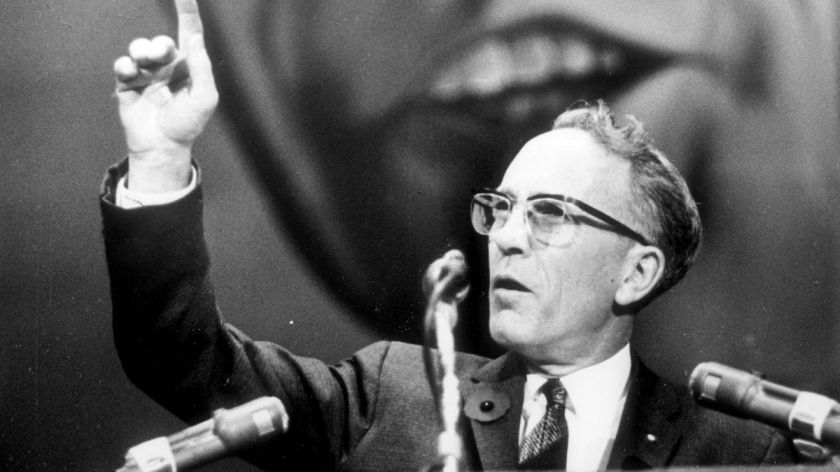
That fellow? Why none other than the “Greatest Canadian” himself, Tommy Douglas.

Tommy Douglas aka The Greatest Canadian

Health care in Canada is at crisis. Patients are suffering terribly. One third of physicians are thinking of leaving the profession in then next two years, just when Canadians need them most.

A crisis demands you look at all options. The first step is to revisit the CHA.

“Health Care for All” Policies Will HURT Physicians and Patients

Recently, physicians leaders have been in the media promoting the right to primary care. I generally refer to this as a “Health care for All” policy, as it is reflective of one of the tenets of former Health Minister (and current Dean of Queens Medical School) Dr Jane Philpott’s new book. Dr. Tara Kiran has also promoted the same through her “Our Care” project. These proposals seek to guarantee a family physician for everyone in a certain geographic area, just like children in an area are guaranteed a school.

While these policies sound nice (for reasons I’ll go over later) – they are doomed to failure. To understand why, let’s look at just two other situations – The Barer Stoddart Report and the move toward safe injection sites and decriminalization of illicit drugs. I appreciate my three loyal readers (I actually gained one!) might be wondering what this has to do with primary care. Bear with me, it hopefully will make sense later.

The Barer-Stoddart report is infamous in Ontario medical politics. It’s the report that is widely viewed as suggesting Ontario had too many (!) doctors in 1990s and led to the reduction of the number of medical school positions. However, what is not commonly appreciated is that was the last recommendation in the report. The first recommendations were to support the current supply of physicians by adding a large number of allied health professionals and making many health systems modifications. If and only if all those recommendations were carried out, then medical school enrolments could be cut. The bureaucrats and politicians looked at that, went through the report, decided that all the other recommendations were too expensive or complicated, and just cut med school enrolment. “The report told us to.”

Similarly, when it comes to drug decriminalization, the idea is best implemented in Portugal. The top line read is “addiction rates fall 40%” after Portugal introduced this policy. BUT a deep dive shows that before decriminalizing drugs, Portugal made a number of legislative changes, ensured that the court systems were educated, ensured that addiction therapy and counselling was available for addicts, and then implemented the decriminalization policy.

In Canada, our bureaucrats looked at Portugal, and figured all the rest of the changes were too complicated. But hey, maybe just decriminalizing will be enough without the other stuff! The result is a disaster when it comes to safe injection sites and an obviously failed policy.

So let’s look at the right to primary care that Drs. Philpott/Kiran and others propose. At their heart, ideas like this are reasonable, make sense and will help improve health care for the general population (I bet you didn’t think I’d say that did you?). They speak to a fairness that just isn’t apparent in the current system. One of the reasons that people pay taxes is so that those taxes can fund health care. How is it fair then, that one taxpayer has a family doctor, and another does not? How is it fair that one quarter of Ontarians can access team based health care, but the rest cannot? And so on.

Well then, what’s the problem and why do I think “Health Care for All” type policies will hurt physicians and patients?

Because I simply don’t believe that our politicians/health care bureaucrats will be able to implement all the work necessary to support this, prior to implementing this change.

Look at the other items I mentioned. Do you really think that the bureaucrats who mucked up so badly will get it right this time? Do you really believe that those bureaucrats are going to provide the admin support, the additional allied health workers, the organizational and structural backing first, before just writing out “everyone gets a family doctor” in the funding contracts?

Not a chance. Zilch. Zero. They will look at the need to invest in teams and say “too expensive.” They will look at the need to add administrative support first and decide that’s not feasible. They will look at the need to build healthcare infrastructure and be confused as to how to do it properly.  They will be aghast when they come to the part that says for teams to be successful, they must be physician led.  “But I’m the aide to the executive secretary of the assistant to the assistant deputy minister’s attache for the chief regional officer of the Primary Care Branch of the Ministry!  I should run the team!”

Then they will come to the part of the policy that says ensure every patient in a geographic area has a family doctor. And those bureaucrats will say “oh that’s easy to do with just some changes and regulation”. And they’ll do just that without any of structural changes needed.

I did some rough calculations for my neck of the woods. Each family doctor in my area would have to take on 200 unattached patients to make this work. The problem is we’re all working at 110% capacity right now. There’s no way we can do that.

So, once “health care for all” comes in what’s going to happen? Physicians will stop doing comprehensive family medicine, myself included.  You can only ask a person to work so hard before they get frustrated and quit.  Which increases the burden on the remaining physicians, which will cause more of them to quit.  And so on.

What’s worse, presenting these policies now deflects from the main issue. Basically, family medicine is no longer economically feasible. Without some immediate stabilization funding, family medicine will collapse.  By the time people figure out how to implement “Health Care for All” and reduce admin burden, you won’t have any family physicians left.  By introducing the “right to primary care” now, the laser like focus on just what is needed to make family practice economically viable is lost and this hurts everyone, patients included.

I genuinely have a great deal of respect for Dr. Kiran and Dr. Philpott in particular (she was the one who sacrificed her political career to warn us that our Prime Minister was an effete, vacuous ninny who for the sake of all Canadians needs to go back and teach drama classes).  But as well intentioned and well thought out as “Health Care for All” may be, now is not the time to talk about it.  

Economically stabilize and support family medicine first.  Then let’s talk.

Dr. Soni Writes to her MP About the Recent Tax Law Changes

My thanks to guest blogger Dr. Deepa Soni, an Emergency Room Physician at Credit Valley Hospital. She has written a much more eloquent letter to her MP about the recent tax changes introduced by the federal government, and allowed me to reproduce here as an open letter.

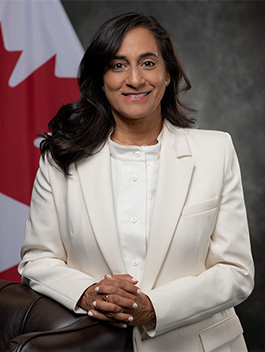
The Honourable Anita Anand,

MP, Oakville,

301 Robinson Street

Oakville, ON

L6J 1G7

 
April 20, 2024

Dear Minister Anand,

I’m writing to you as a constituent of your riding in Oakville regarding your government’s capital gains taxation measures introduced in this week’s budget.

As an emergency physician for the last 25 years, I and thousands of my colleagues in Ontario, were saving in our medical corporation to be able to fund benefits that many Canadians have available through their jobs: maternity leave, disability, and medical/dental benefits. In addition, and most importantly, incorporation allows us to save for our retirement as we do not have pensions (again, a benefit many Canadians, including government employees and civil servants have as part of their employment). Incorporation was a negotiated benefit that was given by the provincial government in lieu of increasing our fees, with the understanding that the structure would allow us to mitigate some of these factors about our career.

When planning for retirement under one set of assumptions, and then finding out that the federal government has moved the goal posts to extract revenue for its budget shortfall, you can understand why so many physicians are bewildered and disappointed by the Liberal government. This would be the equivalent of someone changing the terms of your pension or taking large chunks of it away. For many doctors, this will have profound impacts on their ability to retire when they thought they would.

 
In addition, as a daughter of first-generation immigrant parents, both of whom were physicians, I am certain you had a front row seat watching your parents work hard to obtain their medical degree, residency, and then establishing a practice. This is not to say that other Canadians don’t work hard: the one thing that makes doctors unique is that our fees are set by provincial governments and our fees have not risen to keep up with inflation. Unlike other incorporated professionals such as accountants, dentists, and skilled trades, physicians cannot increase their fees to make up for rising costs. We are locked into the fee schedule determined by provincial governments (who are always employing cost containing measures to balance budgets). The federal government is turning a blind eye to this important point as it does not fall under federal jurisdiction. Nevertheless, the impact cannot be ignored.

 
As a corporate lawyer prior to being elected an MP, I’m sure you would not have wanted your hard work and education to be characterized with the words ‘tax cheat‘ if you had been using a legal way to save for retirement. This is the narrative being circulated in the media and it is deeply disappointing. It is noteworthy that MPs receive an annual pay raise (this year ranging $8000-11900), along with pension and benefits. This makes an MP salary one of the highest earners in Canada, with guaranteed income through retirement.

Yet, it is doctors who are singled out as being in the wealthiest 1% and rhetoric implying that we are not doing our part for less fortunate Canadians. We pay into personal taxes and contribute to the economy like everyone else. As small businesses, doctors support the economy through employing staff (nurses, allied health, receptionists etc.), paying rent, and financially supporting many Canadian companies providing support services to our practices (electronic medical records, medical office supplies etc.).

We are also entrusted with caring for the population of Canada in the most sacred way. This taxation measure comes at a time when the medical profession in Canada is suffering unprecedented levels of burnout. Millions of Canadians cannot access a family doctor because they have closed their practises and left (in large part, due to rising costs and fixed fee schedules). Why in an era when attracting medical graduates to do family medicine is a priority, would your government eliminate one of the few advantages that help new grads set up comprehensive practices so they can care for Canadians from cradle to grave? Does your government understand the downstream effect this capital gains taxation will have on patients for decades to come? 

From watching media interviews recently, it appears that the federal government’s solution to this is “we will just allow in more foreign doctors“. This is deeply hurtful on many levels: it devalues currently practising physicians who have put in their life’s work to bring excellent care to this country’s patients. In addition, it takes many years for a doctor to acclimatize to the healthcare system in Canada. What happens to patients in the meantime? The solution is not to “throw the baby out with the bathwater”. The solution is to step back and really take in the impact of these actions and the message that has been conveyed to the physicians of this country. I hope your government will rethink this and choose to act fairly regarding incorporation for medical professionals. 

Sincerely

Deepa Soni MD CCFP(EM)

Exploring Medical Tourism? Here’s What to Consider.

Full disclosure: I am a consultant for Medicte, a medical tourism firm that provides high quality, cost-effective medical treatments for ALL health conditions in Turkiye. Contact: info@medicte.ca for more information.

Recently, former Ontario Medical Association (OMA) President Dr. Shawn Whatley wrote an opinion piece in the National Post (later reproduced in the Medical Post) quite correctly rebuking Federal Health Minister Mark Holland for insulting people who consider leaving Canada for medically necessary health care. According to an Ipsos Reid poll, that’s 42 percent of all Canadians. As Dr. Whatley pointed out, this isn’t exactly a new phenomenon. In 2017, well before the Covid pandemic that people like to blame for just about everything, over 217,000 Canadians left the country for medical care. God only knows the 2023 number, but it will most certainly be higher.

Ironically enough, the day after Dr. Whatley’s piece was reproduced in the Medical Post, the Medical Post sent me their daily email which included a link to an article that showed Canadians are waiting even longer for surgical procedures than they were in 2019, and it’s not like the 2019 numbers were any good to begin with. It’s well known that increased wait times result in worsening morbidity and mortality (i.e. the longer you wait, the sicker you become). So it’s no wonder that Canadians are exploring ways to get treatments quickly, even if they have to pay out of pocket. Heck, I’m already on record as saying that I will go to Turkiye if Allah/God/Yahweh forbid I got a serious medical illness.

If you too are exploring medical tourism, here’s a list of things to consider.

How safe is the country I’m going to?

The sad reality is that the world has turned decidedly ugly these past few years. Picking a safe country can be hard. Stories like the one about Americans who went to Mexico for medical tourism and got shot by drug cartels get widely publicized. But there are many unsafe countries in the world. If I was looking at south of the United States, I’d probably limit my choices to Costa Rica and Cayman Islands. There are simply too many economic, political and frankly criminal elements in the rest of the countries south of the U.S.

Even in different continents you have to look at safety first. About 5 years ago a patient of mine of Ukrainian descent went back to Ukraine for a procedure. Obviously would not suggest that now with the war on. So look for somewhere stable.

What is the quality of the hospital I will get treatments at?

No hospital is perfect. But you should at least ensure that the hospital you are going to get care at is accredited by the Joint Commission International (JCI). They are the leading international organization that accredits hospitals and other health care organizations in 70 countries across the world. JCI Accreditation won’t guarantee a successful treatment, but it comes with the assurance that you will be getting appropriate health care.

After ensuring JCI accreditation at the facility you are looking at, then check for references. See if you can talk to people who got care there for their first hand experience.

Get a video consult first.

It’s the 21st century people. Video calls are a thing. If the health care organization you are looking doesn’t offer you the ability to have a video consultation with their doctors, before flying out to their country, well that’s a bad sign. During the consultation, ask lots of questions. Specifically ask about their complication rates and what is covered if you are unfortunate enough to get one. Get a “feel” for the doctor. It’s a big decision, be 100 per cent comfortable that the health care organization you are considering, will be able to take care of your needs.

What’s the Cost?

Obviously, at the end of the day, you are going to have to pay for your treatment. I would, of course, not suggest getting the cheapest possible treatment – because that institution has likely cut a lot of corners to get the price down. But at the same time, I weep for the lady from British Columbia, who, frustrated with the long wait times to see an oncologist, spent over $200,000 (US) on cancer care in the United States. She could have gotten the same treatments for around $70-80K in Turkiye. That’s obviously a lot of money, but still a significant savings.

This is actually why I would recommend you NOT go to the United States for medical tourism. Firstly, they have quite a bit of variability in terms of the care they provide. Some facilities are really good and others……well, some are really good. Secondly, the cost just isn’t worth it. A joint replacement that costs $50,000 US in the United States, could likely be had for $15-$20,000 US in another country.

If you are on a budget, or if you, like many others, are going to take out a loan or dip into your retirement savings to pay for these treatments, that difference is significant.

In Conclusion

While some provinces are making necessary investments in health care, the reality is that improvement in wait times are likely years away. The Canadian public is not stupid, they know this. Only 17% of Canadians feel the health system will improve in the near term.

In the interim, I fully expect the number of Canadian citizens who opt for medical tourism to increase. This can be a safe and effective option for Canadians willing to explore this route, but it is important to do your homework first.

A Message for Medical Students Who Didn’t Match on CaRMS Day

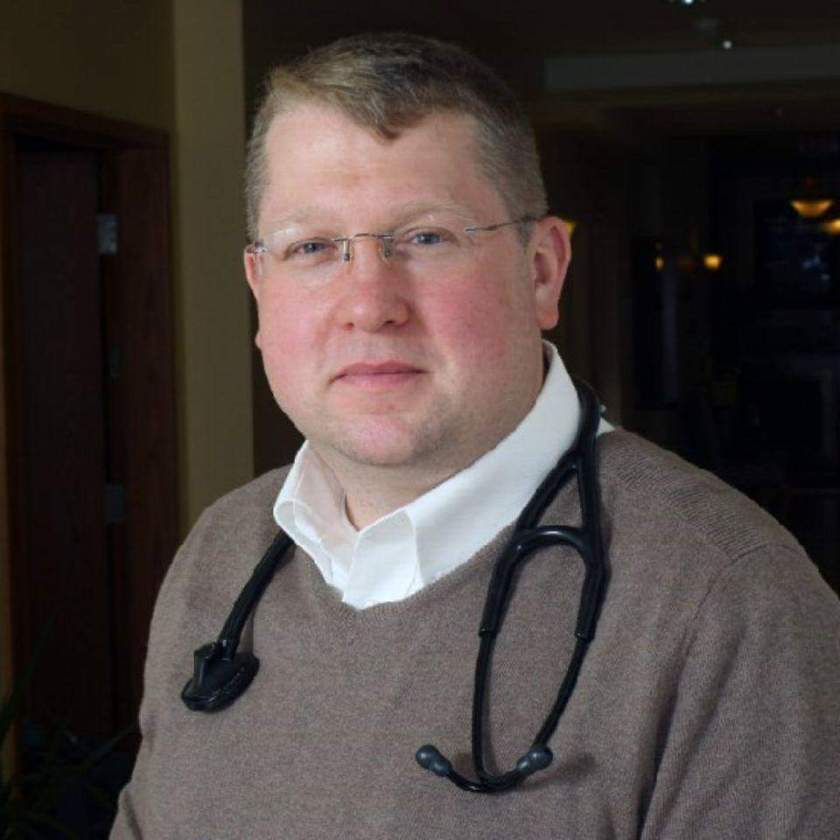
The following blog was written by Dr. Darren Cargill (pictured inset) and originally appeared in the Medical Post in a modified form and it’s full form on his substack. It’s a great message for medical students who didn’t match on CaRMS day, and is being re-printed here with Dr. Cargill’s permission (and my thanks) so that it is more widely available in an un-gated site.

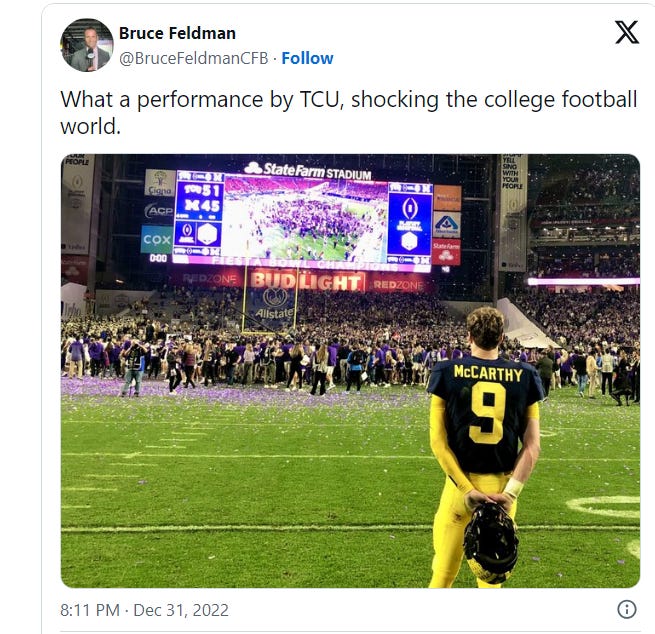
J.J. McCarthy and the UnMatchable

“Those Who Stay Will Be Champions”

On November 14, 2020, Michigan was blown out by Big Ten rival Wisconsin by a score of 49-11, dropping the Wolverines to 1-3 in a pandemic-shortened season. Questions were swirling about if former Michigan quarterback Jim Harbaugh’s would remain as head coach at his alma mater. The Wolverines would finish a the season a disappointing 2-4.

On November 15, J.J. McCarthy sent out this tweet:

What does this have to do with health care in Canada?

I have previously written about my own failures and setbacks. From dropping out of University in 1994 (and 1995, just to be sure), to going unmatched through CaRMs in 2003.

Match Day 2024 is March 19th. I could have simply reposted my Substack from last year and moved on.

But Michigan’s 2023/24 run to the National Championship was calling me.

Anyone who knows Michigan football understands how it works. They run the ball down your throat. They tell you what they are going to do and then challenge you to stop them. Four yards and a cloud of dust. Big Ten Football.

Former Michigan QB Tom Brady played with a chip on his shoulder his entire career. After winning a national championship at Michigan in 1997, Brady was drafted 199th in the 2000 NFL draft. He was not expected to be the GOAT, experts weren’t even sure he would make the team. Yet 10 Super Bowls later (and 7 rings), he is the undisputed greatest Quarterback of all-time (talk to me about Patrick Mahomes in 20 years).

After Michigan’s loss to TCU in the College Playoff last year, McCarthy stood on the field and watched TCU celebrate.

As detailed by Sports Illustrated“There’s perhaps no greater insight into an athlete’s psyche than seeing how they act following a crushing loss. Michigan quarterback J.J. McCarthy gave fans a small glimpse into his mindset after the Wolverines’ devastating 51–45 defeat in Saturday’s Fiesta Bowl.

Playing in the College Football Playoff for the second straight year, Michigan (13-1) was unable to overcome a handful of missed opportunities and came up just short in the national semifinal against the Horned Frogs.”

I see a lot of Brady in McCarthy. Quiet confidence. A leader of men. Resolve in defeat.

Today, J.J. is QB1 for the 2024 College Football National Champion 15-0 Michigan Wolverines.

J.J. enters the 2024 NFL draft this spring. A lot of people (usually Buckeyes) question his ability. They call him a “game manager.” They doubt his arm strength.

Going unmatched in 2003 gave me some serious doubts about my abilities. My skills.

Was it a mistake to go into medicine? Could I be happy in another field? Did I leave the stove on?

Today, I am the only physician in North America with Fellowship in the College of Family Physicians before Canada, Royal College of Physicians and Surgeons of Canada and the American Association of Hospice Palliative Medicine.

The NFL draft is much like the CaRMs match. It distills years of hard work and sacrifice into one binary answer: matched/unmatched.

To my fellow UnMatchable: Take 3 deep breaths…and have faith.

“Destiny is calling. Open up your eager eyes.”

#GoBluE

PS I rushed the field at Michigan Stadium for the first time this year when the Wolverines beat THE Ohio State Buckeyes (again). Destiny calls.

I then watched the Championship game with my friend Mark, who recruited me to Windsor. Destiny calls.

Dr. Alex Duong: The Challenges Facing an Early-Mid Career Family Physician

Dr. Alex Duong, a family physician from the Vanier district of Ottawa (which amazingly enough is one of the more underserviced areas of Ontario).

Recently, Maria DiDanieli, the clinical lead for system navigation at the Burlington Family Health Team, published an opinion piece in Healthy Debate that was critical of the decision of Drs. Alam/Mathew and yours truly to recommend that family practice residents bide their time instead of starting up a comprehensive care practice in Ontario. Dr. Duong replies and has kindly allowed me to reproduce his reply here.

I am a full-time community family physician, and I read this article with great disappointment.


I am at the face of our health care system. When patients cannot get a timely breast biopsy or a knee replacement, they come to ask me. I address their frustrations, alleviate their pain, and manage expectations.


I am the backstop when issues are missed during transitions in care and issues that require follow up.


I am the navigator that helps patients, and their families orient themselves to housing resources, mental health and financial resources.


I am the advocate for my patient’s health when they deal with their employer or insurance companies.


I do all these things and more, alongside everything from newborn care to palliative medicine.


I, like the great majority of family physicians, take pride in our work, and in what we contribute to our patients and the community at large. But Banks do not grant loans for a new clinic based on my contributions to Ontario’s healthcare system. My rent payments do not decrease because of the positive impact I make on my patients’ lives. The salaries of our exceptional staff are not funded by the sound of clanging pots and pans.


Today, to outfit a new clinic with the minimum number of physicians for a FHO requires high 6 figures to 1 million dollars, loaned at 6.95% interest. We guarantee our own lease – we are on the hook for ensuring it gets paid for the entire term. We are responsible for hiring and ensuring our staff are paid a living wage. We invest our own time in making sure the clinic runs. For many community family physicians like me, there is no assistance for any of this from any level of government. No money for staff, no incentives for starting up, no support for logistics. We are in a precarious, failing business model with ever growing administrative burdens patching the system equal to a part-time job. We have been trying to expound on this, and frankly have been completely unsuccessful in this.


You realize that “… there does not seem to be much political will to improve this situation at this time.” Yet, you ask family physicians to work harder expecting a different result from the government.


You state that “With these current barriers and shifts, any new practice can feel fragile or vulnerable to imminent obsolescence.” Yet, you expect new graduates to take on a massive financial risk: long term lease, EMR contracts, and double their already tremendous debt in start-up costs.


You lament that “Instead of acting as beacons of wisdom, encouragement and level-headed advice, we see a growing shift toward inciting everyone to walk out!”. Do you apply this standard to the teachers in Quebec who recently concluded a strike? Are they less dedicated to their students? Do you apply this standard to all groups who organize to make their voices heard?


The authors, Drs. Alam, Gandhi and Mathew made it clear that there are many options available to new family doctors. They warn of the current state of specifically locking into comprehensive family medicine, to ensure that new grads do not put themselves in a position where they will be burnt out early in their career. To me, leadership requires honest conversations, not empty promises, or exploiting the ideals of new family doctors. I find it unethical to sell a romantic vision of what it is like to start and maintain a Family Medicine practice in the current environment. It is a recipe for moral injury when those ideals run flat into the economic realities, as I have experienced.

And frankly, to say to those of us, like myself, still practicing longitudinal family medicine we should be working harder, or we are just doing family practice wrong is demoralizing. It is grossly offensive to my early-mid career family medicine colleagues who have burnt out through great moral struggle and guilt. Disillusioned family physicians who leave longitudinal family practice will not return. The greater harm to the public and to patients is not the Star article that speaks truth to the issue, but the issue itself: that family physicians, whose concerns are being gaslit, continue to leave longitudinal practices.

Dr. Soni Reflects on the Delays in Emergency Rooms

Dr. Deepa Soni, and Emergency Room physician for over twenty years, reflects on the case of a young woman with appendicitis, and the delays in getting her care.

NB: Recently, Julia Malott spoke out on X (formerly known as Twitter) about how terrified she was about Canada’s health care crisis. She wrote how her daughter had not eaten in 18 hours as she continued to wait for surgery for appendicitis. She expressed concern about the lack of the beds and wondered if her daughter would get surgery before the appendix ruptured.

My friend Dr. Soni, who has worked in an Emergency Department for over 20 years, had, as usual, a very thoughtful and well spoken X thread of her own. (Dr. Soni was NOT involved in the care of this young woman). I thank her for allowing me to reproduce her thoughts here.

The only way these stories (about long delays in Emergency rooms) will stop being the norm, is when patients start sharing their experience like this mother did. Only voters can make federal and provincial governments change because votes are the only currency that matter. Doctors and nurses have been raising alarm bells for years without success.

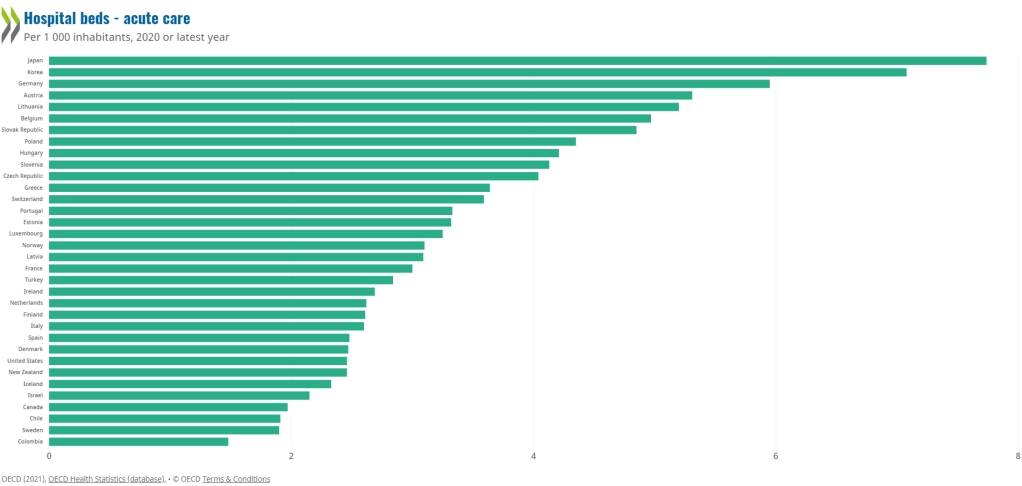
Canada has one of the lowest number of hospital beds of all the OECD countries, around 2.3/1000 people. In comparison countries like Japan, Korea and Germany are around 13/1000.

Graph showing how Canada fourth from the bottom (!) in hospital beds per capita.

Why does this matter? Having low hospital bed numbers means that words like “flu surge“, and “winter surge” — which have been used for decades to explain away long wait times and hallway medicine, are actually not “surges.” Rather, they are the expected backlog in a system that lacks adequate beds and resources.

The population of Canada is increasing and aging. We are about to enter a silver tsunami where a large cohort of our population will be over the age of 65 and many over the age of 85. This will place unprecedented pressures on our health care system.

What happens when the hospital bed capacity is outstripped by the numbers of patients needing care? It means that the elderly patient who needs admission to a hospital bed to recover from a heart attack has no bed to go to and spends days “admitted” in the emergency department. Bureaucrats call these “unconventional spaces.” What they really are, are stretchers.

When the vast majority of the emergency department beds are being used to take care of hospital patients, that means that patients that are waiting in the emergency department waiting room, will wait for hours for care, much like this story is describing.

Media needs to scratch beyond the surface and hold government to account. Real solutions are going to require thinking beyond the four-year election cycle. What will our system look like in 20 years? How do you plan for that?

It’s going to require recognizing the backbone of our healthcare system is primary care. Family doctors are overwhelmed by administrative burden, trying to run their offices and taking care of large practises in the community without adequate resources.


Build community infrastructure with resources like palliative care so that people can remain in their homes comfortably in their last days; and sufficient homecare services so that patients can receive antibiotics and other intravenous treatments at home to ease the pressure on hospitals. These services are vastly underfunded and do not have enough staff to properly provide care for everyone that needs it in the community.

It’s going to require building more nursing homes, retirement homes, seniors services and dementia care programs, as our elderly population will be the largest it’s ever been in this country.


Incentivize and properly pay hospital nurses so that we can recruit and retain them to be able to run departments and programs properly. Currently, agency nurses make at least two times as much as a hospital nurse, and this has created instability in the workforce. Governments need to show that they value nurses and the important work that they do.

Creative solutions like interprovincial licensing of doctors and nurses and a National Pharmacare program will help. While the idea of recruiting from other countries sounds like an easy quick fix, it will not solve anything if those newly obtained doctors and nurses find themselves overworked and burning out soon after arriving to Canada. The system problems are going to impact them just as they have impacted those who are already working in the system. This type of strain is what contributes to moral distress and burn out.

The backlog in the emergency department is a reflection of multiple failing areas that create an overall system that is strained beyond capacity. With each passing year, Canada’s healthcare system has become more and more stretched, trying to provide more care to more people, with fewer resources. Throwing Band-Aids at it is like trying to mop up the floor under an overflowing sink instead of trying to figure out how to turn off the tap.

Stories like this one are happening every day in Ontario and all of Canada. Most patients and families are too busy dealing with the acute health problem to take the time to write to their MP/MPP or to go to the media. But when people take the time to bring these stories to light, a critical tipping point will eventually occur where they can no longer be ignored by government. Because votes matter.

No one who went into healthcare wants to work in a system that makes patients feel like this story illuminated. But we need more voices bringing their stories out in the open. It will improve the system for the people working in it, and for the people receiving care within it. And that is better for everyone.