Dear Minister Jones – Fire Your Negotiations Team.

Dear Minister Jones,

Just me again, a certain crotchety and increasingly cantankerous geezer offering you advice in an open letter that you are not likely to take. But you would be better off if you did. More importantly, so would the people of Ontario.
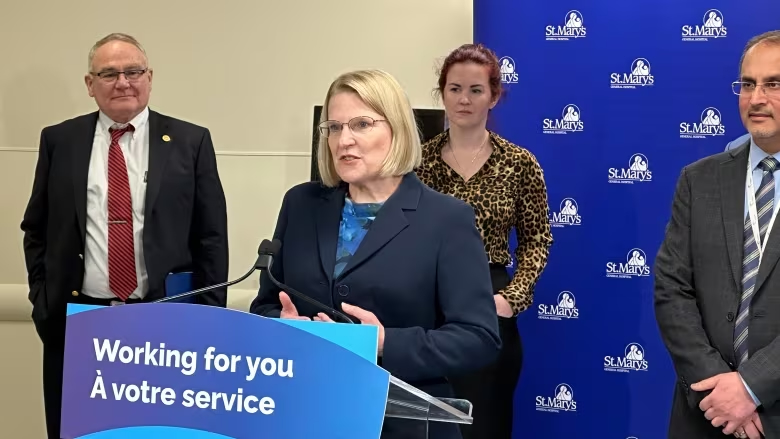
Ontario Health Minister Sylvia Jones

First, I would once again suggest that you have done some good work in the health ministry. Moving surgical procedures to outpatient clinics, increasing the number of diagnostic testing facilities, starting a new medical school focused on training family doctors and more are all good moves. While the effects of some of those decisions will not be felt for many years – the reality is that somebody had to do this to help health care down the road and you’ve done that.

Unfortunately however, the past couple of weeks have been catastrophic for your Ministry’s relationship with Ontario’s doctors. It’s funny how one dumb decision or comment can completely wreck a relationship, but that’s exactly what happened when your Negotiations Team stated that there was “no concern” about a diminished supply of doctors. Therefore, they refused to negotiate money for retention of physicians or admin work, like other provinces have (cough BC, cough Manitoba, cough EVEN Alberta!)

In essence, your Negotiations Team has been a disaster, first by militantly dragging out negotiations into a very adversarial arbitration process (when all the other provinces above figured out a way to, you know, respectfully negotiate with doctors) – and then by making a statement about the supply of doctors that is so comically stupid and out of touch that Ontario has become a laughing stock.
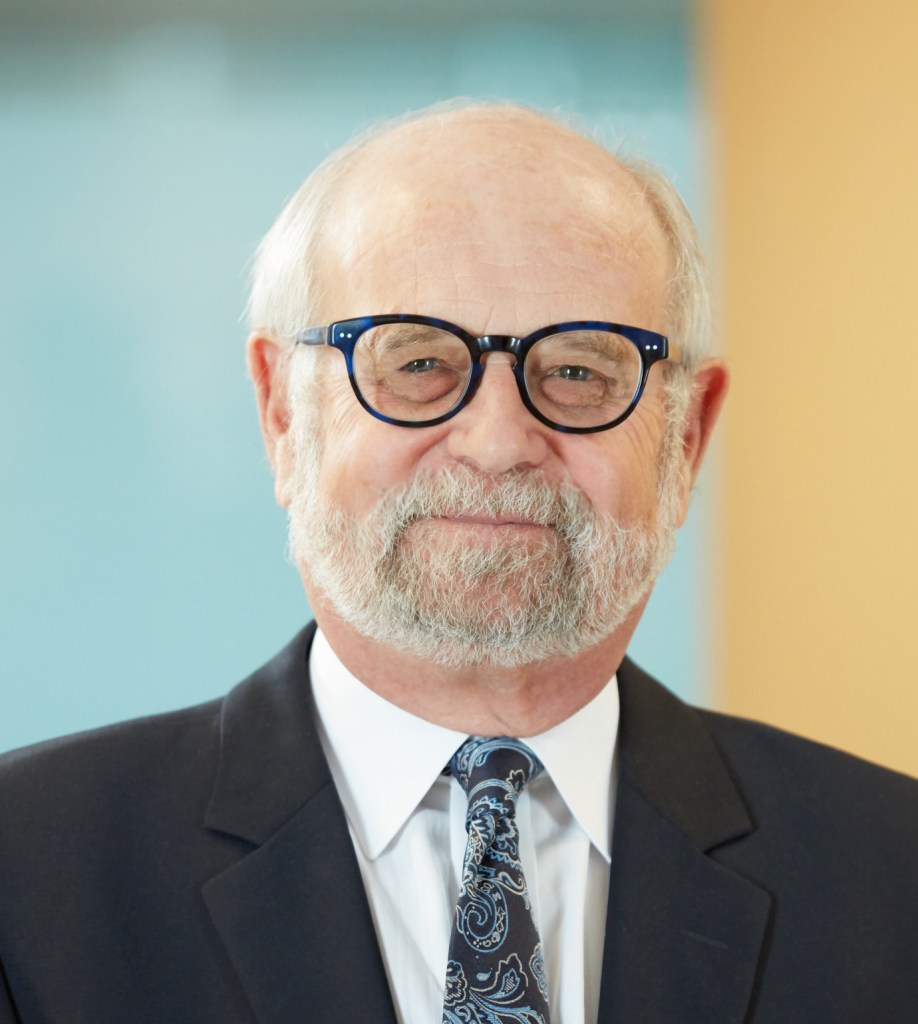
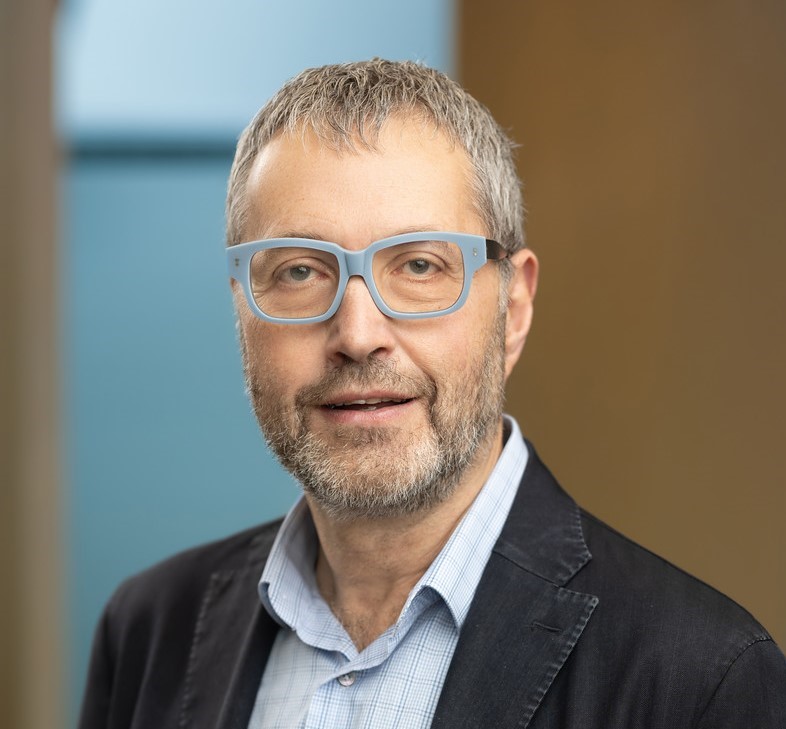
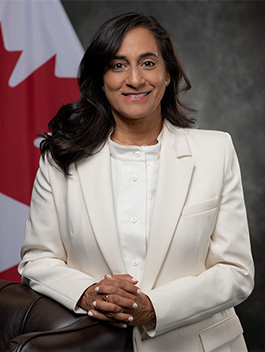
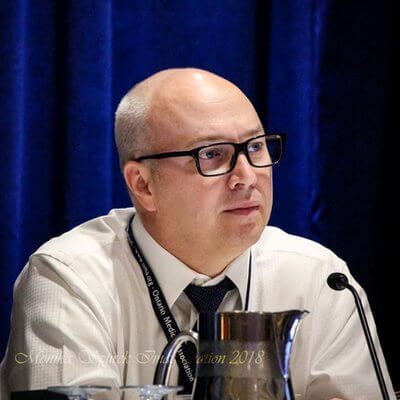
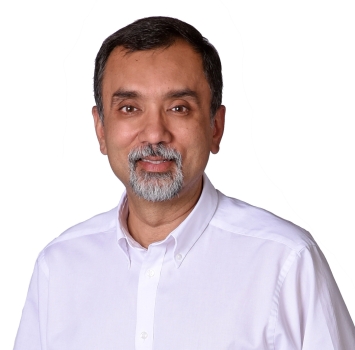
Three members of the Ministry’s Negotiations Team pictured above.

This will not bode well for health care in this province.

Look, I know there may be a temptation to say “Ok this was a mistake” and to try and walk back the comments.. While it’s abundantly true that the people of Ontario are a good and kind people who will forgive politicians if they own up to their mistakes (cough greenbelt, cough enhanced police powers and closing playgrounds during covid) – one thing that politicians can’t survive, is being made a laughing stock. Except Donald Trump of course. I still haven’t figured that one out and I don’t think I ever will. (N.B. Donald Trump is not someone you should try to emulate).

Anyway, the reality is that at this point you really only have one path left to turn this thing around. You have to fire your negotiations team. All of them. I’m not just talking about the seven who were appointed to lead that team, I’m talking about the multiple bureaucrats who give them supporting data and have influenced their position.

The only rational explanation I can think of for those bureaucrats promoting a position of “no concern” about physician supply, and saying doctors are not working hard enough, is that they hate doctors. Many of them were likely hired at a time when it was fashionable to bash doctors for billing “too much”. (BTW how did that attitude work out for the people of Ontario?) They’ve clearly carried on with that belief in the arbitration proposals.

I get that in arbitration, there will be some posturing. If your Negotiations Team had said “we’ll pay you $50 a month as a retention bonus” or “admin work doesn’t involve seeing patients, so we’ll pay you $20 an hour” – I honestly would have shrugged my shoulders, recognized it was part of the arbitration “game” and said nothing.

But to say retention and recruitment of physicians is not a major concern, when people line up for hours on end just for the faint chance of getting a family doctor?? That thought process can only be due to a pathologic hatred of physicians, or a delusional mindset totally divorced from reality. Either is a cause for termination. Can the whole team now.
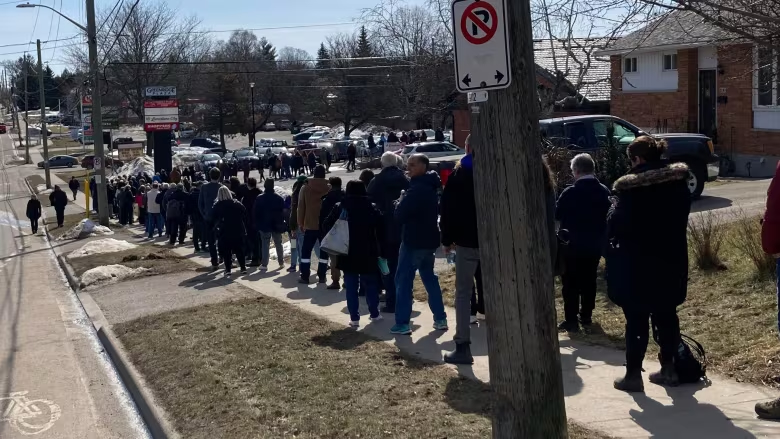
A long line forms outside CDK Family Medicine and Walk-In Clinic in Kingston, Ont.. It was the first day of ‘rostering’ at the clinic, where four doctors will take as many as 4,000 new patients. (Jamie Corbett) – from CBC News

But what of negotiations with the OMA you may ask?

Actually, that’s not hard either. Your ministry has an appointee to the Arbitration Board, just like the OMA does. I believe your appointee is one Kevin Smith. The job of the appointee is to tell you and your team what the lead arbitrator, William Kaplan is thinking and how he is leaning. How they do that is beyond me. When I met Kaplan it was like talking to a Vulcan. There was absolutely no emotion or hint of what he was thinking – but apparently Kevin Smith is better than I am at figuring this out.

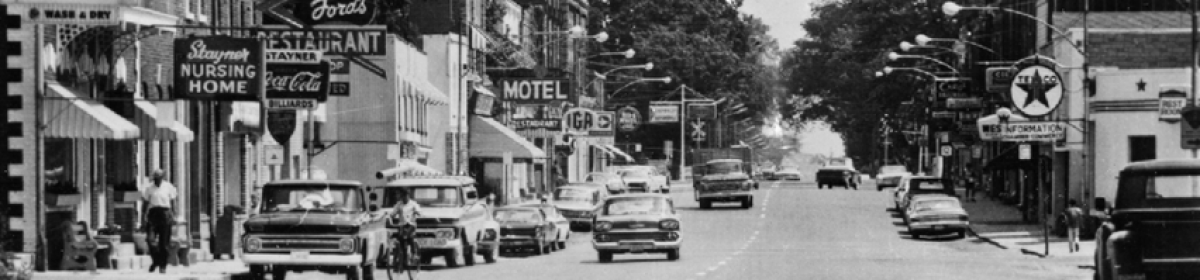
One of the above is William Kaplan, Arbitrator, and even after meeting him I’m not sure which is which.

What your appointee will tell you, and what the OMA appointee to the Board will tell the OMA is – Kaplan is wondering “this” or thinking “that” or leaning towards “X percent”. Find out what that X per cent is, offer it to the Doctors for the first year of the new Physicians Services Agreement (PSA). That solves things for one year, which gives you time to pick a brand new negotiations team for year 2-4 for the PSA.

Note to my three loyal readers, yes, this arbitration is ONLY for the percentage increase of the first year of the four year agreement. Worse, while the OMA and Ministry have generally agreed to a 70/30 split of whatever the amount is with 70% allotted to raises, and 30% to be given to targeted programs, they haven’t been able to agree on how the 30% is to be targeted. This means…..more arbitration for that piece. Then, it begins again next year for years 2-4 of the PSA. In essence, we appear to be locked in a perpetual, never ending antagonistic arbitration process (which is still better than unilateral government actions but really frustrating nonetheless).

As I told Premier Ford recently- if health care doesn’t get fixed – I don’t care what the polls say now, or how many by-elections you seem to have won, this is going to be a real problem in 2026. With health care in the crisis it is in now, you need all hands working together and co-operatively. Locking Ontario’s doctors into two more years of extremely adversarial arbitration shows that we are not co-operating and not working together. This is why graduates are leaving the province. And we can’t afford that.

It’s time for you to do the right thing for Ontario, and cut bait with your current negotiations team.

Yours sincerely,

An Old Country Doctor.

Ontario Government’s Arbitration Position a Slap in the Face for Physicians

On May 6, as part of a needlessly protracted negotiations process, the Ontario Medical Association (OMA) and the Ministry of Health (MOH) began public arbitration hearings to determine a compensation package for physicians for the fiscal year April 1, 2024 to March 31, 2025.  Yes, arbitration has begun AFTER the last contract expired, and physicians will need to be given retroactive pay.   

This is happening as part of the Binding Arbitration Framework (BAF) between the OMA and the MOH.  When the two sides can’t agree on a compensation package after a defined period of time and negotiations, arbitration is invoked.  The expectation is that arbitrator William Kaplan will issue an award sometime in August.  It’s possible the two sides may reach an agreement before then as negotiations are allowed to continue during arbitration. It’s not unheard of that arbitration can sometimes pressure two sides to get a deal done before a decision is rendered.

William Kaplan, of Kaplan Arbitration Services

One common misconception I hear from my colleagues is that Mr. Kaplan will have to pick one side or another.  That’s not the case.  The BAF we have is for something called Binding Interest Arbitration.  Mr. Kaplan will likely award something in between.

Public arbitration, is just that.  It means that the arbitration briefs submitted by the two sides are public, and the arbitration hearings are public.  Which means that physicians across Ontario know exactly what the government thinks they are worth.  And that knowledge will demoralize an already disheartened profession.

Having gone through this process as an OMA Board member in the past, let me acknowledge a few things right off the bat.

  1. Arbitration is still a lot better than the alternative, which would be unilateral government action.  We’ve been down that road before during the Hoskins/Bell years and that was just plain awful for not just physicians, but patients as well.
  2. As part of the arbitration process, the government purposefully put a “lowball offer” forward.  Basically they know the arbitrator will likely award more than they offer so of course they try to present a lower version than they normally would expect.
  3. In that vein, I would have expected the OMA to present a higher requestAll physicians deserve a raise, and their proposal does address that. But the ask frankly just catches up (barely) for the last few years so calling their brief a “strong” demand is inaccurate.
  4. Our negotiations counsel, Messrs Goldblatt and Barrett, frequently told me that it is much better to have a negotiated settlement that both sides agree to, than one that was forced on them by an impartial third party.  More chance of the two sides willingly implementing the many nuances in an agreement as complex as the physicians one.

However there is one thing that hasn’t been considered.  Arbitration frequently leaves bad feelings amongst the two parties.  In the sports world for example, one has to look no further than Toronto Maple Leafs goalie Ilya Samsonov.  He took the team to arbitration last summer.  The team clearly said some negative things about him to justify their offer to him.  While the team has not exactly been forthright about what exactly was wrong with him mentally, there can be no doubt that he had a terrible first half of the hockey season.  It was so bad he eventually got demoted (on paper) to the farm team – and his play was so bad no other team in the NHL wanted him (ouch).

Toronto Maple Leafs goaltender Ilya Samsonov

This is why sports teams try to avoid arbitration – they know that the process can be ugly, and can adversely affect the performance of their top athletes who have to listen to negative things said about them.  For teams to succeed, the top athletes have to play their best.

Looking at the situation in Ontario, it’s frankly hard, as a physician, to feel anything but insulted and disrespected by how the MOH negotiations team has acted.  It’s bad enough that they appear to have, for the most part, stalled the negotiations to the point where arbitration is needed.  Contrast this with Manitoba, Saskatchewan and British Columbia, where the governments realized that they needed to retain their physicians due to the current crisis in health care, and made widely applauded agreements with their doctors.  But Ontario’s arbitration position is so pathetically inadequate (even when considering they are low balling for arbitration) that one really has to wonder if they want to have good relationships with their doctors going forward.

From 2020 to 2023 – inflation has gone up by 14.8% (with another 2.9% for this year so far). Nurses were given an additional 6.75% (on top of their previous agreements) due to the unconstitutionality of Bill 124. And yet the MOH thinks physicians should only get three percent?? With no recognition of administrative burden? And the MOH claims there are no retention/recruitment issues?? Have they talked to the over 2 million people without a family doctor??

Does their negotiations team truly understand the harm they are doing by putting forward such an insulting and offensive proposal?? 

Here’s the thing, after a contract is agreed to or arbitrated, physicians and government will need to work together for the benefit of the people of Ontario.  Yet how does any reasonable person expect physicians to work with a government team that on the one hand says that “physicians are valued and respected” but then, at the first chance they get, demean them with such a pathetic position.  

Remember, many of the bureaucrats who provide supporting information to the MOH’s negotiations team have other roles.  They’ll show up on other bilateral committees between physicians and the MOH.  And after you denigrate people so badly with such an abhorrent brief, will there really be any trust between the two sides (and yes, they are now sides – this opening position makes it clear we are not on the same “team”).  

Just like the Leafs needed Samsonov to, you know, make a few saves earlier in the season, the government needs physicians at their peak to deal with and give their best advice on the current mess that is health care.  And while physicians, as is their nature, will genuinely try their hardest to do so – the blunt reality is that Samsonov tried his best to make more saves as well.  But when your head is not in the right space…….. 

At this point there really is only one solution.  The MOH negotiations team needs to formally apologize to all physicians for their incredibly repulsive offer.  Then they need to look at BC, Manitoba and Saskatchewan, and put together a fair and competitive agreement so that more physicians don’t look elsewhere. This can be done tomorrow.  

Otherwise, I genuinely fear that we are going to continue to lose physicians, not only in fields where they are desperately needed, but to other jurisdictions as well.

Dr. Soni Writes to her MP About the Recent Tax Law Changes

My thanks to guest blogger Dr. Deepa Soni, an Emergency Room Physician at Credit Valley Hospital. She has written a much more eloquent letter to her MP about the recent tax changes introduced by the federal government, and allowed me to reproduce here as an open letter.

The Honourable Anita Anand,

MP, Oakville,

301 Robinson Street

Oakville, ON

L6J 1G7

 
April 20, 2024

Dear Minister Anand,

I’m writing to you as a constituent of your riding in Oakville regarding your government’s capital gains taxation measures introduced in this week’s budget.

As an emergency physician for the last 25 years, I and thousands of my colleagues in Ontario, were saving in our medical corporation to be able to fund benefits that many Canadians have available through their jobs: maternity leave, disability, and medical/dental benefits. In addition, and most importantly, incorporation allows us to save for our retirement as we do not have pensions (again, a benefit many Canadians, including government employees and civil servants have as part of their employment). Incorporation was a negotiated benefit that was given by the provincial government in lieu of increasing our fees, with the understanding that the structure would allow us to mitigate some of these factors about our career.

When planning for retirement under one set of assumptions, and then finding out that the federal government has moved the goal posts to extract revenue for its budget shortfall, you can understand why so many physicians are bewildered and disappointed by the Liberal government. This would be the equivalent of someone changing the terms of your pension or taking large chunks of it away. For many doctors, this will have profound impacts on their ability to retire when they thought they would.

 
In addition, as a daughter of first-generation immigrant parents, both of whom were physicians, I am certain you had a front row seat watching your parents work hard to obtain their medical degree, residency, and then establishing a practice. This is not to say that other Canadians don’t work hard: the one thing that makes doctors unique is that our fees are set by provincial governments and our fees have not risen to keep up with inflation. Unlike other incorporated professionals such as accountants, dentists, and skilled trades, physicians cannot increase their fees to make up for rising costs. We are locked into the fee schedule determined by provincial governments (who are always employing cost containing measures to balance budgets). The federal government is turning a blind eye to this important point as it does not fall under federal jurisdiction. Nevertheless, the impact cannot be ignored.

 
As a corporate lawyer prior to being elected an MP, I’m sure you would not have wanted your hard work and education to be characterized with the words ‘tax cheat‘ if you had been using a legal way to save for retirement. This is the narrative being circulated in the media and it is deeply disappointing. It is noteworthy that MPs receive an annual pay raise (this year ranging $8000-11900), along with pension and benefits. This makes an MP salary one of the highest earners in Canada, with guaranteed income through retirement.

Yet, it is doctors who are singled out as being in the wealthiest 1% and rhetoric implying that we are not doing our part for less fortunate Canadians. We pay into personal taxes and contribute to the economy like everyone else. As small businesses, doctors support the economy through employing staff (nurses, allied health, receptionists etc.), paying rent, and financially supporting many Canadian companies providing support services to our practices (electronic medical records, medical office supplies etc.).

We are also entrusted with caring for the population of Canada in the most sacred way. This taxation measure comes at a time when the medical profession in Canada is suffering unprecedented levels of burnout. Millions of Canadians cannot access a family doctor because they have closed their practises and left (in large part, due to rising costs and fixed fee schedules). Why in an era when attracting medical graduates to do family medicine is a priority, would your government eliminate one of the few advantages that help new grads set up comprehensive practices so they can care for Canadians from cradle to grave? Does your government understand the downstream effect this capital gains taxation will have on patients for decades to come? 

From watching media interviews recently, it appears that the federal government’s solution to this is “we will just allow in more foreign doctors“. This is deeply hurtful on many levels: it devalues currently practising physicians who have put in their life’s work to bring excellent care to this country’s patients. In addition, it takes many years for a doctor to acclimatize to the healthcare system in Canada. What happens to patients in the meantime? The solution is not to “throw the baby out with the bathwater”. The solution is to step back and really take in the impact of these actions and the message that has been conveyed to the physicians of this country. I hope your government will rethink this and choose to act fairly regarding incorporation for medical professionals. 

Sincerely

Deepa Soni MD CCFP(EM)

Blowin’ In The Wind

These lyrics were written by the incomparable Bob Dylan in 1963. Sad that they are still relevant today.

How many roads must a man walk down 
Before you call him a man? 

How many seas must a white dove sail 
Before she sleeps in the sand? 

Yes, and how many times must the cannonballs fly 
Before they’re forever banned?

The answer, my friend, is blowin’ in the wind 
The answer is blowin’ in the wind

Yes, and how many years must a mountain exist 
Before it is washed to the sea? 

And how many years can some people exist 
Before they’re allowed to be free? 

Yes, and how many times can a man turn his head 
And pretend that he just doesn’t see?

The answer, my friend, is blowin’ in the wind 
The answer is blowin’ in the wind

Yes, and how many times must a man look up 
Before he can see the sky? 

And how many ears must one man have 
Before he can hear people cry? 


Yes, and how many deaths will it take ’til he knows 
That too many people have died?

The answer, my friend, is blowin’ in the wind 
The answer is blowin’ in the wind

Are You Accepting New Patients?

Dr. Madura Sundareswaran guest blogs for me today. She’s a community family physician who’s resume is too long to print here. She helped found the Peterborough Newcomer Health Clinic and is a recipient of the CPSO Board Award which recognizes outstanding Ontario Physicians. This article originally appeared on her LinkedIn page.

The day people stop asking this question is the day we have fixed the primary care crisis.

I’m a family physician doing community-based comprehensive family practice in Peterborough, Ontario. I currently work in three different primary care models in our community – fee-for-service, a team-based family health organization, and nurse-practitioner led clinics. All of my colleagues work very hard providing excellent care to their patients.

Despite this, the latest figures suggest that 32,000 people living in the Peterborough region do not have a family doctor.

What does that look like?

A woman in Peterborough notices a breast lump today and is very worried about it. She frantically searches google and reddit to learn that there are no walk-in clinics here. She calls a number late in the afternoon for a local clinic for unattached patients, but all the spots are full for the day. Her options are a virtual doctor who will never conduct a physical exam – but she thinks an exam is important – how will they ever know what this lump feels like virtually? She wants someone’s expertise, she wants reassurance. She decides to go to the emergency department for this problem…but leaves after waiting for 9 hours. She is guilt-ridden as she waits there – she is not as sick as the others in the waiting room. No physician or nurse practitioner will have enough of a relationship with this woman to know that she recently lost her best friend to breast cancer and the impact this has on her illness experience. She is freaking out about this lump…alone.

Or…

A 68 year old male has seen a few pharmacists and virtual family doctor for his hemorrhoids over the last year. He decides that he just has to live with hemorrhoids. A google search says his symptoms are classic for the problem; he’s reassured. As a doctor, I know that this gentleman needs a physical exam but this man cannot find someone to do it. After a few months he winds up in the emergency department with terrible pain – a physical exam very obviously demonstrates rectal cancer. It’s had a year to grow.

Or…

George is a 58 year old man who has never had a family doctor. He has been on Health Care Connect for four years but no one has ever called him to say they have found him a family doctor or nurse practitioner. He is in “perfect health” so he does not need a doctor. He has never had his blood pressure checked, never been counselled on smoking cessation, and has never had bloodwork done. What he doesn’t know is that his Hemoglobin A1c is 7.4 (he has Type II diabetes but too early for symptoms), he has hypertension (high blood pressure – which in its most common form has no symptoms or signs), and his cholesterol is really high. George will probably have a heart attack in the next 10 years. The potential consequences of a heart attack are death. This was entirely preventable.

What we know: attachment to a regular primary care provider (family physician or nurse practitioner) leads to more preventative care, better chronic disease management, and lower rates of hospital admission (ref)

We need a solution ASAP

I eagerly watched as Ontario announced $110 million that will “connect up to 328,000 people across Ontario to primary care teams.” For my community this also translated to a promise for a community health centre (CHC) to connect 11,375 people to primary care. This is much needed but not enough.

Ontario Health Minister Sylvia Jones announcing expansion of primary health care teams

In order to develop a community health centre – a building must be built or set up, policies will need to be implemented, and several primary care providers including physicians, nurse practitioners, social workers, pharmacists, dieticians, etc. will need to be hired. Even if this could be set up within 12 months, where does that leave the other 20,625 in the region without a family doctor? I’ll tell you – scrambling door to door and still knocking asking if anyone is accepting new patients.

But wait! There are other options. A single full-time family physician working in one of Peterborough’s existing family health organizations can roster approximately 1300 patients and join an existing team-based model. We currently have job openings in every one of our five existing multi-disciplinary teams for family physicians. A clinic could be up and running in a matter of weeks. There are family doctors in this community who are very eligible to take on this job – and would likely consider it if they were fairly and adequately compensated.

Learning from British Columbia

I am a firm believer in learning what works and never reinventing the wheel.

In 2023, British Columbia completely revamped its pay structure for family doctors. They paid their doctors better and restructured compensation models – and apparently within a year they got 700 more doing comprehensive, community-based family medicine.

Dr. Ramneek Dosanjh, Past President of Doctors of BC, who called the new funding formula for family physicians in BC a “seismic shift”

I am going to make a few assumptions but I want to illustrate and oversimplify something here.

  • In the new BC payment model, the pay per full time doctor increased by $135,000/year (assume per full time equivalent). It wasn’t just a pay raise – it involved a few critical changes regarding what doctors could bill for and some restructuring. But the end result was a pay raise.
  • This resulted in an increase of 700 family physicians (assume full time equivalent) practicing comprehensive family medicine over one year.
  • Let’s say 1 full time doctor rosters 1300 patients.
  • If Ontario could get 700 new full-time family doctors to provide comprehensive, community-based family medicine, 910,000 people could now have a family doctor.
  • The entire rollout for the BC program is budgeted at $708 million over three years but this would include complete restructuring from fee for service care. Ontario already invests over $1 billion annually in interdisciplinary primary care teams and we have a significant head start compared to BC a year ago.
  • In contrast, Ontario plans to spend an additional $110 million to connect up to 328,000 people across Ontario to primary care teams.

Providing family doctors with the financial support and resources to set up their own practices is the best bang-for-your-buck approach if the goal is patient attachment to a primary care provider.

We need an all hands on deck approach. Support community health centres, nurse practitioner led clinics, but please also support family physician’s practicing family medicine. That is the only way you will achieve attachment for all Ontarians.

Your most obvious solution is pay family physicians better today – so they will hold off retiring for a couple more years and may actually sign on to take a practice.

British Columbia just proved that fair and competitive compensation for family physicians may result in more of them doing it.

Why do I care?

I have been in family practice for five years. I have a roster of patients who have access to a whole range of team-based primary care services – a pharmacist, a social worker, a nurse practitioner, an RPN and multiple other service through our family health team. Every day I get asked if I can take on a friend or family member as they do not have or just lost their family doctor. This simple ask creates a great deal of stress and guilt for me. I know what happens when someone does not have a family doctor or nurse practitioner. They will be sicker, they may die sooner, they will be alone trying to “doctor” themselves.

The moral distress of being made to feel like I am determining people’s fate – giving some people a high standard of care while others are left to fend for themselves will be what ultimately leads to my exit from this profession in this province. Why do I get to give a small handful of people comprehensive team-based care, while the rest (often marginalized, more vulnerable patients) get nothing? It is not fair.

What next?

We are all eagerly awaiting the next negotiation between the Ontario Medical Association and the Ministry of Health.

If we do not see a pay raise for physicians, or worse, we pay them less – everyone in Ontario can accept the reality that they may have a lovely multidisciplinary medical home with a diverse range of primary care providers – but a family doctor probably will unlikely be part of it.

The next time a leader or politician is raving about their new model for care – or pitch a strategy that does not include a family doctor I urge every tax payer and journalist to ask them:

1.     Do you have a publicly funded family doctor? (Do you truly understand what it means not to have one? Have you ever had to endure the struggle?)

2.     If you are so confident in your plan, would you be willing to give up your family doctor to one of the 2.3 million people in Ontario without one?

3.     Why is fair and competitive financial compensation of family physicians not part of your multi-pronged approach?

We are listening to politicians and leaders sell us on an idea of a fully-funded, glorious renovation. Meanwhile the house is on fire. Your family doctors are a dwindling number of people who cannot contain the flames. What are they worth?

Exploring Medical Tourism? Here’s What to Consider.

Full disclosure: I am a consultant for Medicte, a medical tourism firm that provides high quality, cost-effective medical treatments for ALL health conditions in Turkiye. Contact: info@medicte.ca for more information.

Recently, former Ontario Medical Association (OMA) President Dr. Shawn Whatley wrote an opinion piece in the National Post (later reproduced in the Medical Post) quite correctly rebuking Federal Health Minister Mark Holland for insulting people who consider leaving Canada for medically necessary health care. According to an Ipsos Reid poll, that’s 42 percent of all Canadians. As Dr. Whatley pointed out, this isn’t exactly a new phenomenon. In 2017, well before the Covid pandemic that people like to blame for just about everything, over 217,000 Canadians left the country for medical care. God only knows the 2023 number, but it will most certainly be higher.

Ironically enough, the day after Dr. Whatley’s piece was reproduced in the Medical Post, the Medical Post sent me their daily email which included a link to an article that showed Canadians are waiting even longer for surgical procedures than they were in 2019, and it’s not like the 2019 numbers were any good to begin with. It’s well known that increased wait times result in worsening morbidity and mortality (i.e. the longer you wait, the sicker you become). So it’s no wonder that Canadians are exploring ways to get treatments quickly, even if they have to pay out of pocket. Heck, I’m already on record as saying that I will go to Turkiye if Allah/God/Yahweh forbid I got a serious medical illness.

If you too are exploring medical tourism, here’s a list of things to consider.

How safe is the country I’m going to?

The sad reality is that the world has turned decidedly ugly these past few years. Picking a safe country can be hard. Stories like the one about Americans who went to Mexico for medical tourism and got shot by drug cartels get widely publicized. But there are many unsafe countries in the world. If I was looking at south of the United States, I’d probably limit my choices to Costa Rica and Cayman Islands. There are simply too many economic, political and frankly criminal elements in the rest of the countries south of the U.S.

Even in different continents you have to look at safety first. About 5 years ago a patient of mine of Ukrainian descent went back to Ukraine for a procedure. Obviously would not suggest that now with the war on. So look for somewhere stable.

What is the quality of the hospital I will get treatments at?

No hospital is perfect. But you should at least ensure that the hospital you are going to get care at is accredited by the Joint Commission International (JCI). They are the leading international organization that accredits hospitals and other health care organizations in 70 countries across the world. JCI Accreditation won’t guarantee a successful treatment, but it comes with the assurance that you will be getting appropriate health care.

After ensuring JCI accreditation at the facility you are looking at, then check for references. See if you can talk to people who got care there for their first hand experience.

Get a video consult first.

It’s the 21st century people. Video calls are a thing. If the health care organization you are looking doesn’t offer you the ability to have a video consultation with their doctors, before flying out to their country, well that’s a bad sign. During the consultation, ask lots of questions. Specifically ask about their complication rates and what is covered if you are unfortunate enough to get one. Get a “feel” for the doctor. It’s a big decision, be 100 per cent comfortable that the health care organization you are considering, will be able to take care of your needs.

What’s the Cost?

Obviously, at the end of the day, you are going to have to pay for your treatment. I would, of course, not suggest getting the cheapest possible treatment – because that institution has likely cut a lot of corners to get the price down. But at the same time, I weep for the lady from British Columbia, who, frustrated with the long wait times to see an oncologist, spent over $200,000 (US) on cancer care in the United States. She could have gotten the same treatments for around $70-80K in Turkiye. That’s obviously a lot of money, but still a significant savings.

This is actually why I would recommend you NOT go to the United States for medical tourism. Firstly, they have quite a bit of variability in terms of the care they provide. Some facilities are really good and others……well, some are really good. Secondly, the cost just isn’t worth it. A joint replacement that costs $50,000 US in the United States, could likely be had for $15-$20,000 US in another country.

If you are on a budget, or if you, like many others, are going to take out a loan or dip into your retirement savings to pay for these treatments, that difference is significant.

In Conclusion

While some provinces are making necessary investments in health care, the reality is that improvement in wait times are likely years away. The Canadian public is not stupid, they know this. Only 17% of Canadians feel the health system will improve in the near term.

In the interim, I fully expect the number of Canadian citizens who opt for medical tourism to increase. This can be a safe and effective option for Canadians willing to explore this route, but it is important to do your homework first.

Open Letter to Premier Ford: Fix Family Medicine or Risk Losing the Next Election

Dear Premier Ford,

Just me again, your erstwhile, somewhat (but not completely) humble old country doctor. Like last time, I would point out that I am really not your harshest critic. I want to recognize that you have done much for health care infrastructure over the past few years.

For reasons that I cannot fully explain, the previous Liberal regime simply stopped building the necessary infrastructure to help Ontarians. Whether it was new (badly needed) nursing homes, new hospitals, or new teams, the Liberals basically did, well, nothing in terms of infrastructure. To your credit, you’ve reversed that trend and are building facilities we in Ontario need. (As an aside, you seem to like building things a lot!)

Ontario Premier Doug Ford

But all of that building will not mean much in two years (when the next election is – nudge, nudge, wink, wink) if, as projected, over 25% of Ontarians don’t have a family doctor. Yes, you can correctly point out that the decline in family medicine was caused by the Liberals (it truly was – Eric Hoskins was by far the worst Health Minister I personally have seen in my time in health care). You can point out that the Liberals slashed the capitation model favoured by most family docs that started the downward trend. You can also point out that their favoured Deputy Health Minister Bob Bell thought family medicine was so easy he could return to it after over thirty years away:

Screenshot

He even tried to mansplain one of the true leaders of family medicine on how the system should work.

It’s true Bell and Hoskins were completely wrong. That will NOT matter because by 2026, the general public will say – “well you’ve had 8 years to fix this – you haven’t done enough”. That’s just how politics is, and I think deep down you know that.

You can, truthfully, also say that you are listening to organizations like the Ontario College of Family Physicians or the Ontario Medical Association (OMA) and who continue to go on about how team based care is the future of family medicine and how it can help solve the problem. You may not know this but I was the founding Chair of the Georgian Bay Family Health Team . I happen to believe in physician led team based care.

But here’s the thing. It will take a minimum of five years (if we’re lucky) to build out all those teams. That’s assuming the bureaucrats from the Ministry GET OUT OF THE WAY and let front line family physicians be in charge of the teams. But we are losing family doctors by the week. The people of Ontario can’t wait five years.

There is one thing that can be done now however, to stem the tide, and stabilize the system. You need to give comprehensive care family physicians an immediate, and significant raise. How significant? You will need to give an immediate 35% increase to comprehensive care family docs along with annual normative increases for the next four years. If you think that’s outrageous – I invite you to look at Manitoba’s contract or Saskatchewan’s or British Columbia’s. The competition for comprehensive care family doctors has increased significantly, and Ontario is falling behind.

I can pretty well guess what your “advisors” are telling you. They will say you are in arbitration with the OMA, just promise to abide by the result. Honestly, I do believe you will abide by the result, both this year and next.

But…

Arbitration will take months this year, and months if not a year next year. Frankly, I doubt that the OMA, despite their strong words, will advocate for an increase of the amount necessary for comprehensive family medicine (hopefully I’m wrong).

I have absolutely no doubt that the Arbitrator, William Kaplan, will give a raise to family docs, especially after the recent award to nurses. But if the raise isn’t enough, you going out to the general public in two years and saying “we honoured the arbitrators rulings” – will make zero difference to the close to five million people who won’t have a family doctor. They will still blame you for not having been pro active.

William Kaplan, Chair of the Arbitration Board

Listen, I’m on the conservative side of the political spectrum. I’ve always voted for the Conservatives in every provincial election since I was eligible to vote. I live in Simcoe – Grey which is one of, if not the most strongly conservative ridings in Ontario. Heck, in the early 1990s we were the ONLY riding east of Manitoba to vote for a Reform Party MP.

I’m telling you that most of the voices on the ground are really upset about the lack of family doctors. We have about 7,000 patients without a family doctor in our area last I heard. It’s true that when asked who they will vote for in polls, they, like most recent polls, say they’ll vote conservative. However, they always add “I guess, there’s nobody else out there”. That softness in your vote is a problem, and that softness doesn’t show up in the poll numbers.

Listen, I want you to win the next election. I personally think the NDP would be a complete disaster. I have no faith the Liberals, who showed just how much they hate doctors, have changed their tune. But in order to do that, you’re going to need to bite the bullet, and stem the haemorrhage of family docs.

Go to tell your negotiations team to offer up a deal that strengthens family medicine. Mask the increase with things like retention bonuses (like Manitoba) and matching RRSP payments (like BC) and other methods (paid admin time, paid supervision of team members and pensions would be nice). But get it done ASAP.

Otherwise, I genuinely think you will be in more trouble than you might be led to believe by your handlers in 2026.

Your sincerely,

An old country doctor.

Dr. Alex Duong: The Challenges Facing an Early-Mid Career Family Physician

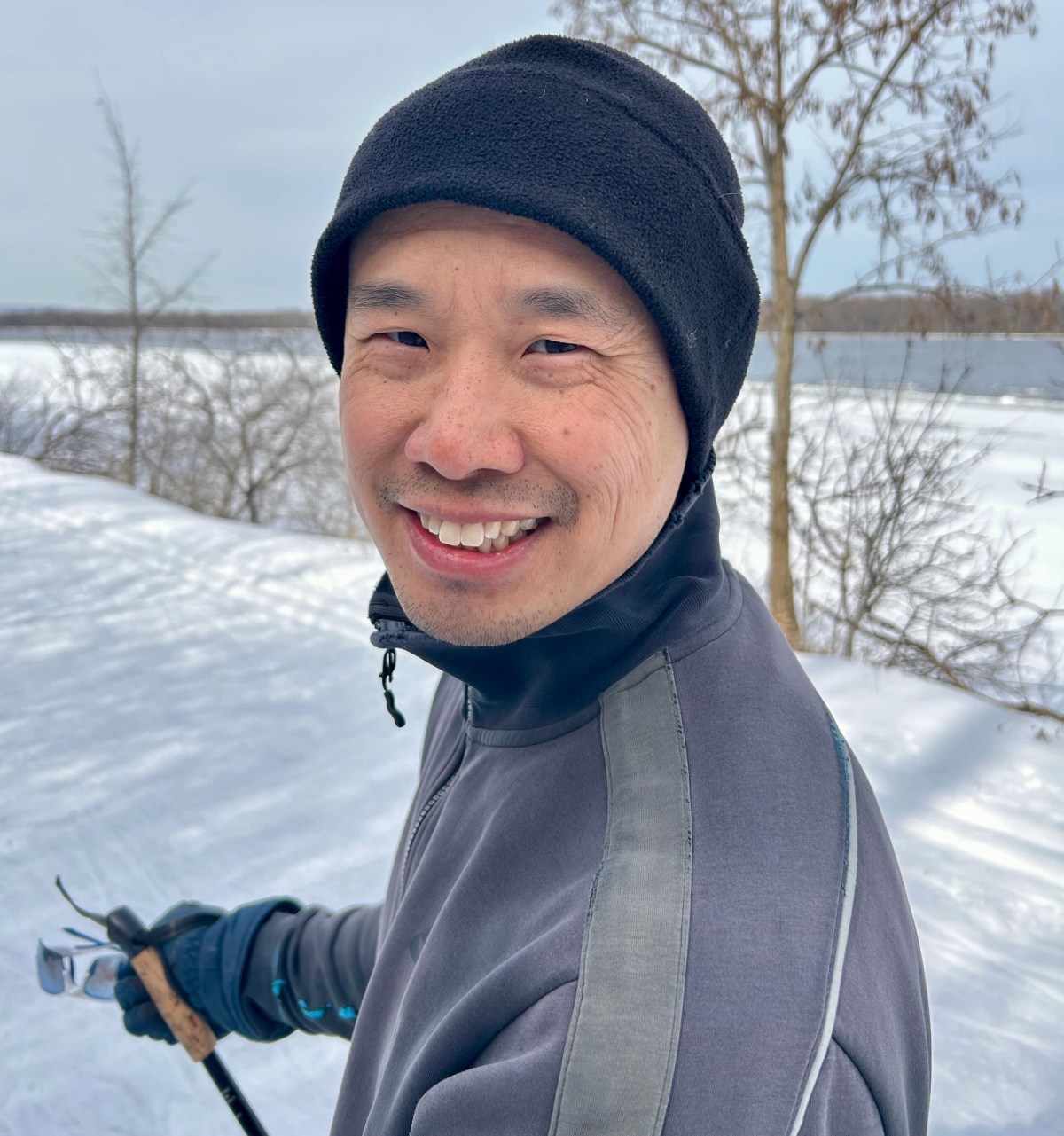
Dr. Alex Duong, a family physician from the Vanier district of Ottawa (which amazingly enough is one of the more underserviced areas of Ontario).

Recently, Maria DiDanieli, the clinical lead for system navigation at the Burlington Family Health Team, published an opinion piece in Healthy Debate that was critical of the decision of Drs. Alam/Mathew and yours truly to recommend that family practice residents bide their time instead of starting up a comprehensive care practice in Ontario. Dr. Duong replies and has kindly allowed me to reproduce his reply here.

I am a full-time community family physician, and I read this article with great disappointment.


I am at the face of our health care system. When patients cannot get a timely breast biopsy or a knee replacement, they come to ask me. I address their frustrations, alleviate their pain, and manage expectations.


I am the backstop when issues are missed during transitions in care and issues that require follow up.


I am the navigator that helps patients, and their families orient themselves to housing resources, mental health and financial resources.


I am the advocate for my patient’s health when they deal with their employer or insurance companies.


I do all these things and more, alongside everything from newborn care to palliative medicine.


I, like the great majority of family physicians, take pride in our work, and in what we contribute to our patients and the community at large. But Banks do not grant loans for a new clinic based on my contributions to Ontario’s healthcare system. My rent payments do not decrease because of the positive impact I make on my patients’ lives. The salaries of our exceptional staff are not funded by the sound of clanging pots and pans.


Today, to outfit a new clinic with the minimum number of physicians for a FHO requires high 6 figures to 1 million dollars, loaned at 6.95% interest. We guarantee our own lease – we are on the hook for ensuring it gets paid for the entire term. We are responsible for hiring and ensuring our staff are paid a living wage. We invest our own time in making sure the clinic runs. For many community family physicians like me, there is no assistance for any of this from any level of government. No money for staff, no incentives for starting up, no support for logistics. We are in a precarious, failing business model with ever growing administrative burdens patching the system equal to a part-time job. We have been trying to expound on this, and frankly have been completely unsuccessful in this.


You realize that “… there does not seem to be much political will to improve this situation at this time.” Yet, you ask family physicians to work harder expecting a different result from the government.


You state that “With these current barriers and shifts, any new practice can feel fragile or vulnerable to imminent obsolescence.” Yet, you expect new graduates to take on a massive financial risk: long term lease, EMR contracts, and double their already tremendous debt in start-up costs.


You lament that “Instead of acting as beacons of wisdom, encouragement and level-headed advice, we see a growing shift toward inciting everyone to walk out!”. Do you apply this standard to the teachers in Quebec who recently concluded a strike? Are they less dedicated to their students? Do you apply this standard to all groups who organize to make their voices heard?


The authors, Drs. Alam, Gandhi and Mathew made it clear that there are many options available to new family doctors. They warn of the current state of specifically locking into comprehensive family medicine, to ensure that new grads do not put themselves in a position where they will be burnt out early in their career. To me, leadership requires honest conversations, not empty promises, or exploiting the ideals of new family doctors. I find it unethical to sell a romantic vision of what it is like to start and maintain a Family Medicine practice in the current environment. It is a recipe for moral injury when those ideals run flat into the economic realities, as I have experienced.

And frankly, to say to those of us, like myself, still practicing longitudinal family medicine we should be working harder, or we are just doing family practice wrong is demoralizing. It is grossly offensive to my early-mid career family medicine colleagues who have burnt out through great moral struggle and guilt. Disillusioned family physicians who leave longitudinal family practice will not return. The greater harm to the public and to patients is not the Star article that speaks truth to the issue, but the issue itself: that family physicians, whose concerns are being gaslit, continue to leave longitudinal practices.

Another Open Letter to the OMA Board: Re-visit the Negotiations Mandate

Dear OMA Board Member,

Just me again. The grumpy, aged quack with a history of being a bit of a thistle in your obliques. Well intentioned I assure you (although I’m told some may not see it that way).

Negotiations with the provincial government on a Physicians Services Agreement (PSA) continue and mediation began on February 20th. That’s all great and part of the process. However, things HAVE CHANGED a lot since the last time I wrote to you and urged you to set a strong mandate.

I am asking you to revisit the negotiations mandate at this time, in light of three new key pieces of information that are very relevant to Ontario doctors.

To recap – the negotiations mandate is the bare minimum ask that the Negotiations Task Force (NTF) can accept on behalf of the Board. If the government makes an offer that meets or exceeds that – well, then they accept it on behalf of the Board and the Board is compelled to endorse it. The mandate is, quite correctly, confidential (you can’t let the other side know your bare minimum ask any more than they would let you know their mandate). But it’s up to the Board to determine if the mandate is enough (not the NTF).

Now to be clear, I’m not saying you should revise it, just revisit it. Perhaps the mandate is already sufficiently strong. That would be great. But things are different now.

The first reason to revisit the mandate:

Other provinces have surpassed Ontario physicians in terms of income. BC and Saskatchewan have significant deals to stabilize the physician work force. Manitoba’s deal with physicians appears to be the best of the bunch. Manitoba has not only a well deserved increase for all physicians, but significant steps towards gender pay equity.

As an aside, while I applaud the fact that DoctorsManitoba made steps towards gender pay equity, I’m forced to wonder what happened to Ontario? When I was on the OMA Board we were proud of the fact that although it was too late, we were the first PTMA to report on the issues around gender pay equity. We proved that the pay gap was not because “women work less hard”. What happened ?

Also, to be clear I want to acknowledge that the negotiations counsel (Messrs Goldblatt and Barrett) are very well aware of any topic that could affect negotiations. I remember Darren Cargill, who at the time was on our NTF, told me “they read everything.”

Therefore, I know they read the Manitoba Schedule of Benefits which is available online and reported back to you. I’m sure you are fully aware of the retention bonuses in that deal. I’m sure you know about the significant changes that decrease the gender pay gap. I’m sure you know about the fact that Manitoba pays physicians for Admin time. And that their capitation model has no negation (although a lower base rate). And that they have an age premium. A pelvic exam premium (gender equity again). And that they allow extra payments for dealing with more than one problem at a visit. I have absolutely no doubt that our negotiations counsel has fully and thoroughly advised you of this, along with the benefits of the deals in BC and Saskatchewan.

The second reason to revisit the mandate:

The crisis in family medicine is spiralling out of control, faster than I thought possible. Not only is it badly affecting patient care, but the health, well being and morale of physicians is sinking like a stone. Last September, I never dreamed that I, along with Drs. Alam and Mathew, would write a letter to Family Practice residents telling them to stay away from comprehensive family medicine in Ontario. I never dreamed that there would be story after story after story of individual family physicians openly talking about how they were burning out. This situation has gone form bad to desperate frighteningly quickly.

The third reason to revisit the mandate:

Bill 124, the piece of legislation that limited increases to the public sector, was used to promote a low ball PSA to us the last time. You even, admittedly and embarrassingly, convinced a guy who should have known better. It’s ruled unconstitutional and the government will not appeal this. In fact they will repeal the Bill entirely. In light of that, many other public sector workers will be asking for catch up pay.

So it really is time for you to re-visit the negotiations mandate. Just double check to make sure it’s as strong as it should be given the above factors. Make sure it takes into account that the the BC deal has attracted over 700 physicians to comprehensive family practice. Make sure it recognizes that Manitoba will likely be showing a net growth in physicians shortly, and can reasonably attract physicians from out of their province. If you have to revise the mandate upwards after looking at it, then do so.

NB – IF the NTF were to push back if you do revise the mandate upwards, then make sure you hold your ground. Remember, YOU are the Board and YOU give direction to ALL committees and task forces, including the NTF. I’ll be careful how I say this so as not to divulge Board confidentiality, but the NTF in my day did have a proposal on one particular issue (not the whole PSA) that they told us to approve and our Board pushed back and said no. We had to listen to some (quite eloquent) speeches about how hard they worked and this undermined their work and so on and so forth – but after that they went back and kept negotiating as directed. Don’t do any less this time.

These negotiations are likely to make or break the profession for decades to come. They are that important. You owe it to your members to take another look at the mandate.

Yours truly,

An Old Country Doctor.

Dr. Corli Barnes on the Challenges Facing New Family Physicians

Dr. Corli Barnes , pictured here, guest blogs for me today. She is a Family Practice resident who is just completing her residency. She sent the following letter to the Sudbury media after reading reports about the crisis in family medicine. I thank her for allowing me to reproduce the letter here.

Hi Len,

I read your article about family physicians. I am a second-year family medicine resident here in Sudbury, ON, originally from Manitoba. Thank you for taking the time to help raise awareness about the crisis in Family Medicine. I wanted to write to you to offer a viewpoint not often accounted for in this conversation.

I’m about to graduate as a family physician. After ten years of climbing that Mount Everest, eight of those years without an income, paying for two full-time degrees plus inflation and living costs, I’m $350,000 in debt. That’s living on around $31,000 a year.

The government just denied me loan repayment assistance because I get paid ~$68,500 a year as a resident. The cost to write my final exam just went from around $1,500 to $4,201. When starting a practice, a monthly bill of anywhere from $7,000 to $12,000 in overhead is waiting for most grads who take up a clinic practice, plus ~$2,000 a month in interest on debt if you supported yourself through school.

When I start practice, I can expect the Ministry of Health to take it’s time (at least two months) to approve my funding model. My first paycheck will come in at fee-for-service levels that won’t cover my costs.

About a year and a half ago, after working a 60-hour week, I started to quietly panic when I did the math to project my net income as an attending physician. Clinic-based family medicine is my passion, and I realized that it wasn’t going to work out based on the way most physicians work. I wouldn’t be able to even begin to pay off my debt.

After all that work, sacrificing my twenties, my health, friendships, and enduring the stress of medical training – I wouldn’t be able to cover my living costs as an attending family physician.

Try imagining uprooting your entire life to go on a pilgrimage to a promise land and when you finally get there, it’s a shell of what it once was. A ghost town with worn out buildings and hardly anyone in sight. You’re 10,000 miles from home and way worse off than when you started.

The only promise this journey has fulfilled is providing the education necessary to safely and meaningfully help people who are sick and enable them to seek wellness.

A family doctor is the only professional that is trained adequately to be able to pick out disease from the general population. It is the only medical specialty educated in every body system, who is there to catch those who fall through the cracks, prevent disease, and deliver medicine in a way that suits an individual.

This work will always be challenging and meaningful, requiring dedication to keep up with rapidly increasing medical knowledge and motivation to continue to seek excellence. The challenge is great, and the reward for doing it well – a healthy patient – even greater. This is why I’m passionate about it, and sad to see it fall apart and go unappreciated. It’s hard to watch as its integrity is cheapened by being grouped into an emerging category of primary care providers with far less training and liability, and have its voice drown out by promises of funding that seem to keep ending up in someone else’s pocket.

Because of the way things are, I have had to pivot considerably by coming up with creative ways to practice medicine and supplement in my income in the future.

Many of my peers have elected to do emergency medicine, hospitalist, subspecialize in family medicine or locum while they contemplate their options.

With every news release, I read about funding for health teams, funding for free schooling for nurses, funding for nurse practitioners, funding for “programs to reduce administrative burden” that I have yet to see a benefit of. I open the news everyday, hoping to read something about increased pay for family physicians. Instead, I read about how negotiations are not going well with the government. I read that the planned increase of 2 or 3% has been cut down to 1% or 0%.

Sometimes, it’s hard to not regret going into any number of specialties I could have. I go to work, and I do my best to help the patient in front of me. They ask about where I’m going to practice with hope in their eyes. They leave feeling better, and I try not to think about the fact that for many family physicians, the thanks for that visit is just $12 to take home.

Eventually, fueled by the same determination that got me into medical school, I started to dig deep to find a solution that wouldn’t mean I would have to abandon my dream of opening a clinic-based practice. A solution that wouldn’t mean I have to give up freedom I’ve waited years for, work unsustainable hours or in a toxic environment bred by chronic underfunding.

I scoured Ontario looking for a place that would help fund the start of my career in a meaningful way while having a sustainable business model that supports good medicine. After around a year of this search, I am lucky to have found a place in Madoc, Ontario but I can report that it is a very hard thing to find.

I am sad to be leaving Sudbury, where I currently live and initially hoped to call home when I moved here in 2022. I hope this letter helps to raise awareness about the difficult situation many residents are in and how urgently family physicians need change.