Bureaucratic Stupidity in Covid Vaccine Clinic Case Will Have Far Reaching Consequences

I’ve repeatedly been told that I am too unkind and too harsh to Ministry of Health (MOH) bureaucrats. A senior staff member at the OMA once suggested I was “out of line” to a very sharp (but necessary) scolding I gave an MOH bureaucrat at a bilateral meeting we had. About a month later, that same senior staff person, when on a voice conference call with the same bureaucrat, got up and wrote “This is a waste of time” on a chalkboard at OMA headquarters. But I digress.

Yet every time I try to pull back, these same bureaucrats go and do something that is so incomprehensibly stupid that I once again wonder about the talent level and frankly intelligence of the bureaucracy as a whole at the MOH.

On this occasion, I’m referring to the Ontario Health Insurance Plan’s (OHIP) relentless persecution of Dr. Elaine Ma. The whole mess has been extensively reported and you can read all the details in the links, but I will summarize key points below:

October 25, 2024

Dr. Ma’s clinic in Kingston suddenly cancelled its October 26 drive thru flu/covid vaccine clinic. Over 600 patients had registered with more pending. The reason is that OHIP had notified her that she would not be paid to vaccinate patients at the clinic. Why? Because she was going to have medical students (who would be supervised) vaccinate. According to a 2001 bulletin OHIP pulled out, students are not employees and so she can’t delegate to them. (OHIPs story keeps changing and you’ll see that further down the blog). It also emerged that OHIP was attempting to recoup funds paid to her for running similar vaccine clinics in 2021.

October 30, 2024

It was now reported that OHIP was demanding Dr. Ma repay $600,000 that she billed to run outdoor vaccination clinics. She ran a number of mass Covid vaccinations clinics that gave over 35,000 shots. These were set up by her in response to the provinces call to “get shots in peoples arms“at the height of the Covid pandemic. Dr. Ma was widely lauded for her efforts at the time – and won the Ontario College of Family Physicians award of Excellence. Her area became the most vaccinated area of the province, something that should be celebrated.

OHIP now claims that she didn’t follow the rules for billing. Their excuse this time? That clinic was outdoors and not in a doctor’s office. (I told you OHIPs story would keep changing). Yes, you did read that right. In the middle of a pandemic caused by an airborne virus, OHIP wanted the vaccination clinics to be held in crowded indoor spaces!

November 1, 2024

Dr. Ma had rapidly gained the public support of the local medical officer of health (there was likely background support previously). She also had the support (previously background now public) of her MPP, the OMA and many others. She did not get the public support of Dr. Jane Philpott. Dr. Philpott, in her role as Dean of Queens Medical school was full of praise for the clinics. I suspect Dr. Philpott has 550,000 reasons to stay quiet publicly now. Hopefully she can influence behind the scenes.

OHIP now stated that the concern was that Dr. Ma used some of the funds to pay the staff who worked there. You read that right. They were worried because a physician billed OHIP (gasp!) then took the funds to pay overhead (double gasp!!). The horror!

Hannah Jensen, the Minister of Health’s Communications Director initially simply parroted the line that OHIP bureaucrats fed her about being ineligible to bill because of using medical students and it being outdoors. But she was rapidly exposed as being completely out of her depth when the Kingstonist questioned her about dates, which doctor, which clinics, how she arrived at figures and so on.

Additionally, her tone took a seriously ugly and aggressive turn. There was an accusation that Dr. Ma “pocketed the funds” which essentially is an accusation of theft. (No law enforcement is involved….yet).

November 7, 2024

The story hit the national news and it was reported that not only was OHIP asking Dr. Ma to pay back $600,000, but they were demanding $35K in interest as well (!). Who knew OHIP bureaucrats moonlighted as loan sharks??

November 8, 2024

Dr. Hijazi, leader of the Ontario Union of Family Physicians was interviewed by the CBC . He obviously was supportive of Dr. Ma demanded that the Ministry apologize to her. The Ministry issued an utterly and completely delusional statement to CBC radio stating that claims Ontario can’t get family physicians are “fictitious”. (Listen to the last 30 seconds at the link). 2.5 million people can’t get a family doctor in this province because doctors don’t want to work comprehensive care is “fictitious”????
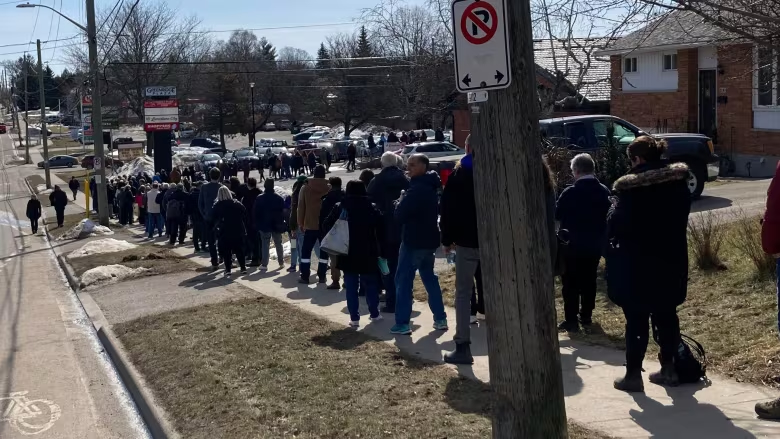
Nothing much to see here. Just a fictitious clinic in Kingston, where fictitious people without a family doctor lined up hoping to get a doctor because a fictitious family doctor announced a new practice..

What consequences are there to this?

To0 many to mention, and they are all awful. Perry Brodkin, OHIPs former lawyer was quoted extensively in the articles about process. He pointed out that before attempting to recoup these funds, the bureaucrats would have run it up the chain to the deputy minister if not the health minister. There is therefore no doubt that this egregious action is one of the bureaucracy as a whole as opposed to one rogue bureaucrat. This cements the feeling that many physicians increasingly have had that bureaucrats as a whole are malicious (especially after the nonsense they claimed during arbitration).

It also badly threatens medical teaching. If the appeal that Dr. Ma filed is unsuccessful, then it essentially means that physicians would not get paid for teaching medical students. Which would effectively end teaching in Ontario. How exactly do you plan to replace the current supply of physicians as they age out, if no one will teach new ones?

With the story hitting the national news on CBC, it also will significantly impair attempts to recruit physicians from out of province. We are already losing younger doctors to provinces like BC and Manitoba where they see a co-operative relationship between government and physicians. Why would any of them come to a Province where you are called a hero one day, and then publicly embarrassed, harassed and vilified over a clearly outdated memo that needed to put aside during a once in a lifetime pandemic?

What SHOULD happen next (but probably won’t)

Unfortunately, Brodkin also points out that at this point there is nothing that will influence the appeal board. The process could have been stopped earlier before the hearing, but Sylvia Jones and her staff chose not to. But, if Dr. Ma wins, the government should immediately announce they will not appeal the decision to the courts. Additionally, Hannah Jensen needs to publicly apologize for her…..out of line…..comment on “pocketing” funds. And Sylvia Jones should also offer up an apology to Dr. Ma for the failure of her bureaucrats to recognize that rigid adherence to minutiae in a time of crisis is completely unacceptable.

Finally, what badly needs to be done is that the entire Ministry of Health bureaucracy needs to be given a very large enema to clear out the…….

We Know How to Save Family Medicine. Why Aren’t We Doing It?

I’m honoured to have Dr. Mark Linder guest blogging for me today. I first met Dr. Linder during our time advocating against Dr. Eric Hoskins unilateral cuts to health care. He’s exceptionally well spoken and articulate . He’s a former ER doctor and now full time family physician and clinic owner. His other claim to fame is that got fired from the Kaplan MCAT teaching course after one session – which apparently was a first.

I just wrote this in a flurry this morning. I see stupider and stupider proposals from the government and from newspaper editorials. I see our new grads learn from their teachers that they need to stay away from this job. I then see the  domino effect this has on recruitment, job satisfaction and reinforced by absurd government initiatives to save the system. I watch the OMA get pulled in every direction to try and please everyone. So apologies in advance -this is just my take really-and mostly to get it off my chest-not that it will lead anywhere. So thanks for reading.

The Family Health Organization (FHO) is what saves family medicine. It has done it before and it can do it again.

In 2006 something unprecedented happened. It hasn’t happened before or since. And perhaps we didn’t quite appreciate how unique it was. The provincial Liberal government, under Dalton McGuinty and Health Minister George Smitherman, introduced an upgraded payment model for Family Medicine. It built on the existing capitation based Family Health Network (FHN) model to enhance it.

What was so unique about this? It stands out as one of the only times a government has thought beyond their 4 year term to the ultimate health of their population as well as their economy down the road when they may no longer be in power.  Sure, it was going to make them look good if everyone got a family doctor out of it-but it was a big expensive risk, a risk based on an assumption that family medicine was critical to the system, AND that practitioners need to be paid fairly for their work if they wish to retain these doctors in the future. A different time to be sure!

It worked. Look at the stats from 2008 to 2018. Look at how many Family Doctors gladly embraced the new system. Look how the number of orphaned patients dropped. 

The system had flaws. I mean this was the second iteration of what was described as an experiment. The “outside use” enforcement rule made little sense in most cases. The calculation of capitation payments wasn’t always a fair representation of how much work it took to look after the patient in front of you. Certain “in the basket” fees were bizarre and should never have been part of the package.  Doctors were actually more incentivized to send people to the ER over a walk in clinic!!! But all in all, it was a great innovation, a great idea, and saved family medicine. It also, no doubt saved the province millions in treatment dollars and ER visits as family doctors made themselves available to look after patients.

And then, In 2015 Kathleen Wynne and Eric Hoskins, the health minister at the time, effectively shut down enrollment in FHOs And that was the beginning of the end. I presume they just wanted to control the immediate budget – paying for family medicine up front meant huge savings down the road. But it resulted in a pretty big chunk of budget going out the door NOW. And the Wynne liberals didn’t have a health care crisis, didn’t heed the warnings that we as physicians laid out pretty starkly at the time, and decided, nah, we’ll just “pause” the experiment.

Which they did. And the fall out was obvious. As a clinic owner and a family doctor, I had a front row seat.  The residents and new grads had all been trained in the new system, and now were unable to access it. If they wanted to work, they’d be taking a tremendous risk setting up a clinic in a Fee For Service environment using a Schedule of Benefits that had failed to keep up with inflation for 20 years. They were screwed.  The aging Family Doctor population continued to retire at a predictable rate, and the aging population continued to get more desperate to find doctors with increasing difficulty.

By the time the FHO’s opened up again in 2021, it barely mattered–The reputation of family medicine among new grads had been thrashed for 6 years. 
With the new rules, new grads would have to gather 6 like-minded individuals (instead of just 3 like in the old days), or find a bigger FHO that was already established and could fit them in. Not so easy. Opening up your own shop had become increasingly more expensive with post pandemic inflation, so the debt would be crippling just to get started if you wanted your own clinic. And these are graduates who already had a huge amount of debt coming out of school.

Couple this with the insane increase in administrative burden as we become more and more efficient at having hospitals and labs forward us copies of paperwork. In theory, amazing, in practice hugely burdensome, time consuming and unpaid. Arguably, if the FHO rates had increased at the level of inflation, there’d be no complaints about this additional work. But the FHO rates had more or less remained static relative to the cost of doing business. Still better than FFS, still paid a lot less than the actual market value of doing the job as proven by the lack of uptake that continues today.

The thing is: The FHO is still the answer. It absolutely needs some significant tweaks. The rates need to go up. The outside use concept needs to go. Minimum size and shared EMR requirement needs to be softened so that smaller groups can join together in nearby geographic areas. Some sort of separate funding will be essential to help clinic owners to keep up with inflation.  But it still achieves by far the best mix of physician autonomy, clinic management, and long term government savings. And it’s evidence-based! We have a recent history we can look back on to demonstrate efficacy!

Other solutions, such as having lesser-trained individuals diagnosing and managing patients give the appearance of short term gains at a huge future cost as more referrals to specialists are made and more referrals to the ER are made. Another concept of having government run all clinics is clearly so expensive as to be dead at the gates-Doctors currently pay for rent, administration and their own retirements out of their incomes. It’s not great for us, but it’s a heck of a lot cheaper for the taxpayer to do it that way, and simply pay the doctors more.

I recognize that my FFS colleagues are not helped at all by an enhancement and advocacy for the FHO approach. And I’m sorry. I obviously think there’s a lot of work that could be done to improve FFS rules and individual payments. No doubt.


But we actually have the evidence that the FHO saved family medicine when it was introduced. It was stunningly effective, and if nursed back to health, will absolutely work again.

Ontario Government to Family Doctors: The Beatings Will Continue Until Morale Improves

That we have a family medicine crisis in Ontario is indisputable. That the numbers of family doctors leaving comprehensive care family medicine continues to rise and is expected to leave over 4 million people without a family doctor in the next couple of years is irrefutable. That the need to recruit and retain comprehensive care family doctors has never been more urgent especially as competition from provinces like British Columbia, Manitoba and others increases is unquestionable.

All of this is self evident to anybody following health care.

People lined up in Kingston desperately hoping to get a family doctor when a new clinic opened (image first put out by the CBC)

Except of course, the Ontario Government, and their Ministry of Health Bureaucrats. As far as they are concerned, now is actually the perfect time to attack family doctors. Because, you know, the way to improve burnout, morale and encourage them to take on new patients is to ambush people who are already under siege with overwhelming workloads.

Here’s what happened. About 6,000 family doctors in Ontario practice under what is called a Family Health Organization (FHO) model. Think of it as a base salary plus performance bonuses. As part of working in that model, the family doctors have to sign a contract agreeing to deliver a basket of services, including, a certain amount of after hours care.

Because we have so many rural areas in Ontario, where family doctors do a whole bunch of other work (emergency department, hospital on call, palliative care, long term care on call and more), there is a provision in the contract that says if you have X number of family doctors doing this kind of work already, then the amount of after hours care you provide as a FHO can be reduced. There’s a somewhat complicated formula but that doesn’t really matter – it’s the principle that counts. Essentially, if you are already doing after hours work – then you are not asked to do more after hours work.

Unless of course you are a Ministry of Health bureaucrat, taking the guidance of your bellicose negotiations team that said there was “no concern” about a shortage of family physicians. This allows you licence to use a stick against family physicians.

Then, you send letters to 75 FHOs telling them they are not meeting the terms of their contract, based on made up metrics. The letters (I’ve seen a few of them) all allege that the doctors in the FHOs are not living up to the terms of their contract.

Let’s be 100% clear on this. If a physician signs a contract as part of a FHO, they should hold up their end of the bargain. You should read the contract, go in with your eyes open, and make sure you are capable of meeting all of the terms that you agreed to.

BUT.

It appears what the Ministry is arbitrarily and unilaterally determining how to decide if a physician is meeting the terms. For example, one FHO letter I saw suggested that that FHO was not performing as well as its “peers” and was therefore targeted. Two things though. First the Ministry unilaterally decided who the peers were. Second, performing up to the standards of your peers was not part of the original contract.

Another letter I saw alleged that the doctors who do call for their hospital or their nursing home, don’t qualify because……they don’t bill enough for going into the hospital. The ministry unilaterally decided that in order to claim after hours work, you couldn’t just be on call, but you had to keep going into the hospital when on call, a certain number of times (this number was never up for discussion before).

I’ll use myself as an example. Last Wednesday I was on call for my hospital. I got three calls (one at 4:00 am!) and managed all the patients over the phones. I DID perform the task I agreed to (being on call). But the bungling bureaucrats won’t acknowledge that. They want me go to the hospital (even if I can handle it over the phone) and then bill OHIP for the service (which would drive UP the cost!!) to be recognized – a decision they seemingly made on their own, without consultation.

My two loyal fans and one non-fan regular reader know that I’ve long maintained that Star Trek is a far better franchise than Star Wars. But in this case, I will concede the Ministry’s actions are most appropriately compared to this fellow:

Normally when a government changes the terms of an agreement unilaterally, one would expect the Ontario Medical Association to step in and advocate for their members. However, the response from the OMA, in a letter sent to all its members was, frankly, pathetic. The letter basically told doctors to “notify the Ministry” about the circumstances around your group. Try to reason with Darth Vader as it was. No dedicated email or legal team staff member either. Just contact the general help email.

I guess specialists who had expressed concerns on Social Media about too many family doctors on the OMA Board have nothing to worry about. Clearly the OMA, between allowing the across the board increases to the arbitration award this year and not dedicating resources to tackle this issue cares nothing about family medicine. (They talk a great game on social media, but it’s the actions that count).

I imagine the issue will eventually sort itself out after many rancorous meetings and back and forth – all of which will take up physicians time and prevent them from doing minor and inconsequential things like, say, seeing patients. The Ministry will continue to claim that we have more family doctors than ever before – but let’s face it, if they keep behaving like this, those doctors won’t practice comprehensive care medicine. It just seems so ridiculous, and indicative of a Ministry that truly doesn’t understand or value family medicine.

And that should frighten the general public more than the Death Star ever did. (Drat, made ANOTHER Star Wars reference).

The original Death Star from Stars Wars, Episode IV: A New Hope

Arbitration Part III: When and How Much Will Docs Get Paid?

Disclaimer: The information is based on my personal analysis and should not be your sole source of information. The payment schedule below is based on what we were told was “PLANNED”. Being a firm believer in “Murphy’s Law“, I would suggest that changes to the below may come at any time. Contact info@oma.org with any questions.

After writing why the Arbitration Award will be bad for patients and doctors, it seems my three loyal readers were unhappy that I couldn’t say when docs would be paid. Being a demure, sensitive, and eager to please sort, I feel compelled to try my best to explain when money is coming.

Once again, my two examples are Drs. Alpine and Valley. Both had 13 years of post secondary education (4 years for a BSc, 4 years for medical school and 5 years for residency). Dr. Alpine does a lot of procedures and can see more patients than he could 20 years ago due to improved technology. Dr. Valley spends a lot of time with intensively sick patients, so she sees the same number of patients as 20 years ago.

What assumptions am I making for the Calculations?

Drs. Alpine and Valley will each provide same number of OHIP services yearly from 2023 – 2026. We have to assume that the entire 2.8 % increase from last year, and the 9.95% award this year will be given across the board (ATB) until April 1, 2025. (The OMA and MOH could reach an agreement on distributing the funds more fairly- but I highly doubt it). We’ll also assume that the schedule for payments the OMA provided at their webinar will be met – I remain very skeptical.

Let’s assume Dr. Alpine billed OHIP an average of $100,000 a month for fiscal 2022/23 and Dr. Valley billed OHIP $30,000 a month. This time period is the base rate for OMA calculations, and hence mine. (Physicians who read this blog can put their average 2022/23 monthly billings into the calculations below to find out their own numbers).

What happened for April 1, 2023 to March 31, 2024?

The OMA and MOH agreed to a 2.8% increase in fees that was to be divided into across the board (ATB) increases and relativity increases. Because the agreement came late, and the OHIP Computers couldn’t be updated (sigh), Drs. Alpine and Valley continued to bill OHIP at the same rate as 2022/23.

What happened on April 1, 2024?

The OHIP computers finally updated to reflect the previous year’s increase. Since the two sides didn’t agree on a relatively formula, the 2.8% was given ATB. Dr. Alpine’s gross income went to $102,800 a month. Dr. Valley’s went to $30,840. Both increases showed up on the May Remittance. Doubtful Dr. Valley even noticed her increase.

What will happen on the Nov. 2024 Remittance ?

Well, finally all the reviewing and rejecting and re-submitting of claims for the year April 1, 2023 to March 31, 2024 will have happened. The computers will then pay the retroactive 2.8% amount of this year to the doctors. Dr. Alpine will get an additional $33,600 (1.028 x $100,000 x 12) on his remittance for retroactive pay. Dr. Valley will get $10,080 (1.028 x $30,000 x 12).

Isn’t there a drop beginning in December 2024?

The increase drops to 2.55% and the funds saved are dedicated to enhancing the Hospital On Call Coverage program (HOCC). Dr. Alpine will now see $102,550 (1.0255 x $100,000 and Dr. Valley will start to get $30, 765 (1.0255 x $30,000).

What happens for the January – March 2025 Remittance Advice?

Allegedly, the OHIP computers will be able to apply the 9.95% increase for this year now (I’ll believe it when I see it). The word “prospective payment” was used in the webinar, but I don’t know what that means. This increase is compounded to the now 2.55% from the previous year. As a result, starting with the January remittance, Dr. Alpine will now get $112,753.73 ( 1.0255 x 1.0995 x $100,000) a month from OHIP. Dr. Valley will be at $33,826.12 a month.

What is supposed to happen on the March 2025 Remittance?

What’s that you say? Wasn’t the 9.95% increase supposed to start on April 1, 2024? So what happened to all that money? Well, according to the OMA you will get a lump sum payment for April to December in the March remittance. Dr. Alpine can expect to see a one time retroactive payment of $89,583. 57 ($112,753.73 that he should have gotten subtracting the $102,800 that he did get, multiplied by 9 months) and Dr. Valley will get $26,875.08. This is in addition to their usual remittance.

OK, What Happens After April 1, 2025?

Well at this point the new ‘permanent’ fees are supposed to kick in. Up until now, everyone has been given ATB increases. Whatever is negotiated or arbitrated, is supposed to start now. However, the base rate will be the 2022/23 rates. In a previous blog, I assumed that we would carry on the process of giving 1/4 of the increase as ATB and 3/4 via relativity. IF this is done (not sure if it will be) then every speciality will get 2.46% (0.7% for last year + 1.75% this year, compounded) plus X percent – with the X varying from speciality to specialty based on relativity.

Let’s assume Dr. Alpine’s speciality got an X=0% and that Dr. Valley’s got X = 17.54%. In that case Dr. Alpine will now get $102,460 a month:

  • $100,000 base rate from 2022/23 x (1.0246 ATB increase + 0 for relativity).

Dr. Valley on the other hand will get $36,000 a month:

  • $30,000 base rate from 2022/23 x (1.0246 ATB +.1754 for relativity).

I imagine Dr. Alpine will be annoyed.

What are the chances of the new fees being ready on April 1, 2025?

Slim to none. Militancy on the part of the MOH and incompetence on the part of bureaucrats in charge of OHIP are two constants as sure as death and taxes.

Um…well what happens to our monthly incomes after April 1, 2025?

I honestly can’t figure that part out (and not for lack of trying). The procedural agreement states:

“Any unexpended portion of the targeted price increases will continue to be paid to physicians as a separate payment on the monthly Remittance Advice until such time as each targeted increase is implemented or unless the parties agree otherwise.” 

This is the part that I think most people have missed (including, frankly, the OMA Board that approved this agreement – and yes I know it was an attempt to get real money in the hands of physicians). It’s one thing to accept 2.8% ATB. But to accept 12.75% ATB (2.55% from last year compounded with 9.95% from this year) is a bit much. You really have to wonder if there wasn’t a fairer way to spend this money, especially with so many Dr. Valley’s struggling. Time will tell what happens here.

Geez old country doctor, all you’ve done is fuzzify the muddification!

I aim to please dear reader. I aim to please.

SPECIAL MESSAGE FOR FAMILY PHYSICIANS ONLY

Those of you who have read my blogs know that I (and many others) are really really upset with College of Family Physicians of Canada for inviting Dr. David Price to be a keynote speaker at the Family Medicine Forum. I view it as a slap in the face to family physicians, given his role on the Ontario Government’s Negotiations Team.

The Ontario Union of Family Physicians would seem to agree with me. They are asking all family physicians to sign the petition below to have Dr. Price removed as a Keynote speaker. PLEASE click on this link to read and I encourage you to sign.

Arbitration Part II: Award Implementation Will Hurt Physicians/Patients

Disclaimer: The information below is based on what a non-lawyer (i.e. me) was able to sort out after reading the OMA and Ministry’s 2024-2028 Procedural Agreement, the OMA Legal Counsel’s summary of the award, and attending the OMA Zoom session on the award. This may not be accurate (and I will correct the blog if more relevant information becomes available). I encourage all OMA members to contact the OMA directly with specific questions (info@oma.org) and not rely on this blog as your sole source of information.

The Numbers

First, let’s again review the numbers (approximated for simplicity).

Physician Services Budget, fiscal year ending March 2024: $16 Billion +

Arbitration Award: 9.95% – approximately $1.6 billion

OMA/MOH agreement on split of funds: 70% ($1.12 Billion) to fee increases and 30 %( $480 million) to targeted programs.

Previous contract (no guarantee this will repeat): 25% of the fee increases ($280 million) would go to across the board (ATB) fee increases for entire profession. The remainder ($840 million) would be distributed on the basis of relativity (giving more of a raise to low earning specialties and less to higher earning specialties). IF this pattern repeats, this equals a 1.75% increase for everyone. Then each specialty would get assigned an additional percentage (let’s say X) based on relativity. Ergo everyone should get 1.75% + X, where X varies from zero (for high billers) to higher (for lower billers).

The Implementation

According to the OMA webinar, the OMA and Ministry have yet to agree how to distribute the award. Mediation starts early October and all of this might wind up in Arbitration in March of 2025. My sense from watching the webinar is they are not close on an agreement.

So what happens to the money for this year? We are all supposed to get a raise now right? Well, that’s when the procedural agreement takes effect. It states (sorry for the legalese):

The Year 1 price increase will be implemented as follows:
a. The entire price increase under the Year 1 2024-28 PSA will be implemented
prospectively as an across-the-board increase to the fee-for-service payments
identified in paragraph 1a above, with a target date of the RA in the month 90
days following the issuance of the arbitration decision, and will flow through to
non-fee-for-service payments as soon as practicable.
b. A lump sum payment equal to the entire increase awarded for Year 1 for the
earlier period from April 1, 2024 through to the implementation date under
paragraph 12(a), will be paid as soon as practicable following the arbitration
award with a target date of October 2024.
c. To the extent practicable, the permanent year 1 non-targeted price increases
will be implemented at the same time as the April 1, 2023, price increases
under Year 3 of the of the 2021-24 PSA i.e. April 1, 2025, and in any event no
later than October 1, 2025. These increases will be calculated on a base of
2023-2024 expenditures …… The distribution as between across the board increases and relativity increases will be determined in such manner as the parties agree or, failing agreement, as the board of arbitration awards….

OMA staff confirmed at the webinar that this is in fact what will happen. They even had a complex schedule of prospective payments/lump sum payments/retroactive payments and so on that left me, frankly in need of high doses of Zofran.

To try and simplify things, let’s look at how this will affect two doctors.

Meet Drs. Alpine and Valley

Dr. Alpine and Dr. Valley both completed four years of an undergraduate degree. They then completed four years of medical school, and each did a five year residency in the field of their choosing. Dr. Alpine was always someone who liked to “do stuff”. He wound up in a speciality that does a lot of procedures and as technology has improved, has been able to treat more patients in a day than his specialty could 20 years ago.

Dr. Valley, who is no less smart, really enjoys patient interaction. She chose a specialty that requires more intensive time with patients, and as such, is not able to see more people in a day than someone in her field could 20 years ago.

With our aging population and increasingly complex health care needs – both Dr. Alpine and Dr. Valley are swamped and have long waiting lists.

Dr. Alpine, was able to bill OHIP $1 million for fiscal year ending March 2024. This represents his gross income, and to be fair, his office has a lot of leased medical equipment, along with staff that he has to pay for out of that $1 million. Dr. Valley billed OHIP $350 thousand for fiscal year ending March 2024. She too has staff and other overhead expenses, but not as much equipment.

What happens to Dr. Alpine and Dr. Valley under the procedural agreement? While the schedule for payments for the award is a convoluted mess, the reality is that for the fiscal year ending March 2025 – Dr. Alpine will gross $1.1 million, and Dr. Valley will gross $385,000.

Now the OMA states that the goal is to have new permanent fees in place based on relativity and targeted funding for April 1, 2025. The ONLY way this could happen is if the government negotiations team completely capitulates its positions in the next couple of weeks. Seriously people, the schedule shows that if there is no agreement this thing goes to Arbitration in early March 2025. IF that happens, it’s part and parcel of Arbitration for the 2-4 years of the contract. So the Arbitrator probably won’t even make a ruling until September 2025. Then another six months to re program the ancient OHIP computers and while the fees may be retroactive to April 1, 2025, you likely won’t see the money until Spring 2026.

Let’s assume that the arbitrator follows the precedent set where 1/4 of the increase ( $280 million) should indeed be ATB, and then distributes the rest based on relativity. And let’s assume that Dr. Alpine’s speciality was assigned an X of 0% and Dr. Valley got an X of 18.25%. Therefore Dr. Alpine for the fiscal year ending March 2026 will gross $1.0175 million – a reduction of $82,500 dollars from the year before. While Dr. Valley will get bumped to $420,000.

No matter how often the OMA reminds people that the increase for the first year is one time only, and NOT a permanent increase, the reality is that many members will have budgeted around their increase, and Dr. Alpine will, be very miffed at a $82,500 reduction in income for doing the same work.

But it’s not all that great for Dr. Valley either. She will have missed one year of a substantial increase that should have gone to her earlier. Not only that, but her offices cost pressures and admin workload have been skyrocketing. She needs the stability a relativity based formula provides right now, not in March of 2026.

Because of the delay in stabilizing her practice, she actually chose to leave her practice and do a different kind of medicine. Her patients now have to go back on a waiting list, and who knows when they can find someone to take over their care.

I understand why this procedural agreement was put in place. It was to ensure that doctors got a much need cash injection sooner rather than later. But unfortunately there are unintended consequences of this and those are coming to fruition. Specialists like Dr. Valley who need the relativity increases right now will not be able to hold out and may leave their practices. Dr. Alpine will be understandably miffed at the yoyoing of his income.

And all of this uncertainty will do nothing to help the health care system.

The Arbitration Award: The Good, The Bad, The Ugly

On Sep 12, Ontario Medical Association (OMA) Board Chair Dr. Cathy Faulds announced that the Kaplan Board of Arbitration awarded Ontario’s doctors 9.95% for the first year of their Physicians Services Agreement (PSA).  Sounds straightforward right? Nope – it’s actually ridiculously complicated.

I’ve looked at the award.  I may have some of this wrong (copious documents found on the OMA website induced catatonia, hypersomnolence and cluster headaches).  But this is my take.

A simplified (I have a small brain) set of numbers first:

Total award:  10%, approx value $1.6 billion dollars

Amount for general feel increases: 7% or $1.12 billion dollars

Amount for “targeted funding”: 3% or $480 million dollars.

In the past the OMA and Ministry agreed 1/4 of the raises would be across the board, the rest done with “relativity in mind”.  IF we do that again then $280 million (1/4 of $1.12 billion) will be in across the board increases.  Every specialty would get a 1.75% raise. The rest of the money ( $840 million) would be for raises based on relativity. So all specialties would get 1.75% + X as a raise.  The “X” would vary. It would be more for low income specialties, and the X would be lower or even zero, for the high income specialties.

The Good.
There’s a raise.  The MOH Team stated that Bill 124 should not impact the deal. The arbitrator disagreed and felt that we were unfairly treated because of Bill 124 stating:

“Bill 124 directly impacted the bargaining even though physician compensation was not subject to its terms.”

Hence, the MOH Team completely lost their argument that there should be no redress, and there was a 6.95% redress given.

There was a recognition that family practice is in crisis.  In his ruling the Arbitrator said:

“We accept on the evidence that there is a physician shortage. Somewhere between 1.35 million and 2.3 million people in the province are not attached to a family doctor. These are real numbers. The Ministry’s own documents – which we ordered disclosed–demonstrate that there is a problem to address.”

The arbitrator had to order the Ministry to disclose this?? Jeez. Additionally, the Arbitrator noted:

“Clearly, more family doctors are needed as are more doctors practising comprehensive longitudinal medicine…..it is obvious that the citizenry is ageing – the Government acknowledges this brings with it increased complexity…”

Contrast this with the Ministry’s absolutely laughable position that there is “no concern” about a shortage of doctors.  This is frankly a warning shot, and a welcome one, to the MOH’s negotiations team to not say such stupid things again, and to change their position in future rounds of negotiations.

In another shot to the now obviously inept MOH Negotiations Team, the Arbitrator agreed that admin burden also needed to be addressed with, you know, money. He stated:

“We have reached the conclusion that targeted increases – not necessarily baked in – should be allocated to the reduction and redeployment of administrative work that can best be performed by others or through digital or other measures.”

Finally, It was quick.  OMA Board Chair Cathy Faulds had told us not to expect an award until the end of September.  Who knows why Kaplan put the award out so quickly.

The Bad.

This will not be enough.  The OMA asked for a 22.9% increase. They got less than half of that. This is not really the big win the OMA is portraying it as.

A 10% increase in gross billings for family medicine will not be enough to stop the haemorrhaging of doctors from comprehensive family practice. The “X” for family medicine (see above) needs to be high, and much of the targeted funding needs to go to family medicine too.

And, while it’s true that the Arbitrator recognized there was a crisis in family medicine, the award given did not really do anything in and of itself to stabilize family medicine.  It’s true that was not part of the scope of the arbitrator for this round (this round was for a fee increase). The fact that some practical guidance in how to resuscitate family medicine is missing is still bad for all Ontarians.

The Ugly

The implementation of this award is going to be a nightmare.  As I write this, there is no indication that the MOH and OMA have agreed on how to divide up the $1.12 billion in general fee increases based on relativity.  In fact, indications are that the MOH will continue to fight the methodology, meaning it could be a very long time before fee increases for specialties are set.

Worse, the OMA and MOH have not been able to agree on how to distribute the $480 million in targeted funds.  Which means….more mediation and arbitration.  I continue to concede that the OMA states arbitration and mediation will be done by mid- March 2025. I continue to not hold my breath.

Even uglier is that one solution being proposed would be to give “everyone” a 9.95% increase right now, until the relativity and targeted funding is sorted out.  But that would mean that some of the higher paid specialties would see a 9.95% for a bit, only to have a relative cut once the final fees are sorted out (also to be arbitrated by March 3-7, 2025).  No matter how you message this to warn people – this will cause problems when people see a decrease in income after a rise.

All of which means that the retroactive pay for this year may not come for over a year. If you are a physician who has some decisions to make (eg do you renew the lease on your office at the higher rates the landlord is demanding) – you are going to be awash in uncertainty.

The ugliest part of all of course, is that a bunch of lawyers are going to get really rich as their billable hours go through the roof during this process.

There is a better way.

The government’s main concern should be about expenditures. That decision has now been made for them.  The PSB will go up by $1.6 billion.  That money will have to be paid one way or another.  

The government can now, especially after being told off by the Arbitrator back off from their polarizing and obstructionist path, accept the OMA proposals for implementing the award. They cover what the government states it wanted (pay lower paid specialist more of an increase than higher paid ones).  They also covers issues around admin burden which the Arbitrator acknowledged exist, and the shortage of family physicians (which the arbitrator also acknowledged). 

The total amount spent by the government is going to be $1.6 billion regardless. Getting rapid agreement on the distribution of those funds will decrease the uncertainty about how much goes where and will shorten the time it takes doctors to get paid, which will stabilize the health care system.

Then, for the love of Allah/God/Yahweh/Great Universal Consciousness – the government now needs to realize that you can’t fix health care without working co-operatively with your doctors.  Go look at other provinces. Copy them and get a fair deal for years 2-4 of this agreement.

Or the government can continue to obstruct, obfuscate, delay and impede any real progress towards working together with more protracted, internecine mediation and arbitration. The ball is in their court.

What should doctors do?

The above represent my personal interpretations of the documents I read. I encourage all Ontario physicians to register for the OMA live session on Tuesday Sep 17 from 7:30 – 8:30 pm to hear more details about this agreement.

Dear Minister Jones – Fire Your Negotiations Team.

Dear Minister Jones,

Just me again, a certain crotchety and increasingly cantankerous geezer offering you advice in an open letter that you are not likely to take. But you would be better off if you did. More importantly, so would the people of Ontario.

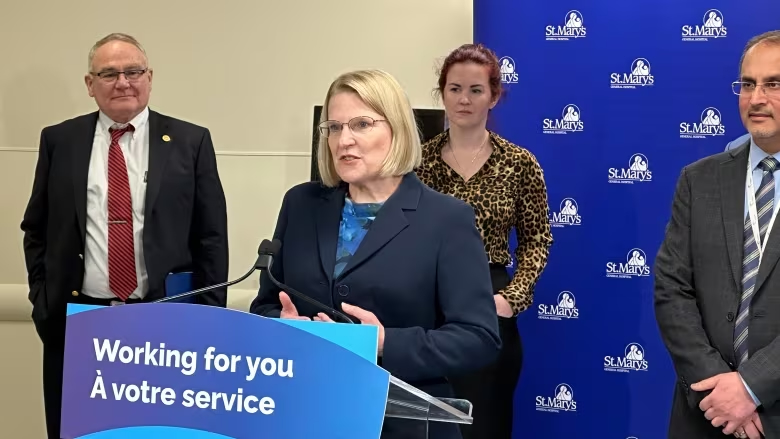
Ontario Health Minister Sylvia Jones

First, I would once again suggest that you have done some good work in the health ministry. Moving surgical procedures to outpatient clinics, increasing the number of diagnostic testing facilities, starting a new medical school focused on training family doctors and more are all good moves. While the effects of some of those decisions will not be felt for many years – the reality is that somebody had to do this to help health care down the road and you’ve done that.

Unfortunately however, the past couple of weeks have been catastrophic for your Ministry’s relationship with Ontario’s doctors. It’s funny how one dumb decision or comment can completely wreck a relationship, but that’s exactly what happened when your Negotiations Team stated that there was “no concern” about a diminished supply of doctors. Therefore, they refused to negotiate money for retention of physicians or admin work, like other provinces have (cough BC, cough Manitoba, cough EVEN Alberta!)

In essence, your Negotiations Team has been a disaster, first by militantly dragging out negotiations into a very adversarial arbitration process (when all the other provinces above figured out a way to, you know, respectfully negotiate with doctors) – and then by making a statement about the supply of doctors that is so comically stupid and out of touch that Ontario has become a laughing stock.

Three members of the Ministry’s Negotiations Team pictured above.

This will not bode well for health care in this province.

Look, I know there may be a temptation to say “Ok this was a mistake” and to try and walk back the comments.. While it’s abundantly true that the people of Ontario are a good and kind people who will forgive politicians if they own up to their mistakes (cough greenbelt, cough enhanced police powers and closing playgrounds during covid) – one thing that politicians can’t survive, is being made a laughing stock. Except Donald Trump of course. I still haven’t figured that one out and I don’t think I ever will. (N.B. Donald Trump is not someone you should try to emulate).

Anyway, the reality is that at this point you really only have one path left to turn this thing around. You have to fire your negotiations team. All of them. I’m not just talking about the seven who were appointed to lead that team, I’m talking about the multiple bureaucrats who give them supporting data and have influenced their position.

The only rational explanation I can think of for those bureaucrats promoting a position of “no concern” about physician supply, and saying doctors are not working hard enough, is that they hate doctors. Many of them were likely hired at a time when it was fashionable to bash doctors for billing “too much”. (BTW how did that attitude work out for the people of Ontario?) They’ve clearly carried on with that belief in the arbitration proposals.

I get that in arbitration, there will be some posturing. If your Negotiations Team had said “we’ll pay you $50 a month as a retention bonus” or “admin work doesn’t involve seeing patients, so we’ll pay you $20 an hour” – I honestly would have shrugged my shoulders, recognized it was part of the arbitration “game” and said nothing.

But to say retention and recruitment of physicians is not a major concern, when people line up for hours on end just for the faint chance of getting a family doctor?? That thought process can only be due to a pathologic hatred of physicians, or a delusional mindset totally divorced from reality. Either is a cause for termination. Can the whole team now.

A long line forms outside CDK Family Medicine and Walk-In Clinic in Kingston, Ont.. It was the first day of ‘rostering’ at the clinic, where four doctors will take as many as 4,000 new patients. (Jamie Corbett) – from CBC News

But what of negotiations with the OMA you may ask?

Actually, that’s not hard either. Your ministry has an appointee to the Arbitration Board, just like the OMA does. I believe your appointee is one Kevin Smith. The job of the appointee is to tell you and your team what the lead arbitrator, William Kaplan is thinking and how he is leaning. How they do that is beyond me. When I met Kaplan it was like talking to a Vulcan. There was absolutely no emotion or hint of what he was thinking – but apparently Kevin Smith is better than I am at figuring this out.

One of the above is William Kaplan, Arbitrator, and even after meeting him I’m not sure which is which.

What your appointee will tell you, and what the OMA appointee to the Board will tell the OMA is – Kaplan is wondering “this” or thinking “that” or leaning towards “X percent”. Find out what that X per cent is, offer it to the Doctors for the first year of the new Physicians Services Agreement (PSA). That solves things for one year, which gives you time to pick a brand new negotiations team for year 2-4 for the PSA.

Note to my three loyal readers, yes, this arbitration is ONLY for the percentage increase of the first year of the four year agreement. Worse, while the OMA and Ministry have generally agreed to a 70/30 split of whatever the amount is with 70% allotted to raises, and 30% to be given to targeted programs, they haven’t been able to agree on how the 30% is to be targeted. This means…..more arbitration for that piece. Then, it begins again next year for years 2-4 of the PSA. In essence, we appear to be locked in a perpetual, never ending antagonistic arbitration process (which is still better than unilateral government actions but really frustrating nonetheless).

As I told Premier Ford recently- if health care doesn’t get fixed – I don’t care what the polls say now, or how many by-elections you seem to have won, this is going to be a real problem in 2026. With health care in the crisis it is in now, you need all hands working together and co-operatively. Locking Ontario’s doctors into two more years of extremely adversarial arbitration shows that we are not co-operating and not working together. This is why graduates are leaving the province. And we can’t afford that.

It’s time for you to do the right thing for Ontario, and cut bait with your current negotiations team.

Yours sincerely,

An Old Country Doctor.

My Interview Regarding Recruitment and Retention of Doctors Not a Concern

My thanks to Greg Brady and 640 am News Toronto for interviewing me today (May 9, 2024) about comments from the Health Ministry that recruitment and retention of physicians is not a concern for Ontario. Posting a link to the podcast of that interview here, as some forms of social media will not allow the actual link to be posted.

Ontario Government’s Arbitration Position a Slap in the Face for Physicians

On May 6, as part of a needlessly protracted negotiations process, the Ontario Medical Association (OMA) and the Ministry of Health (MOH) began public arbitration hearings to determine a compensation package for physicians for the fiscal year April 1, 2024 to March 31, 2025.  Yes, arbitration has begun AFTER the last contract expired, and physicians will need to be given retroactive pay.   

This is happening as part of the Binding Arbitration Framework (BAF) between the OMA and the MOH.  When the two sides can’t agree on a compensation package after a defined period of time and negotiations, arbitration is invoked.  The expectation is that arbitrator William Kaplan will issue an award sometime in August.  It’s possible the two sides may reach an agreement before then as negotiations are allowed to continue during arbitration. It’s not unheard of that arbitration can sometimes pressure two sides to get a deal done before a decision is rendered.

William Kaplan, of Kaplan Arbitration Services

One common misconception I hear from my colleagues is that Mr. Kaplan will have to pick one side or another.  That’s not the case.  The BAF we have is for something called Binding Interest Arbitration.  Mr. Kaplan will likely award something in between.

Public arbitration, is just that.  It means that the arbitration briefs submitted by the two sides are public, and the arbitration hearings are public.  Which means that physicians across Ontario know exactly what the government thinks they are worth.  And that knowledge will demoralize an already disheartened profession.

Having gone through this process as an OMA Board member in the past, let me acknowledge a few things right off the bat.

  1. Arbitration is still a lot better than the alternative, which would be unilateral government action.  We’ve been down that road before during the Hoskins/Bell years and that was just plain awful for not just physicians, but patients as well.
  2. As part of the arbitration process, the government purposefully put a “lowball offer” forward.  Basically they know the arbitrator will likely award more than they offer so of course they try to present a lower version than they normally would expect.
  3. In that vein, I would have expected the OMA to present a higher request.  All physicians deserve a raise, and their proposal does address that. But the ask frankly just catches up (barely) for the last few years so calling their brief a “strong” demand is inaccurate.
  4. Our negotiations counsel, Messrs Goldblatt and Barrett, frequently told me that it is much better to have a negotiated settlement that both sides agree to, than one that was forced on them by an impartial third party.  More chance of the two sides willingly implementing the many nuances in an agreement as complex as the physicians one.

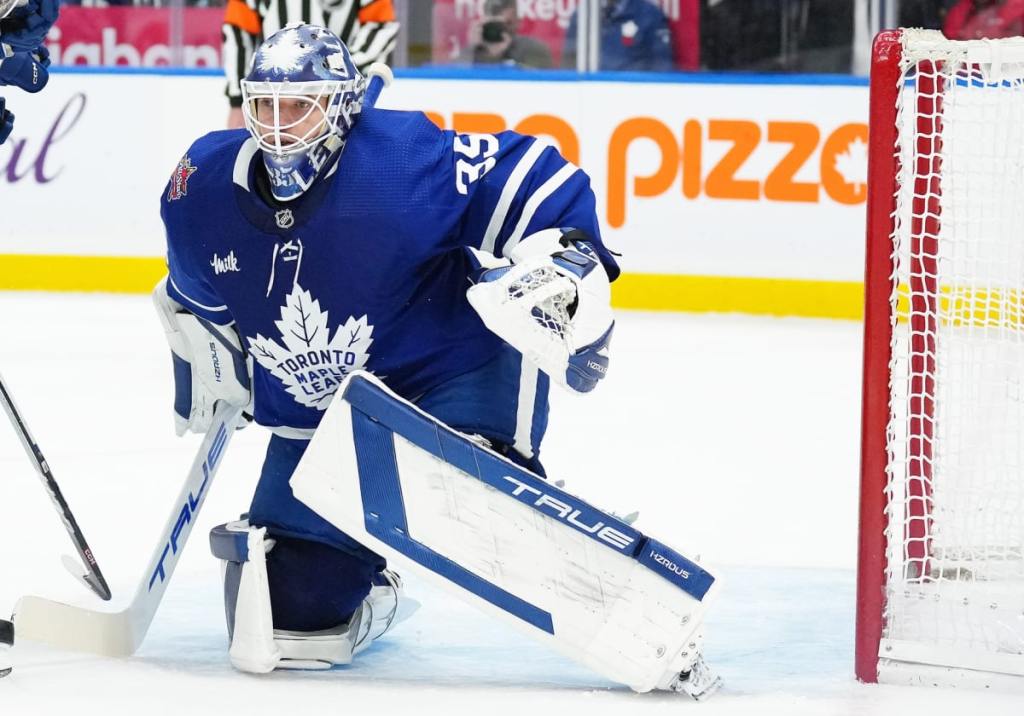
However there is one thing that hasn’t been considered.  Arbitration frequently leaves bad feelings amongst the two parties.  In the sports world for example, one has to look no further than Toronto Maple Leafs goalie Ilya Samsonov.  He took the team to arbitration last summer.  The team clearly said some negative things about him to justify their offer to him.  While the team has not exactly been forthright about what exactly was wrong with him mentally, there can be no doubt that he had a terrible first half of the hockey season.  It was so bad he eventually got demoted (on paper) to the farm team – and his play was so bad no other team in the NHL wanted him (ouch).

Toronto Maple Leafs goaltender Ilya Samsonov

This is why sports teams try to avoid arbitration – they know that the process can be ugly, and can adversely affect the performance of their top athletes who have to listen to negative things said about them.  For teams to succeed, the top athletes have to play their best.

Looking at the situation in Ontario, it’s frankly hard, as a physician, to feel anything but insulted and disrespected by how the MOH negotiations team has acted.  It’s bad enough that they appear to have, for the most part, stalled the negotiations to the point where arbitration is needed.  Contrast this with Manitoba, Saskatchewan and British Columbia, where the governments realized that they needed to retain their physicians due to the current crisis in health care, and made widely applauded agreements with their doctors.  But Ontario’s arbitration position is so pathetically inadequate (even when considering they are low balling for arbitration) that one really has to wonder if they want to have good relationships with their doctors going forward.

From 2020 to 2023 – inflation has gone up by 14.8% (with another 2.9% for this year so far). Nurses were given an additional 6.75% (on top of their previous agreements) due to the unconstitutionality of Bill 124. And yet the MOH thinks physicians should only get three percent?? With no recognition of administrative burden? And the MOH claims there are no retention/recruitment issues?? Have they talked to the over 2 million people without a family doctor??

Does their negotiations team truly understand the harm they are doing by putting forward such an insulting and offensive proposal?? 

Here’s the thing, after a contract is agreed to or arbitrated, physicians and government will need to work together for the benefit of the people of Ontario.  Yet how does any reasonable person expect physicians to work with a government team that on the one hand says that “physicians are valued and respected” but then, at the first chance they get, demean them with such a pathetic position.  

Remember, many of the bureaucrats who provide supporting information to the MOH’s negotiations team have other roles.  They’ll show up on other bilateral committees between physicians and the MOH.  And after you denigrate people so badly with such an abhorrent brief, will there really be any trust between the two sides (and yes, they are now sides – this opening position makes it clear we are not on the same “team”).  

Just like the Leafs needed Samsonov to, you know, make a few saves earlier in the season, the government needs physicians at their peak to deal with and give their best advice on the current mess that is health care.  And while physicians, as is their nature, will genuinely try their hardest to do so – the blunt reality is that Samsonov tried his best to make more saves as well.  But when your head is not in the right space…….. 

At this point there really is only one solution.  The MOH negotiations team needs to formally apologize to all physicians for their incredibly repulsive offer.  Then they need to look at BC, Manitoba and Saskatchewan, and put together a fair and competitive agreement so that more physicians don’t look elsewhere. This can be done tomorrow.  

Otherwise, I genuinely fear that we are going to continue to lose physicians, not only in fields where they are desperately needed, but to other jurisdictions as well.

“Health Care for All” Policies Will HURT Physicians and Patients

Recently, physicians leaders have been in the media promoting the right to primary care. I generally refer to this as a “Health care for All” policy, as it is reflective of one of the tenets of former Health Minister (and current Dean of Queens Medical School) Dr Jane Philpott’s new book. Dr. Tara Kiran has also promoted the same through her “Our Care” project. These proposals seek to guarantee a family physician for everyone in a certain geographic area, just like children in an area are guaranteed a school.

While these policies sound nice (for reasons I’ll go over later) – they are doomed to failure. To understand why, let’s look at just two other situations – The Barer Stoddart Report and the move toward safe injection sites and decriminalization of illicit drugs. I appreciate my three loyal readers (I actually gained one!) might be wondering what this has to do with primary care. Bear with me, it hopefully will make sense later.

The Barer-Stoddart report is infamous in Ontario medical politics. It’s the report that is widely viewed as suggesting Ontario had too many (!) doctors in 1990s and led to the reduction of the number of medical school positions. However, what is not commonly appreciated is that was the last recommendation in the report. The first recommendations were to support the current supply of physicians by adding a large number of allied health professionals and making many health systems modifications. If and only if all those recommendations were carried out, then medical school enrolments could be cut. The bureaucrats and politicians looked at that, went through the report, decided that all the other recommendations were too expensive or complicated, and just cut med school enrolment. “The report told us to.”

Similarly, when it comes to drug decriminalization, the idea is best implemented in Portugal. The top line read is “addiction rates fall 40%” after Portugal introduced this policy. BUT a deep dive shows that before decriminalizing drugs, Portugal made a number of legislative changes, ensured that the court systems were educated, ensured that addiction therapy and counselling was available for addicts, and then implemented the decriminalization policy.

In Canada, our bureaucrats looked at Portugal, and figured all the rest of the changes were too complicated. But hey, maybe just decriminalizing will be enough without the other stuff! The result is a disaster when it comes to safe injection sites and an obviously failed policy.

So let’s look at the right to primary care that Drs. Philpott/Kiran and others propose. At their heart, ideas like this are reasonable, make sense and will help improve health care for the general population (I bet you didn’t think I’d say that did you?). They speak to a fairness that just isn’t apparent in the current system. One of the reasons that people pay taxes is so that those taxes can fund health care. How is it fair then, that one taxpayer has a family doctor, and another does not? How is it fair that one quarter of Ontarians can access team based health care, but the rest cannot? And so on.

Well then, what’s the problem and why do I think “Health Care for All” type policies will hurt physicians and patients?

Because I simply don’t believe that our politicians/health care bureaucrats will be able to implement all the work necessary to support this, prior to implementing this change.

Look at the other items I mentioned. Do you really think that the bureaucrats who mucked up so badly will get it right this time? Do you really believe that those bureaucrats are going to provide the admin support, the additional allied health workers, the organizational and structural backing first, before just writing out “everyone gets a family doctor” in the funding contracts?

Not a chance. Zilch. Zero. They will look at the need to invest in teams and say “too expensive.” They will look at the need to add administrative support first and decide that’s not feasible. They will look at the need to build healthcare infrastructure and be confused as to how to do it properly.  They will be aghast when they come to the part that says for teams to be successful, they must be physician led.  “But I’m the aide to the executive secretary of the assistant to the assistant deputy minister’s attache for the chief regional officer of the Primary Care Branch of the Ministry!  I should run the team!”

Then they will come to the part of the policy that says ensure every patient in a geographic area has a family doctor. And those bureaucrats will say “oh that’s easy to do with just some changes and regulation”. And they’ll do just that without any of structural changes needed.

I did some rough calculations for my neck of the woods. Each family doctor in my area would have to take on 200 unattached patients to make this work. The problem is we’re all working at 110% capacity right now. There’s no way we can do that.

So, once “health care for all” comes in what’s going to happen? Physicians will stop doing comprehensive family medicine, myself included.  You can only ask a person to work so hard before they get frustrated and quit.  Which increases the burden on the remaining physicians, which will cause more of them to quit.  And so on.

What’s worse, presenting these policies now deflects from the main issue. Basically, family medicine is no longer economically feasible. Without some immediate stabilization funding, family medicine will collapse.  By the time people figure out how to implement “Health Care for All” and reduce admin burden, you won’t have any family physicians left.  By introducing the “right to primary care” now, the laser like focus on just what is needed to make family practice economically viable is lost and this hurts everyone, patients included.

I genuinely have a great deal of respect for Dr. Kiran and Dr. Philpott in particular (she was the one who sacrificed her political career to warn us that our Prime Minister was an effete, vacuous ninny who for the sake of all Canadians needs to go back and teach drama classes).  But as well intentioned and well thought out as “Health Care for All” may be, now is not the time to talk about it.  

Economically stabilize and support family medicine first.  Then let’s talk.