
Open Letter to All Family Practice Residents

The following letter was jointly written by the three of us and published in the Toronto Star on February 20, 2024. It is being reproduced below so that we can share the letter on Facebook as we believe it will be of interest to physicians across Canada.

To All Family Medicine Residents, 

We are writing to say congratulations! You are nearly at the end of a decade of hard work, perseverance and sacrifice; ready to start your career and “real life”. You have joined a beautiful and unique specialty. You will be the key to the healthcare system. You will find answers when patients arrive with ambiguous symptoms. Others will tag in and out of a patient’s health journey. You will stay and be an essential part of the beginning, middle and end of every patient’s story. You will save lives. 

Your skill and knowledge are unparalleled, and there is no substitute for your expertise. 

Which is why with heavy hearts, we, the undersigned, recommend that you do not start your own family medicine practice in Ontario. Not right now.  

Family medicine is in crisis. Family doctors in Ontario are unable to provide the care they could and should. We face unprecedented levels of administrative burden, unsustainable business expenses, lack of healthcare resources, lack of social and cultural support for our patients and ourselves and finally, a lack of respect. This has led to widespread burnout and exhaustion.

In short, it is becoming frankly unsafe to run a family practice in Ontario, especially for those just starting.

We are family doctors with decades of experience. We are also physician leaders, past-presidents and board directors of the Ontario Medical Association (OMA), academic faculty, and health policy experts. We understand the situation well. 

Do not sign that contract. Do not sign a lease, hire staff, buy equipment, contract with an EMR or any of the million things that must be done so that you can start a comprehensive care family practice. 

Starting a practice at this time will require you to continue to sacrifice everything else in your life. If you have debt, you may not be able to pay it down, let alone start living the life you and many others have postponed for so long. You will struggle to spend time with your family, buy a home, care for vulnerable loved ones and more. You will continue to work at a non-stop pace, this time with no end in sight.

You will burn out and like many others, leave family medicine for good. This is why millions of Ontarians no longer have a family doctor.

The Ontario Ministry of Health can solve this crisis. 

Governments in Manitoba, Saskatchewan and British Columbia have done so. This past year, they made family medicine a priority – and backed their words with targeted funding toward key programs to support both new and established doctors. It comes as no surprise that they have welcomed hundreds of new family doctors into their communities.

If they can do it, so can Ontario.

What can you do in the meantime? Work in hospitals, hospices, operating rooms and long-term care. Work in obstetrics, anesthesia, as a hospitalist, in emergency or palliative care, oncology, sports medicine etc. Be a locum. Bide your time. 

You are skilled, smart, and adaptable. Your knowledge is extensive, demonstrating an unmatched depth and breadth of training. Use it.

When people leave comprehensive care family medicine, they almost never come back. 

We don’t want that to happen to you. When the government of Ontario recognizes family doctors as the foundation of medical care, negotiates a fair contract and improves health policies to reflect patient needs in 2024… well, when that happens, we will write a different letter and welcome you to the world you were meant to be in.

 We hope by then it is not too late.

Sincerely,

Dr. Nadia Alam, comprehensive care family physician and anesthetist, past-president of the OMA 

Dr. Sohail Gandhi, comprehensive care family physician and hospitalist, past-president of the OMA

Dr. Silvy Mathew, comprehensive care family physician and long-term care, past-board director of the OMA

Actually, Ontario Does NOT Have a Shortage of Family Physicians….

You’re probably wondering if I’ve lost my mind. The media is currently littered with stories about how 2.3 million people in Ontario don’t have a family doctor and how that number is expected to double in two years. Family practices are closing down. In Sault Ste Marie – over 10,000 people are about to be orphaned (left without a family doctor). The Ontario Union of Family Physicians just held an event geared towards helping family doctors leave the profession.

How out of touch must I be to make the assertion, as I did on CTV news recently, that we don’t have a shortage of family doctors?

Yours truly on CTV News

Truth be told, there is an important distinction that has to made, which is key to solving the orphaned patient crisis. There are family doctors, and there are family doctors who are willing to work in a comprehensive care family practice like I do. 

According to the Ontario Medical Association (OMA) website, there are over 15,000 members of the Section of General and Family Practice. These doctors have got their medical licence, are qualified to practice in Ontario, and are able to practice family medicine without any further regulatory hurdles (like getting foreign doctors licensed would entail). There are likely many more as some doctors with a family practice billing licence don’t choose a section – but let’s go with 15,000.

What’s really telling is that only about 9,300 are in what’s called a PEM (Practice Enrolment Model – where a formal agreement exists to run a family practice). The number that are in Fee For Service alone (without an agreement) but still run a practice, is likely only a couple of hundred. So at most we have 9,500 comprehensive care family doctors. The other 5,500+ do something else (hospital only work, clinical associate work, walk in, etc).

From the OMA website. PEM + APP is about 9,300. This would be the number of docs with a formal agreement to run a family practice. 

There’s a myriad of reasons why comprehensive family practice is so unappealing, but let’s look at the two main ones.

1)Decreasing net incomes over the years. It is of course, unpopular to talk about the money doctors make. The OMA has historically felt that the general public views doctors as “fat cats” and “part of the rich elite.” So they’ve shied away from talking about physicians incomes or trying to positively frame that discussion – with predictable results.

As Boris Kralj (PhD in Economics, Adjunct Asst. Prof at McMaster and former Staff at the OMA) points out, net income for family physicians has fallen drastically over the past 20 years.

My thanks to Dr. Kralj for allowing me to share his graph.

2) Increasing Admin Burden. I think everybody has heard how family doctors now spend up to 19 hours a week doing administrative work, ON TOP of the time they spend seeing patients. This work is unpaid of course (there is no fee code for admin work). On a personal note, in about 2004, my office, which was already electronic, got a vpn (virtual private network). This allowed me to connect to he office from anywhere in the world. Initially, I thought it was great. I would go on vacation, spend 20 minutes a day taking care of messages and when I got back from vacation – I would not have the backlog of messages to deal with. 

This past summer, I went on a hiking trip with one of my sons. He pointed out that I was now spending over two hours a day going through labs and messages. Essentially, family doctors don’t have any vacation now. I don’t care what your job is or who you are, a life without any breaks is unsustainable.

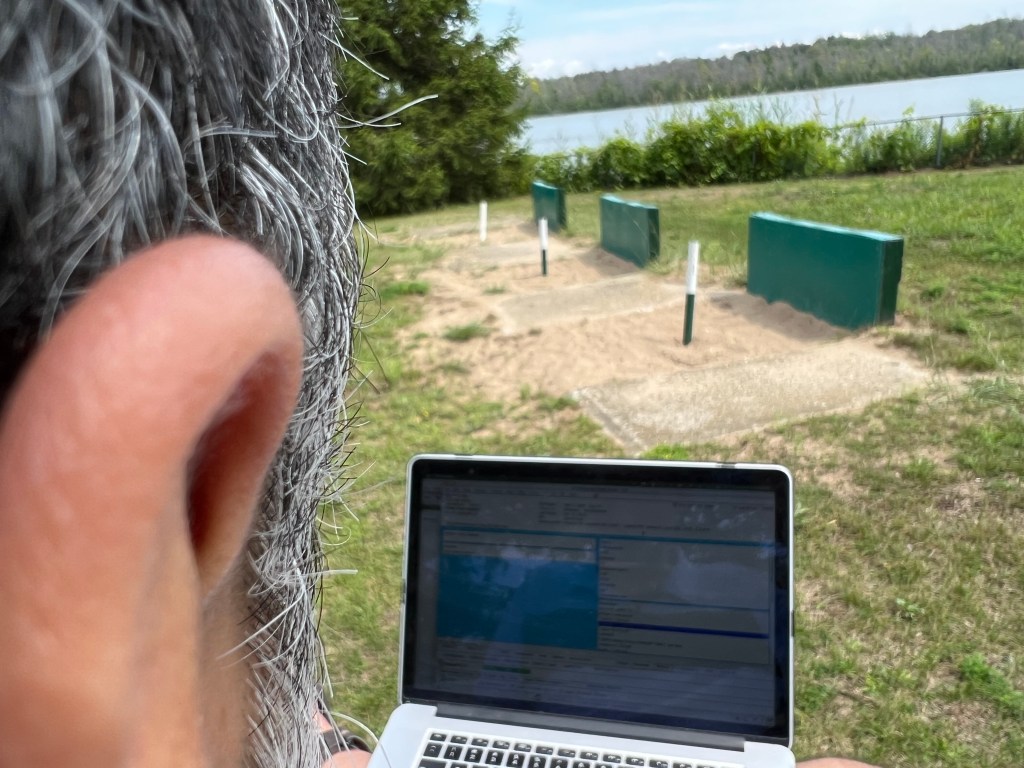
Me last summer, by a lake, on vacation, checking my office messages and lab work (dummy chart)

What can be done about this? How does one make family medicine more appealing? This may rub some people the wrong way but the first step is simple. Pay family physicians more. In Ontario, the most common fee billed by a family physician is about $37. (The last time I got a haircut, I paid $40). Out of that $37 the family doctor has to pay their nurse, receptionist, rent, cleaning, supplies and so on. Gets used up pretty quickly. 

Additionally, you need to pay physicians for admin work. If there is 19 hours of admin work that needs to be done – it’s only fair that work is paid for. There are people who are skeptical this will work. To them I would point out that British Columbia has gotten 700 more family doctors since increasing the pay to family physicians. 

You mean if you increase the income for a job, more people will apply for it? Who knew?

B.C. isn’t even the province that pays physicians the most. That’s arguably, as I have written before, Manitoba. Saskatchewans new deal is also much better than what Ontario offers.

The second aspect is to reduce the admin burden for all physicians. Many experts suggest this is a process that will take time. They are the same experts that oversaw the increase in Admin work for physicians with “oh it’s just one extra click or it’s just a simple form”. 

To reduce the Admin burden significantly, one needs to drastically revamp digital health care. Get rid of eHealth Ontario and OntarioMD, and run all decisions through the Digital Health Branch of the Ministry of Health. It’s too late to unify all of our electronic medical records, but you can approve one (and only one) patient app that will allow patients to access and transfer their records to the physician of their choice to reduce duplication and waste. That’s the kind of bold steps that we need to take, not just crowing about the fact that doctors don’t have to sign hearing aid forms any more.

Look we already have 5,500 licensed family physicians in Ontario able to open up a practice. If 40 per cent did so, it would end this crisis immediately without having to resort to years long plans of modifying licensing and training requirements for foreign graduates (who in fairness are generally very good).

Do our leaders have the boldness and vision to do the right thing?

OMA Needs to Communicate Better About Status of Negotiations

Negotiations between the Ontario Medical Association (OMA) and the Ministry of Health (MOH) on a new Physicians Services Agreement (PSA) began this past fall. The first set of bilateral meetings were in mid-October. This years negotiations present a particularly complex challenge as not only is the OMA trying to negotiate a new four year agreement for physicians, but it also has to determine how much of an increase physicians will get this year (more on that later).

Given that we are a few months into the process – I think the OMA as an organization is really not doing a very good job of communicating the status of the Negotiations with its members.  The OMA really needs to increase some of the transparency around the negotiations process.

In fairness, there are somethings about negotiations that simply can’t be divulged (and I fully support this and members do need to accept this):

  • The mandate for negotiations must be confidential, to prevent the other side from knowing what our bare minimum acceptable increase is
  • The detailed discussions between the Negotiations Task Force (NTF) and the MOH must also be confidential (a lot of stuff that goes back and forth is hypothetical – and to protect the integrity of the process – you can’t disclose this to 40,000 + people)
  • The briefings presented to the Board and the Section Chairs must stay confidential as well (for the same reasons above).
  • NB – If we wind up in arbitration, the asks at arbitration are public.

So what should the OMA be informing members about then, given what’s usually a “cone of silence” around negotiations? Well, put simply, there are a number of things that are part of the negotiations process, outlined in public documents readily available to all members. The OMA needs to recognize some members (not just me) will read and wonder about these. (Although I’m probably one of the few loudmouths who’ll publicly write about it).

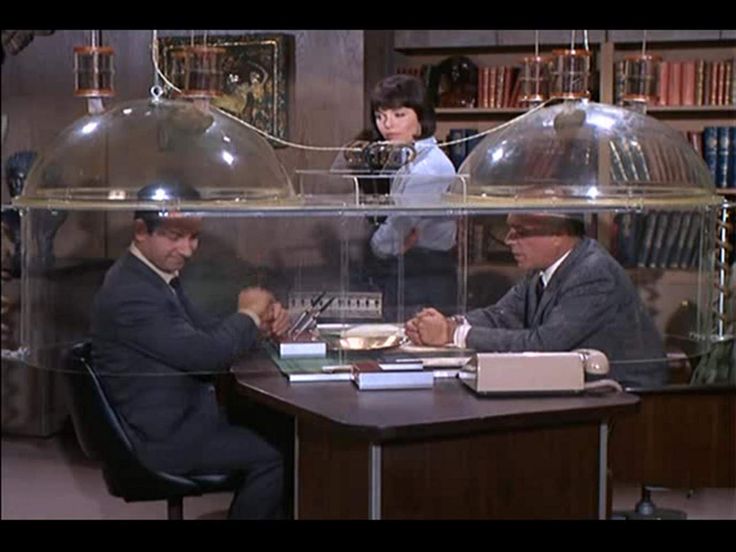
The Cone of Silence, from the classic series, “Get Smart”

For example, the Binding Arbitration Framework, under which negotiations are now held, is posted on the OMA website for all physicians to see. The framework is pretty clear. After 60 days of negotiations, either side can ask for mediation. They don’t have to, but they can. 

We are over 60 days. Perhaps mediation is not needed yet (which would be a good thing). But the OMA can, without compromising the negotiations tell members something like “while we have been negotiating for x number of days, at this time the process continues and we neither side has called for mediation.” It would at least let members who follow this closely know what the stages are.

Similarly, it would be quite reasonable for the OMA to list the dates of the meetings with he MOH and a general list of what they are talking about. Eg Oct 19 met with MOH to discuss Primary Care models, Oct 21 to discuss backlog in radiology etc. (I have no idea when the meetings with the MOH were or what they talked about btw – I’m just pointing out what could be said).

Finally, there appears to be radio silence about the part of the last contract that directly affects this year. This contract was completed and ratified by members and is public knowledge. The parts of concern are:

21. ….the parties will establish a committee that will meet on a quarterly basis…..to review the expenditure calculations. Through this committee, the parties will agree to a best estimate of the year 3 (2023- 2024) PSB expenditures in accordance with paragraph 6 by December 15, 2023.

22. Any agreements reached by the Government with respect to any new physician payment program or addition to an existing program which was not the subject of a proposal by the OMA during the negotiations leading to the agreement for the 2021-2024 PSA will not be included in calculating the total PSB expenditure …..”

It’s obviously past December 15, 2023. Which means we should have an agreement on the PSB expenditures by know. This information is critical to determining how much of an increase we get this year. The OMA had told us that:

“Conservative OMA projections indicate an expected Year 3 increase of 2.8 per cent, with a range of 2.1 per cent to 3.6 per cent”

But if the expenditures are too high, then we potentially get a zero percent increase. My friend Paul Hacker did an EXCELLENT job of explaining this here:

Paul Hacker’s Analysis

As an aside, some of you wondered why I endorsed him for OMA Board Director. It’s because of stuff like the above link. He knows the Board needs to provide proper oversight on the process and ensure it’s explained to members.

Anyway, perhaps this date got pushed back. This wouldn’t surprise me. The MOH Negotiations team was never able to get data on time in the past (there was always an excuse, except for the truth – that they are generally incompetent).

But the OMA should simply tell members this. Remember last year when it was announced to primary care docs that the repurposing of the preventative care bonuses couldn’t be mutually agreed on, and so was delayed for a year? Do the same thing and say the deadline couldn’t be met and you continue to work on it. But don’t just ignore the deadline and hope no one will notice.

Communicating better would also be beneficial for the NTF. There is no task force at the OMA that is more controversial, and gets more….attention…from members than the NTF. Yet what’s missed is that the NTF works really really hard. I remember some of the 18 hour days they put in when I was in various roles at the OMA. 

But when communication about the process, and the work they are doing is substandard, members won’t appreciate all that. They’ll simply blame the NTF for what goes wrong (e.g. if we were to get zero percent this year). It would be foolish in the extreme to suggest everyone will love the NTF if they just communicated better. But better communication would at least blunt some of the criticism that will come their way.

Hopefully, the OMA as an organization will recognize this.

Will Medical Political History Repeat Itself in 2024?

“The Wheel of Time turns, and Ages come and pass, leaving memories that become legend. Legend fades to myth, and even myth is long forgotten when the Age that gave it birth comes again.”
The Eye of the World, Book I of the Wheel of Time Series of Novels.

One of the advantages (?) of being old, is that you can see when history is about to repeat itself. Having followed medical politics for over three decades now (!), I continue to be amazed at how things keep circling, just like in the Wheel of Time series of novels. Unlike those books however, the Wheel in Medical Politics (WIMP?!?) would seem to come around every decade.

Case in point is the current crisis in family practice. I won’t bore with you the details yet again since this issue is all over the news. But I will bore you by pointing out that this is currently the third major health care crisis in my career.

In the late 1990s, there was a significant shortage of family physicians (sound familiar?). The shortage was made worse by poor payment for family physicians and poor working conditions. The Ontario Medical Association (OMA), which was supposed to represent all physicians, was widely viewed by the members at the time to be sorely lacking in helping family physicians. This led a few physicians (among them Drs. Sharla Lichtma/Rochelle Schwarts/Suzanne Strasberg) to form the Coalition of Family Physicians (COFP).

Dr. Suzanne Strasberg, former member of COFP, Past OMA President and current CMA Board Chair (and the only one of the COFP members whose photo I could find online)

Being politically savvy, they went out to the media and said things that the OMA, for whatever reason, did not. Not only did they get the attention of the press, they were (regardless of whatever revisionist history may suggest) instrumental in forcing the government of the day to institute Primary Care Reform and bring in the capitation models of funding for family practice. 

Their leaders also ran for OMA positions, with one of them, Dr. Suzanne Strasburg, eventually becoming the OMA president. It would be erroneous of me to suggest the OMA suddenly became an organization that had the undying love of its members, but the reality was that there was a noticeable shift in tone of their messaging when various members of the COFP got elected to the OMA Board.

Fast forward to the mid 2010s, and, once again there was a (you guessed it) crisis in medicine. This time, the crisis was created by militant Health Minister Hoskins, who was hell bent on doing things his own way. It’s not without reason that one grumpy old coot coined the moniker “Unilateral Eric” for him. 

Hoskins and his belligerent deputy Minister Bob Bell were so certain that what they were doing is right that they never bothered listening to the many intelligent people who tried to help them. Shockingly for most of us, instead of defending doctors, the OMA got into bed with Hoskins and Bell (aack! now I can’t get that image out of my head) and actually agreed on a tentative contract that stabbed doctors in the back.

Once again, when the OMA couldn’t deliver for physicians, a breakaway group of doctors got organized on Social Media. They were led by a strong crew of doctors that included the likes of Drs. Nadia Alam, Paul Hacker, Silvy Mathew and advised by people like Dr. Paul Conte and too many others to named. Despite being weighed down by an ancient, crotchety bugger they went and said and did things that the OMA couldn’t. They caught the eye of the media and the hope of the membership. Eventually, some of them (you guessed it) wound up on the OMA Board. 

Once again, while the OMA hardly became beloved by members, there was a noticeable shift in the tone from the OMA. Remember the ”Not a second longer” ads? 

And yes, Dr. Alam (and the guy who came in on her coat tails) both eventually wound up being President of the OMA.

As we head into the mid-2020s (!), the Wheel of Time is turning, and the Age is now being reborn. Once again the crisis in Family Medicine is in the forefront. Once again, the OMA is seen by many to be lacking in defending the profession.

N.B. I really do appreciate the work of most of the staff at the OMA but the reality is that the OMA has spent much of the past couple of years pushing their “Prescription for Ontario.“ To be fair, it’s a very good document with many positive ideas for change. But the blunt reality is that no one in government asked for it, any similarity to what government is doing is purely co-incidental and not because they are listening to the OMA, and the unrelenting focus on it makes members feel as if you the organization is not advocating for their own personal well being.

And of course, we now have the Ontario Union of Family Physicians. A breakaway group that has gone out and said and done things the OMA can’t. Led by Drs. Ramsey Hijazi, Britt Harrison, Vakar Khan, Alex Duong and too man others to name, the group has, in very short order:

  • set up an incredibly slick and well functioning website
  • been active in the media talking about why family physicians are quitting and not being afraid to mention that poor pay is (along with the admin burden) a root cause.
  • Began a job action campaign that the OMA can’t
  • and yes, one of their own, Dr. Ramsey Hijazi, is now running for OMA Board (along with Drs. Paul Conte and Paul Hacker). Full disclosure – I’m voting for all three of them, and you should too – and no, they didn’t know I would endorse them in this blog.
Dr. Ramsey Hijazi, a founding member of the OUFP, and a candidate for the OMA Board.

It’s easy to get cynical about medical politics when one sees how things keep circling. Truth be told, I’ve had my own moments of pessimism where I’ve wondered why things don’t change permanently. But the reality is that any big organization will have a tendency towards inertia. That’s just life.

But what’s also reality is that these organizations also significantly benefit from having people who are widely viewed as outsiders, or “disruptors” come in and shake things up. This is a healthy thing (whether the organizations thinks so or not). And it seems, in 2024, we may get that again.

OMA, CMA and CCFP Should put MEMBERS, not the Corporation, First

My thanks to Dr. Paul Hacker, pictured here, for his contributions to this blog. Dr. Hacker is a former Vice-Chair of OMA Council and a former member of the SGFP Executive. He’s a strong advocate for physicians interests, exceptionally well versed in governance and bylaws, and good friend.

As we approach election season for the Ontario Medical Association (OMA), many members have regularly brought up one issue to me. Is it true that the the Board Directors for the OMA are all asked to sign “an oath of loyalty to OMA central and not the members?”. The question is usually asked with incredulity and a tone suggesting a disappointing response.

The OMA is a corporation, as is the Canadian Medical Association (CMA) and the College of Family Practitioners of Canada (CFPC). There are many, many good reasons for these organizations to be incorporated, including preferential tax rates, some indemnification for members from assuming the debts of the corporation in case of financial difficulty and a requirement that bylaws and Boards adhere to certain standards.

If you think your membership fees are high now – just wait till you see what they would be if these organizations did not incorporate.

Good corporate governance demands that Board Directors of any corporation put the fiduciary interests of the corporation first. So yes, when I became an OMA Board Director, I did have to sign an agreement saying I would act in the best interests of the corporation. “Oath of loyalty” is a bit hyperbolic, but Directors are legally bound by their fiduciary duties.

In order to help educate Board members on their role, governance training is provided to them when they assume their role at the OMA. I assume this is also the case for the CMA and CFPC. The governance training is usually provided by some hot shot consultant (we got some guru from Rotman Management). Given the consultant’s list of degrees/publications after their name, there was an understandable (but still irksome) tendency for the staff at the OMA to value their opinions on Board matters over some Directors.

But this whole thing is frankly a crock when we are dealing with a membership representing organization (I told our consultant that). Fiduciary responsibility as Director of a for profit corporation whose goal is to increase share value is fine. But it’s quite another when the raison d’être of a corporation is to be a non-profit whose purpose is to advance the interests and needs of the members.

Let’s look at some examples.

I previously wrote about the atrocious 2016 tPSA between the OMA and the Ontario. What I didn’t mention is that that tPSA was actually really good for the OMA as a corporation.

No seriously. The agreement, if passed would have ended a period of internecine warfare between the dismal Kathleen Wynne Ontario government and the OMA, saving a bunch of money. More importantly, that agreement also created some bilateral tables where the OMA could be a joint partner and “co-manage” aspects of the health care system with the government.

There was to be a table on recommendations on physician supply and distribution. One to “co-manage” expenditures of the Physicians Services Budget. A commitment to work together on health reform and much more. In short, that agreement would have given the corporation of the OMA more power and a say in the health care system. All the OMA had to do was ruthlessly stab its members in the back.

Yet look what happened in the aftermath. The then Board was thoroughly repudiated in the ensuring vote. The first non-confidence motion in a OMA Board Executive occurred. Multiple special meetings were called. The resignation of the executive led to a protracted period where the OMA had no leadership or spokesperson. This is good for the corporation?

Want more? Let’s look at the Canadian Medical Association (CMA). In 2018 the CMA surprisingly announced that it was selling MD Management, which many of its members had relied on for their retirement planning. It’s hard not to see why they did it. The CMA got upwards of $2 billion dollars for the deal. The corporation of the CMA clearly benefited significantly and, unless it is financially managed by the same crew that ran Enron (remember them?) – will never go bankrupt and will live in perpetuity.

All it had to do is, you guessed it, stab its members in the back in a move that was widely viewed with a sense of betrayal. The outcome? In 2018 when Dr. Gigi Osler took over as president of the CMA, it boasted 85,000+ members. When Dr. Lafontaine took over in 2022, that number dropped to 68,000. I asked a friend of mine who is quite high up the chain at the CMA what that number is now and she told me she tried to find out, but apparently “they don’t give that number out any more.” Hmm.

NB: I realize correlation does not equal causation, but I find it interesting that the CMA stopped saying how many members it had after a grumpy miserable old coot pointed out the drop in numbers last year. The Medical Post often reprints my blogs – perhaps one of their intrepid reporters could ask the CMA how many members they have today.

Once again, the question needs to be asked, how does a drop in members truly benefit the CMA? How can they honestly say they “champion the medical profession” when they have fewer and fewer doctors as members?

We are seeing the same thing unfold with the College of Family Physicians of Canada (CFPC). They recently announced the truly idiotic suggestion that it was fair to raise their membership fees by 7 %, and the even dumber suggestion that the residency should increase to 3 years from two. They are now embroiled in a serious controversy over this and their annual meeting promises to be a mess. (Both of these moves would benefit the corporate CFPC of course – but not the members or the public).

The pattern is abundantly clear. When Directors of membership corporations don’t put members first (not the corporation), the corporation will suffer. I hope whoever runs for Director of the OMA has the intestinal fortitude to politely confront whatever “governance consultant” is brought on, and tell them just that.

Dear OMA Board Member, About That Mandate for Negotiations

Dear OMA Board Member,

I read, with interest Ontario Medical Association (OMA) Board Chair Dr. Cathy Faulds update last Friday. There’s the usual information in there about the goings on at the OMA (which sadly not enough members pay attention to, though they should). Critically for most members however, was this comment by Dr. Faulds:

“The board will hold a special meeting at the end of September to finalize the negotiations mandate for use by the Negotiations Task Force (NTF)..”

This is a big step in the negotiations process and to truly understand that, members need to understand what a “mandate” is. Allow me to briefly expand on what Dr. Faulds wrote. The short version is that a mandate is the minimum offer the NTF can accept from the government. If the government offers an increase that is equal to or exceeds the mandate, then the NTF will automatically accept that offer on behalf of the Board.

The corollary to that, which some Board members did not understand when I was on the Board, is that if the mandate is met, and the NTF accepts – then it will automatically mean that you as a Board have to accept the offer as well. As per Board rules, you will then have to endorse the government offer to the membership. You can’t very well tell the NTF “you must achieve XYZ”, and if they do achieve XYZ, turn around and say it’s not enough.

Therefore, it is incumbent on you as a Board, to make sure the mandate is sufficient for the membership as a whole, given the times we live in, and the environment around us.

To that end, without spilling specific secrets, I will state that there was quite a lot of discussion about what an acceptable mandate was during my time on the Board. There were some Board Members who wanted to be “reasonable” and some who wanted to take a hard line and keep the mandate high.

I would, respectfully, point out that for the most part, mandates are never met. Usually the NTF comes back to the Board with “we tried – but this is the best we could get” and presents that to the Board. To be clear, I’m referring to all labour negotiations in general, not just physician ones. Negotiations Legal Counsel told us this last time, just ask them. Whatever you (or any Board) sets as the initial mandate, there is a strong chance the NTF will come back to you later and ask you to lower that mandate.

You will need to keep that in mind when setting your mandate.

To that end, I would encourage you to recognize that the time really has never been better to set the bar extremely high for the NTF mandate. It’s not just that physicians are considering leaving the profession. It’s not just that health care is collapsing all around us. It’s not just the ongoing problems with not just recruiting, but retaining physicians. You already know about all of those issues in excruciating detail.

No, the reality is that we now also have some significant competition for physicians within Canada from other provinces. And I mean strongly significant.

Not sure how many of you have seen this summary form the recently approved Physicians Services Agreement (PSA) in Nova Scotia. On the surface there would appear to be a fairly minimal 10% raise over four years. A deep dive however shows significant add ons like improved parental benefits, funding for overhead, funding to hire allied health care professionals, funding for admin work, enhanced FTE and income stabilization for specialists and so on. That plus a retirement fund!

Similarly, in Manitoba, their recent agreement was widely hailed as a landmark and a game changer. I spoke to a friend of mine from Manitoba who confirmed that it too contains things like a retention bonus ($21,000 and higher for those in rural communities), funding for admin time, funding for new models of care, additional funding for those patients who are older and an equity lens applied to fees. In short, the increase is widely viewed to be in the double digits percentage wise per year.

Look, I know the NTF knows all the stuff I’m pointing out (but others who read my open letter may not). I also would acknowledge that Dr. Mizdrak is a fine chair for the NTF and is (in a very good way and said with total admiration on my part) a real pitbull on behalf of the profession. I also have full confidence that the NTF did it’s due diligence in reviewing the many asks by the leaders of all the specialties.

But at the end of the day, it is up to you, dear Board Member to set the minimum acceptable deal (mandate) and it is up to you dear Board Member to ensure that Ontario remains a competitive place to attract physicians.

To that end, you must ensure that if there is a negotiated agreement, it must at least equal the increase in Manitoba or Nova Scotia (whichever is higher). Anything less would, quite frankly, be rightly viewed as the Board selling the profession out. (If we wind up going to arbitration, that’s a different story – but at least we will have gone there because the Board refused to take a sub optimal deal).

All of which is a long way of saying that since it is quite likely that an initial mandate may not be met, it is incumbent on the Board to set a mandate for the NTF that is HIGHER than what was achieved in Manitoba/Nova Scotia. This will allow for the usual process of the NTF having to come back and say what parts can be achieved and what can’t, and allow some wiggle room.

If you set the bar lower, well, frankly, I have to wonder how you can justify saying that you are advocating for the Doctors of Ontario.

Yours truly,

An Old Country Doctor.

Dear Premier Ford, You Know You’re a Conservative, Right?

Dear Premier Ford,

I’m not exactly your harshest critic. I actually support some (not all) of what what you’ve done in health care. Moving procedures from hospitals to outpatient clinics, building new hospitals, enhanced funding for paediatric mental health, are good steps. I hope there will be more commendable steps in the future.

Ontario Premier Doug Ford makes a health care spending announcement

However, I would be remiss if I didn’t point out that the health care system is going to be under a lot of fiscal pressure in the next couple of years. The remuneration that taxpayers pay for front line health care workers is about to increase drastically.

You will note, I hope, that I said “taxpayers” pay. I, like you in the past, try to avoid saying “government money”. The money to pay for health care and other services comes from the pockets of the little guy as a certain politician once put it. Calling it “government money” is just a way to deflect the public from the truth.

At any rate, you are no doubt aware that the nurses in Ontario got a well deserved 11 % arbitration award. You are probably aware that negotiations for a Physicians Services Agreement in Ontario are about to begin. Given that Manitoba just negotiated a record overall funding agreement with their doctors, and Nova Scotia doctors got a significant increase, you will not be able to hold the line against physicians getting an increase in Ontario.

Which of course means that many more health care workers will want an increase too. In short, there is going to be a lot of fiscal pressure on the taxpayer in the near future.

With that in mind, I will confess that my biggest disappointment in your management of health care is that I can’t honestly see that your government has reigned in the bureaucratic bloat that has so hampered the ability of front line physicians (and other health care workers) to look after patients properly.

Bureaucratic bloat is common in all government agencies. I greatly admire politicians who’ve made comments about needing to “end the gravy train” that provides jobs for bureaucrats and a myriad of consultants at the Provincial Government. Perhaps it’s because I live it daily, but no where does this gravy train seem to be so prevalent as health care.

Let’s look at digital health in Ontario for example. You have Ontario MD, which is an arms length agency that claims to be “the only truly provincial digital health network in Canada”, whatever that means. When I was on the OMA Board, OntarioMD was funded by taxpayers around $18 million a year.

But wait, you also have eHealth Ontario, that claims to be “creating a secure electronic health record information system so that all your medical information can be safely shared and accessed by your health care providers“. If I can decipher their audit statements correctly, they get a further $234 million dollars in revenue.

But that’s not all. The Ministry of Health has not one but TWO separate departments that appear to deal with health IT issues. Their organizational chart clearly shows a bureaucrat in charge of Health Services for an Information and IT cluster. She has her own team of well paid bureaucrats. Yet there is another bureaucrat in charge of Digital and Analytics strategy all with his own team of well paid bureaucrats. The Digital Health Branch of the Ministry of Health had a budget of almost $324 million in 2021/22.

And this is where the waste comes in. You have three agencies (one with two departments) to deal with one field, all reporting separately, none of whom necessarily agree with the other on what to do next. I saw this a lot at government when I was with the OMA. So progress was significantly impaired in digital health because not only was there not one vision amongst the agencies, but because every single issue went back and forth between the three agencies to try to get alignment (to cover the asses of the Sunshine List bureaucrats in case something went wrong). As a result, we are far behind every developed country (except the United States) when it comes to digital health.

I remember a politician who said:

What drives me crazy is when you have a supervisor in government, and they report into 12 other supervisors. That’s unacceptable.

That’s exactly what happens with the digital health care strategy in Ontario.

But moreover, the same thing happens in every single branch of the health care system. I mean seriously, if you already have a Clinical Care and Delivery Branch of the Ministry (see organizational chart) why do you need a separate arms length agency like Cancer Care Ontario? Or Ontario Drug Benefit? Or a myriad of others? They should be rolled up into the Ministry. There are many more examples but you get the point I hope.

If you were to simply stop funding OntarioMD (which in my opinion is no longer useful) and the scandal plagued, eHealth Ontario (which completely failed in its mission anyway), that would represent a savings of $250 million. At $100,000 each, that could pay for 2,500 front line nurses. Clearly nurses who provide front line care are more needed than bureaucrats who go around in circles.

The bureaucrats will no doubt fight you if you tried to do this. They will produce reams of power points and glossy manuals (all on the taxpayers dime of course) saying their work is important. But seriously, what would you expect from those who are accustomed to the gravy train?

Conservatives are supposed to be about reducing government waste, decreasing bureaucracy and efficient delivery of services. These are age old principles that, to be honest, I have yet to see from you as Premier.

If you don’t want to heed my advice, might I suggest that you instead take to heart the advice of the politician I mentioned above who wanted to end the gravy train and reduce the reporting to 12 other supervisors nonsense. That politician? A guy by the name of Doug Ford.

Respectfully submitted,

An Old Country Doctor.

The Admin Burden That’s Really Killing Family Practice

Recently, there’s been a lot of talk about the “administration burden” faced by family physicians. The Ontario College of Family Physicians estimates family doctors spend up to 19 hours a week on “paper work”. Given there are only so many hours in a week, the more hours spent doing paperwork, the less hours seeing patients.

It also contributes to situations where people just get too frustrated with family medicine, and quit. Twenty percent of Toronto family doctors are planning on leaving within five years. This bad karma is not lost on medical students, who, as I mentioned in a previous blog – are avoiding family practice like the plague, worsening a crisis that has been years in the making.

But what exactly is this “administration burden”? What’s the “paper work” that is driving us all to frustration? I would argue it’s not paper per se, it’s digital.

That’s not to say there isn’t paper. I frequently get asked for completely pointless sick notes from employers, impractical forms to return to work and seemingly useless – “we agreed your patient was permanently disabled, but we want a one year update to make sure your patient is still permanently disabled” forms from the pointy headed bureaucrats at insurance companies. But I’ve taken a somewhat mercenary approach to those forms in order to keep myself sane.

A sick note costs $20 and takes about a minute to write. A form the insurance company asks for usually takes a few minutes to fill out and I charge $40-$175 depending on the form. I reconcile the fact that these forms are a burden, with the fact that at least I make money out of them. While somewhat unscrupulous on my part, it keeps me from totally blowing my lid whenever I see one of these.

No the real admin burden comes from the completely absurd and unrelenting avalanche of reports/lab work/follow up notes – all of which present to me in a haphazard way, seemingly designed to drive me to psychiatric medications.

I took the Friday of Eid ul Fitr off to celebrate with my family. On Saturday, I logged into my Electronic Medical Record (EMR), correctly realizing that if I waited until Monday, the EMR inbox would crush my sorry soul.

Unsurprisingly, I had a total of 75 labs/reports/messages about patients to review. It wasn’t so much the number of items to take care of, (truly if they were straight forward it wouldn’t have been too bad). It was rather how badly and inefficiently the information came to me that sucked all of the happiness I had enjoyed on Eid from my spirit.

One method of getting information to me is via a system called Hospital Report Manager (HRM). I look at HRM in my EMR and see a report on a renal transplant patient from Sick Kids. But the note was “uncategorized” which meant that I had to go into the HRM software and enter the category “nephrologist” in the report. The VERY NEXT report in my HRM in box was……the exact same report on the exact same patient, but this time HRM had categorized the report as being from a cardiologist – so I had to go in, change the report once again to “nephrologist” and I now have two copies of the same report.

By the way – Sick Kid’s hospital provides exceptional medical and nursing care to my patients, but ever since they switched their hospital IT systems to a company called EPIC there has been no end of issues like this. The only thing that software is epic at is causing physician distress.

That’s not all. HRM has more goodies awaiting for me. There’s a report from my colleague Dr. Collings on his expert management of a wrist fracture on one of my patients. Thorough, comprehensive, and well done. Except HRM has auto-categorized him to be a gynaecologist So yes, I either have inaccurate information in my patients chart, or I go back and re-categorize the report to reflect that Dr. Collings is an orthopaedic surgeon.

Next up, HRM has a report from an Emergency Room physician about a patient who was seen and apparently had some abnormal bloodwork. Not life threatening, so asked to follow up with me. Only problem is the blood work from the hospital doesn’t come to me via HRM. Now I have to go to that patients chart, and access yet another system called OLIS, log into that and download the lab work from the hospital. But wait the note from the ER was unfortunately late getting to me (about 10 days out). OLIS is set up to auto download for the past seven days, unless I click more buttons, and back date – which I have to do.

Next up, a report from HRM that a patient of mine had a Covid swab done. But HRM won’t tell me if the swab was positive or negative. Just that it was done. Now I go back to that patient chart and access OLIS where the result is, adding yet more steps to my day.

Next come messages (yes, that’s on top of HRM and OLIS). I note a message from the local Shoppers Drug Mart asking for a renewal of blood pressure medications for a patient of mine. Only problem is that a brief look at the chart shows I sent a one year supply of that same medicine to the Shoppers three months ago, and they accepted this and downloaded it. I tell the pharmacy staff who tell me they “can’t find it” which leads to……well, let’s just say a deterioration in the conversation.

As an aside, while I’m not allowed to endorse any specific pharmacy, I will say I’ve generally found care to be much better when provided by smaller, independent pharmacists who build relationships with their patients, rather than big chains that just seem to fly in itinerant staff.

Anyway, you get the point. In total it took about 3 hours on Saturday to sort through this mess and it just doesn’t have to be this way. The reason I wrote a blog about Health IT in Turkiye was to show that other countries do a much better job of managing this burden. I’m sure there are other examples and we need to learn from them.

The vast majority of my family practice colleagues practice family medicine because they genuinely like their patients, like providing comprehensive care, value the relationships built over time and feel like they make a difference in peoples lives. But unless we do something about this administration burden, I fear more and more will leave the profession, because at some point, being human, they just won’t be able to take it any more.

What if We Didn’t Lose the Doctors We Trained?

Canada is in the midst of doctor shortage. In particular there are at least 6 million Canadians with out family doctor. The situation is worsening. The most recent Canadian Residency Match for medical students applying to specialties, showed that there were 268 empty spots for family medicine after the first round. This is the highest number of unmatched family medicine positions ever. Medical Students, being really smart people, are viewing family medicine as a dead end specialty and avoiding it like the plague.

If only the boorish loudmouth who predicted we were heading in this direction six years ago and been listened to…..

Governments at both federal and provincial levels are taking steps to try to address this. In British Columbia, they have introduced a capitation based payment model for family physicians (think of it as salary + performance bonuses). Ontario has a model like this that had great success in the early 2000’s. The federal government pledged more spending on health care in the future. Ontario plans the “largest expansion of medical school education in ten years.” And so on.

But what would have things been like if successive governments didn’t drive doctors away from Canada in the first place?

Going back as far as the 1990s, inept governments have, over the years, done their best to make physicians feel unwelcome. The Bob (“I am super elite“) Rae NDP government of 1990-1995 in Ontario implemented the Barer-Stoddart report. This report decided “there were too many doctors” (I kid you not) and cut medical school enrolment by 10%. Three decades later we are still feeling the adverse ramifications created by that move.

Similarly, the disreputable Kathleen Wynne Ontario Liberal government went to war with physicians in the mid 2010s, led by her woefully incompetent Health Minister Eric Hoskins, and his inept sidekick, Deputy Minister Bob Bell. Those geniuses thought it was a good idea to CUT 50 residency positions (training for doctors) and only saw the light during a deathbed confession just in time for the 2018 election. In particular, Hoskins and Bell’s blatant disregard and borderline contempt for family physicians resulted in, as OMA Vice-Chair Audrey Karlinsky put it, 6 years of family medicine graduates not choosing comprehensive family medicine.

Do you think supporting hundreds of those young potential family docs then would have made a difference now when 2.2 Million Ontario residents are without a family doctor?

To prove that idiocy in health care management can occur with parties of all political stripes, the former Alberta Conservative Health Minister, the combustible Tyler Shandro, actually verbally attacked a physician at his home in Alberta, along with, you guessed it, going to war with physicians in his own province. Really helps to retain physicians, no?

In my first ever blog for the Huffington Post (seven years ago!), I pointed out to then Health Minister Eric Hoskins that 30% of my graduating class no longer worked in Ontario due to Bob Rae’s intransigence. I urged Hoskins to change his behaviour or that by the time of the next election, health care would be in a worse crisis and hinted his government would pay the price in the 2018 election. (I wonder if Kathleen Wynne regrets sticking with him as health minister for so long, despite the fact he was obviously not up to the task).

Admittedly, that’s one person’s recollection. Are there any statistics out there that show just how many Canadian trained doctors have left Canada? There are, although they are really hard to come by, and not as up to date as I’d like. Huge shout out to Dr. Mary Fernando for digging these up for me.

In 2000, the OECD published a report on the mobility of health care professionals. On page 50, it indicated that 19% of doctors born in Canada were working in other countries. Given the crisis we see in health care around us right now, do you think it would help if we could have retained those doctors in Canada?

But wait, aren’t we trying get international medical graduates (IMGs) to come to Canada? Ontario health minister Sylvia Jones did direct colleges to come up with a way to speed up the ability to get foreign doctors licensed. But it turns out we have trouble keeping them as well. A study on retention patterns of IMGs in Canada showed that 12% of IMGs were approved to practice in Canada between 2005 and 2011 LEFT Canada by 2015. While IMGs apply, we have trouble retaining them too.

Clearly, governments need to focus on retention of physicians just as much (if not more so) than recruiting new physicians. What can they do?

The federal government can do a couple of things to help. First it can heed the results of a poll taken by the Medical Post magazine (I voted just before closing and these were the results):

Doctors don’t have pensions and benefits mostly due to some weird federal tax laws. Changing these should be easy and offering pensions and benefits would be a strong way to retain physicians. Similarly, reversing the 2017 tax changes that completely threw retirement planning out the window for doctors would be a big help.

Provincial governments should of course, take note of the fact that going to war with doctors always leads to a deterioration in health care for the residents of their province. But since most politicians are incapable of thinking about anything but their own self interest, let me point out three facts.

In 1995, after going to war with doctors, the Bob Rae NDP government was turfed from power in Ontario and the NDP has yet to form a provincial government since. In 2018, after going to war with doctors, the Kathleen Wynne Liberal government was decimated in the Ontario election, even losing official party status, which they have yet to regain. In 2022 after going to war with doctors, Alberta Premier Jason Kenny had to resign as premier because his own party saw the writing on the wall.

The message is clear. Going to war with doctors is bad for health care and bad for political careers. It’s time politicians realized that, and came up with meaningful solutions like pensions to retain the ones we train.

Canada’s Health Care Landscape has Changed Since the Canada Health Act

I’m honoured to have Dr. Silvy Mathew guest blog for me today. She’s a former member of the OMA Board, former member of the Physicians Services Committee, has a Master’s in Health Policy and Economics, a Certificate in Global Health and is hands down one of the smartest people I know.

Health care in Canada is governed by the Canada Health Act, a federal act that essentially states that medically necessary care provided by physicians and hospitals, will be covered by public insurance and administered by each province. 

The Act was passed in 1984, and is reflective of the type of acute medical care practiced at the time. However, in 2023 (and for at least a decade prior), medical care, through technology, medical advancements and aging, has changed drastically. Publicly covered care now, however well intentioned, is sorely lacking. Ironically, because of that, it is also very expensive.

For exampe, we lack public pharmacare  for adults despite being promised this by 2006 by then Prime Minister Paul Martin. (There is some pharmacare for seniors and children).

We lack dental care. We lack appropriate home care in an aging population that is getting weaker and frailer. We lack coverage on physiotherapy. In an era of increasing mental health burdens we lack psychotherapy.

The list goes on and on, notwithstanding the severe social issues that contribute to many of these issues (healthy food, exercise, housing and all the other social determinants of health).

Because we have not invested upfront, we pay significant costs in expensive procedures, prolonged hospital stays, and medications much of which could be minimized or avoided.

Why does it matter?

McKinsey Global Institute published a prospective analysis of 200 countries, looking forward on the impact of 52 diseases over the next two decades to quantify the social and economic gains if health is made a priority by government and private sector.  They quantified the value of health to the economy and showed that if using the existing interventions we have today, we can reduce disease burden by 40% in the next 20 years and extend “active middle age by 10 years”. This translates to an economic return of $2-$4 for each $1 invested. That’s remarkable. 

What’s the hold up? The lack of foresight, upfront cost and political inertia is costing us.

We have a shortage of healthcare professionals, and we use the ones we have, in extremely inefficient ways. For example, the lack of a proper digital health infrastructure in Ontario (like they have in Turkiye!) results in duplication of services, poor coordination, and inconsistent delivery of health care. Even the electronic services we DO have don’t capitalize on Artificial Intelligence (AI).

Technology advancement is a double edged sword. There are benefits to patients in terms of ongoing updated guidelines for care. But health care workers are having to do more, monitor more and change practice styles more, all leading to more individual HCW time.

Each test, often results in further testing or reassessment down the line, which compounds the problem. It’s rare that physicians just close the door on one issue a day.

Again, at the time of the Canada Health Act, we were practicing acute, limited health care. Today’s world is focused on prevention and chronic illness with monitoring. That shift has placed a huge burden on physicians time to review, inform/educate, coordinate new referrals and remind individuals to do monitoring.  Much of the time, it seems like we still don’t know how much benefit we will get from this. Hopefully the data will show we were correct to do this.

To collect and review the data though, we would need better digital systems to capture the information, which we don’t have.

Some people imply this will be managed with more “healthcare team members”. I think a huge solution for this particular issue is investing in technology and AI solutions.

Right now, we are trying and failing at holding back an avalanche.  We have technological advancements, but limited access to those. We have lack of integration of our digital infrastructure. An ageing population is leading to increased needs. But an aging health care work force is seeing retirements and illness leading to less access. New providers are available but their impact is less clear due to lesser training and duplication of services leading to increased costs. Delayed diagnoses are leading to worsened health outcomes and more expensive care. There is less preventative care due to a shortage of family physicians which leads to delayed diagnoses, worsened health outcomes and more expensive care. Lack of care giver support and home care support means that people are leaving the workforce to care for ill relatives which leads to hospital dumping. Burnout is endemic in health care, due to a feeling of disrespect and an inability to practice best patient care.

And so, physicians are in all areas of the country are giving up and closing their practices.

In the meantime, while we wait for our wishes to come true, there is opportunity to push the envelope and to drive change. People are desperate and they want options.

When access to health care is inadequate, people will choose out of jurisdiction options for delayed procedures and even screening tests. There is a moral hazard involved. People are taking risks by going elsewhere under the assumption that they will be taken care of properly.

However, with any challenges, there are opportunities. Some “non-medically necessary” medical tests (eg. screening for vitamin D) are not covered by medicare. However, it’s increasingly viewed as an early intervention. We will only see technology increase these options as better screening methods become available, and governments delay paying for them. Perhaps instead of waiting for open heart surgery or stenting, there may come a day where preventative procedures can be used to dissolve plaque in the heart arteries.

Health care faces inescapable and exponential change. However, it is unlikely, at least in the near future, that Canada (or any country’s) public health system will be able to keep up with technology and demand.

Oh for some strong, principled leadership that can see these challenges and address them head on, without resorting to political sound bites.