Primary Care Reform Needs More Than a Phone Call 

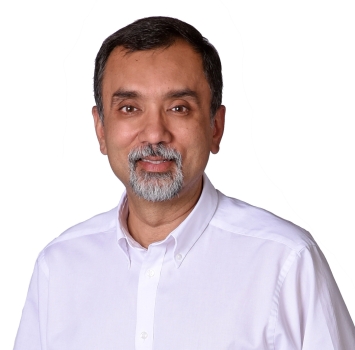
Dr. Madura Sundareswaran  once again guest blogs for me. She’s a community family physician who’s resume is too long to print here. She helped found the Peterborough Newcomer Health Clinic and is a recipient of the CPSO Board Award which recognizes outstanding Ontario Physicians. I happen to think she is one of our brightest young leaders.

I was feeling incredibly optimistic after Friday’s SGFP report, which articulated the importance of family physicians in addressing the current primary care crisis. But that hope was abruptly crushed by a recent email I received from Ontario Health East. Ironically, it serves as a prime example of how health systems transformation continues to follow a top-down approach with little regard for the realities of primary care delivery.

In its latest communication to its members, Ontario Health East outlines a two-step strategy for clearing the Health Care Connect waitlist. 

Let’s talk about the good first. 

Given that the Health Care Connect waitlist has been largely stagnant, the proposal to verify and update the list is reasonable and welcomed. 

In its latest proposal, Ontario Health East also commits to providing “interim services” for patients who are not immediately matched to a family physician or primary care team. This is great – and arguably where the new “Care Connector” portfolio should focus. Why? Because this is what many Ontarians need right now: assistance navigating our complex healthcare system without a family doctor.

Now, the not-so-good.

A large part of Ontario Health’s plan is to connect with every primary care clinic in the OHT to determine available capacity. If I am reading this correctly, they want to cold call every primary care clinic in the region and ask if they are accepting new patients. Are they aware that people have been trying to do this for years…? 

To their credit, Ontario Health has expressed a commitment to support capacity-building. They’ve emphasized exploring “creative ways” to expand capacity at the individual clinician level — but this language effectively masks the absurdity of the underlying ask. The expectation appears to be that family physicians, already working at or beyond full capacity, can somehow stretch further, simply by reimagining how we work — all while receiving little to no additional resources.

To their credit, Ontario Health has expressed a commitment to support capacity-building. They’ve emphasized exploring “creative ways” to expand capacity at the individual clinician level — but this language effectively masks the absurdity of the underlying ask. It assumes that family physicians already working at full capacity, can somehow stretch further, by simply reimagining how they work — with little to no additional resources.

I’d like to apply the trending analogy of comparing our healthcare system to the public education system.

Imagine 30,000 children in your community suddenly need a place in schools – all at once. Instead of building new schools, adding classrooms, increasing the budget for school supplies, or hiring new teachers – the plan is to call each teacher and ask if they can “accept a few more students.” Not just one or two students– try about 100 each. Now teachers, please brainstorm how you can better meet this need (on your free time, of course).

Parents and teachers – would you allow this to happen? 

The dilution of services is not the solution to this primary care crisis. This government’s current focus is entirely on numbers – with little regard for the quality of care being compromised in this process. What happens when each of us have 100 more patients with little to no additional support? 

Some argue that teams will offset this burden. Full disclosure: I do think teams can help. But whose responsibility will it be to create medical directives, identify how the teams can best work, and continue to engage in quality improvement and assurance as this new process evolves? Family physicians. Back to the classroom analogy – it doesn’t matter how many other support staff you hire, a classroom of 130 students needs more than one teacher

This proposal assumes we haven’t already asked—more accurately, begged—family physicians to take on more patients. We have, many times. And with limited success. And before I’m criticized for being negative or dismissing innovation, allow me to share my own experience.

In 2023 I founded the Peterborough Newcomer Health Clinic with the intention of supporting newcomers to Peterborough transition to the Canadian Healthcare system. In this process, I follow newcomers for 6-12 months after which I personally cold call family doctors and primary care nurse practitioners to see if any of them will accept my patients after I have done a great deal of work completing intake assessments and consolidating all previous health records. I have already brainstormed and implemented strategies to make the transition as easy as possible. Have I successfully attached my patients? Rarely. Many of these patients remain unattached. 

This is just one story. Many in our community — advocacy groups, primary care providers, and local organizations — have made similar efforts with limited success. And let’s not overlook the fact that this proposed model of attachment completely ignores the issue of inequitable access for marginalized populations (another post for another time).

As I sit here on a Sunday, preparing to enter the week without sounding like a “grumpy physician,” here are my final thoughts. 

  1. In this race to reach 100% patient attachment to primary care; we must advocate to ensure that this is not done in a way that dilutes existing resources, compromises existing access to care and devalues family physicians who are currently working at full capacity. We need to protect our existing workforce and support sustainable growth. I encourage every user of our publicly funded healthcare system to advocate for this.
  2. Family physicians – I urge you to continue to advocate for better remuneration and exercise caution when pressed to roster more. Please remember that our contracts exist with the Ministry of Health and Long Term Care. When new opportunities arise – exercise due diligence to ensure that what is being asked of you aligns with the policies of your own practice/organization and the CPSO.
  3. Rushed, expensive, and poorly planned reforms that focus on quantity, not quality is not good for patient care. Failing to address the core issues with primary care – demonstrated by fewer and fewer family physicians choosing to practice comprehensive, community-based family medicine – is resulting in top-down, expensive, and band aid solutions to the primary care crisis. It edges on careless spending on taxpayer dollars. We should advocate for a system that prioritizes sustainable, safe and equitable care – not just a solution for tomorrow. 

Disclaimer: The views expressed in this piece are my own and do not necessarily reflect those of any affiliated organizations or institutions.


Survey on Delayed OHIP Payments

NB: The following is a guest blog, written by the (anonymous) author of the survey I referenced in, “Will the OMA Learn Lessons from OHIPs Latest Attack on Doctors?“. While it’s true these surveys tend to attract negative responses by their nature, the rather large number of respondents (especially compared to some of the OMAs own Thought Lounge surveys), suggests the OMA really needs to pay attention to the extreme dissatisfaction this issue has caused. My thoughts follow at the end.

The purpose of this survey was to highlight to the OMA the need to take this issue more seriously and to outline the impact the delayed payments had on members. The OMA’s response to this has been tepid. At the time the survey responses were collected, the payment timeline for November and December, 2024 retroactive pay was set as November, 2025. This was changed to August, but this does not alter the fact that the MOH has repeatedly delayed payments for physicians over the years.

Even with a signed, public agreement, the MOH has not managed to uphold its obligations, yet the OMA seems resigned, on behalf of its members, to accept whatever delays happen, based on whatever excuse the MOH provides. The members are not the cause of the MOH’s problems, yet they pay, over and over, for these deficiencies.

The survey results are summarized below. As a practicing physician, my time is at a premium, so I utilized AI to summarize the main findings of the survey.

Technology willing, the full survey results are here. Survey Monkey dashboard is here.

AI-Generated Summary of the Full Survey Document:

The survey responses reveal widespread dissatisfaction among Ontario physicians regarding delayed payments, systemic issues in healthcare administration, and inadequate advocacy by the Ontario Medical Association (OMA). Key themes include the impact of late payments, financial hardship and impact to personal finances.

Many respondents reported being unable to meet financial obligations, pay taxes, or fund discretionary purchases due to delayed payments. Some had to take on debt or cancel planned expenses like maternity leave benefits, vacations, or home down payments.

Clinic Operations:

Clinic owners faced cash flow disruptions, inability to pay staff, and delayed renovations. Others mentioned the administrative burden of tracking payments and rejected claims.

Mental and Emotional Toll:

Physicians expressed feelings of moral injury, frustration, and discouragement, with some considering early retirement or leaving the province entirely. The delay has eroded trust in the Ministry of Health and the OMA.

Lack of Accountability:

Respondents described the Ministry as untrustworthy, disrespectful, and adversarial, with unilateral decisions that breach agreements. Many called for interest payments on delayed funds and legal action to hold the Ministry accountable.

Systemic Issues:

Complaints included outdated payment systems, rejected claims, and lack of transparency in billing processes.

Weak Advocacy:

Many respondents felt the OMA failed to advocate strongly for physicians, with delayed and insufficient responses to the payment issue. Some called for legal action, media campaigns, and stronger negotiation tactics.

Loss of Trust:

Physicians expressed frustration with the OMA’s perceived lack of power and transparency, with some questioning the value of membership dues.

Declining Appeal to Practicing in Ontario:

Many respondents are considering leaving Ontario or medicine altogether due to poor compensation, lack of respect, and systemic challenges. Some noted that other provinces offer better pay structures and support.

Family Medicine Crisis:

Respondents highlighted the lack of investment in family medicine and primary care, with concerns about burnout, scope creep, and inadequate funding.

Rejected Claims:

Physicians reported valid claims being rejected by OHIP , causing financial losses and administrative burdens.

Delayed Payments:

Delays in flow-through funding, parental leave benefits, and relativity-based fee adjustments were frequently mentioned.

Outside Use Penalties:

Respondents criticized penalties for outside use, especially when patients sought care elsewhere due to hospitalizations or urgent needs.

Recommendations for Advocacy:

Demand Accountability:

Push the Ministry to honour agreements, pay interest on delayed funds, and improve payment systems.

Increase Transparency:

Advocate for clearer communication about payment timelines, rejected claims, and billing processes.

Strengthen Negotiation:

Take a more aggressive stance in negotiations, including legal action and public campaigns to highlight the Ministry’s failures.

Support Physicians:

Address broader issues like rejected claims, outside use penalties, and inadequate funding for family medicine and specialists.

Conclusion:

There have been severe financial, emotional, and operational impacts of the delayed OHIP payment. There is an urgent need for the OMA to advocate more forcefully with the Ministry of Health to address late payments and systemic issues affecting Ontario physicians. Physicians are calling for immediate action, including interest payments, stronger advocacy, and accountability from the Ministry of Health and the OMA. The dissatisfaction expressed by respondents highlights the risk of losing physicians to other provinces or professions if these issues are not resolved.

An Old Country Doctors Thoughts:

While the above was written by my colleague, my personal thoughts on the survey is that I’m not really surprised by the results. I try to “keep my ear to the ground” so to speak, and there is a broad level of dissatisfaction with how the MOH repeatedly gets away with violating its own signed contracts, and the frankly abject level of incompetence at the MOH. The incompetence is unfortunately, not limited to just their payment systems/processes, but also how they run health care in general.

I’m also not surprised by the negative comments towards the OMA. Admittedly (as mentioned before) these surveys tend to cater to negative responses. However, there is a real sense of defeat on the ground about how physicians are being treated by the current government (protracted arbitration, stupid statements about the family physician shortage, and more). My sense is most physicians are resigned to defeat and are disengaging from health care – which is bad for the whole health system.

It does not help frankly, that a few short days after being told physicians would not get paid on time, OMA CEO Kim Moran was quoted in an Ontario Government News release on Primary Care saying:

“Ontario’s doctors are encouraged by this announcement and look forward to working with government to ensure that every Ontarian has access to a family doctor. We will do everything we can to accelerate this goal by collaborating with Deputy Premier and Minister of Health Sylvia Jones, and the lead of the Primary Care Action Team, Dr. Jane Philpott. It’s a long road ahead but this is a positive step forward to protecting Ontario’s valued health care system.”
Kimberly Moran
CEO, Ontario Medical Association (OMA)”

A very well respected physician from another province told me after seeing this: “It’s a bit pathetic. Screw us over and we’ll still be nice to you”. Personally I think Ms. Moran should look up “Stockholm Syndrome“.

I’ve repeatedly said you cannot have a high functioning health care system without happy, healthy and engaged physicians. These survey results suggest that that isn’t the case in Ontario.

Unrelenting Bureaucracy is Killing Health Care (and Canada)

Canadians are currently dealing with the dizzying spectacle of Donald Trump’s tariffs against our country. On again? Off again? Delayed? Doubling? I’ve personally gotten seasick trying to keep up with whatever tangerine Palpatine is thinking.

U.S. President Donald Trump – aka the Tangerine Palpatine

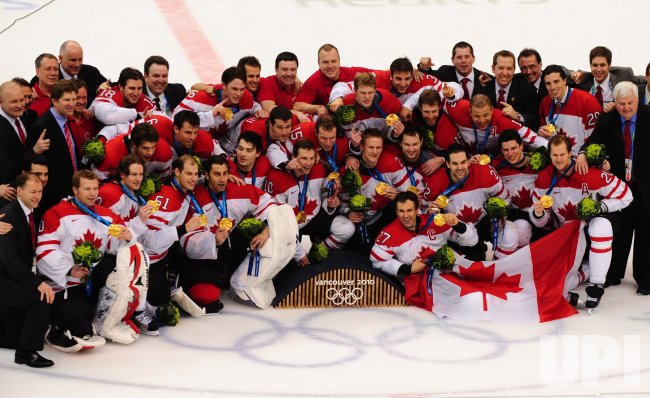
However Canada’s response to this (and the nonsense about us becoming the 51st state) has frankly been quite lacking. Yes, it’s great to see Canadians being able to fly the flag with pride, especially after the miserable co-opting of the Canadian flag by the freedom convoy types, who likely themselves were Donald Trump supporters. (How’s that working out for you guys now?) Yes #elbowsupCanada is a wonderful approach to take and a great mantra going forward, particularly with how intertwined hockey is with our nation. (Quick reminder: Not only do we win Olympics, we win Four Nations Cups as well).

BUT, for all the outcropping of (absolutely warranted) national pride – our governments – outside of launching retaliatory tariffs, haven’t done anything to fix the systemic problems in our economy. For example, getting rid of domestic trade barriers and having free trade between provinces would provide a boost of up to $200 billion dollars to our economy, but seemingly no action on this yet.

Even more importantly and what’s long overdue, is an absolutely necessary look at the bureaucracy and impediments that many businesses face in trying to contribute to our economy. Let me talk about a personal experience (and no disrespect intended to the good people on staff in my township).

About 10 years ago, our community had clearly outgrown the medical centre. Some poor sap was put in charge of expanding it. (Guess who.) I had to deal a myriad of problems of putting an addition on our medical centre. Here’s a couple of examples of what I dealt with.

As per policy, the township requested that we provide an engineered site plan. The reason for this was to assess water drainage requirements. While on the surface this makes sense, all the engineered site plan was going to tell us what size of culvert to put on our property for water drainage. The estimate for the site plan was about $15,000.

A sad, lonely culvert, passing its life away draining water…

However, it turns out there were only two sizes of commercial culverts for our project. A big one and a small one. The big one cost $500 more than the small one. Being well-versed in the obstinacy of Ontario Health’s bureaucrats, but somewhat naive in the inflexibility of municipal bureaucrats, I offered to simply put in the bigger culvert right from the start in exchange for waving the engineered site plan.

Those discussions went as well as my less naive readers will expect. The site plan wound up costing $17,000, and it told us that we had to put in the big culvert.

Want more? The township requested a $250,000 letter of credit or certified cheque prior to approving the expansion of the building. My initial reaction was somewhat negative to this request, but upon reflecting, I did realize that it made sense. The request was put in place in case a builder started a project, ran out of money before they finished the project, and left a hole in the ground. The money would then be used to pay to clean up the mess they made.

I still grumbled about the fact that the township was making long term doctors who were clearly invested in the community do this, but I have to concede that it was fair.

The bank informed me there’s some complex fee formula for a letter of credit – and it would have cost $5,000. I asked them for a certified cheque, and it turns out banks don’t do that anymore. However, they were willing to issue a bank draft and the fee for that was $50. Obviously, I got the bank draft instead.

When I went to the planning office however, I was told this was unsuitable. The contract we signed specifically asked for a Letter of Credit or Certified Cheque and I had presented neither. Therefore we had not met the terms of our contract and the project would come to a halt. The staff person did offer to take this to the planning committee, and six weeks later they decided this was ok.

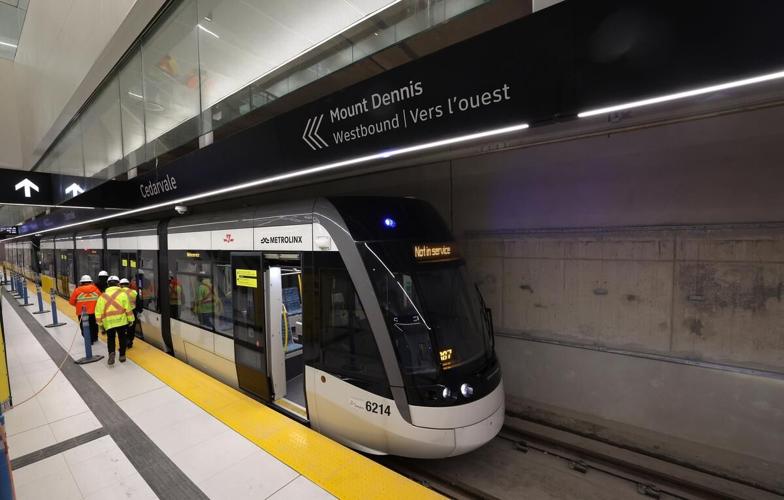
Is this me just griping? Nope – in fact his is happening all through health care and businesses in Canada. I recently spoke to the owner of a Nursing Home. His home had been approved on a “fast track” for a new build based on the dire shortage of nursing home beds in Ontario. I asked when the facility would be built and he just laughed. Apparently “fast track” means that there will “only” be 30 months of paper work (!) before the shovels go in the ground and he hopes it will be completed in 5-6 years!! I’m guessing this “fast track” must be on Toronto’s Eglinton LRT line….

A sad, lonely train on Toronto’s much, much, much delayed Eglinton LRT line

Want more? Just look at the saga of my local hospital, the Collingwood General and Marine. We’ve known for almost two decades that it’s far too small for the community. Heck the community has been asking for a new hospital since the early 2010s and finally got approval on phase 1 (of 5) in 2016. And 9 years later (!) we are at phase 3. The “hope” is that the new building will open its doors in 2032 – 16 YEARS after it was absolutely clear a new hospital was needed immediately.

This problem is not restricted to the health care sector of course. The Financial Post had a piece in 2019 (!) about how these rules are affecting multiple industries. Not only are we not building critical infrastructure in a timely manner because of an inability to cut the bureaucratic bloat, but it’s stifling private businesses as well. The Canadian Chamber of Commerce pointed out that the “ease” of doing business has gone from fourth in the world in 2006 to 53rd now, and this impedes economic growth and investment.

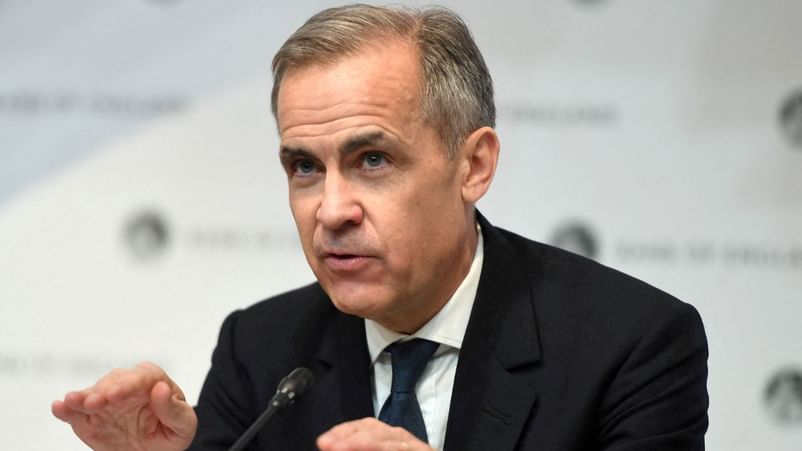
New Prime Minister Mark Carney is off to Europe this week to build trade and strengthen relations. Nothing wrong with that, we need reliable trade partners in the future. BUT, we face an unhinged, hyper volatile situation with our neighbours to the south RIGHT NOW. It seems to me there is no better time than now to drop intra Provincial trade Barriers and right size the bureaucracy allowing for businesses to grow and thrive more easily in Canada. As for health care, the right time was 10 years ago.

Prime Minister Mark Carney

Dr. Elaine Ma Case is Proof Ontario is Unfriendly to Physicians

Last week, the Ontario Health Sector Appeal and Review Board (HSARB) denied the appeal by Dr. Elaine Ma in her fight against the Ontario Health Insurance Plan (OHIP). At the risk of upsetting Dr. Ma and many (? all) of my colleagues, that decision actually was legally appropriate. HSARB can’t actually look at whether a case is reasonable or not, their job is to go by what’s written in bulletins/updates. The real affront to physicians is that it should never ever have gotten here in the first place.

The Background

For non-physicians reading this, here is a condensed summary of what happened. It’s 2020. The Covid pandemic is raging. Ontario Premier Doug Ford appoints General Rick Hillier to oversee the Covid Vaccination program. He’s tasked with, as Ford calls it, “the largest vaccine rollout in a generation, a massive logistical undertaking, the likes of which this province has never seen.” Hillier’s stated goal? To get shots in everyone’s arms by August 2021.

Dr. Elaine Ma from Kingston realizes the need to act quickly to help her community. She organizes outdoor mass vaccination clinics. Over 35,000 shots were given and Kingston became the most vaccinated area of the province. Dr. Ma was given an Award of Excellence by the Ontario College of Family Physicians for her efforts.

Picture of an outdoor vaccination clinic found elsewhere on the web

The Dispute with OHIP

So what happened? For the Covid vaccine clinics, there were two sets of billing codes assigned. The first was a standard hourly rate. This was meant for physicians who attend a vaccine clinic and perform immunizations there. There were numerous such clinics set up by hospitals/public health/pharmacies and so on. Those agencies paid for the setup costs of those clinics. The physician just showed up and vaccinated.

The second set of codes is used by physicians who give vaccinations in clinics they set up. These codes pay somewhat more, but they’re meant to compensate physicians for the fact that they have to cover all the overhead in those clinics.

Dr. Ma would have had to make sure that things like electricians were hired to ensure that there was power and Internet access outdoors. She may have needed to arrange for commercial grade outdoor tents. Propane heaters to heat the tents and the propane might have been needed. Some staff were paid (others volunteered). All of this organizational work, and figuring out payments, needed to be done in advance. She did it.

She therefore billed OHIP the second code. This is entirely reasonable given the circumstances and the work she did.

So what happened?

The sudden increase in billings did not go unnoticed by OHIP and was flagged. This is absolutely appropriate. As taxpayers, we need to be sure that there is a mechanism to catch outlying bills. The anomaly was sent for review by the various bureaucrats at OHIP. Also appropriate.

So what went wrong?

Basically everything after that. The OHIP bureaucrats reviewed the situation. As pointed out by Perry Brodkin (OHIPs former lawyer, who was quoted extensively in the Kingstonist) – the information was sent “up the hierarchy” and would have reached the deputy health minister and minister.

The bureaucrats and health minister decided she didn’t qualify for the codes. The reasons given (see the Kingstonist articles for more details) change at a whim. First it was that the clinic was outdoors not inside (you mean at a time when we are all social distancing – we should have crammed unrelated people into a clinic to immunize them??). Then it was that medical students were used (despite the strong endorsement of using medical students by the then Dean of Queen’s University Medical School, Dr. Jane Philpott). Then it was that she paid people to work there.

Dr. Jane Philpott – former Dean of Queen’s University Medical School – and a strong supporter of the vaccination clinics set up by Dr. Ma

Then things got ugly

And finally, after repeated questioning by the Kingsonist, things got really ugly when Hannah Jensen, the communications director for the Minister of Health issues a statement alleging that Dr. Ma “pocketed” the funds. This basically amounted to an allegation of theft by Dr. Ma and was widely viewed as a disgusting, immoral and reprehensible comment in the medical community. Even the Kingstonist was alarmed by this and called the statement “rife with allegations.”

Hannah Jensen, Communications Director for Minister of Health Sylvia Jones (photo from LinkedIn Profile page)

Why this offends doctors so much.

Let’s be clear about this. There is zero tolerance in the broader medical community for misappropriation of funds/intentional fraudulent OHIP billing. Zilch. Nada. But there is a recognition that the imperfect OHIP billing schedule needs to be interpreted with reason, especially when times are unreasonable (and what could possibly be a more unreasonable time than a once in a lifetime pandemic?).

Dr. Ma did all the work to meet the billing criteria (even the OHIP bureaucrats were forced to admit that yes, over 35,000 shots were given and yes she had planned and organized the whole thing). The fact that she did it outside and had medical students help when some 20 year old pre pandemic memos said not to is an unwarranted use of a technicality.

For many physicians, this brings back memories of when another set of bureaucrats persecuted physicians. They even told one paediatric respirologist that in order to bill a code, he had to perform rectal and pelvic exams on children!

What does this mean for Ontario Health care?

First, as Dr. Ma herself pointed out, it is now illegal for physicians to bill any procedures that they delegated to medical students. This means that medical teaching will effectively grind to a halt. Why would any doctor teach a medical student to say, suture a wound, when that doctor would now be financially penalized?

Second, this story has made the national press. It has also been reported in Canadian Journals that cater to physicians and other health care workers. The message to them is clear. Do NOT think of relocating/starting up a practice in Ontario. You will be treated grossly unfairly by the bureaucrats and health minister and there will be no reasonable interpretation of the rules.

What can be done?

According to Brodkin, Health Minister Sylvia Jones and Premier Doug Ford can direct OHIP to disregard the HSARB ruling. They need to do so immediately. However, because politicians only think of re-election, and not what is right, Dr. Ramsey Hijazi, the founder of the Ontario Union of Family Physicians wants to up the pressure on them.

Dr. Ramsey Hijazi, founder of the Ontario Union of Family Physicians – pictured inset.

His group has set up a petition that clearly demands that justice be done in this case. It demands that the Minister and Premier disregard the HSARB ruling. We need to support our health care heroes not penalize them on technicalities in outdated bulletins.

I urge all of my followers to sign the petition. If this case is allowed to go on, trust me on this, there will be negative consequences for health care in Ontario, and we don’t need any more of those.

Click here to sign the petition.