How the Arbitration Process Works and How it Applies to Family Medicine

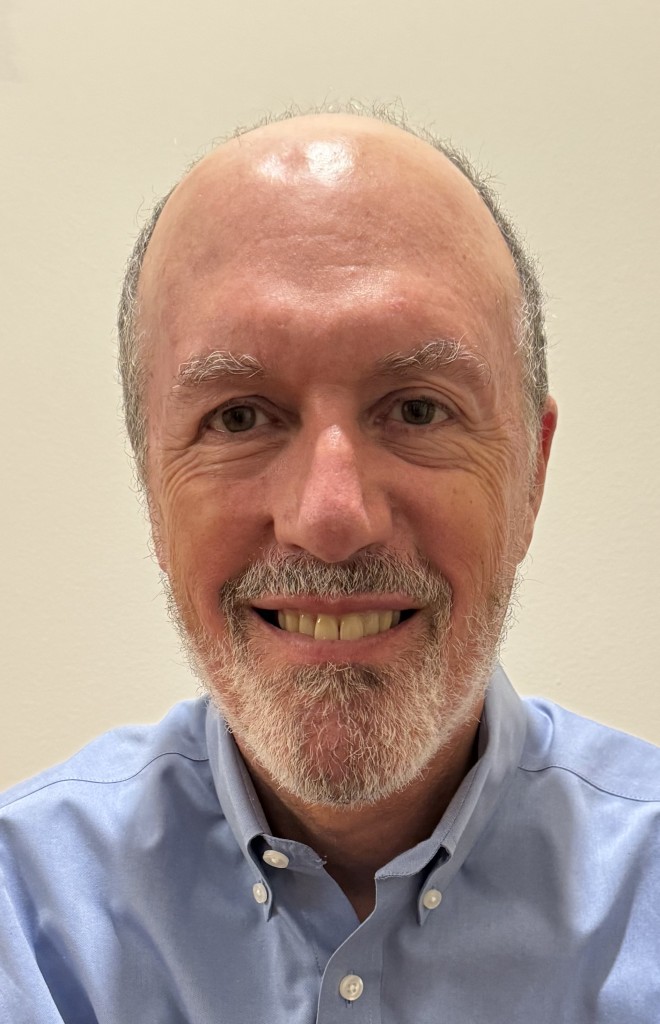
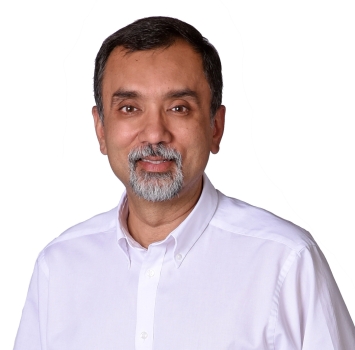
picture of the guest blogger today, Dr. Mark Dermer, a retired family physician.

Dr. Mark Dermer (pictured inset) , a recently retired family physician guest blogs for me today. He posted his thoughts about the arbitration process and how it can potentially affect family medicine on a private facebook group. I thought his post was excellent and I’m honoured that he has agreed to allow me to republish his thoughts here, so more people can see it.

A common misconception about how the arbitration decision will be determined is that the arbitrator will choose either the entire OMA submission or the entire MOH submission as the PSA award for 2025-28. While some arbitrations work like that – salary arbitration does – that’s not the case in the OMA-MOH 2017 Binding Arbitration Framework (BAF). As stated in paragraph 18 of that document (in this group’s files section):

“Absent an agreement of the parties, the method of binding interest arbitration to be used shall not be final offer selection. In particular, unless the parties agree otherwise, the arbitration board may, on any issue or issues, select either party’s proposal, choose a middle ground, or issue any award that it determines is appropriate in the circumstances.”

In other words, the arbitration board will issue a decision that is built point-by-point, with quantitative decisions set anywhere on the continuum between the two parties submitted positions. And the choice for each point/issue will be made in the context of the entire Physician Services Agreement (PSA).

For family physicians, there are four points of dispute that await the final PSA arbitration decision:

1) Annual increases to the Physician Services Budget (PSB) in years 2, 3 and 4 (2025-26, 2026-27 and 2027-28) of the present 2024-28 PSA. Note that these overall increases will then be subject to relativity adjustments that are managed within the OMA.

OMA submission: 3.75% in each of the three years for a total of 11.25%

MOH submission: 2.25% year 2, 2% in years 3 and 4 for a total of 6.25%


The arbitration board will award a percentage amount for each of the three years that lies on the range between the two parties submitted figures guided by the information supporting their numbers (the OMA’s justifications for its figures in its submission look to my eyes to be considerably stronger).

2) Continuity of Care Accountability Measure with Financial Consequences – the methodology of the measure has been agreed by the parties. But the question of whether there will be financial consequences and if so, the trigger threshold and financial magnitude, have not.

OMA submission: no financial consequence but if so, trigger threshold should occur only if continuity falls below 70% and penalty should be a 10% reduction in base rate

MOH submission: Trigger threshold is falling below 80% continuity and penalty should be 20% reduction in base rate


The arbitration board must first decide whether there should be a financial consequence and if so, when it should be implemented. For example, it could say that physicians need several quarterly reports to allow them to adapt their practices before the financial penalties start. With respect to the threshold, the arbitration board will likely choose a figure in the 70-80% range, though it is free to choose outside that range and here to, it could make a setting that changes over the three remaining years of the agreement. Same goes with the size of the base rate penalty, which we can assume will be in the 10-20% range if a penalty forms part of the new PSA.

** Note – Continuity of Care and any penalty is assessed at the level of each individual physician’s practice, NOT at the level of the FHO.

3) Increase to FHG premium

OMA submission: Increase from the current 10% to 20%

MOH submission: No change


The arbitration board may choose to keep the FHG premium the same, or increase it by any amount it wishes. Including raising it by more than 20%.

4) $5 per patient visit overhead fee for community practices (up to 40 visits per day; excludes hospital, contract and FHO/FHO+ services)

OMA submission: Newly proposed by OMA

MOH: No response


The arbitration board will have to decide whether to introduce this fee at all and then at what dollar rate to set the fee. Note that this fee applies to community specialist practices as well as to non-FHO family medicine practices.

The bottom line:

There is a wide range of possible financial outcomes of the arbitration board award. That’s why trying to forecast how it will affect you, or plan adaptations, will likely not be a very good use of your time at the moment.

I also think that the past week has demonstrated, yet again, the OMA’s poor member communication skills: it was irresponsible of them to publish scenarios and calculators that neither acknowledge nor take into account the possible continuity of care financial penalties. My recommendation is to generally ignore their messages until the arbitration board issues its decision.

The FHO+ Model Alone Won’t Save Family Medicine in Ontario

Disclaimer: I’ve looked through the OMA page on the FHO+ model and interpreted the data as best I can, BUT, this information should NOT be used by others for their own financial planning – they should review the data for themselves. Additionally, because this is a complex model – if the OMA’s Negotiations Task Force feels there are mistakes – I would be happy to correct those.

Last week, the OMA announced that they and the Ontario government had developed an enhanced model for paying family physicians. In Ontario, the most popular model for paying family physicians is something called the Family Health Organization (FHO). More physicians would choose it, but in typical unthinking and regressive fashion, the bureaucrats at the MOH convinced the government to limit entry into that model in the 2010s – because you know, why would you want people going into family medicine to have their preferred payment model? What were they going to do? Stop working as family doctors? Sigh…..

The OMA website states the new FHO+ is the “Future of Family Medicine” and talks glowingly about how this will “bring back the joy of family medicine, and build a foundation to support recruitment and retention”.

It’s always tough to break things down with a new model, and there are a lot of variables and enhancements to review. I encourage all family physicians to watch my friend Dr. Adam Stewart’s set of truly excellent videos on this new model.

For my part, I consider myself to have a medium sized practice. I therefore looked at Dr. “B” on the OMA’s web page to come up with my thoughts. (Note to OMA – come up with some better names for the doctors!)

  1. How much of an increase in income am I going to get?

According to the OMA site, I should expect an increase of 13% of my gross income. But it’s not clarified what the baseline for that increase is? Is it this year’s income? Last year’s? So I emailed the OMA and was given this answer:

“The base rate the parties agreed to use in our costing was FY2023/24, keeping in mind the last permanent increases were on April 1, 2023, the recent years 2.8%, 9.95% and the monthly relativity for FY2024/25 are all temporary and will end on April 1, 2026.”

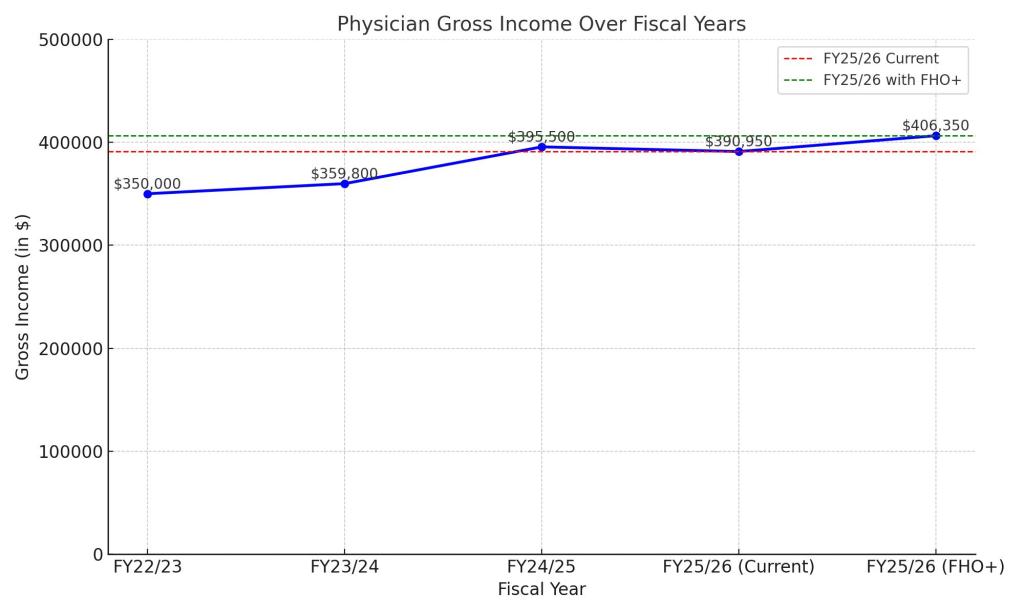
Alright, some more math (my apologies). Let’s use fiscal year 22/23 to start. Let’s assume I grossed $X in that year. For FY 23/24 – that was the last year of the previous PSA and we got a 2.8% increase in fees. So I grossed $1.028X that year. FY24/25 was year I of the current PSA and we were awarded 9.95% by the Arbitrator (compounded to the 2.8%). Because there was no agreement on how to divide it up, it was distributed equally among all docs. So I grossed $1.13X.

Still with me? This year, FY 25/26, by mutual agreement, there was a relativity based increase from the original FY 22/23. FHO docs like me got 11.7% so this year, for now, I will be grossing $1.117X. This is down from last year but may change based on whatever happens in Arbitration.

Based on the OMAs reply, if FY 23/24 is the base year they used in their calculations (when I made $1.028X) then and increase of 13% on that will translate to $1.161X. In essence, if FHO+ goes through, it will mean a 4.4% increase for me next year, compared to this year (1.161-1.117) and a mere 3% more than last fiscal year. Better than nothing? Sure. Is it the major dollar influx needed to save family medicine? I think you know the answer to that.

Graph showing a hypothetical growth in gross income for a category “B” family physician who billed $350,000 in FY 22/23

2. How will rural medicine fare?

One of the things that strikes me about this model is that effectively, rural medicine will not do as well. Now, in fairness, there are attachment bonuses for taking on new patients, and those bonuses are higher in rural areas. So there is that. But my understanding is that rural doctors are working overtime anyway and not really able to take more patients right now.

But what should be noted is that in the OMA calculations, the assumption has been made that doctors are getting at least some access bonus currently. So let’s look at Dr. Rustic and Dr. Metro, a rural and urban doc.

Let’s assume they also fall into category “B” as per the OMAs example. It is well known that urban doctors, despite how hard they work, have challenges getting the access bonus. Dr. Metro currently gets an access bonus of $0 because there are five walk in clinics with 15 minutes of her office. This is despite her group working after hours care. Dr. Rustic on the other hand, gets $25K in access bonus, mostly because his group is the only game in town.

With FHO+ the access bonus gone and repurposed to pay for other items (and that is a very good thing as my friend Dr. Mark Linder pointed out) in effect, Dr. Metro’s raise will be $25k MORE than Dr. Rustic’s. I don’t begrudge Dr. Metro the income, she deserves it. But in order to recruit in rural areas, we’re going to have to find a way to bump Dr. Rustic’s income more.

3. What exactly will the Accountability Metric be?

This is of course, the great unknown. These metrics are often presented as “reasonable” and then governments always find a way to make them unreasonable. We won’t know the answer to that until after Arbitration.

Final Thoughts

At the end of the day, I think family doctors as a whole need to realize that FFS family medicine has gone the way of the Dodo bird (I know this will upset some FFS purists). The government also seems to recognize this and as part of the agreement is increasing the number of FHO+ positions.

Dr. FFS, Family Physician

Despite some of the concerns above, I do think that FHOs should migrate to the new model. It is slightly more money, and I do wonder if by tweaking your practice more – the amount can go up. For example, I have about 200 patients whom I have not rostered because of outside use issues – I would now roster them – and this would increase my income even more. So I suspect there is potential to make more than a 4.4% increase if you manage your roster well. Looking at increased shadow billing rates also offers some potential for more growth.

However, saving family medicine requires a multi-pronged approach that requires a single, unified health information system, family practice teams with physicians clearly placed as the leaders of the teams (with funding for leadership roles) and much more than a 4.4% increase in income. So take the money for now, but don’t in anyway shape or form believe that this in and of itself will fix family medicine.

MOH Pleasantly Surprises (!) and OMA Disappoints in Arbitration Briefs

As I write this, yet another round of Arbitration has begun between the Ministry of Health (MOH) and the Ontario Medical Association (OMA). This time, the goal is to provide a contract for years 2-4 for the Physicians Services Agreement (PSA). As was pointed out to me on social media (thanks Jane and Lisa), year 2 of this current PSA cycle began on April 1, 2025. Yet again, physicians are going to be due retroactive pay for whatever the Arbitrator decides.

Lawyers from both sides have prepared rather thick legal documents called “briefs”. (Proof number 4,638 that lawyers have a rather weird sense of humour). These briefs are public.

I’d be lying if I said that I had thoroughly understood the briefs from both sides. The excruciating agony in trying to parse the language in these things would make having a kidney stone preferable. But these are my humble thoughts from trying to do so….

  1. The MOH team appears to have learned their lesson from last time.

To be abundantly clear right off the bat, the MOH offer for physicians is too low. They are clearly undervaluing doctors in their stance and if the Arbitrator was to accept their position, it would spell further disaster for health care in Ontario.

But….

As I mentioned in my last blog, offering low is what you expect from the other side. It’s part of posturing for the Arbitrator and I’m genuinely not ruffled by it. What would have been unacceptable is they had refused to recognize the severity of the health care crisis like they did last time. Or if they had once again repeated the truly stupid statement that they weren’t concerned about the shortage of comprehensive care family doctors.

Additionally, the MOH has actually agreed to enhance family medicine models through the “FHO+” program, and has agreed to spend a large chunk of the funds on family physicians, an area of the health care system that is dire need. In essence, they admit that there is a problem with a shortage of comprehensive care family doctors. (NB – I will have my thoughts on the FHO+ model sometime early next week).

To re-iterate, there are still a number of problematic issues with their arbitration proposals, including the too low wage increase, the hopelessly complex method of “accountability” in the FHO+ model, a laughable statement that attachment bonuses for Complex patients will begin on July 1, 2025 when the Arbitrator won’t even rule on this until September or October of this year.

But their position is at least not stupid, and certainly not enough to make me go off like last time.

2. The OMA Disappoints With Their Brief

Once again, to be fair, there is a lot to like in the OMA Brief. There is a good analysis of the economic picture in Ontario, a great analysis of the the delays in care, the crisis in family medicine, hard hitting information about the challenges of recruiting and retaining physicians, superb advocating to relieve the admin burden and a clear explanation of why many Alternate Payment Plans are outdated.

Alas, there is once again a “but” here…..

All of the above is what one should expect from a representative organization. One should however, also expect that organization to advocate strongly to make sure their members get their increases in a reasonable time. And it’s here that the OMA falls (badly) flat.

One of (if not THE biggest) issues for physicians these past couple of years has been the constant delays in getting the increases the Arbitrator awarded them in a timely manner. Just recently the MOH unilaterally announced a delay in paying the retroactive funds owed physicians. This is amongst a series of delays all attributed to an ancient and decrepit computer system at the government. (They’ve been making this statement for well over a decade, and very tellingly, have NEVER bothered to upgrade their system).

While the last 4 pages of the OMA Arbitration Brief does a nice job of outlining the issue for the Arbitrator, including the consequences of the MOH incompetence (physicians will simply stop doing certain procedures), the remedy the OMA seeks is milquetoast at best. From the Arbitration brief (edited):

“As a result, the OMA requests, as is normal and customary, that this Board of Arbitration remain seized with respect to any issues arising from the implementation of this Award……….

“….with the OMA reserving its right to seek appropriate remedies (e.g. interest) in the event that the Ministry fails to meet agreed upon or directed implementation dates, particularly where the Ministry is unable to provide justification for any delay, or otherwise where the delay is unreasonable and unwarranted.”

That’s it?? All this means is that WHEN (not if – we all know the MOH can’t get their act together) the next payment delays show up, all that will happen is the OMA will complain to the Arbitrator, then there will be more hearings, and those hearings will go on for months/years and then finally, the Arbitrator MAY announce penalties to the MOH. The only good that will come out of this is that a bunch of lawyers will get rich going to repeated hearings.

What’s worse is the OMA readily admits they know the Arbitrator “favours accountability measures” in their video on the new FHO+ model (around the 3:36 mark). So doctors have to be accountable to follow an agreement, but the MOH can wiggle out and delay? The OMA can’t advocate for accountability to go both ways?

EVEN worse is that in reading the MOH briefs, they actually clearly lay out what accountability measures they want from physicians. Page 92 specifically outlines what accountability they expect from family physicians in the new FHO+ model, and how the penalties will be implemented if physicians don’t meet those accountabilities. No “seizing of the Arbitration Board” or any such thing. Now I disagree wholeheartedly with the MOH stance on this – but at least they clearly outlined what remedies they are seeking without the need for further drawn out processes. The OMA couldn’t have done the same thing??

Overall, this Arbitration hearing appears less contentious than last time, and the gap in asks is smaller overall. Hopefully this means a quicker resolution. But while there is a lot of good stuff in the OMA brief, it’s hard not feel let down by the subservient, almost nonchalant attitude the OMA is taking on payment delays. Sure looks like a golden opportunity to address this was missed.

Study of Family Doctors Choosing “Other” Work Leaves Me with Mixed Feelings

Last week, a study published in the Annals of Family Medicine revealed what those of us in medicine knew all along. More and more, physicians who are trained in comprehensive family medicine, are choosing to do other things. There are a myriad of reasons for this (ranging from poor remuneration, lack of respect from government, incredible admin burden and more). But the blunt reality, which is very very bad for the people of Ontario, is that despite having enough family doctors, not enough of them are practicing comprehensive care family medicine, and more are expected to stop.

There was of course, a large amount of press interest in the study, and rightfully so. Probably the best interview given by one of the studies authors was by my friend Dr. Kamila Premji (who is brilliant) and can be listened to here.

I was fortunate enough to be asked about this issue last week on “Toronto Today” with host Greg Brady. As I explained to him, I personally am left with decidedly mixed feelings about the report.

The Hope

It’s not like people haven’t been talking about this for a long time. Heck I wrote about how Ontario does NOT have a shortage of family doctors, just over a year ago. I pointed out that family doctors were leaving to do other things then.

But now that there is a comprehensive study done on the matter, maybe, just maybe, the bureaucrats at Ontario Health will finally do something positive about the matter. (I won’t bet the mortgage on it – but there is a teensy little bit of hope).

The Frustration

It’s precisely because people have been talking about this for such a long time that I was also frustrated that this issue hasn’t been dealt with yet. Dr. Premji herself warned about this issue years ago. My friend Dr. Mathew (another doctor much smarter than I) pointed out how the system has been deteriorating since 2012 . Dr. Nadia Alam, a former President of the Ontario Medical Association (also a dear friend much smarter than I) wrote in 2018 about the fact a crisis was coming in Family Medicine. And yes, a certain grumpy, miserable and cantankerous old bugger wrote back in 2017 about the need to support Family Medicine and warned that the shortage of comprehensive care Family Physicians was going to get worse if nothing was done.

All of these doctors were ignored. When Dr. Alam wrote her blog, “only” 800,000 people in Ontario didn’t have a family doctor – we are over 2.5 million now.

Thinking about how much better off we would be if the bureaucrats at Ontario Health hadn’t unilaterally ignored these doctors makes my blood boil.

The Fear

Which brings me to my biggest fear in all this. When I look around at some of the Ontario Health staff, and see some of the reports/decisions and directions given by various committees/panels/departments of Ontario Health, I see frankly, a lot of the same old names and faces. The same bureaucrats that ignored Dr. Alam and others for over a decade, and have made bad decisions and recommendations ever since, are still in charge. Many have been promoted. All of them are going to retire with full pensions. And yet now, they will likely be tasked to find a solution to the very mess that they failed to foresee and in many cases aided and abetted in creating.

If I may paraphrase Albert Einstein a little bit, to expect the same people who consistently and repeatedly made wrong decisions over the past ten years to suddenly not make a mistake with the next set of decisions is surely the definition of insanity.

So What’s Next for Family Medicine in Ontario?

As I think most of us know, Dr. Jane Philpott has been tasked by Ontario Premier Doug Ford to lead the new Primary Care Task Force. Her stated goal is to ensure every resident of Ontario has primary care within the next five years. She has a strong relationship with Dr. Tara Kiran, one of the more visible authors of the study on family doctors. Both seem to be working closely together.

Both of them seem genuinely passionate in their support of family medicine. They also understand the foundational importance of family medicine in a strong health care system. I believe they both have the desire to fix this crisis as soon as possible. We should all want them to succeed, because success means a healthier population for all Ontarians.

But…..

To date, I haven’t seen in either of them the willingness/ability/chutzpah/brass necessary to tell off our woefully incompetent bureaucrats at the Ontario Health and tell them which direction we need to go in. As I mentioned above, we just cannot rely on the advice the bureaucrats are giving anymore – nor the processes they have put into place.

One small example of ongoing bureaucratic incompetence if I may. It’s been know for over fifteen years now that our health care IT systems are completely disorganized and don’t talk to each other. The situation is so bad that healthcare is the ONLY major industry in which fax machines are still used (seriously). It’s so wasteful that it’s been estimated that we could save $2.1 billion dollars a year if we unified our health IT systems. (Which ironically is about how much Dr. Philpott has been given to fix the family medicine crisis).

Recently, Ontario Health announced that it would develop an electronic referral system to get rid of faxes. Sounds great. But unfortunately, a deep dive of their plan suggests that each of Ontarios 180+ health teams is to pick their own software. Which means you could have a situation for someone like myself, who has patients from two different areas, being forced to use two different electronic referrals systems. Which will do absolutely nothing to reduce my admin burden, the same admin burden that the study’s authors admit is driving physicians away from comprehensive family practice.

The family medicine crisis desperately needs to be fixed in Ontario. It will take a combination of a seamless electronic record system, processes in place to reduce paperwork, increased pay for family doctors (including pay for admin work and retention bonuses) and yes teams where the family doctors guiding them. But I don’t think any of that can happen until we clean out the bureaucrats at Ontario Health.

Primary Care Reform Needs More Than a Phone Call 

Dr. Madura Sundareswaran  once again guest blogs for me. She’s a community family physician who’s resume is too long to print here. She helped found the Peterborough Newcomer Health Clinic and is a recipient of the CPSO Board Award which recognizes outstanding Ontario Physicians. I happen to think she is one of our brightest young leaders.

I was feeling incredibly optimistic after Friday’s SGFP report, which articulated the importance of family physicians in addressing the current primary care crisis. But that hope was abruptly crushed by a recent email I received from Ontario Health East. Ironically, it serves as a prime example of how health systems transformation continues to follow a top-down approach with little regard for the realities of primary care delivery.

In its latest communication to its members, Ontario Health East outlines a two-step strategy for clearing the Health Care Connect waitlist. 

Let’s talk about the good first. 

Given that the Health Care Connect waitlist has been largely stagnant, the proposal to verify and update the list is reasonable and welcomed. 

In its latest proposal, Ontario Health East also commits to providing “interim services” for patients who are not immediately matched to a family physician or primary care team. This is great – and arguably where the new “Care Connector” portfolio should focus. Why? Because this is what many Ontarians need right now: assistance navigating our complex healthcare system without a family doctor.

Now, the not-so-good.

A large part of Ontario Health’s plan is to connect with every primary care clinic in the OHT to determine available capacity. If I am reading this correctly, they want to cold call every primary care clinic in the region and ask if they are accepting new patients. Are they aware that people have been trying to do this for years…? 

To their credit, Ontario Health has expressed a commitment to support capacity-building. They’ve emphasized exploring “creative ways” to expand capacity at the individual clinician level — but this language effectively masks the absurdity of the underlying ask. The expectation appears to be that family physicians, already working at or beyond full capacity, can somehow stretch further, simply by reimagining how we work — all while receiving little to no additional resources.

To their credit, Ontario Health has expressed a commitment to support capacity-building. They’ve emphasized exploring “creative ways” to expand capacity at the individual clinician level — but this language effectively masks the absurdity of the underlying ask. It assumes that family physicians already working at full capacity, can somehow stretch further, by simply reimagining how they work — with little to no additional resources.

I’d like to apply the trending analogy of comparing our healthcare system to the public education system.

Imagine 30,000 children in your community suddenly need a place in schools – all at once. Instead of building new schools, adding classrooms, increasing the budget for school supplies, or hiring new teachers – the plan is to call each teacher and ask if they can “accept a few more students.” Not just one or two students– try about 100 each. Now teachers, please brainstorm how you can better meet this need (on your free time, of course).

Parents and teachers – would you allow this to happen? 

The dilution of services is not the solution to this primary care crisis. This government’s current focus is entirely on numbers – with little regard for the quality of care being compromised in this process. What happens when each of us have 100 more patients with little to no additional support? 

Some argue that teams will offset this burden. Full disclosure: I do think teams can help. But whose responsibility will it be to create medical directives, identify how the teams can best work, and continue to engage in quality improvement and assurance as this new process evolves? Family physicians. Back to the classroom analogy – it doesn’t matter how many other support staff you hire, a classroom of 130 students needs more than one teacher

This proposal assumes we haven’t already asked—more accurately, begged—family physicians to take on more patients. We have, many times. And with limited success. And before I’m criticized for being negative or dismissing innovation, allow me to share my own experience.

In 2023 I founded the Peterborough Newcomer Health Clinic with the intention of supporting newcomers to Peterborough transition to the Canadian Healthcare system. In this process, I follow newcomers for 6-12 months after which I personally cold call family doctors and primary care nurse practitioners to see if any of them will accept my patients after I have done a great deal of work completing intake assessments and consolidating all previous health records. I have already brainstormed and implemented strategies to make the transition as easy as possible. Have I successfully attached my patients? Rarely. Many of these patients remain unattached. 

This is just one story. Many in our community — advocacy groups, primary care providers, and local organizations — have made similar efforts with limited success. And let’s not overlook the fact that this proposed model of attachment completely ignores the issue of inequitable access for marginalized populations (another post for another time).

As I sit here on a Sunday, preparing to enter the week without sounding like a “grumpy physician,” here are my final thoughts. 

  1. In this race to reach 100% patient attachment to primary care; we must advocate to ensure that this is not done in a way that dilutes existing resources, compromises existing access to care and devalues family physicians who are currently working at full capacity. We need to protect our existing workforce and support sustainable growth. I encourage every user of our publicly funded healthcare system to advocate for this.
  2. Family physicians – I urge you to continue to advocate for better remuneration and exercise caution when pressed to roster more. Please remember that our contracts exist with the Ministry of Health and Long Term Care. When new opportunities arise – exercise due diligence to ensure that what is being asked of you aligns with the policies of your own practice/organization and the CPSO.
  3. Rushed, expensive, and poorly planned reforms that focus on quantity, not quality is not good for patient care. Failing to address the core issues with primary care – demonstrated by fewer and fewer family physicians choosing to practice comprehensive, community-based family medicine – is resulting in top-down, expensive, and band aid solutions to the primary care crisis. It edges on careless spending on taxpayer dollars. We should advocate for a system that prioritizes sustainable, safe and equitable care – not just a solution for tomorrow. 

Disclaimer: The views expressed in this piece are my own and do not necessarily reflect those of any affiliated organizations or institutions.

OMA’s Recent Messages to Family Physicians are Disappointing and Misleading

Last week, Alberta, the province that once had a health Minister who went to a physicians house to berate him in person, created a new pay model for their family physicians. Even Alberta, the province whose premier told the health service to not talk about vaccines, realized the obvious. Family physicians need to be paid commensurate to the foundational work they do, and the role they play, in a high functioning health system.

I’ve taken a look at the new Alberta model. Some of the specifics are gated but the rough overall numbers are public. My back of napkin math suggests there is about a 24% increase in gross income for family physicians with a practice size of 1200. This includes payments for indirect work (checking labs, reviewing reports, supervising staff – all the admin work that Ontario refuses to recognize) and increased payments for more complex patients. I congratulate my colleagues in Alberta on this accomplishment. It WILL stabilize not only family medicine, but their whole health care system.

In response OMA CEO Kimberly Moran sent out an email on Friday Dec 20th. (A complete guess on my part is that she saw some of the responses to this deal on Social Media). I personally was offended (but not surprised) by the manipulation of figures and data in her email. While it’s true that every thing she wrote in the email was technically correct, the manner in which it was presented created an impression of successes that just aren’t there when it comes to advocating for family physicians.

OMA CEO Kimberly Moran

I hate to talk numbers, this stuff gets confusing. But here’s a short set of data you need to know (numbers rounded for simplicity).

  • 2022/23 is the BASE YEAR for all future increases negotiated/arbitrated going forward
  • The 2022/23 physicians budget was $16 billion
  • For 2023/24 (the last year of the previous agreement) the OMA negotiated a 2.8% ($448 million) increase
  • for 2024/25 the Arbitrator awarded us 9.95% compounded to the 2.8% from 2023/24 – which winds up being 13.03% more than the BASE YEAR ($2.08 Billion more than 2022/23)

So what’s the problem? Well for starters Ms. Moran states that the OMA “successfully” advocated for a 9.95% increase without mentioning that the OMA asked for 22.9%. Getting less than half of what you ask for is successful? But more importantly she went on to tell family physicians that they will receive a higher increase than the arbitration award of 9.95%. (11.75 – 13.54% depending on the practice model). But here’s the thing, the arbitration award was the increase for one year only (2024/25). The increase that family doctors are getting is an increase from the BASE YEAR (2022/23) – so it reflects your increase for two years not one like the arbitration award. The two year increase to the physicians budget is, as mentioned above 13.02%.

Now I completely respect the fact that the numbers that I’m quoting do not reflect the fact that the the award is meant to be split 70/30 between fee increases and targeted funds (but neither did Ms. Moran’s email!!). A very brief summary of how targeted funds are supposed to work:

  • 70% of the $2.08 billion are supposed to go to fee increases ($1.456 billion)
  • the other 30% is supposed to be targeted ( $624 million)
  • of the $1.456 billion, 25% ($364 million) is supposed to go to across the board (ATB) increases for everybody. Crunching the numbers means everyone gets a 2.27% increase to their 2022/23 (BASE YEAR) income. The rest of the increase is based on relativity. Ophthalmologists for example get an additional 0.18% for relativity, and family doctors get between 9.48 – 11.27% additional for relativity. But again – that’s the increase for TWO YEARS, whereas the 9.95% was just for the one year.

This type of sophistry in messaging from the OMA regarding family medicine is sadly all too common. For example, the OMA has said that Ontario Family doctors have the highest capitation rates in Canada. Is that statement true? Of course it is. BUT – what’s also true is that no other province has deductions for outside use. Also, at a bare minimum family physicians in British Columbia, Saskatchewan, Alberta and Manitoba (with Manitoba being on top) pay family physicians more. Maybe Nova Scotia as well. Ignoring that while trumpeting higher overall capitation payments is unsettling.

While I sadly did expect such sleight of hand over numbers from OMA central, I must admit I was very disappointed in the SGFP email that came shortly thereafter. The SGFP has recently really gotten quite a bit stronger at advocating for family doctors and done some good work. But even they sadly fell into the trap when SGFP Chair Dave Barber told members in his letter:

“…Family doctors will receive increases greater than the 9.95% arbitration award announced earlier this year”.

David Barber – Chair of the Section of General and Family Practice

Again, technically a true statement, but very inappropriate. I don’t know what he was thinking signing off on that.

The really sad thing is that it didn’t have to be this way. The OMA (and SGFP) could have been completely forthright and honest and simply laid out the facts as I did above. This still shows family doctors getting a relativity bump more than a lot of other specialties. And they could have said that they want a good chunk of the targeted funds to go to Family Medicine but the government continues to fight them. Finally, they could have blamed the government for not recognizing the seriousness of the crisis. All of that still would have talked about the positive work being done, without creating the impression that they were trying to hoodwink the members. But alas……

What can we done? Well, I’ve said it many times before. Only the members can change the OMA if they want to. This year in particular, four physician members are up for election for Board Director – which represents half of all the physician positions. There are also multiple candidates running for SGFP executive positions. This really represents the best opportunity in a long time to continue to change the culture at the OMA so that we don’t get disingenuous messaging like this.

I’ll have my thoughts on the election in an upcoming blog.

Bureaucratic Stupidity in Covid Vaccine Clinic Case Will Have Far Reaching Consequences

I’ve repeatedly been told that I am too unkind and too harsh to Ministry of Health (MOH) bureaucrats. A senior staff member at the OMA once suggested I was “out of line” to a very sharp (but necessary) scolding I gave an MOH bureaucrat at a bilateral meeting we had. About a month later, that same senior staff person, when on a voice conference call with the same bureaucrat, got up and wrote “This is a waste of time” on a chalkboard at OMA headquarters. But I digress.

Yet every time I try to pull back, these same bureaucrats go and do something that is so incomprehensibly stupid that I once again wonder about the talent level and frankly intelligence of the bureaucracy as a whole at the MOH.

On this occasion, I’m referring to the Ontario Health Insurance Plan’s (OHIP) relentless persecution of Dr. Elaine Ma. The whole mess has been extensively reported and you can read all the details in the links, but I will summarize key points below:

October 25, 2024

Dr. Ma’s clinic in Kingston suddenly cancelled its October 26 drive thru flu/covid vaccine clinic. Over 600 patients had registered with more pending. The reason is that OHIP had notified her that she would not be paid to vaccinate patients at the clinic. Why? Because she was going to have medical students (who would be supervised) vaccinate. According to a 2001 bulletin OHIP pulled out, students are not employees and so she can’t delegate to them. (OHIPs story keeps changing and you’ll see that further down the blog). It also emerged that OHIP was attempting to recoup funds paid to her for running similar vaccine clinics in 2021.

October 30, 2024

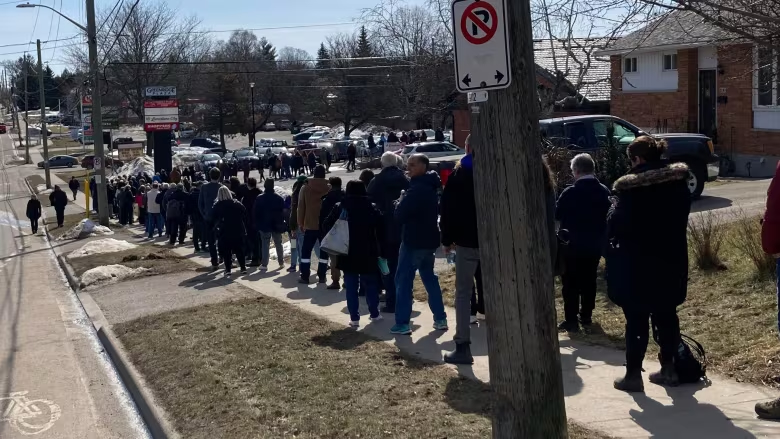
It was now reported that OHIP was demanding Dr. Ma repay $600,000 that she billed to run outdoor vaccination clinics. She ran a number of mass Covid vaccinations clinics that gave over 35,000 shots. These were set up by her in response to the provinces call to “get shots in peoples arms“at the height of the Covid pandemic. Dr. Ma was widely lauded for her efforts at the time – and won the Ontario College of Family Physicians award of Excellence. Her area became the most vaccinated area of the province, something that should be celebrated.

OHIP now claims that she didn’t follow the rules for billing. Their excuse this time? That clinic was outdoors and not in a doctor’s office. (I told you OHIPs story would keep changing). Yes, you did read that right. In the middle of a pandemic caused by an airborne virus, OHIP wanted the vaccination clinics to be held in crowded indoor spaces!

November 1, 2024

Dr. Ma had rapidly gained the public support of the local medical officer of health (there was likely background support previously). She also had the support (previously background now public) of her MPP, the OMA and many others. She did not get the public support of Dr. Jane Philpott. Dr. Philpott, in her role as Dean of Queens Medical school was full of praise for the clinics. I suspect Dr. Philpott has 550,000 reasons to stay quiet publicly now. Hopefully she can influence behind the scenes.

OHIP now stated that the concern was that Dr. Ma used some of the funds to pay the staff who worked there. You read that right. They were worried because a physician billed OHIP (gasp!) then took the funds to pay overhead (double gasp!!). The horror!

Hannah Jensen, the Minister of Health’s Communications Director initially simply parroted the line that OHIP bureaucrats fed her about being ineligible to bill because of using medical students and it being outdoors. But she was rapidly exposed as being completely out of her depth when the Kingstonist questioned her about dates, which doctor, which clinics, how she arrived at figures and so on.

Additionally, her tone took a seriously ugly and aggressive turn. There was an accusation that Dr. Ma “pocketed the funds” which essentially is an accusation of theft. (No law enforcement is involved….yet).

November 7, 2024

The story hit the national news and it was reported that not only was OHIP asking Dr. Ma to pay back $600,000, but they were demanding $35K in interest as well (!). Who knew OHIP bureaucrats moonlighted as loan sharks??

November 8, 2024

Dr. Hijazi, leader of the Ontario Union of Family Physicians was interviewed by the CBC . He obviously was supportive of Dr. Ma demanded that the Ministry apologize to her. The Ministry issued an utterly and completely delusional statement to CBC radio stating that claims Ontario can’t get family physicians are “fictitious”. (Listen to the last 30 seconds at the link). 2.5 million people can’t get a family doctor in this province because doctors don’t want to work comprehensive care is “fictitious”????

Nothing much to see here. Just a fictitious clinic in Kingston, where fictitious people without a family doctor lined up hoping to get a doctor because a fictitious family doctor announced a new practice..

What consequences are there to this?

To0 many to mention, and they are all awful. Perry Brodkin, OHIPs former lawyer was quoted extensively in the articles about process. He pointed out that before attempting to recoup these funds, the bureaucrats would have run it up the chain to the deputy minister if not the health minister. There is therefore no doubt that this egregious action is one of the bureaucracy as a whole as opposed to one rogue bureaucrat. This cements the feeling that many physicians increasingly have had that bureaucrats as a whole are malicious (especially after the nonsense they claimed during arbitration).

It also badly threatens medical teaching. If the appeal that Dr. Ma filed is unsuccessful, then it essentially means that physicians would not get paid for teaching medical students. Which would effectively end teaching in Ontario. How exactly do you plan to replace the current supply of physicians as they age out, if no one will teach new ones?

With the story hitting the national news on CBC, it also will significantly impair attempts to recruit physicians from out of province. We are already losing younger doctors to provinces like BC and Manitoba where they see a co-operative relationship between government and physicians. Why would any of them come to a Province where you are called a hero one day, and then publicly embarrassed, harassed and vilified over a clearly outdated memo that needed to put aside during a once in a lifetime pandemic?

What SHOULD happen next (but probably won’t)

Unfortunately, Brodkin also points out that at this point there is nothing that will influence the appeal board. The process could have been stopped earlier before the hearing, but Sylvia Jones and her staff chose not to. But, if Dr. Ma wins, the government should immediately announce they will not appeal the decision to the courts. Additionally, Hannah Jensen needs to publicly apologize for her…..out of line…..comment on “pocketing” funds. And Sylvia Jones should also offer up an apology to Dr. Ma for the failure of her bureaucrats to recognize that rigid adherence to minutiae in a time of crisis is completely unacceptable.

Finally, what badly needs to be done is that the entire Ministry of Health bureaucracy needs to be given a very large enema to clear out the…….

We Know How to Save Family Medicine. Why Aren’t We Doing It?

I’m honoured to have Dr. Mark Linder guest blogging for me today. I first met Dr. Linder during our time advocating against Dr. Eric Hoskins unilateral cuts to health care. He’s exceptionally well spoken and articulate . He’s a former ER doctor and now full time family physician and clinic owner. His other claim to fame is that got fired from the Kaplan MCAT teaching course after one session – which apparently was a first.

I just wrote this in a flurry this morning. I see stupider and stupider proposals from the government and from newspaper editorials. I see our new grads learn from their teachers that they need to stay away from this job. I then see the  domino effect this has on recruitment, job satisfaction and reinforced by absurd government initiatives to save the system. I watch the OMA get pulled in every direction to try and please everyone. So apologies in advance -this is just my take really-and mostly to get it off my chest-not that it will lead anywhere. So thanks for reading.

The Family Health Organization (FHO) is what saves family medicine. It has done it before and it can do it again.

In 2006 something unprecedented happened. It hasn’t happened before or since. And perhaps we didn’t quite appreciate how unique it was. The provincial Liberal government, under Dalton McGuinty and Health Minister George Smitherman, introduced an upgraded payment model for Family Medicine. It built on the existing capitation based Family Health Network (FHN) model to enhance it.

What was so unique about this? It stands out as one of the only times a government has thought beyond their 4 year term to the ultimate health of their population as well as their economy down the road when they may no longer be in power.  Sure, it was going to make them look good if everyone got a family doctor out of it-but it was a big expensive risk, a risk based on an assumption that family medicine was critical to the system, AND that practitioners need to be paid fairly for their work if they wish to retain these doctors in the future. A different time to be sure!

It worked. Look at the stats from 2008 to 2018. Look at how many Family Doctors gladly embraced the new system. Look how the number of orphaned patients dropped. 

The system had flaws. I mean this was the second iteration of what was described as an experiment. The “outside use” enforcement rule made little sense in most cases. The calculation of capitation payments wasn’t always a fair representation of how much work it took to look after the patient in front of you. Certain “in the basket” fees were bizarre and should never have been part of the package.  Doctors were actually more incentivized to send people to the ER over a walk in clinic!!! But all in all, it was a great innovation, a great idea, and saved family medicine. It also, no doubt saved the province millions in treatment dollars and ER visits as family doctors made themselves available to look after patients.

And then, In 2015 Kathleen Wynne and Eric Hoskins, the health minister at the time, effectively shut down enrollment in FHOs And that was the beginning of the end. I presume they just wanted to control the immediate budget – paying for family medicine up front meant huge savings down the road. But it resulted in a pretty big chunk of budget going out the door NOW. And the Wynne liberals didn’t have a health care crisis, didn’t heed the warnings that we as physicians laid out pretty starkly at the time, and decided, nah, we’ll just “pause” the experiment.

Which they did. And the fall out was obvious. As a clinic owner and a family doctor, I had a front row seat.  The residents and new grads had all been trained in the new system, and now were unable to access it. If they wanted to work, they’d be taking a tremendous risk setting up a clinic in a Fee For Service environment using a Schedule of Benefits that had failed to keep up with inflation for 20 years. They were screwed.  The aging Family Doctor population continued to retire at a predictable rate, and the aging population continued to get more desperate to find doctors with increasing difficulty.

By the time the FHO’s opened up again in 2021, it barely mattered–The reputation of family medicine among new grads had been thrashed for 6 years. 
With the new rules, new grads would have to gather 6 like-minded individuals (instead of just 3 like in the old days), or find a bigger FHO that was already established and could fit them in. Not so easy. Opening up your own shop had become increasingly more expensive with post pandemic inflation, so the debt would be crippling just to get started if you wanted your own clinic. And these are graduates who already had a huge amount of debt coming out of school.

Couple this with the insane increase in administrative burden as we become more and more efficient at having hospitals and labs forward us copies of paperwork. In theory, amazing, in practice hugely burdensome, time consuming and unpaid. Arguably, if the FHO rates had increased at the level of inflation, there’d be no complaints about this additional work. But the FHO rates had more or less remained static relative to the cost of doing business. Still better than FFS, still paid a lot less than the actual market value of doing the job as proven by the lack of uptake that continues today.

The thing is: The FHO is still the answer. It absolutely needs some significant tweaks. The rates need to go up. The outside use concept needs to go. Minimum size and shared EMR requirement needs to be softened so that smaller groups can join together in nearby geographic areas. Some sort of separate funding will be essential to help clinic owners to keep up with inflation.  But it still achieves by far the best mix of physician autonomy, clinic management, and long term government savings. And it’s evidence-based! We have a recent history we can look back on to demonstrate efficacy!

Other solutions, such as having lesser-trained individuals diagnosing and managing patients give the appearance of short term gains at a huge future cost as more referrals to specialists are made and more referrals to the ER are made. Another concept of having government run all clinics is clearly so expensive as to be dead at the gates-Doctors currently pay for rent, administration and their own retirements out of their incomes. It’s not great for us, but it’s a heck of a lot cheaper for the taxpayer to do it that way, and simply pay the doctors more.

I recognize that my FFS colleagues are not helped at all by an enhancement and advocacy for the FHO approach. And I’m sorry. I obviously think there’s a lot of work that could be done to improve FFS rules and individual payments. No doubt.


But we actually have the evidence that the FHO saved family medicine when it was introduced. It was stunningly effective, and if nursed back to health, will absolutely work again.

Sunday Snippets – November 3, 2024

Another in a weekly series of brief snippets of health care stories that bemused, intrigued and otherwise beguiled me over the past week along with my random thoughts on the matter.

Item: AI is now inventing things no one ever said. It turns out that AI can “hallucinate” (no really, that’s what they are calling it). Apparently the AI invents commentary that includes things like racial comments/violent rhetoric (!) and even medical mis- diagnoses.

My thoughts: My group is actually looking at AI to help with our Admin burden. While the technology shows promise – this is a useful reminder that we should all read what software generates before logging off. You will probably still save some time, just not as much as hoped.

Item: A new lung cancer vaccine that uses mRNA technology is entering trials. Somewhat ironically, this is what mRNA technology was being studied before the COVID pandemic, and its use for the COVID vaccines. The technology shows great promise to greatly reduce the side effects of cancer treatment, and provide more targeted therapy.

My thoughts: The “vaccine” term is probably going to need refining, because it’s not really preventing lung cancer (which is what most people associate with the term vaccine). Additionally, social media is still awash in mis-information about mRNA technology. So probably better to avoid that term. But at the end of the day I would agree what we are really in a remarkable time for cancer therapy with so many new treatments available. (Still better not to get cancer of course – so if you do smoke – quit!).

Item: Dr. Elaine Ma, a physician who went over and above the call of duty to organize mass vaccination clinics in the Kingston area at the height of the Covid Pandemic is asked to pay back the billings generated during those clinics. (Note I did not say income – Dr. Ma would have used a good portion of those billings to pay staff, supplies and other overheads).

My thoughts: I’ve been (frequently) told I’m too hard on bureaucrats in health care. That I come across as somewhat insulting and “un-presidential” when I complain about them. And every time I think to myself “I really need to take a deep breath and be hard on the problem, not the people” – along comes yet another example of rigid bureaucratic thinking and frankly bureaucratic stupidity that I wind up reverting to my old habits. I will say this, the residents of the Kingston area are a whole lot better off because of Dr. Ma , and the sooner the OHIP bureaucrats get this, the better. As for the OMA’s silence on the matter, it’s pretty disappointing.

Addendum: after writing this blog the OMA has confirmed that they have been helping behind the scenes. I’m glad to hear that they have been helping Dr. Ma, but I would state for the sake of their members that they need to be SEEN to be helping….

Item: The Registered Nurses Association of Ontario blasted the government for not embracing nurses as a central to solving the primary care crisis.

My thoughts: I admire the RNAO for advocating for their members (no really, that’s kind of what a member organization is supposed to do). They’re wrong of course. Using Nurse Practitioners to replace physicians (as opposed to complementing them) will only massively drive up the cost of health care and worsen outcomes. But unlike certain organizations- see above – the RNAO stands up for its members.

Item: Walking pneumonia rates in the United States – and probably Canada – are spiking, particularly in young children.

My thoughts: It’s always awful to see children sick, and as clinicians we should be on the look out for this. BUT – thankfully the vast majority of cases appear to be mild, and if treated appropriately people are recovering. They may have a persistent cough for several weeks – but they are getting better.

Item: Collingwood’s newest physician says that the profession is endangered until the province ante’s up better pay. Disclosure – Dr. Ladda has joined my Family Health Organization and I feel we are lucky to have him.

My thoughts: Read my full blog tomorrow – written by a guest blogger so at least it will be coherent.

Item: A columnist in the Ottawa Citizen basically says that Premier Ford is outsourcing the family medicine problem.

My thoughts: A good friend of mine says it much, much better than I could. “We need the political leadership to step beyond name calling and giving token titles to people to win an election. If you want this province to thrive, rebuild and lead Canada again, it requires more than what we have seen for 20 years from ALL political parties .”

That’s it for this week’s Sunday Snippets. As mentioned above, watch out for a really superb guest blog tomorrow on how to fix family medicine.

Sunday Snippets – Oct. 27, 2024

I was away last week but I’m back with another in a weekly series of brief snippets of health care stories that bemused, intrigued and otherwise beguiled me over the past week along with my random thoughts on the matter.

Item: There was significant growth in the number of physicians in Alberta in the third quarter.

My Thoughts: Alberta is kind of a funny province. There are some very strange goings on with their health care policy. But it can’t be denied that despite all of that, if you provide incentives to attract younger physicians it will help. Having said that, it can all be easily undone if they don’t get on with it and implement the compensation for family physicians they promised, and for some reason appears to be delayed.

Item: The province of Nova Scotia has launched a physicians retirement fund initiative, helping physicians to retire well.

My Thoughts: What’s that you say? You mean ensuring that physicians have peace of mind about their retirement might actually help recruit (gasp!) and even retain (double gasp!!) physicians? Who would have thunk it?? In all seriousness, given the way the Federal Liberal government of our effete Prime Minister really screwed physicians with the recent tax law changes – this is a necessary move and I hope will get copied by all provinces. It really will help improve morale and reduce some of the burnout.

Item: John Richards and Tingting Zhang, from the CD Howe Institute wrote an op-ed in the Financial Post encouraging more use of nurse practitioners since they can “do almost everything an MD can”.

My Thoughts: El Toro Poo Poo. (This is a PG rated blog so that’s all I could get away with). I work with Nurse Practitioners and I have seen them help patients and I firmly believe they have a role in health care. But that role is not to replace physicians. The studies that show they can “do almost everything” are done based on what scope of practice suggests they can do. The blunt reality is nurse practitioners drive up costs and worsen care if used in settings as these characters suggest. The studies that show that NPs are cheaper ONLY look at the actual income an NP gets and compare it to a physicians income, as opposed to looking at the work that is actually done/number of patients seen/and number of tests ordered. The FP article isn’t even fit to be used for toilet paper.

Item: The crisis in Home Care supplies, first reported by Avis Favaro on X (formerly Twitter) continues. Home care nurses are reporting heartbreaking stories of patients buying their own supplies on Amazon since home care couldn’t provide them. Dr. Drew Moore and Dr. Hal Berman should be lauded for going public with their concerns. (I’ve met both of them and they are both mensches).

My Thoughts: I’m old. I’ve seen a lot of government screw ups in my time, especially in health care. But I have yet to see bureaucrats who screw up be truly held accountable and fired. Ever. They just get shuffled off to some other department. It it too much to ask that if someone makes a mistake at their job (and this is a BIG one) they get held accountable?

Item: Quebec is attacking family doctors for some reason. First they suggested they would link people to non-family physicians for care and even remove patients who were “healthy” from their own family physicians. Then they presented erroneous data suggesting that family doctors basically don’t work hard enough.

My Thoughts: There are 9 other provinces and 3 territories that would love to have these doctors.

Item: Penn State Medical Residents unionized, went on strike and got significant benefits (despite being driven off the hospital grounds by hospital security!)

My thoughts: Unionization of physicians is going to happen eventually. Whether through the long gestating Charter Challenge (yes my Ontario peeps – it is still working its way through the courts) or some other mechanism. The younger physicians clearly seem to want this model of representation and at some point in the not too distance future, physicians will be unionized.

Item: The Ontario government announced plans to effectively bar foreign students from attending medical school in Ontario.

My thoughts: My thanks to Am640 News for interviewing me on the topic, and my thoughts on this can be heard below. (This short version – this is populist rhetoric that will do nothing to help with the health care crisis):