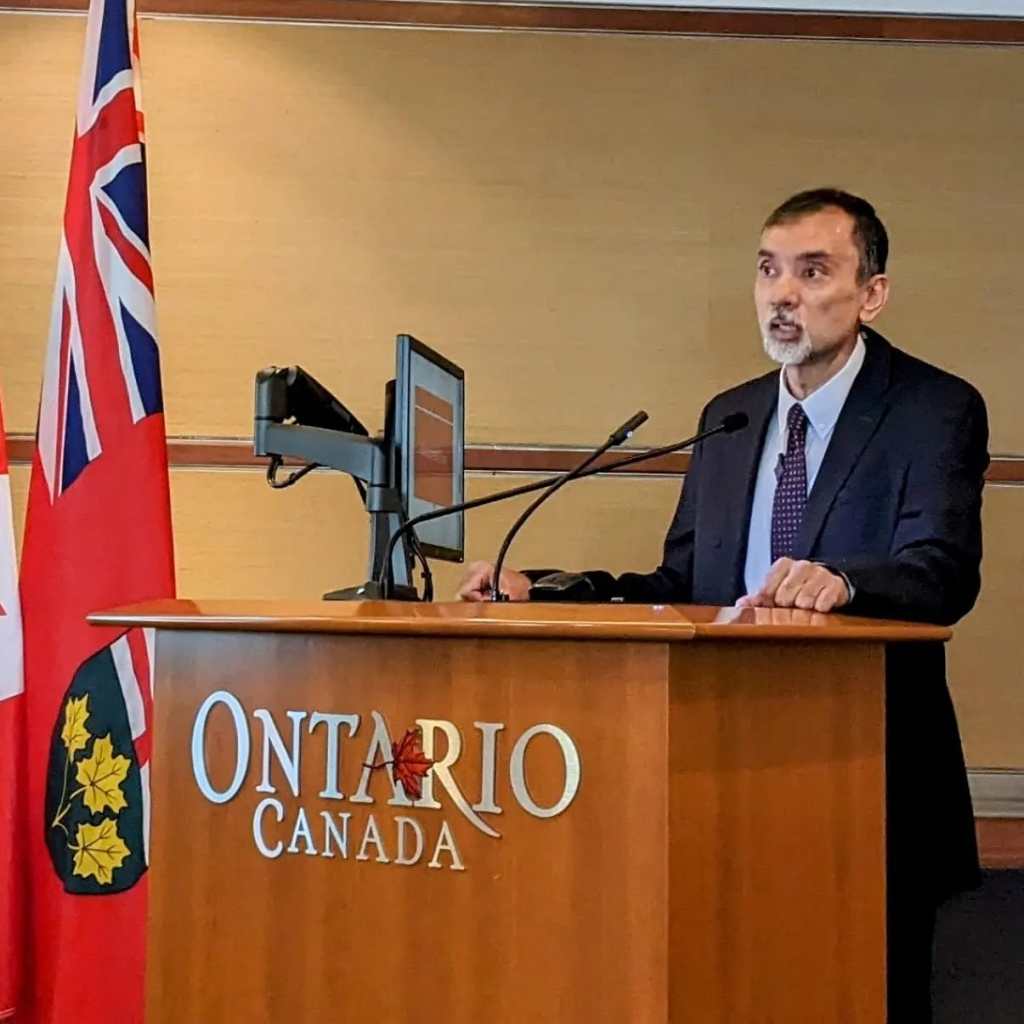

Bureaucratic Stupidity in Covid Vaccine Clinic Case Will Have Far Reaching Consequences

I’ve repeatedly been told that I am too unkind and too harsh to Ministry of Health (MOH) bureaucrats. A senior staff member at the OMA once suggested I was “out of line” to a very sharp (but necessary) scolding I gave an MOH bureaucrat at a bilateral meeting we had. About a month later, that same senior staff person, when on a voice conference call with the same bureaucrat, got up and wrote “This is a waste of time” on a chalkboard at OMA headquarters. But I digress.

Yet every time I try to pull back, these same bureaucrats go and do something that is so incomprehensibly stupid that I once again wonder about the talent level and frankly intelligence of the bureaucracy as a whole at the MOH.

On this occasion, I’m referring to the Ontario Health Insurance Plan’s (OHIP) relentless persecution of Dr. Elaine Ma. The whole mess has been extensively reported and you can read all the details in the links, but I will summarize key points below:

October 25, 2024

Dr. Ma’s clinic in Kingston suddenly cancelled its October 26 drive thru flu/covid vaccine clinic. Over 600 patients had registered with more pending. The reason is that OHIP had notified her that she would not be paid to vaccinate patients at the clinic. Why? Because she was going to have medical students (who would be supervised) vaccinate. According to a 2001 bulletin OHIP pulled out, students are not employees and so she can’t delegate to them. (OHIPs story keeps changing and you’ll see that further down the blog). It also emerged that OHIP was attempting to recoup funds paid to her for running similar vaccine clinics in 2021.

October 30, 2024

It was now reported that OHIP was demanding Dr. Ma repay $600,000 that she billed to run outdoor vaccination clinics. She ran a number of mass Covid vaccinations clinics that gave over 35,000 shots. These were set up by her in response to the provinces call to “get shots in peoples arms“at the height of the Covid pandemic. Dr. Ma was widely lauded for her efforts at the time – and won the Ontario College of Family Physicians award of Excellence. Her area became the most vaccinated area of the province, something that should be celebrated.

OHIP now claims that she didn’t follow the rules for billing. Their excuse this time? That clinic was outdoors and not in a doctor’s office. (I told you OHIPs story would keep changing). Yes, you did read that right. In the middle of a pandemic caused by an airborne virus, OHIP wanted the vaccination clinics to be held in crowded indoor spaces!

November 1, 2024

Dr. Ma had rapidly gained the public support of the local medical officer of health (there was likely background support previously). She also had the support (previously background now public) of her MPP, the OMA and many others. She did not get the public support of Dr. Jane Philpott. Dr. Philpott, in her role as Dean of Queens Medical school was full of praise for the clinics. I suspect Dr. Philpott has 550,000 reasons to stay quiet publicly now. Hopefully she can influence behind the scenes.

OHIP now stated that the concern was that Dr. Ma used some of the funds to pay the staff who worked there. You read that right. They were worried because a physician billed OHIP (gasp!) then took the funds to pay overhead (double gasp!!). The horror!

Hannah Jensen, the Minister of Health’s Communications Director initially simply parroted the line that OHIP bureaucrats fed her about being ineligible to bill because of using medical students and it being outdoors. But she was rapidly exposed as being completely out of her depth when the Kingstonist questioned her about dates, which doctor, which clinics, how she arrived at figures and so on.

Additionally, her tone took a seriously ugly and aggressive turn. There was an accusation that Dr. Ma “pocketed the funds” which essentially is an accusation of theft. (No law enforcement is involved….yet).

November 7, 2024

The story hit the national news and it was reported that not only was OHIP asking Dr. Ma to pay back $600,000, but they were demanding $35K in interest as well (!). Who knew OHIP bureaucrats moonlighted as loan sharks??

November 8, 2024

Dr. Hijazi, leader of the Ontario Union of Family Physicians was interviewed by the CBC . He obviously was supportive of Dr. Ma demanded that the Ministry apologize to her. The Ministry issued an utterly and completely delusional statement to CBC radio stating that claims Ontario can’t get family physicians are “fictitious”. (Listen to the last 30 seconds at the link). 2.5 million people can’t get a family doctor in this province because doctors don’t want to work comprehensive care is “fictitious”????
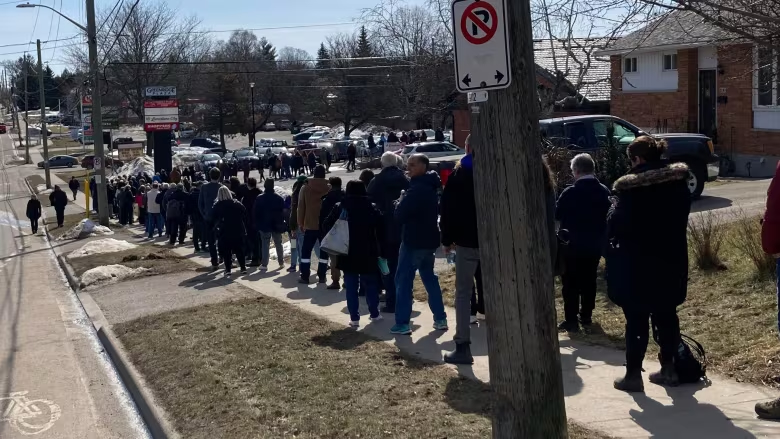
Nothing much to see here. Just a fictitious clinic in Kingston, where fictitious people without a family doctor lined up hoping to get a doctor because a fictitious family doctor announced a new practice..

What consequences are there to this?

To0 many to mention, and they are all awful. Perry Brodkin, OHIPs former lawyer was quoted extensively in the articles about process. He pointed out that before attempting to recoup these funds, the bureaucrats would have run it up the chain to the deputy minister if not the health minister. There is therefore no doubt that this egregious action is one of the bureaucracy as a whole as opposed to one rogue bureaucrat. This cements the feeling that many physicians increasingly have had that bureaucrats as a whole are malicious (especially after the nonsense they claimed during arbitration).

It also badly threatens medical teaching. If the appeal that Dr. Ma filed is unsuccessful, then it essentially means that physicians would not get paid for teaching medical students. Which would effectively end teaching in Ontario. How exactly do you plan to replace the current supply of physicians as they age out, if no one will teach new ones?

With the story hitting the national news on CBC, it also will significantly impair attempts to recruit physicians from out of province. We are already losing younger doctors to provinces like BC and Manitoba where they see a co-operative relationship between government and physicians. Why would any of them come to a Province where you are called a hero one day, and then publicly embarrassed, harassed and vilified over a clearly outdated memo that needed to put aside during a once in a lifetime pandemic?

What SHOULD happen next (but probably won’t)

Unfortunately, Brodkin also points out that at this point there is nothing that will influence the appeal board. The process could have been stopped earlier before the hearing, but Sylvia Jones and her staff chose not to. But, if Dr. Ma wins, the government should immediately announce they will not appeal the decision to the courts. Additionally, Hannah Jensen needs to publicly apologize for her…..out of line…..comment on “pocketing” funds. And Sylvia Jones should also offer up an apology to Dr. Ma for the failure of her bureaucrats to recognize that rigid adherence to minutiae in a time of crisis is completely unacceptable.

Finally, what badly needs to be done is that the entire Ministry of Health bureaucracy needs to be given a very large enema to clear out the…….

Never Ending Arbitration a Sign Government Does NOT Want to Work with Doctors

News Item #1: Prince Edward Island agrees to a contract with its doctors. Amongst other things, the deal recognizes that family medicine is a specialty (finally!) and increases compensation to reflect that. It also introduces strong measures to reduce red tape and administrative burdens, and adds what appear to be retention bonuses. PEI joins British Columbia, Manitoba, Saskatchewan and even Alberta (!) in working co-operatively with their doctors.

Dr. Krista Cassell of Medical Society of PEI with Health and Wellness Minister Mark McLane and Health PEI CEO Melanie Fraser

News Item #2: Ontario Medical Association (OMA) Board chair Cathy Faulds announced last week that the Kaplan Board of Arbitration will not deliver a ruling on the fractious contract dispute between Ontario’s doctors and the Ministry of Health (MOH)at the end of August as expected. It is delayed until at least the end of September, if not longer.

Now you, dear reader, are probably wondering why I refer to a one month delay as “never-ending”. Firstly, because I’m not convinced it’s only one month. I don’t recall the Arbitrator ever giving us a timeline for when he was going to give a decision when I was on the OMA Board. Timelines for meetings and hearings, sure – but for the decision, no.

But more importantly, even if there is a ruling in September, it’s nothing but a mere step in a protracted, convoluted process that, at the end of the day, does nothing more than show that the government would rather not engage the OMA in providing solutions for our health care crisis. To understand why, one needs to first appreciate the prolonged nature of the current arbitration process, and just how tortuous it is. (I will do my best).

First, the current arbitration process is ONLY for one PART of the first year of what is supposed to be a four year contract. It will cover April 1, 2024 to March 31, 2025. BUT, it will only cover a percentage increase for that one year. It will not set specific fees for different specialties. Instead, there was general agreement (last I heard) that 70% of the increase would go towards fee increases and the other 30% would go towards targeted areas of high need.

Sounds simple enough to sort out right? If the deal is worth, say $2 billion (this number is totally made up and Mr. Kaplan, if you are reading, this number is much less than the increase should be), then $1.4 billion would go towards fee increases, and $600 million would be targeted towards areas of need.

The problem is that the fee increases are to be distributed along what’s know as a “relativity model”. Essentially lower paid specialists are to be given a bigger raise than higher paid ones. Unfortunately, the OMA and MOH can’t agree on how those raises are to be distributed amongst the various specialties. Worse, they can’t agree on how to distribute the 30% that was earmarked for “targeted funds”.

Which means…..you guessed it, ANOTHER round of arbitration with yet another set of decisions to be ruled upon by the arbitrator. This additional protracted process won’t begin until the arbitrators first ruling and further negotiations and mediations. The information on the OMA website suggests arbitration for those issues won’t happen until March 3, 2025.

But wait, didn’t I say that this was only for the first year of the four year contract? Why yes, yes I did. Which means that after this, we now start arbitration AGAIN for years 2-4 for the doctors contract. And yet again, not only do decisions needed to be made on the percentage increase, but on how that increase is divided up. Which means…….potentially many more rounds of arbitration.

I would concede the OMA websites suggests all of the year 2-4 arbitration, and left over issues from year one can be done at the same time (March 3-7, 2025). However, I will refrain from betting the mortgage on that actually coming to fruition. We are one early election from this timeline being thrown into chaos. The cynic in me thinks that by the time arbitration is all done for this supposed four year cycle, it will be time to start negotiating (and yes more arbitration!) for the next four year cycle.

The government will most likely abide by the initial arbitration award (it’s doubtful they would reject an award prior to an election call). Ontario Health Minister Galen Weston Sylvia Jones will frame this as part of the process for coming to an agreement. She will (probably) claim that by abiding by the award the government is “working with” physicians to benefit the health care needs of the province.

She will be wrong.

I’ve mentioned this before, arbitration is preferable to the days when governments could unilaterally cut physicians income at the whim of the health minister. However, that doesn’t change the fact that arbitration should be viewed as a necessary evil, with emphasis on the evil. Not only can it demoralize people who are going through it, the spill over effects have wide reaching consequences.

What does this mean for the general public? The OMA has come up with some solutions for the various crises our health care system is facing (2.5 million without a family doctors, worsening health care catastrophe in Northern Ontario, overwhelming bureaucratic burden etc). The reality is that many of the solutions require changes that need to be made in a contract with Ontario’s doctors. But we don’t have one, so none of these will be implemented.

Instead of working co-operatively with the OMA to come up with solutions in a fair contract, the current government seemingly prefers to leave it all to the arbitrator. And as a result, patients will continue to suffer.

The government of Ontario has a choice. Follow the lead of BC, Manitoba, PEI and so on and work with the doctors to help patients. Or set up a perpetual conflict with them.

Over to you Minister.

Ontario Health Minister Sylvia Jones, who can start to fix things tomorrow, if she wants.

Dr. Soni Reflects on the Delays in Emergency Rooms

Dr. Deepa Soni, and Emergency Room physician for over twenty years, reflects on the case of a young woman with appendicitis, and the delays in getting her care.

NB: Recently, Julia Malott spoke out on X (formerly known as Twitter) about how terrified she was about Canada’s health care crisis. She wrote how her daughter had not eaten in 18 hours as she continued to wait for surgery for appendicitis. She expressed concern about the lack of the beds and wondered if her daughter would get surgery before the appendix ruptured.

My friend Dr. Soni, who has worked in an Emergency Department for over 20 years, had, as usual, a very thoughtful and well spoken X thread of her own. (Dr. Soni was NOT involved in the care of this young woman). I thank her for allowing me to reproduce her thoughts here.

The only way these stories (about long delays in Emergency rooms) will stop being the norm, is when patients start sharing their experience like this mother did. Only voters can make federal and provincial governments change because votes are the only currency that matter. Doctors and nurses have been raising alarm bells for years without success.

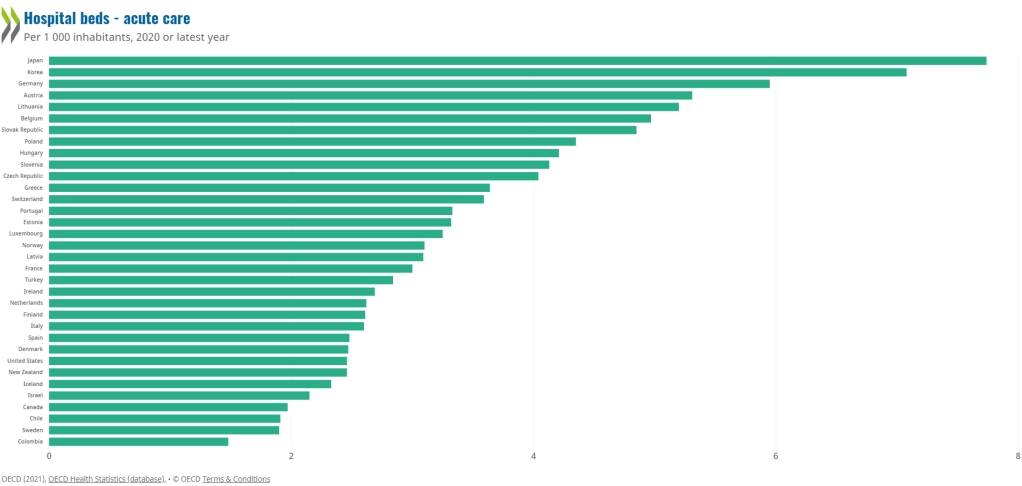
Canada has one of the lowest number of hospital beds of all the OECD countries, around 2.3/1000 people. In comparison countries like Japan, Korea and Germany are around 13/1000.

Graph showing how Canada fourth from the bottom (!) in hospital beds per capita.

Why does this matter? Having low hospital bed numbers means that words like “flu surge“, and “winter surge” — which have been used for decades to explain away long wait times and hallway medicine, are actually not “surges.” Rather, they are the expected backlog in a system that lacks adequate beds and resources.

The population of Canada is increasing and aging. We are about to enter a silver tsunami where a large cohort of our population will be over the age of 65 and many over the age of 85. This will place unprecedented pressures on our health care system.

What happens when the hospital bed capacity is outstripped by the numbers of patients needing care? It means that the elderly patient who needs admission to a hospital bed to recover from a heart attack has no bed to go to and spends days “admitted” in the emergency department. Bureaucrats call these “unconventional spaces.” What they really are, are stretchers.

When the vast majority of the emergency department beds are being used to take care of hospital patients, that means that patients that are waiting in the emergency department waiting room, will wait for hours for care, much like this story is describing.

Media needs to scratch beyond the surface and hold government to account. Real solutions are going to require thinking beyond the four-year election cycle. What will our system look like in 20 years? How do you plan for that?

It’s going to require recognizing the backbone of our healthcare system is primary care. Family doctors are overwhelmed by administrative burden, trying to run their offices and taking care of large practises in the community without adequate resources.


Build community infrastructure with resources like palliative care so that people can remain in their homes comfortably in their last days; and sufficient homecare services so that patients can receive antibiotics and other intravenous treatments at home to ease the pressure on hospitals. These services are vastly underfunded and do not have enough staff to properly provide care for everyone that needs it in the community.

It’s going to require building more nursing homes, retirement homes, seniors services and dementia care programs, as our elderly population will be the largest it’s ever been in this country.


Incentivize and properly pay hospital nurses so that we can recruit and retain them to be able to run departments and programs properly. Currently, agency nurses make at least two times as much as a hospital nurse, and this has created instability in the workforce. Governments need to show that they value nurses and the important work that they do.

Creative solutions like interprovincial licensing of doctors and nurses and a National Pharmacare program will help. While the idea of recruiting from other countries sounds like an easy quick fix, it will not solve anything if those newly obtained doctors and nurses find themselves overworked and burning out soon after arriving to Canada. The system problems are going to impact them just as they have impacted those who are already working in the system. This type of strain is what contributes to moral distress and burn out.

The backlog in the emergency department is a reflection of multiple failing areas that create an overall system that is strained beyond capacity. With each passing year, Canada’s healthcare system has become more and more stretched, trying to provide more care to more people, with fewer resources. Throwing Band-Aids at it is like trying to mop up the floor under an overflowing sink instead of trying to figure out how to turn off the tap.

Stories like this one are happening every day in Ontario and all of Canada. Most patients and families are too busy dealing with the acute health problem to take the time to write to their MP/MPP or to go to the media. But when people take the time to bring these stories to light, a critical tipping point will eventually occur where they can no longer be ignored by government. Because votes matter.

No one who went into healthcare wants to work in a system that makes patients feel like this story illuminated. But we need more voices bringing their stories out in the open. It will improve the system for the people working in it, and for the people receiving care within it. And that is better for everyone.

What Would I Do if I Got Sick? I Would go to Turkiye.

NB. I am a consultant for Medicte, a medical tourism firm that connects people with the Acibadem Health Group in Turkiye. I appreciate my two loyal fans may read this to be an “advertorial” – but it does represent how I feel. 

Yours truly at an Acibadem Hospital in Turkiye with their team and representatives from Medicte

Recently, Leger released the findings of a survey that polled Canadians on their thoughts about the health care system. 70% of Canadians worried about not being able to get high quality health care. Surprisingly, only 37% thought the health care system was poor – did 63% not need medical care recently? But the number that should demoralize all of us is that only 17% feel the system will improve.

Like everyone else of a certain age, I’m coming to the realization that the one fight I won’t win, is the battle against time. More of my friends and colleagues are developing health issues. While I’m blessed to be in good health, like 83% of Canadians, I realize that the current health care system (which doctors call horrific and inhumane ), will not provide the access and care we should expect as standard in this country. I can only see things getting worse in the near future.

It does not help that I live in the health system every day. I’ve watched patients I really care about suffer in ways that I would not have imagined possible. Young people with cancer not getting treatment for three months. People with joint pain waiting a year for surgery. Patients developing complication after complication while on wait lists to access necessary treatments. 

Most heartbreakingly, I see the toll that the burnout of working in such a hellishly damnable health care system is taking on doctors, nurses and other allied health care professionals on a daily basis.

That’s why I recently made the decision that if I, or someone in my family needed health care, I would seek care outside of Canada. I am not alone in this. The data is hard to get at, but going back as far as 2014, between 52,000 to 217,000 Canadians were seeking health care outside of Canada annually. 

There are a variety of reasons to seek care outside of Canada, and specifically Türkiye:

  1. Getting immediate care. I could get hip surgery next week, not next year. Cancer patients get all the tests they need done within a week, not three months like I’ve seen. 
  2. Getting treatments that are not available in Canada. Canada offers a host of great medical treatments, but many are not covered by government plans. Lap Band surgery is one. New, emerging radiation therapies for pancreatic cancer is another. There are more. All of these are available in Türkiye.
  3. Getting better allied health care support. Canada has GREAT nurses and other allied health care workers. But the system does not let them care for patients the best. Last time I was on call at my hospital, I overheard the nurses talking about how they each had 7 patients to look after for the shift. The safe number for an acute care hospital ward is 5 patients per nurse. We have excellent nurses but if you are constantly working at 40% over capacity, things are not going to go well. At the Acibadem hospitals in Türkiye, they have 4 nurses for 15 patients (3.75 patients per nurse).
  4. More cost effective care. I’m fortunate I can afford to pay out of pocket for care if needed. Worst comes to worst I’ll put off retirement for a couple of years to pay for things if necessary. But even I would have trouble with $200,000 (U.S.!) that B. C. resident Allison Ducluzeau spent on her cancer care. Costs in Türkiye for most procedures I looked at are generally less than half of what it costs in the U.S.
  5. First World Standards for Health Care Treatments. All of the Acibadem hospitals are JCI Accredited (the global leader in health care accreditation agencies). This puts them on par (and in some cases better) than top European hospitals.
  6. Türkiye is a well sought after Medical Tourism destination. Medical Travel Market recently highlighted 12 reasons why Türkiye was so well sought after including cost, world class facilities and cutting edge treatments. 1.2 million people went to Türkiye for medical tourism in 2022, mostly from Europe.

As part of my consulting work, I went on a fact finding tour to Türkiye and visited the Acibadem hospitals. To say my jaw dropped would be an understatement.

The team and I reviewing the process for orthopaedic care with their top spine surgeon.

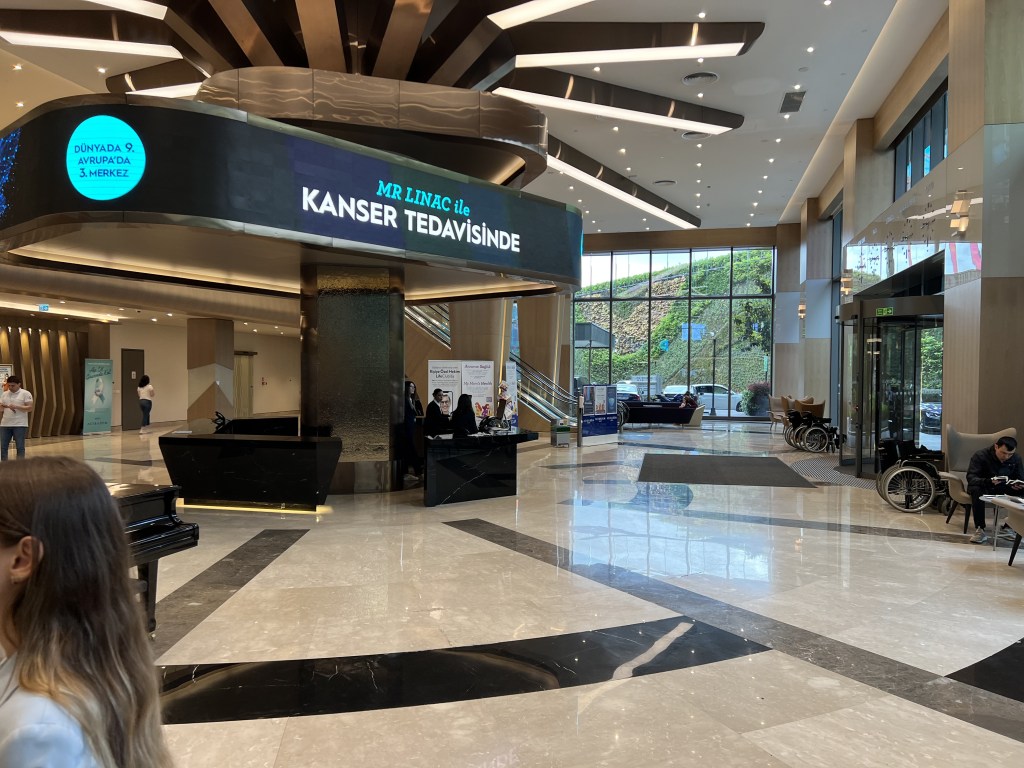
The hospitals (there are 21 in the Acibadem group) look like hotels. Each room is private. The wards are immaculate. All of the staff were incredibly attentive (and yes, spoke English). 

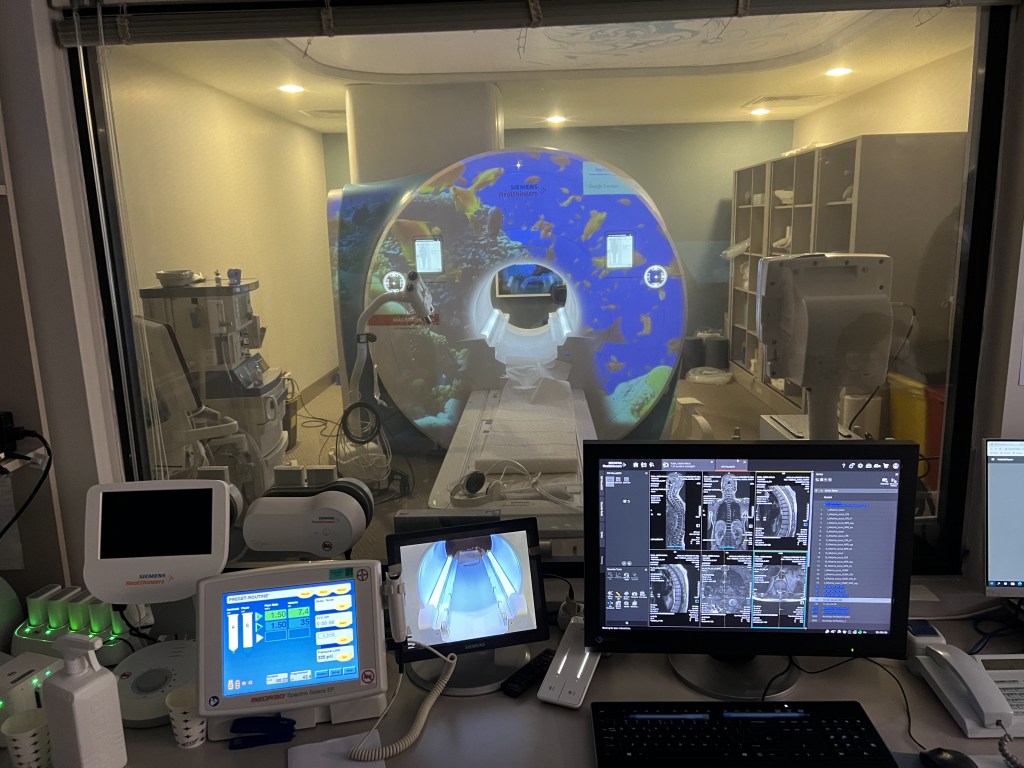
I asked to see the MRI, and the staff wanted to know which one (!). Their approximately 170 bed hospital had THREE MRIs, specialized for different conditions. This is on top of the CT scans, gamma knives (cancer treatment), PET scans etc etc. All of the equipment was brand new. I especially liked the MRI that projected a movie onto the equipment, to help children stay calm during the procedure.

I also ran into a couple of top ranked Turkish footballers (soccer players) while there. The Turks are as crazy about football as we are about hockey. Their top athletes go to the Acibadem group.

But what’s more impressive than the top ranked doctors, nurses and equipment is their philosophy of how to provide health care. If you were to sadly, get cancer, you would see all the specialists you need to see (surgeon, medical oncologist, radiation oncologists etc) on the same day. Any tests you need would be organized sequentially and rapidly over the next couple of days (if not the same day). You would have a full treatment plan within a few days.

Contrast this with Canada where you have to have an appointment with one doctor, then wait x number of weeks to see another then x to see another like my patients currently do. All while the cancer continues to grow.

Also, for the record, I did wind up getting care myself at Acibadem. Bad teeth run in my family, and so I went for a dental check up. The dentist examined me, put in two fillings, got the oral surgeon to come by and took out two teeth that were beyond hope, all during the same visit. This would have taken multiple visits in Canada. You could say I put my money where my mouth is. And yes, the care was excellent.

I appreciate this sounds like an advertorial. But the reality is that more and more Canadians are getting frustrated with the long waits for health care and seeking care outside of Canada. It may have started off with people seeking lower cost cosmetic surgery, but now things like orthopaedic surgery, cancer treatments, organ transplants, dental implants and even cutting edge infertility treatments can be had for those willing to travel. 

There is never a guarantee of a successful result with medical treatments anywhere (including Canada). If considering leaving the country for care, people should do their due diligence. Make sure you deal with a reputable firm and first rate hospital.

I’ve made my decision, and I know where I’ll go. 

If you or anyone else would like to explore options for out of country health care, contact Medicte for a free consultation.

Meditech Expanse – How Do I Hate Thee?

Authour’s Note: After another frustrating time of dealing with our hospital’s health information (?) system, Meditech, I felt compelled to re-publish my altogether horrid attempt at poetry.

Meditech Expanse – How Do I Hate Thee?

How do I hate thee?  Let me count the ways.
I hate thee to the depth and breadth and height
My soul does retch when my eyes see your sight
Beginning to end, Expanse does torment
I will despise thee all my living days
Most un-needed code, for us a true blight
I hate thee truly, you dim all good light
Hate thy order entry, makes my mind craze
I hate thee with passion I will not excuse
In my Nuance, errors show up like wraiths
I hate thy med rec so I turn to booze
With my lost joy, I hate thee with the death
and anguish of soul, wrought by those who choose
This Expanse that shall surely take my last breath

– with profuse apologies to Elizabeth Barrett Browning, authour of the original “How Do I Love Thee?”

Screenshot of the highly cluttered and remarkably UN-intuitive Meditech Expanse Home Screen found on the web, presumably from one of their training modules. Patients listed are fake.

Canada Should Look to Turkiye for Health Information/Data Systems

Disclosure: I have a business relationship with Medicte, a firm that provides high quality medical tourism services for Canadians. They provided me with some information for this blog. If you are on a prohibitively long waiting list for medical or surgical services, and are willing to consider travelling out of country to have treatment, contact Dr. Abdullah Erdogan at: medical.developer@mestassistance.com

I’ve written previously about Health Data Systems and what a poor job Ontario (and indeed all of Canada) does at using information technology (IT) to help with health care. Let’s look at country that does things the right way, Turkiye (formerly Turkey). I appreciate this choice may come as a surprise to many, but Turkiye has a very modern, highly efficient health care system, and had to go through their own period of transformation from a fragmented system to a more integrated one.

The long version of how Turkiye evolved their health systems can be found here. The short version is that in 2003, the Turkish government came up with the political will to introduce the Health Transformation Program. Over the next ten years this act, and unyielding political will, transformed the Turkish health care into a fully integrated system. In many ways, it’s a model for what Canada needs to do.

I had the honour of being invited to do a talk for the Canadian Turkish Business Council on the Canadian health system (along with my smarter and more esteemed colleagues Drs. Nadia Alam and Silvy Mathew). In preparation, I studied up on how Turkiye handles health data (with the help of Medicte). I cannot tell you how impressed I was with their system.

In Turkiye, the federal government has mandated that all hospitals in Turkiye use the Hospital Information Management System (HIMS). Now to be clear, different hospitals in Turkiye still use some different modules of software, but they are all compatible with HIMS. The data for all citizens of Turkiye is then backed up securely.

Then, every citizen of Turkiye is offered a patient portal called e-Nabiz.

Official logo of Turkiye’s patient portal.

What does this portal allow patients in Turkiye to do? According to Medicte:

“When people enter their E-Nabız profile, they can make appointments at all public hospitals and access the records of these appointments. They can review all of their examination, diagnosis and treatment data in the health facilities they visit and access the details of all the tests performed during this process. This includes all data related to the process, such as all laboratory tests and radiology images with their reports, prescriptions, diagnoses and drug usage details.” 

Further more, the app can be used to allow other health care providers access to patients health information (with consent). Let’s say a resident of Istanbul happens to travel to Antalya (a truly lovely tourist destination about an 8 hour drive away). If that person gets ill, they can use the E-Nabiz portal to allow doctors in Antalya to see their previous health information to help guide their care. Not only that, information about their visit in Antalya will automatically be available to their family doctor in Istanbul, including lab work, diagnosis, and prescriptions. I can’t even get health information on patients of mine that go to a walk in clinic in Barrie, and that’s only 30 minutes away from my office.

Not only does this system allow for much better communication between health care professionals of all kinds (physicians, nurses, pharmacists, home care and so on), but having knowledge of a patient’s previous health history significantly reduces duplication of tests. And leads to more optimal outcomes.

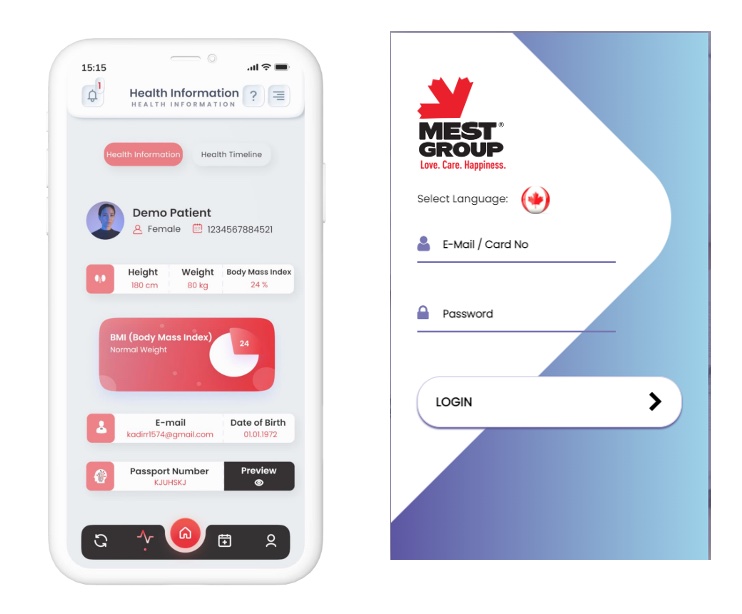
For people who are not citizens of Turkiye, but go there for medical tourism (Turkiye is one of the top medical tourist destinations in the world), their travel companies can offer them similar access to their health care records. For example, Medicte will soon offer the MestCard app via its parent company MestGroup.

Screenshots of the MestCard Apps

Essentially, a patient of mine, who choses not to wait the 13 months that they currently have to wait for a hip replacement in my area, could go to Turkiye next month, get their hip replaced AND have much better access to all their health records than a patient of mine who got that done in Canada. (And yes, all of these apps/software/portals are compliant with recent security standards).

But that’s not all, this tight integration of IT allows for other benefits. For example, Health Systems Consultant Matthew Lister, who spoke at the same event, informed how this allowed hospitals across Turkiye to manage their supply issues. If one hospital was short on something (tubing, a drug, IV fluid or so on), it can immediately check the inventory of nearby hospitals and request a transfer. No phone calls, no double checking. It’s all online, backed up, and available for hospital management to see. He also emphasized that this has been the case in Turkiye since at least 2011!

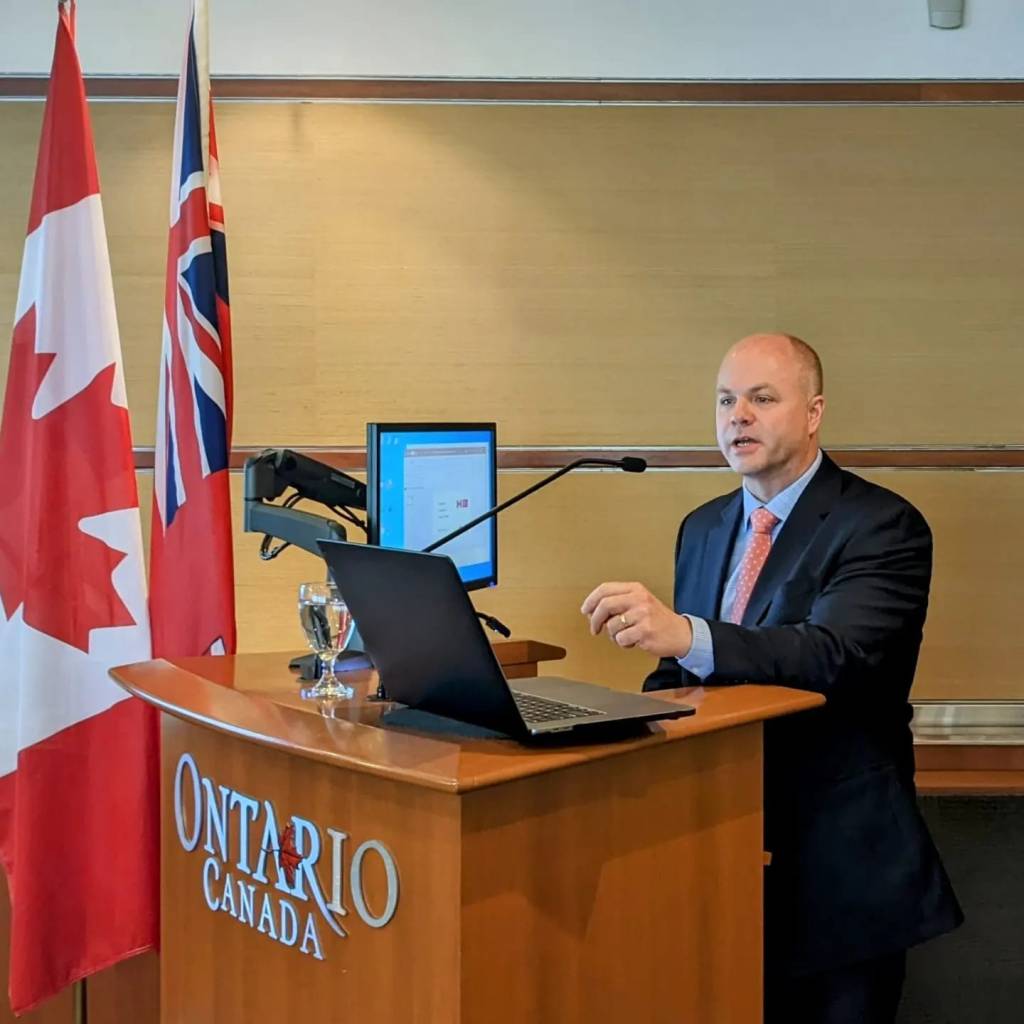
Matthew Lister speaking at the Canadian Turkish Business Council event.

In Canada, given the disastrous current state of our health care system, there have been calls for system transformation from multiple sources. Whether from what are viewed as conservative organizations like the Fraser Institute and Postmedia News, or progressive organizations like Canadian Doctors for Medicare and the Torstar Media group, everyone from all sides of the political spectrum agrees that health care is need of a fix.

Here’s thought. Rather than start from scratch, let’s look at countries like Turkiye, that have taken their own fragmented health care systems, unified them and leapfrogged Canada to develop a much more efficient health system. Then just do what they did.

The benefits to the citizens of Canada would be enormous.

Post Script: While it’s true that Turkiye has a modern, high functioning health system, even such a system can be overwhelmed by a disaster like the recent Earthquake that has claimed at least 50,000 lives. To help the victims of the earthquake in both Turkiye and Syria, I encourage you to donate to the IDRF Earthquake Relief Fund.

Moving Procedures to IHFs is a Step in the Right Direction

Let’s say you are a patient with high blood pressure in Ontario. It’s time for a check up. If you are lucky enough to have a family physician, you will go their office. Your family doctor will check your blood pressure and perform additional physical exams as necessary. If you are due for additional tests, they will order that and renew your medications. They will likely be paid fee code A007, currently set at $36.85. Out of that $36.85, your family doctor will put some aside to pay the staff, some for cleaning, some for rent, some for other expenses. The remainder, the “profit” if you will, your family doctor will keep for themselves.

Additionally, your family doctor will be required to keep their medical equipment in good order, vaccines in a fridge at consistent temperature, sterilize their equipment and so on. Medial charts must be kept legible and comprehensive. Your doctor will be subject to inspections from their governing body, the College of Physicians and Surgeons (CPSO) to ensure they comply with this.

None of this is new, and it’s how health care has worked in Ontario for decades.

It’s therefore amusing to me to see the righteous indignation on social media when the Ontario Government announced that it would allow more procedures to be done outside of hospital, in an attempt to start to catch up on a backlog of health care that some estimates place at 20 million procedures. The frenzied cries of how this is scheming to create two tier health care where you pay with your credit card have come from the usual suspects.

Premier Doug Ford and Health Minister Sylvia Jones announcing the expansion of Independent Health Facilities

Ontario has had Independent Health Facilities (IHFs) for decades. This is not a new concept. Just like your family doctors, these IHFs bill OHIP for services that are insured, and in return perform a procedure/test/examination on you the patient. They are subject to inspection by the CPSO (just like your family doctor) and have to stay up to standards.

As technology has evolved, many procedures that were once done only in hospital can now be done safely outside of hospitals. Cataract surgery for sure. Colonoscopies/Gastroscopies as well. Arthroscopies are safe and even some joint replacements can be done as outpatient surgery now.

And, just like a visit to your family doctor, you would go to the IHF, the physician would get paid for the work they do by OHIP, some of what they get paid would go to cover their overhead, and the remainder, the profit, they would keep for themselves.

Philosophically, there is NO difference between these two scenarios. So it is extremely curious that people are raising such a furious response to this. Essentially they are saying “it’s ok for family doctors to own their own clinic and keep a profit but it’s not okay for a specialist to do so.” Talk about two tier!

Now that’s not to say there aren’t some practical considerations that need to be thought out.

  1. Where will the support staff (particularly nurses) come from?
    • My feeling on this is that right now we do have a number of nurses who have left hospitals because of the stress of working there. They are never going back. If we build these outpatient surgical centres as part of the hospital bureaucracy, not only will it take longer (hospital bureacrats have never met a committee they didn’t like) but when the hospitals go to hire staff, they will likely want the staff to be able to work in other parts of the hospital and take call. The nurses who left the hospital will NEVER agree to that. Maybe some of these nurses would work in an IHF if they were guaranteed daytime hours. I don’t know how many. But it will be more that the zero that will go back to a hospital owned facility.
  2. Where will the surgeons come from?
    • Fun fact that you may not know. We do have a shortage of doctors. But we also have 150 unemployed orthopaedic surgeons in the province. I’m serious. And I agree with Canadian Medical Association Journal that this is a sign of poor planning. The real problem for most surgeons is lack of operating room time. Having IHFs with operating time will allow them to work and catch up on the health care back log.
  3. Will there be charges outside of OHIP?
    • The reality is that OHIP only covers some things. If you need a Drivers Medical for example, OHIP does not pay for that. Your family doctor will charge you. Same for sick notes, prescription renewals without a visit and more. Philosophically, there is again, no difference between what your family doctor would do, and IHF would do if you wanted something that OHIP didn’t cover (an upgraded cataract lens for example). My father paid for upgraded lenses when he had cataract surgery (in a hospital), and that was something like 15 years ago.
  4. How will we ensure appropriate care?
    • This is a biggie, and the one area that we really need more details on. One example, if I order an MRI of a spine on a patient, I have to fill out an “MRI Appropriateness Form”. This form ensures that clinically, the MRI is required and if the patient doesn’t meet the clinical criteria, the MRI is declined. This is process is only in place at some hospitals. We do need something similar in place if we are to have IHFs do MRIs and other tests.
  5. How do we ensure physician coverage at hospitals?
    • Another biggie. And another area where we really need some more details. What happens if someone has, say, a gall bladder is removed at an IHF and unfortunately the patient has complications? Obviously they will need to go to a hospital. Off the top of my head I would suggest that an IHF only get a licence to do surgical procedures if all of the surgeons have privileges at a nearby hospital so that they can manage their own complications. There may be other ways around this. But there clearly needs to be some work done here as well.

In short, Ontario is finally taking some steps that have the potential to reduce the overwhelming backlog of medical care that patients are experiencing. Instead of throwing up egregious “two tier American style health care tweets” based on ideology alone, we need to work on the practical details of this move to ensure that the roll out is done in the most effective manner possible. Even with that, it will still take years to make a meaningful dent in the backlog of health care.

But I can tell you that if we listen to what the politically motivated folks on Social Media want (have the hospitals run these facilities) it will instead, take decades.

Open Letter to Nadia Surani, Director, Primary Health Care Branch of MOH

Dear Ms. Surani,

On November 21, 2022 you wrote a letter to primary care organizations requesting that they offer seven day a week availability. For those who may not have seen this letter – I’ve attached a copy for upload here.

The response to your memo has been probably not what you expected. You’ve got one Past President of the Ontario Medical Association calling it dumb. Mind you, that guy always was a bit of a boorish loudmouth. But you’ve got another, much more eloquent past President of the Ontario Medical Association also calling you out on this:

You can’t even say you didn’t know the consequences of your letter, because you’ve got the really smart Dr. Premji warning you against blaming family docs FOUR DAYS before sending your letter:

There’s a lot more upset physicians (and other health care professionals) on social media and elsewhere, but you get my drift. This letter was, to put it far too mildly, not well received. In light of all this, might I humbly suggest that I re-write your letter for you.

From: Nadia Surani, Director, Primary Health Care Branch

To: Family Health Teams, Nurse Practitioner Led Clinics, Indigenous Primary Health Care Organizations

Re: Important Ministry Request

First and foremost, on behalf of the Ministry, I want to thank each and every one of our primary care providers for working tirelessly through the pandemic. I know that there are not enough of you to take care of all the health care needs of Ontario’s residents. Despite that, you continue to do your best and have been working at 110% capacity for longer than seems humanly possible. Your efforts have not gone un noticed and are truly appreciated.

Unfortunately, we are now experiencing a difficult and complex fall season, full of the respiratory illnesses that many of you had predicted. The combination of earlier than expected Influenza A, returning RSV infections and ongoing Covid-19 is pressuring our healthcare system like never before. The paediatric sector is particularly hard hit and sadly, we are expecting high volume pressures across our health system throughout the winter months.

As a result of the above I would like to offer you what support I can to help the residents of Ontario get care during these challenging times. You are all on the front lines, and you see the day to day challenges of providing care first hand. You see the inefficiencies and you see where things can be made better. Many of you may have ideas as to how better manage the flow of patients and many of you have some unique solutions that will help us cope, despite the shortage of health care workers.

Knowing there are limited resources, I obviously can’t promise that we can implement everything suggested. But I want you to know that every reasonable suggestion that will increase the ability of your organization to see patients and alleviate pressure on the health care system as a whole will be considered. If you feel that there will be extraordinary costs associated your suggestions, please contact your ministry representative.

Thank you once again for your ongoing commitment and dedication in the fight against the pandemic and other urgent system pressures. I truly appreciate it and I will do my best to support any innovative solutions you may have.

Please connect with your assigned ministry contact with any suggestions you have for enhancing your organization or any other questions.

Nadia Surani, Director, Primary Care Branch, Ministry of Health

There you have it. I hope that was helpful.

Sincerely,

Your humble servant.

Get Your Flu Shot…. AND Your Covid Booster.

I’ve written about the importance of getting flu shots before. I continue to be grateful for people who are being pro-active about their health, even if the phone calls to my office asking when the flu shot is coming get to be bit much.

This year there seem to be two main themes in all the phone calls we are getting.

1) What is the ideal interval between getting the flu shot and a Covid booster?

This one is relatively straightforward. The human immune system is designed to handle multiple threats at a time. We can handle multiple vaccines at a time. When infants get immunized at 2,4 and 6 months, they get Tetanus/Diptheria/Pertussis and Polio (and in many jurisdictions Rotavirus and Haemophilus) vaccines all at the same time. We’ve been doing this for decades and it’s served us well.

So getting the flu shot and Covid vaccine on the same day is not an issue. The Centre for Disease Control (CDC) in the United States has clearly indicated this. What is important however, is that the flu shot really needs to be timed properly for peak effectiveness. Again, I’ve written about this before, but the short version is you should get a flu shot in November, so that the vaccine will have peak efficiency during flu season.

If you happen to be due for your Covid booster in November, that’s ok, get both shots at the same time. On the other hand, if you are not due for your Covid booster for a couple of months, please do not put off getting your flu shot.

2) Do I really need a flu shot?

I am hearing this question more often and it saddens me. It is true that the past two flu seasons were relatively mild. The measures we implemented to prevent us from getting Covid (masks, social distancing, etc) also prevented us from getting ALL respiratory illnesses, including the flu. Perhaps people have forgotten how bad the flu can be.

If you have a cough, or the sniffles or a low grade fever, that’s just a cold. It’s not “a touch of the flu”. If you have the flu, in addition to those three symptoms, you will feel like you got run over by a truck twice. The second time because the flu virus will have wanted to to ensure you really really felt it’s presence. Muscles you never knew existed will hurt for days, and it will be an experience you won’t soon forget.

If you are a senior, or someone who for whatever reason has a weakened immune system, the flu will make you more prone to getting a serious complication like pneumonia. You will wind up in hospital, or worse.

With many of the Covid restrictions easing it is reasonable to anticipate that this coming flu season will be worse than the last two years. Australia, which also lifted many Covid restrictions, just came off their worst flu season in five years and their pattern is often repeated in North America. So yeah, anticipate a much worse flu season this year.

Additionally, the number of boosters we need to protect ourselves from Covid seems to increase every few months, and a certain amount of “vaccine fatigue” does set in. I get it, I really do. It can be tiresome to be told you need yet another shot. But you do.

One issue that I have not been asked about, but we should talk about, is what happens if you do get the flu. Hopefully you will “just” be sick for a few days, and then get over it. But unfortunately, we have to consider the possibility that you may get a severe case, and have complications that require you to go to hospital.

I recognize some will accuse me of fear mongering, but in that scenario, you really need to consider the possibility that the care you need (and paid tax dollars for) may not be available. This past summer, media was littered with headlines about this hospitals closing beds, having trouble finding staff and even shutting down ERs. Heck the Chelsey hospital ER is being shut down for months! Do you really think that trend is going to magically end when flu season comes around?

The sad reality is that if you do get a complication from the flu, you may wind up with no one to provide you with the care you need going forward.

What’s the best thing you can do?

First, just about everybody over the age of six months should get a flu shot to protect themselves and their loved ones. The number of people who truly, truly have adverse reactions to the flu shot is very low. Talk to your doctor if you have concerns.

Second, for people who are in nursing homes and retirement homes, it probably is worthwhile getting the shot the last week of October. These patients are truly truly high risk, and it may take them longer to develop immunity.

Third, for most other people in the community, wait till November to get your flu shot. This will ensure that we all have a reasonable amount of immunity until the end of the flu season.

Yours truly getting a gentle flu shot from a gentle nurse…

Finally, get the new bivalent Covid booster as soon as you are eligible (for most people it’s three months after their last booster or a Covid infection). Once again, the chance of a true reaction to the Covid Vaccine is exceedingly low. Much lower than your risk of complications from Covid.

Immunizations continue to represent one of our strongest tools to stay healthy. Outside of clean water/sanitation, they are arguably the most successful public health measure in the history of humanity. Let’s all do our part to stay healthy and protect those around us.

Disclaimer: The opinion above is not individualized medical advice. It’s meant for the population as a whole. If you have specific questions or concerns, speak to your doctor.

Most Health Care in Canada is Publicly Funded, Privately Delivered

NB: My thanks to Dr. Hemant Shah, who inspired the title of this blog with his statements on health care delivery in Canada.

Well, here we go again. Yet another kerfuffle caused by absolutist ideologues who are so hell bent on forcing their immovable views on the rest of us that they are resorting to fear tactics.

Ontario Health Minister Won’t Rule out Privatization as Option to Help ER Crisis” – screams the headline in the Toronto Star (a newspaper known for its extremely biased reporting on health care). The article comes after Ontario Health Minister Sylvia Jones had a press scrum. The only problem is that’s not quite what she said.

Here’s the tweet from Mark McAllister, who embarrassingly reached a similar conclusion in his summary:

At no point does the Minister say she is going to privatize Emergency Rooms. Her quote is:

“Look, we’ve always had a public health system in the province of Ontario and we will continue to do so.”

Exactly what part of this screams “privatization”? Even the snippet after where she refers to looking at “options” she clearly mentions other jurisdictions in Canada, where, you know, you have public health care.

The reality is that public health care is for the most part, privately delivered in Canada. Take your family doctor for example (assuming you are lucky enough to have a family doctor). Supposing you go to your doctor to get assessed. In Ontario, your family doctor will likely get paid $36.85 (see page A5 on the Schedule of Benefits). Out of that $36.85, your doctor will allot some of it for the receptionist, the nurse, the cleaners, the rent, the computers and so on. The remainder is the profit, which you family doctor will keep for themselves.

Your family doctor is a private business.

The infuriating thing about this kerfuffle is that this kind of absolutist, hyperbolic nonsense has prevented real advances in health care over the past twenty years. Every time there is a new proposal on how to look at health care differently, some nitwit politician screams out that we are opening the door to two tier American style health care. The new idea gets shut down without taking a thorough look at its merits.

It’s the rigid, inflexible thinking by geniuses like Jagmeet Singh that prevent any such exploration of new ideas. Just have a look at our hospitals. We currently have a crisis with our hospitals over capacity and many waiting in ERs for beds. Yet we still do procedures in hospitals that could be done elsewhere, and free up hospital capacity.

For example, there is ample evidence that independently operating cataract surgery clinics are more efficient and can cut cataract surgery waiting lists. In Canada, these clinics would have to be funded by public health insurance. All absolutists like Singh see is that procedures will be done in a “private” clinic, and are therefore un-Canadian and Tommy Douglas must be rolling in his grave to hear of such a possibility.

Fun fact: Tommy Douglas supported user fees for health care.

Singh and his absolutists would rather you go blind on 2 year wait lists than have publicly funded health care done in a way they don’t approve.

To be completely fair, there are some legitimate concerns about doing procedures in independent clinics. For example, there was concern that colonoscopies in outpatient settings were suboptimal. However, those concerns were addressed by some needed changes made by the College of Physicians and Surgeons of Ontario, with the setting of minimum standards and inspections. As a result of that, there was a strong feeling that colonoscopies could be done safely and efficiently outside of hospitals.

And let’s face it, it’s not as if public institutions are without issues either. Remember the time there was concern the Niagara hospital mishandled a c.difficile outbreak? Or the public nursing home that has been shut to new admissions for over a year? In fact there’s a suggestion that harm to patients in public hospitals costs $1 Billion a year.

No matter if public or private, so long as human beings are involved, mistakes will get made. What’s really needed is a way to do appropriate inspection and review of facilities that are funded by the public purse, so that mistakes are minimized. Then let them get on with their jobs.

What I don’t get is how these folk don’t recognize the hypocrisy of their views. In their mind, it is okay for a family doctor to bill OHIP for a blood pressure check, then use that money to pay for their clinic and keep the profit. But it’s not okay for a gastroenterologist to bill OHIP for a colonoscopy in a health facility (which is safe to do), and use that money to pay for their clinic and keep the profit. Or for an ophthalmologist to bill OHIP for a cataract removal out of hospital (also safe to do) pay for their clinic and keep the profit. And they accuse Sylvia Jones of promoting two tiered approach to medicine???

What about the fact that these private clinics charge patients for some things? Um…..have you ever gone to your family doctor for a Driver’s Medical? You know it’s not covered by public health insurance right? And you have to pay your family doctor for it? How about a sick note? An employment form? The reality is that ALL clinics will charge you for things that public health insurance won’t cover.

As our health care system continues to collapse all around us, we need to take a thoughtful, intelligent and open minded look at how we deliver health care. Yes it should be paid for by the public purse. But we need to recognize the reality that appropriately funding private clinics (with levers to ensure high quality care) is the most effective way start clearing the immense backlog of health care cases.

As for absolutists who snarl at the mere mention of the phrase “private”. While everyone with a modicum of intelligence recognizes that Star Trek is a much better franchise, let me leave them with this from the other, weaker franchise: