Dr. Elaine Ma Case is Proof Ontario is Unfriendly to Physicians

Last week, the Ontario Health Sector Appeal and Review Board (HSARB) denied the appeal by Dr. Elaine Ma in her fight against the Ontario Health Insurance Plan (OHIP). At the risk of upsetting Dr. Ma and many (? all) of my colleagues, that decision actually was legally appropriate. HSARB can’t actually look at whether a case is reasonable or not, their job is to go by what’s written in bulletins/updates. The real affront to physicians is that it should never ever have gotten here in the first place.

The Background

For non-physicians reading this, here is a condensed summary of what happened. It’s 2020. The Covid pandemic is raging. Ontario Premier Doug Ford appoints General Rick Hillier to oversee the Covid Vaccination program. He’s tasked with, as Ford calls it, “the largest vaccine rollout in a generation, a massive logistical undertaking, the likes of which this province has never seen.” Hillier’s stated goal? To get shots in everyone’s arms by August 2021.

Dr. Elaine Ma from Kingston realizes the need to act quickly to help her community. She organizes outdoor mass vaccination clinics. Over 35,000 shots were given and Kingston became the most vaccinated area of the province. Dr. Ma was given an Award of Excellence by the Ontario College of Family Physicians for her efforts.

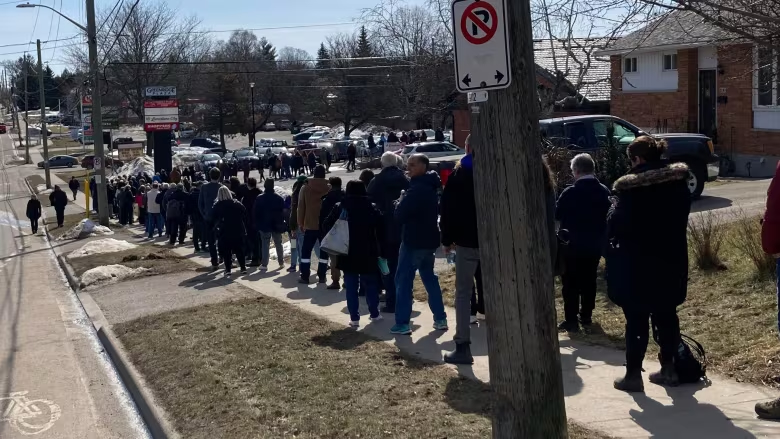
Picture of an outdoor vaccination clinic found elsewhere on the web

The Dispute with OHIP

So what happened? For the Covid vaccine clinics, there were two sets of billing codes assigned. The first was a standard hourly rate. This was meant for physicians who attend a vaccine clinic and perform immunizations there. There were numerous such clinics set up by hospitals/public health/pharmacies and so on. Those agencies paid for the setup costs of those clinics. The physician just showed up and vaccinated.

The second set of codes is used by physicians who give vaccinations in clinics they set up. These codes pay somewhat more, but they’re meant to compensate physicians for the fact that they have to cover all the overhead in those clinics.

Dr. Ma would have had to make sure that things like electricians were hired to ensure that there was power and Internet access outdoors. She may have needed to arrange for commercial grade outdoor tents. Propane heaters to heat the tents and the propane might have been needed. Some staff were paid (others volunteered). All of this organizational work, and figuring out payments, needed to be done in advance. She did it.

She therefore billed OHIP the second code. This is entirely reasonable given the circumstances and the work she did.

So what happened?

The sudden increase in billings did not go unnoticed by OHIP and was flagged. This is absolutely appropriate. As taxpayers, we need to be sure that there is a mechanism to catch outlying bills. The anomaly was sent for review by the various bureaucrats at OHIP. Also appropriate.

So what went wrong?

Basically everything after that. The OHIP bureaucrats reviewed the situation. As pointed out by Perry Brodkin (OHIPs former lawyer, who was quoted extensively in the Kingstonist) – the information was sent “up the hierarchy” and would have reached the deputy health minister and minister.

The bureaucrats and health minister decided she didn’t qualify for the codes. The reasons given (see the Kingstonist articles for more details) change at a whim. First it was that the clinic was outdoors not inside (you mean at a time when we are all social distancing – we should have crammed unrelated people into a clinic to immunize them??). Then it was that medical students were used (despite the strong endorsement of using medical students by the then Dean of Queen’s University Medical School, Dr. Jane Philpott). Then it was that she paid people to work there.

Dr. Jane Philpott – former Dean of Queen’s University Medical School – and a strong supporter of the vaccination clinics set up by Dr. Ma

Then things got ugly

And finally, after repeated questioning by the Kingsonist, things got really ugly when Hannah Jensen, the communications director for the Minister of Health issues a statement alleging that Dr. Ma “pocketed” the funds. This basically amounted to an allegation of theft by Dr. Ma and was widely viewed as a disgusting, immoral and reprehensible comment in the medical community. Even the Kingstonist was alarmed by this and called the statement “rife with allegations.”

Hannah Jensen, Communications Director for Minister of Health Sylvia Jones (photo from LinkedIn Profile page)

Why this offends doctors so much.

Let’s be clear about this. There is zero tolerance in the broader medical community for misappropriation of funds/intentional fraudulent OHIP billing. Zilch. Nada. But there is a recognition that the imperfect OHIP billing schedule needs to be interpreted with reason, especially when times are unreasonable (and what could possibly be a more unreasonable time than a once in a lifetime pandemic?).

Dr. Ma did all the work to meet the billing criteria (even the OHIP bureaucrats were forced to admit that yes, over 35,000 shots were given and yes she had planned and organized the whole thing). The fact that she did it outside and had medical students help when some 20 year old pre pandemic memos said not to is an unwarranted use of a technicality.

For many physicians, this brings back memories of when another set of bureaucrats persecuted physicians. They even told one paediatric respirologist that in order to bill a code, he had to perform rectal and pelvic exams on children!

What does this mean for Ontario Health care?

First, as Dr. Ma herself pointed out, it is now illegal for physicians to bill any procedures that they delegated to medical students. This means that medical teaching will effectively grind to a halt. Why would any doctor teach a medical student to say, suture a wound, when that doctor would now be financially penalized?

Second, this story has made the national press. It has also been reported in Canadian Journals that cater to physicians and other health care workers. The message to them is clear. Do NOT think of relocating/starting up a practice in Ontario. You will be treated grossly unfairly by the bureaucrats and health minister and there will be no reasonable interpretation of the rules.

What can be done?

According to Brodkin, Health Minister Sylvia Jones and Premier Doug Ford can direct OHIP to disregard the HSARB ruling. They need to do so immediately. However, because politicians only think of re-election, and not what is right, Dr. Ramsey Hijazi, the founder of the Ontario Union of Family Physicians wants to up the pressure on them.

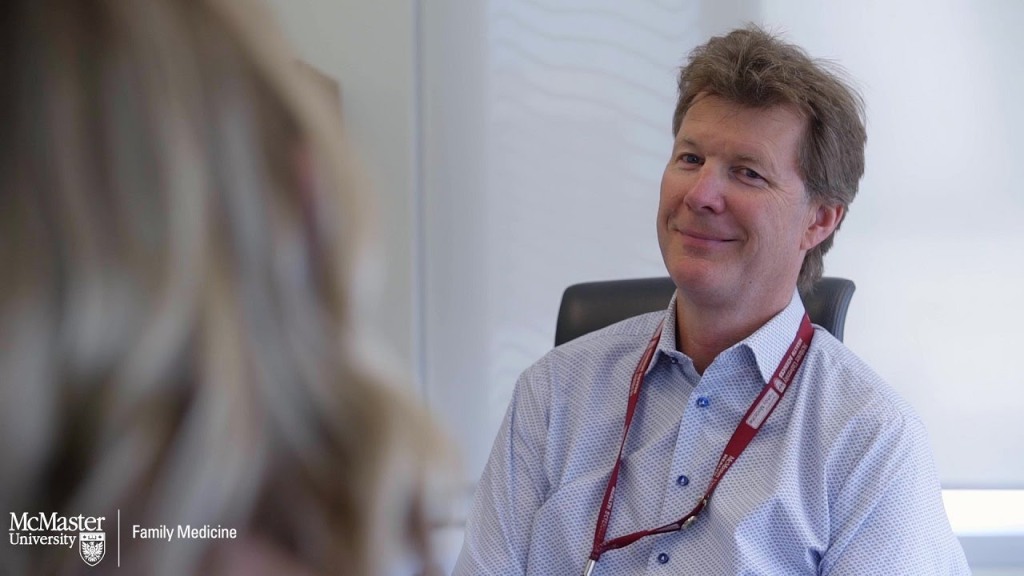
Dr. Ramsey Hijazi, founder of the Ontario Union of Family Physicians – pictured inset.

His group has set up a petition that clearly demands that justice be done in this case. It demands that the Minister and Premier disregard the HSARB ruling. We need to support our health care heroes not penalize them on technicalities in outdated bulletins.

I urge all of my followers to sign the petition. If this case is allowed to go on, trust me on this, there will be negative consequences for health care in Ontario, and we don’t need any more of those.

Click here to sign the petition.

Bureaucratic Stupidity in Covid Vaccine Clinic Case Will Have Far Reaching Consequences

I’ve repeatedly been told that I am too unkind and too harsh to Ministry of Health (MOH) bureaucrats. A senior staff member at the OMA once suggested I was “out of line” to a very sharp (but necessary) scolding I gave an MOH bureaucrat at a bilateral meeting we had. About a month later, that same senior staff person, when on a voice conference call with the same bureaucrat, got up and wrote “This is a waste of time” on a chalkboard at OMA headquarters. But I digress.

Yet every time I try to pull back, these same bureaucrats go and do something that is so incomprehensibly stupid that I once again wonder about the talent level and frankly intelligence of the bureaucracy as a whole at the MOH.

On this occasion, I’m referring to the Ontario Health Insurance Plan’s (OHIP) relentless persecution of Dr. Elaine Ma. The whole mess has been extensively reported and you can read all the details in the links, but I will summarize key points below:

October 25, 2024

Dr. Ma’s clinic in Kingston suddenly cancelled its October 26 drive thru flu/covid vaccine clinic. Over 600 patients had registered with more pending. The reason is that OHIP had notified her that she would not be paid to vaccinate patients at the clinic. Why? Because she was going to have medical students (who would be supervised) vaccinate. According to a 2001 bulletin OHIP pulled out, students are not employees and so she can’t delegate to them. (OHIPs story keeps changing and you’ll see that further down the blog). It also emerged that OHIP was attempting to recoup funds paid to her for running similar vaccine clinics in 2021.

October 30, 2024

It was now reported that OHIP was demanding Dr. Ma repay $600,000 that she billed to run outdoor vaccination clinics. She ran a number of mass Covid vaccinations clinics that gave over 35,000 shots. These were set up by her in response to the provinces call to “get shots in peoples arms“at the height of the Covid pandemic. Dr. Ma was widely lauded for her efforts at the time – and won the Ontario College of Family Physicians award of Excellence. Her area became the most vaccinated area of the province, something that should be celebrated.

OHIP now claims that she didn’t follow the rules for billing. Their excuse this time? That clinic was outdoors and not in a doctor’s office. (I told you OHIPs story would keep changing). Yes, you did read that right. In the middle of a pandemic caused by an airborne virus, OHIP wanted the vaccination clinics to be held in crowded indoor spaces!

November 1, 2024

Dr. Ma had rapidly gained the public support of the local medical officer of health (there was likely background support previously). She also had the support (previously background now public) of her MPP, the OMA and many others. She did not get the public support of Dr. Jane Philpott. Dr. Philpott, in her role as Dean of Queens Medical school was full of praise for the clinics. I suspect Dr. Philpott has 550,000 reasons to stay quiet publicly now. Hopefully she can influence behind the scenes.

OHIP now stated that the concern was that Dr. Ma used some of the funds to pay the staff who worked there. You read that right. They were worried because a physician billed OHIP (gasp!) then took the funds to pay overhead (double gasp!!). The horror!

Hannah Jensen, the Minister of Health’s Communications Director initially simply parroted the line that OHIP bureaucrats fed her about being ineligible to bill because of using medical students and it being outdoors. But she was rapidly exposed as being completely out of her depth when the Kingstonist questioned her about dates, which doctor, which clinics, how she arrived at figures and so on.

Additionally, her tone took a seriously ugly and aggressive turn. There was an accusation that Dr. Ma “pocketed the funds” which essentially is an accusation of theft. (No law enforcement is involved….yet).

November 7, 2024

The story hit the national news and it was reported that not only was OHIP asking Dr. Ma to pay back $600,000, but they were demanding $35K in interest as well (!). Who knew OHIP bureaucrats moonlighted as loan sharks??

November 8, 2024

Dr. Hijazi, leader of the Ontario Union of Family Physicians was interviewed by the CBC . He obviously was supportive of Dr. Ma demanded that the Ministry apologize to her. The Ministry issued an utterly and completely delusional statement to CBC radio stating that claims Ontario can’t get family physicians are “fictitious”. (Listen to the last 30 seconds at the link). 2.5 million people can’t get a family doctor in this province because doctors don’t want to work comprehensive care is “fictitious”????

Nothing much to see here. Just a fictitious clinic in Kingston, where fictitious people without a family doctor lined up hoping to get a doctor because a fictitious family doctor announced a new practice..

What consequences are there to this?

To0 many to mention, and they are all awful. Perry Brodkin, OHIPs former lawyer was quoted extensively in the articles about process. He pointed out that before attempting to recoup these funds, the bureaucrats would have run it up the chain to the deputy minister if not the health minister. There is therefore no doubt that this egregious action is one of the bureaucracy as a whole as opposed to one rogue bureaucrat. This cements the feeling that many physicians increasingly have had that bureaucrats as a whole are malicious (especially after the nonsense they claimed during arbitration).

It also badly threatens medical teaching. If the appeal that Dr. Ma filed is unsuccessful, then it essentially means that physicians would not get paid for teaching medical students. Which would effectively end teaching in Ontario. How exactly do you plan to replace the current supply of physicians as they age out, if no one will teach new ones?

With the story hitting the national news on CBC, it also will significantly impair attempts to recruit physicians from out of province. We are already losing younger doctors to provinces like BC and Manitoba where they see a co-operative relationship between government and physicians. Why would any of them come to a Province where you are called a hero one day, and then publicly embarrassed, harassed and vilified over a clearly outdated memo that needed to put aside during a once in a lifetime pandemic?

What SHOULD happen next (but probably won’t)

Unfortunately, Brodkin also points out that at this point there is nothing that will influence the appeal board. The process could have been stopped earlier before the hearing, but Sylvia Jones and her staff chose not to. But, if Dr. Ma wins, the government should immediately announce they will not appeal the decision to the courts. Additionally, Hannah Jensen needs to publicly apologize for her…..out of line…..comment on “pocketing” funds. And Sylvia Jones should also offer up an apology to Dr. Ma for the failure of her bureaucrats to recognize that rigid adherence to minutiae in a time of crisis is completely unacceptable.

Finally, what badly needs to be done is that the entire Ministry of Health bureaucracy needs to be given a very large enema to clear out the…….

We Know How to Save Family Medicine. Why Aren’t We Doing It?

I’m honoured to have Dr. Mark Linder guest blogging for me today. I first met Dr. Linder during our time advocating against Dr. Eric Hoskins unilateral cuts to health care. He’s exceptionally well spoken and articulate . He’s a former ER doctor and now full time family physician and clinic owner. His other claim to fame is that got fired from the Kaplan MCAT teaching course after one session – which apparently was a first.

I just wrote this in a flurry this morning. I see stupider and stupider proposals from the government and from newspaper editorials. I see our new grads learn from their teachers that they need to stay away from this job. I then see the  domino effect this has on recruitment, job satisfaction and reinforced by absurd government initiatives to save the system. I watch the OMA get pulled in every direction to try and please everyone. So apologies in advance -this is just my take really-and mostly to get it off my chest-not that it will lead anywhere. So thanks for reading.

The Family Health Organization (FHO) is what saves family medicine. It has done it before and it can do it again.

In 2006 something unprecedented happened. It hasn’t happened before or since. And perhaps we didn’t quite appreciate how unique it was. The provincial Liberal government, under Dalton McGuinty and Health Minister George Smitherman, introduced an upgraded payment model for Family Medicine. It built on the existing capitation based Family Health Network (FHN) model to enhance it.

What was so unique about this? It stands out as one of the only times a government has thought beyond their 4 year term to the ultimate health of their population as well as their economy down the road when they may no longer be in power.  Sure, it was going to make them look good if everyone got a family doctor out of it-but it was a big expensive risk, a risk based on an assumption that family medicine was critical to the system, AND that practitioners need to be paid fairly for their work if they wish to retain these doctors in the future. A different time to be sure!

It worked. Look at the stats from 2008 to 2018. Look at how many Family Doctors gladly embraced the new system. Look how the number of orphaned patients dropped. 

The system had flaws. I mean this was the second iteration of what was described as an experiment. The “outside use” enforcement rule made little sense in most cases. The calculation of capitation payments wasn’t always a fair representation of how much work it took to look after the patient in front of you. Certain “in the basket” fees were bizarre and should never have been part of the package.  Doctors were actually more incentivized to send people to the ER over a walk in clinic!!! But all in all, it was a great innovation, a great idea, and saved family medicine. It also, no doubt saved the province millions in treatment dollars and ER visits as family doctors made themselves available to look after patients.

And then, In 2015 Kathleen Wynne and Eric Hoskins, the health minister at the time, effectively shut down enrollment in FHOs And that was the beginning of the end. I presume they just wanted to control the immediate budget – paying for family medicine up front meant huge savings down the road. But it resulted in a pretty big chunk of budget going out the door NOW. And the Wynne liberals didn’t have a health care crisis, didn’t heed the warnings that we as physicians laid out pretty starkly at the time, and decided, nah, we’ll just “pause” the experiment.

Which they did. And the fall out was obvious. As a clinic owner and a family doctor, I had a front row seat.  The residents and new grads had all been trained in the new system, and now were unable to access it. If they wanted to work, they’d be taking a tremendous risk setting up a clinic in a Fee For Service environment using a Schedule of Benefits that had failed to keep up with inflation for 20 years. They were screwed.  The aging Family Doctor population continued to retire at a predictable rate, and the aging population continued to get more desperate to find doctors with increasing difficulty.

By the time the FHO’s opened up again in 2021, it barely mattered–The reputation of family medicine among new grads had been thrashed for 6 years. 
With the new rules, new grads would have to gather 6 like-minded individuals (instead of just 3 like in the old days), or find a bigger FHO that was already established and could fit them in. Not so easy. Opening up your own shop had become increasingly more expensive with post pandemic inflation, so the debt would be crippling just to get started if you wanted your own clinic. And these are graduates who already had a huge amount of debt coming out of school.

Couple this with the insane increase in administrative burden as we become more and more efficient at having hospitals and labs forward us copies of paperwork. In theory, amazing, in practice hugely burdensome, time consuming and unpaid. Arguably, if the FHO rates had increased at the level of inflation, there’d be no complaints about this additional work. But the FHO rates had more or less remained static relative to the cost of doing business. Still better than FFS, still paid a lot less than the actual market value of doing the job as proven by the lack of uptake that continues today.

The thing is: The FHO is still the answer. It absolutely needs some significant tweaks. The rates need to go up. The outside use concept needs to go. Minimum size and shared EMR requirement needs to be softened so that smaller groups can join together in nearby geographic areas. Some sort of separate funding will be essential to help clinic owners to keep up with inflation.  But it still achieves by far the best mix of physician autonomy, clinic management, and long term government savings. And it’s evidence-based! We have a recent history we can look back on to demonstrate efficacy!

Other solutions, such as having lesser-trained individuals diagnosing and managing patients give the appearance of short term gains at a huge future cost as more referrals to specialists are made and more referrals to the ER are made. Another concept of having government run all clinics is clearly so expensive as to be dead at the gates-Doctors currently pay for rent, administration and their own retirements out of their incomes. It’s not great for us, but it’s a heck of a lot cheaper for the taxpayer to do it that way, and simply pay the doctors more.

I recognize that my FFS colleagues are not helped at all by an enhancement and advocacy for the FHO approach. And I’m sorry. I obviously think there’s a lot of work that could be done to improve FFS rules and individual payments. No doubt.


But we actually have the evidence that the FHO saved family medicine when it was introduced. It was stunningly effective, and if nursed back to health, will absolutely work again.

Never Ending Arbitration a Sign Government Does NOT Want to Work with Doctors

News Item #1: Prince Edward Island agrees to a contract with its doctors. Amongst other things, the deal recognizes that family medicine is a specialty (finally!) and increases compensation to reflect that. It also introduces strong measures to reduce red tape and administrative burdens, and adds what appear to be retention bonuses. PEI joins British Columbia, Manitoba, Saskatchewan and even Alberta (!) in working co-operatively with their doctors.

Dr. Krista Cassell of Medical Society of PEI with Health and Wellness Minister Mark McLane and Health PEI CEO Melanie Fraser

News Item #2: Ontario Medical Association (OMA) Board chair Cathy Faulds announced last week that the Kaplan Board of Arbitration will not deliver a ruling on the fractious contract dispute between Ontario’s doctors and the Ministry of Health (MOH)at the end of August as expected. It is delayed until at least the end of September, if not longer.

Now you, dear reader, are probably wondering why I refer to a one month delay as “never-ending”. Firstly, because I’m not convinced it’s only one month. I don’t recall the Arbitrator ever giving us a timeline for when he was going to give a decision when I was on the OMA Board. Timelines for meetings and hearings, sure – but for the decision, no.

But more importantly, even if there is a ruling in September, it’s nothing but a mere step in a protracted, convoluted process that, at the end of the day, does nothing more than show that the government would rather not engage the OMA in providing solutions for our health care crisis. To understand why, one needs to first appreciate the prolonged nature of the current arbitration process, and just how tortuous it is. (I will do my best).

First, the current arbitration process is ONLY for one PART of the first year of what is supposed to be a four year contract. It will cover April 1, 2024 to March 31, 2025. BUT, it will only cover a percentage increase for that one year. It will not set specific fees for different specialties. Instead, there was general agreement (last I heard) that 70% of the increase would go towards fee increases and the other 30% would go towards targeted areas of high need.

Sounds simple enough to sort out right? If the deal is worth, say $2 billion (this number is totally made up and Mr. Kaplan, if you are reading, this number is much less than the increase should be), then $1.4 billion would go towards fee increases, and $600 million would be targeted towards areas of need.

The problem is that the fee increases are to be distributed along what’s know as a “relativity model”. Essentially lower paid specialists are to be given a bigger raise than higher paid ones. Unfortunately, the OMA and MOH can’t agree on how those raises are to be distributed amongst the various specialties. Worse, they can’t agree on how to distribute the 30% that was earmarked for “targeted funds”.

Which means…..you guessed it, ANOTHER round of arbitration with yet another set of decisions to be ruled upon by the arbitrator. This additional protracted process won’t begin until the arbitrators first ruling and further negotiations and mediations. The information on the OMA website suggests arbitration for those issues won’t happen until March 3, 2025.

But wait, didn’t I say that this was only for the first year of the four year contract? Why yes, yes I did. Which means that after this, we now start arbitration AGAIN for years 2-4 for the doctors contract. And yet again, not only do decisions needed to be made on the percentage increase, but on how that increase is divided up. Which means…….potentially many more rounds of arbitration.

I would concede the OMA websites suggests all of the year 2-4 arbitration, and left over issues from year one can be done at the same time (March 3-7, 2025). However, I will refrain from betting the mortgage on that actually coming to fruition. We are one early election from this timeline being thrown into chaos. The cynic in me thinks that by the time arbitration is all done for this supposed four year cycle, it will be time to start negotiating (and yes more arbitration!) for the next four year cycle.

The government will most likely abide by the initial arbitration award (it’s doubtful they would reject an award prior to an election call). Ontario Health Minister Galen Weston Sylvia Jones will frame this as part of the process for coming to an agreement. She will (probably) claim that by abiding by the award the government is “working with” physicians to benefit the health care needs of the province.

She will be wrong.

I’ve mentioned this before, arbitration is preferable to the days when governments could unilaterally cut physicians income at the whim of the health minister. However, that doesn’t change the fact that arbitration should be viewed as a necessary evil, with emphasis on the evil. Not only can it demoralize people who are going through it, the spill over effects have wide reaching consequences.

What does this mean for the general public? The OMA has come up with some solutions for the various crises our health care system is facing (2.5 million without a family doctors, worsening health care catastrophe in Northern Ontario, overwhelming bureaucratic burden etc). The reality is that many of the solutions require changes that need to be made in a contract with Ontario’s doctors. But we don’t have one, so none of these will be implemented.

Instead of working co-operatively with the OMA to come up with solutions in a fair contract, the current government seemingly prefers to leave it all to the arbitrator. And as a result, patients will continue to suffer.

The government of Ontario has a choice. Follow the lead of BC, Manitoba, PEI and so on and work with the doctors to help patients. Or set up a perpetual conflict with them.

Over to you Minister.

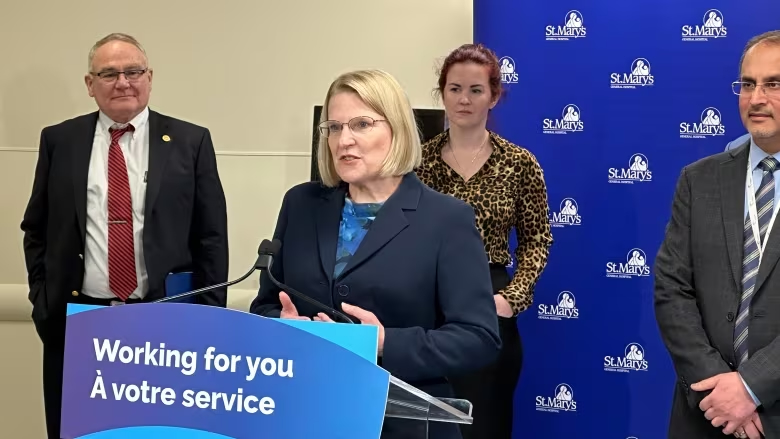
Ontario Health Minister Sylvia Jones, who can start to fix things tomorrow, if she wants.

Reflections on Leaving Family Practice

My thanks to Dr. Ramsey Hijazi, founder of the OUFP, and one of the strongest advocates for improving family medicine that I know, for guest blogging for me today. Unfortunately, the government didn’t listen to Dr. Hijazi, and as a result he left family practice earlier this year. In this blog he reflects on how his life has changed since.

It was a busy Saturday morning at my daughter’s dance competition in April 2024. The family had all got up at 5am to get ready for the day. The morning was hectic getting the kids and dog dressed and fed, making sure we didn’t forget supplies for the day, packing snacks and then rushing across the city to Hull for the competition.

My wife helped bring my daughter and her sister backstage to get dressed and prepare for practice. I watched my 2 year old son run tirelessly down the hall of the venue screaming in pleasure. I watched with a sense of calm and patience that I hadn’t felt in a very long time. More than I can remember I felt….present. The previous day I had left my family practice to pursue a position as a hospitalist. In less than 24 hours (and to my own disbelief) I noticed a distinct difference in my frame of mind.

Leaving family practice was not an easy decision. It is a rewarding and challenging career where you can make a positive difference in the lives of your patients. You get to know your patients better than anyone else in the medical system as you care for them from birth to old age. Their journeys in the medical system can remain with you forever. I became a family doctor because I loved family medicine and I am grateful for having had the opportunity to practice and take care of my patients. It is also part of the reason I started the Ontario Union of Family Physicians in July 2023 to help advocate for changes to improve the working conditions of family doctors. I had hoped to continue this work.

However, over the last several years the landscape of family practice has deteriorated significantly. The administrative or paperwork burden in family medicine has ballooned to almost 20 hrs/week. It is a constant barrage of work that is being downloaded or dumped on to family doctors from specialists, insurance companies and pharmacies. There’s also the extraordinary duplication of lengthy and sometimes irrelevant hospital reports that come in daily for review.

In essence, you supervise every single step all of your patients take in the medical system whether you have seen them recently or not. You ensure that tests and follow ups are completed and that nothing falls through the cracks. If my patients did not have me overseeing their journey in the system, countless tests and follow ups would get missed and never take place.

Like it or not, family physicians have been unofficially assigned the responsibility to make sure things actually get done when no one else will. It is mentally exhausting. There were days I would come home from work feeling so overstimulated I could do nothing more than sit on the couch and keep silently to myself for the rest of the night (although young kids make that a difficult reality to realize).

In an age where patients can simply email their family doctor you are never unplugged from your job. Despite trying to convince myself that I wouldn’t think or worry about work on vacation, I couldn’t help but have intrusive thoughts that occupied my mind. I would drift away from the present moment I was trying to enjoy. Often I would use the first and last days of my vacation as a desperate attempt to try and be caught up.

On weekends when not much was happening, such as watching TV with the kids or supervising them in the backyard I also couldn’t help but have the same intrusive thoughts of thinking my time could be better spent trying to catch up on the paperwork that was piling in. I very much resented having these thoughts.

Now add this to the stress of running a family practice. Business expenses have steadily increased with a dramatic spike in the last 3-4 years without any real increase in OHIP revenue. Running a business can be a stressful, but worthwhile endeavour. Unfortunately, this couldn’t be further from the reality of running a family practice. Revenue from OHIP continues to pay less year over year relative to inflation and expenses.

The OMA has kept track of OHIP rates relative to inflation to show current rates are only 37% of what OHIP used to pay physicians to run their practice. For the newer family doctors entering practice the future stability of the profession is truly grim. They enter practice with huge loads of debt and an almost guarantee they will take home less and less money every year despite the workload contrarily increasing year over year. With no pension, benefits, paid sick time or vacation to top it off, the reality for recent grads is that without significant changes to help the profession, it is no longer a viable career option.

Many family doctors work side jobs to help financially subsidize their practice. Granted, the entire medical system is plagued with poor working conditions, underfunding and increasing burdens of work, however, the situation is particularly magnified in family medicine. But you don’t need to take my word for it, just look around to see what is going on in your community and in our province. Despite the OMA showing statistics that we have more doctors trained in family medicine per capita than ever before, we are in one of the worst shortages ever.

Family doctors simply don’t want to do family medicine any more.

Changing my career path to work in the hospital as a hospitalist was a big risk and required a leap of faith (I hadn’t worked in a hospital since I finished residency). But unfortunately, in family medicine I had become increasingly unhappy professionally and personally. As it turns out, becoming a hospitalist was the best decision I could have ever made. Working in hospital means I am responsible only for the patients on my ward and not 1500 patients in the medical system. I must round on and see each patient to review their medical problems, perform examinations and order any tests or investigations. I follow up with family when needed and appropriate for medical updates. At the end of the day unless I am on call, I walk through the door to go home and my work is done until I arrive again the next morning. There is no appointment schedule to rigidly follow and I can take as much or as little time that is needed for each patient. If something unexpected occurs, I can deal with it and get back to my work without the worry or stress of being behind schedule and having irritated patients. It is also challenging and extremely rewarding.

No longer do I have all the stresses of running a business or see up to 40% of my OHIP billings go towards business expenses. No longer do I need to reconcile rushing several patients in and out of the clinic for appointments to stay on schedule and maintain a reasonable availability while also trying to give the appropriate time to address their concerns. No longer do I leave work at the end of the day, eat dinner with the family and go back to the computer to tackle the never ending pile of paperwork. No longer do I need to worry and stress while on vacation about all the work that is piling up in my absence. No longer do I have the intrusive thoughts of working on paperwork while watching the kids ride their bikes or to watch my son run down that venue hall aimlessly in pleasure.

I am more present and at peace. I am a better person, husband and parent because of my decision to leave family practice and that is perhaps the saddest and scariest thing about this entire journey.

Dear Minister Jones – Fire Your Negotiations Team.

Dear Minister Jones,

Just me again, a certain crotchety and increasingly cantankerous geezer offering you advice in an open letter that you are not likely to take. But you would be better off if you did. More importantly, so would the people of Ontario.

Ontario Health Minister Sylvia Jones

First, I would once again suggest that you have done some good work in the health ministry. Moving surgical procedures to outpatient clinics, increasing the number of diagnostic testing facilities, starting a new medical school focused on training family doctors and more are all good moves. While the effects of some of those decisions will not be felt for many years – the reality is that somebody had to do this to help health care down the road and you’ve done that.

Unfortunately however, the past couple of weeks have been catastrophic for your Ministry’s relationship with Ontario’s doctors. It’s funny how one dumb decision or comment can completely wreck a relationship, but that’s exactly what happened when your Negotiations Team stated that there was “no concern” about a diminished supply of doctors. Therefore, they refused to negotiate money for retention of physicians or admin work, like other provinces have (cough BC, cough Manitoba, cough EVEN Alberta!)

In essence, your Negotiations Team has been a disaster, first by militantly dragging out negotiations into a very adversarial arbitration process (when all the other provinces above figured out a way to, you know, respectfully negotiate with doctors) – and then by making a statement about the supply of doctors that is so comically stupid and out of touch that Ontario has become a laughing stock.

Three members of the Ministry’s Negotiations Team pictured above.

This will not bode well for health care in this province.

Look, I know there may be a temptation to say “Ok this was a mistake” and to try and walk back the comments.. While it’s abundantly true that the people of Ontario are a good and kind people who will forgive politicians if they own up to their mistakes (cough greenbelt, cough enhanced police powers and closing playgrounds during covid) – one thing that politicians can’t survive, is being made a laughing stock. Except Donald Trump of course. I still haven’t figured that one out and I don’t think I ever will. (N.B. Donald Trump is not someone you should try to emulate).

Anyway, the reality is that at this point you really only have one path left to turn this thing around. You have to fire your negotiations team. All of them. I’m not just talking about the seven who were appointed to lead that team, I’m talking about the multiple bureaucrats who give them supporting data and have influenced their position.

The only rational explanation I can think of for those bureaucrats promoting a position of “no concern” about physician supply, and saying doctors are not working hard enough, is that they hate doctors. Many of them were likely hired at a time when it was fashionable to bash doctors for billing “too much”. (BTW how did that attitude work out for the people of Ontario?) They’ve clearly carried on with that belief in the arbitration proposals.

I get that in arbitration, there will be some posturing. If your Negotiations Team had said “we’ll pay you $50 a month as a retention bonus” or “admin work doesn’t involve seeing patients, so we’ll pay you $20 an hour” – I honestly would have shrugged my shoulders, recognized it was part of the arbitration “game” and said nothing.

But to say retention and recruitment of physicians is not a major concern, when people line up for hours on end just for the faint chance of getting a family doctor?? That thought process can only be due to a pathologic hatred of physicians, or a delusional mindset totally divorced from reality. Either is a cause for termination. Can the whole team now.

A long line forms outside CDK Family Medicine and Walk-In Clinic in Kingston, Ont.. It was the first day of ‘rostering’ at the clinic, where four doctors will take as many as 4,000 new patients. (Jamie Corbett) – from CBC News

But what of negotiations with the OMA you may ask?

Actually, that’s not hard either. Your ministry has an appointee to the Arbitration Board, just like the OMA does. I believe your appointee is one Kevin Smith. The job of the appointee is to tell you and your team what the lead arbitrator, William Kaplan is thinking and how he is leaning. How they do that is beyond me. When I met Kaplan it was like talking to a Vulcan. There was absolutely no emotion or hint of what he was thinking – but apparently Kevin Smith is better than I am at figuring this out.

One of the above is William Kaplan, Arbitrator, and even after meeting him I’m not sure which is which.

What your appointee will tell you, and what the OMA appointee to the Board will tell the OMA is – Kaplan is wondering “this” or thinking “that” or leaning towards “X percent”. Find out what that X per cent is, offer it to the Doctors for the first year of the new Physicians Services Agreement (PSA). That solves things for one year, which gives you time to pick a brand new negotiations team for year 2-4 for the PSA.

Note to my three loyal readers, yes, this arbitration is ONLY for the percentage increase of the first year of the four year agreement. Worse, while the OMA and Ministry have generally agreed to a 70/30 split of whatever the amount is with 70% allotted to raises, and 30% to be given to targeted programs, they haven’t been able to agree on how the 30% is to be targeted. This means…..more arbitration for that piece. Then, it begins again next year for years 2-4 of the PSA. In essence, we appear to be locked in a perpetual, never ending antagonistic arbitration process (which is still better than unilateral government actions but really frustrating nonetheless).

As I told Premier Ford recently- if health care doesn’t get fixed – I don’t care what the polls say now, or how many by-elections you seem to have won, this is going to be a real problem in 2026. With health care in the crisis it is in now, you need all hands working together and co-operatively. Locking Ontario’s doctors into two more years of extremely adversarial arbitration shows that we are not co-operating and not working together. This is why graduates are leaving the province. And we can’t afford that.

It’s time for you to do the right thing for Ontario, and cut bait with your current negotiations team.

Yours sincerely,

An Old Country Doctor.

Dr. Soni Writes to her MP About the Recent Tax Law Changes

My thanks to guest blogger Dr. Deepa Soni, an Emergency Room Physician at Credit Valley Hospital. She has written a much more eloquent letter to her MP about the recent tax changes introduced by the federal government, and allowed me to reproduce here as an open letter.

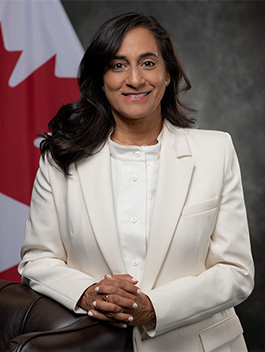
The Honourable Anita Anand,

MP, Oakville,

301 Robinson Street

Oakville, ON

L6J 1G7

 
April 20, 2024

Dear Minister Anand,

I’m writing to you as a constituent of your riding in Oakville regarding your government’s capital gains taxation measures introduced in this week’s budget.

As an emergency physician for the last 25 years, I and thousands of my colleagues in Ontario, were saving in our medical corporation to be able to fund benefits that many Canadians have available through their jobs: maternity leave, disability, and medical/dental benefits. In addition, and most importantly, incorporation allows us to save for our retirement as we do not have pensions (again, a benefit many Canadians, including government employees and civil servants have as part of their employment). Incorporation was a negotiated benefit that was given by the provincial government in lieu of increasing our fees, with the understanding that the structure would allow us to mitigate some of these factors about our career.

When planning for retirement under one set of assumptions, and then finding out that the federal government has moved the goal posts to extract revenue for its budget shortfall, you can understand why so many physicians are bewildered and disappointed by the Liberal government. This would be the equivalent of someone changing the terms of your pension or taking large chunks of it away. For many doctors, this will have profound impacts on their ability to retire when they thought they would.

 
In addition, as a daughter of first-generation immigrant parents, both of whom were physicians, I am certain you had a front row seat watching your parents work hard to obtain their medical degree, residency, and then establishing a practice. This is not to say that other Canadians don’t work hard: the one thing that makes doctors unique is that our fees are set by provincial governments and our fees have not risen to keep up with inflation. Unlike other incorporated professionals such as accountants, dentists, and skilled trades, physicians cannot increase their fees to make up for rising costs. We are locked into the fee schedule determined by provincial governments (who are always employing cost containing measures to balance budgets). The federal government is turning a blind eye to this important point as it does not fall under federal jurisdiction. Nevertheless, the impact cannot be ignored.

 
As a corporate lawyer prior to being elected an MP, I’m sure you would not have wanted your hard work and education to be characterized with the words ‘tax cheat‘ if you had been using a legal way to save for retirement. This is the narrative being circulated in the media and it is deeply disappointing. It is noteworthy that MPs receive an annual pay raise (this year ranging $8000-11900), along with pension and benefits. This makes an MP salary one of the highest earners in Canada, with guaranteed income through retirement.

Yet, it is doctors who are singled out as being in the wealthiest 1% and rhetoric implying that we are not doing our part for less fortunate Canadians. We pay into personal taxes and contribute to the economy like everyone else. As small businesses, doctors support the economy through employing staff (nurses, allied health, receptionists etc.), paying rent, and financially supporting many Canadian companies providing support services to our practices (electronic medical records, medical office supplies etc.).

We are also entrusted with caring for the population of Canada in the most sacred way. This taxation measure comes at a time when the medical profession in Canada is suffering unprecedented levels of burnout. Millions of Canadians cannot access a family doctor because they have closed their practises and left (in large part, due to rising costs and fixed fee schedules). Why in an era when attracting medical graduates to do family medicine is a priority, would your government eliminate one of the few advantages that help new grads set up comprehensive practices so they can care for Canadians from cradle to grave? Does your government understand the downstream effect this capital gains taxation will have on patients for decades to come? 

From watching media interviews recently, it appears that the federal government’s solution to this is “we will just allow in more foreign doctors“. This is deeply hurtful on many levels: it devalues currently practising physicians who have put in their life’s work to bring excellent care to this country’s patients. In addition, it takes many years for a doctor to acclimatize to the healthcare system in Canada. What happens to patients in the meantime? The solution is not to “throw the baby out with the bathwater”. The solution is to step back and really take in the impact of these actions and the message that has been conveyed to the physicians of this country. I hope your government will rethink this and choose to act fairly regarding incorporation for medical professionals. 

Sincerely

Deepa Soni MD CCFP(EM)

About Asking for Reduced Admin Burden From the MOH….

Lots of talk on the net about how the economic model for family physicians no longer works in 2024. My own blog site has had guest posts dedicated to this issue. There has been some criticism of this position. Dr. Darren Larsen in a reply to the post linked above suggests he is “not seeing or hearing…ideas for solutions“. He further states that all paying doctors more will do is create a “better-paid, unhappy professional. Nothing has changed.”

Others have made the similar comments. There is nothing philosophically wrong with the argument to reduce workload instead of raising pay. Practically speaking however, history has repeatedly taught us that the Ministry of Health (MOH) bureaucracy is incapable of delivering on that promise.

Some personal stories:

In the mid 2010s I was a Peer Lead for OntarioMD (no really!). I was frustrated by the Ontario Lab Information System (OLIS) because I had to manually retrieve all the lab work for a patient individually in their chart. Hospital Report Manager (HRM) by comparison, sends reports on all my patients directly to one inbox. (why we need two systems – and now more, is another story). The then VP of OntarioMD informed me they were working on “Practitioner Query” – which would allow me to get all my lab work from OLIS in one inbox. This was supposed to be ready in six months. That was over a decade ago.

From 2014-2018, thanks to the vision of my colleague Dr. James Lane, we developed an integrated health portal as part of our Health Links project for South Georgian Bay. For $35K a year, we were able to ensure that nursing homes could message physicians on their EMR. We dramatically reduced paperwork for physicians from nursing homes, improved health care outcomes, and reduced hospitalizations thus saving the entire health system money.

The MOH bureaucracy couldn’t wrap its head around this and wouldn’t allow it to continue.

For those of you who think I should have told people about this project, I wrote an article in the Toronto Sun about it. Afterwards, I got invited to do a presentation on this with the then CEO of eHealth Ontario and her senior team. Heck, when I was a keynote speaker at OntarioMDs Every Step conference in 2019 (no really!) I presented this project. The then head of the MOH Digital Health Team was there and heard it. Still, the bureaucracy couldn’t see their way towards allowing a project that saved physician time (and improved health care outcomes) could continue.

Ok, ok, so this blog is just for me to complain about not being listened to right? Well no, there are multiple other examples.

One workload issue for family physicians is keeping track of which of our patients get immunized for which vaccines. If only there was a central tracking system that sent the information to us directly. Wait, there is! The Covax system for tracking Covid vaccinations. Obviously the easiest and most sensible thing to do is expand the already existing system to add all the other vaccines so we get notified (eg when public health gives Gardasil). Yet 3 years after Covax, the MOH can’t even make this simple common sense change.

More? When I was on the SGFP Executive, one of our senior physicians told us the story of how he was on a working group to make the schedule of benefits (the fee schedule for Ontarios doctors) easier. After six months of meetings, they made a decision to add a comma to the descriptive sentence of one code. One comma in an 800 page schedule.

I could go on but you get the point. It’s fine for the MOH to say that that they promise to reduce the Admin burden for family docs. But frankly to these aged and cynical ears, it just sounds like them saying “This time we really mean it, honest!” – kinda like when Lucy promised to hold the football down for Charlie Brown for real this time, with predictable results.

Look, we have a five alarm crisis in family medicine in Ontario. Just about every week brings a story of another physician who is struggling with the economics of running a practice, and is considering quitting.

As with all emergencies, we need to have an effective triage system in place. Deal with the most urgent thing first, then go on to other things. We clearly can’t wait until 2034 for the MOH to implement some of the workload reducing schemes they might have (and no matter how much they promise they really mean it – it will take that long). So the first thing that needs to be done is bring financial stability to family practices so that they can continue to function while we sort out everything else.

Now, given Ontario physicians are in the midst of negotiating a new contract with the Ontario government, I expect the MOH team to say to our own negotiations team something like – “I know you guys want X% increase, but we can only give you 1/2 of that, but we promise to reduce your admin burden so you are working less hard”. I would do the same if I was them.

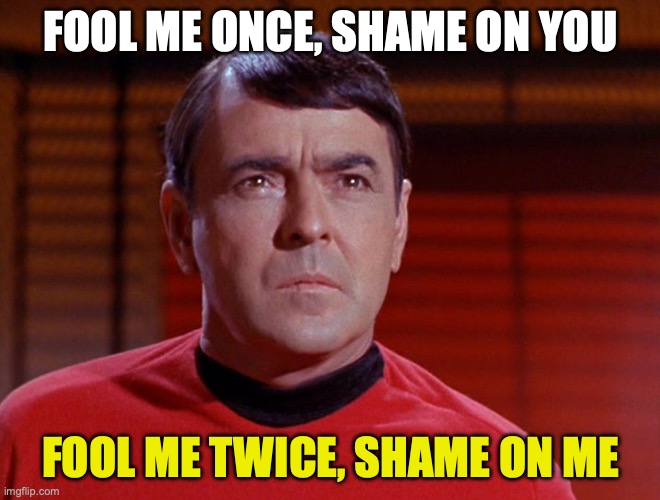
But, my expectation, and the expectation I think of the majority of doctors in Ontario, would be that the OMA negotiations team looks at the MOH team, and quotes the best engineer in the history of Starfleet to them.

With apologies to Geordi Laforge, B’elana Torres, Trip Tucker, Jett Reno, Andy Billups, and Hemmer – but Scotty was the BEST ENGINEER in the history of Star Trek!

The first step towards fixing the crisis in family medicine is a new physicians service agreement that stabilizes family practices. Once that’s done, work can begin anew on health systems transformation/workload reduction and so on. To try to do it the other way round, or even hand in hand, is a recipe for further collapse of the health care system.

Dr. Alex Duong: The Challenges Facing an Early-Mid Career Family Physician

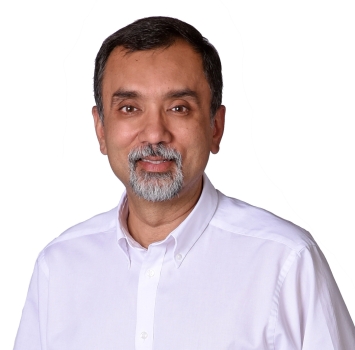
Dr. Alex Duong, a family physician from the Vanier district of Ottawa (which amazingly enough is one of the more underserviced areas of Ontario).

Recently, Maria DiDanieli, the clinical lead for system navigation at the Burlington Family Health Team, published an opinion piece in Healthy Debate that was critical of the decision of Drs. Alam/Mathew and yours truly to recommend that family practice residents bide their time instead of starting up a comprehensive care practice in Ontario. Dr. Duong replies and has kindly allowed me to reproduce his reply here.

I am a full-time community family physician, and I read this article with great disappointment.


I am at the face of our health care system. When patients cannot get a timely breast biopsy or a knee replacement, they come to ask me. I address their frustrations, alleviate their pain, and manage expectations.


I am the backstop when issues are missed during transitions in care and issues that require follow up.


I am the navigator that helps patients, and their families orient themselves to housing resources, mental health and financial resources.


I am the advocate for my patient’s health when they deal with their employer or insurance companies.


I do all these things and more, alongside everything from newborn care to palliative medicine.


I, like the great majority of family physicians, take pride in our work, and in what we contribute to our patients and the community at large. But Banks do not grant loans for a new clinic based on my contributions to Ontario’s healthcare system. My rent payments do not decrease because of the positive impact I make on my patients’ lives. The salaries of our exceptional staff are not funded by the sound of clanging pots and pans.


Today, to outfit a new clinic with the minimum number of physicians for a FHO requires high 6 figures to 1 million dollars, loaned at 6.95% interest. We guarantee our own lease – we are on the hook for ensuring it gets paid for the entire term. We are responsible for hiring and ensuring our staff are paid a living wage. We invest our own time in making sure the clinic runs. For many community family physicians like me, there is no assistance for any of this from any level of government. No money for staff, no incentives for starting up, no support for logistics. We are in a precarious, failing business model with ever growing administrative burdens patching the system equal to a part-time job. We have been trying to expound on this, and frankly have been completely unsuccessful in this.


You realize that “… there does not seem to be much political will to improve this situation at this time.” Yet, you ask family physicians to work harder expecting a different result from the government.


You state that “With these current barriers and shifts, any new practice can feel fragile or vulnerable to imminent obsolescence.” Yet, you expect new graduates to take on a massive financial risk: long term lease, EMR contracts, and double their already tremendous debt in start-up costs.


You lament that “Instead of acting as beacons of wisdom, encouragement and level-headed advice, we see a growing shift toward inciting everyone to walk out!”. Do you apply this standard to the teachers in Quebec who recently concluded a strike? Are they less dedicated to their students? Do you apply this standard to all groups who organize to make their voices heard?


The authors, Drs. Alam, Gandhi and Mathew made it clear that there are many options available to new family doctors. They warn of the current state of specifically locking into comprehensive family medicine, to ensure that new grads do not put themselves in a position where they will be burnt out early in their career. To me, leadership requires honest conversations, not empty promises, or exploiting the ideals of new family doctors. I find it unethical to sell a romantic vision of what it is like to start and maintain a Family Medicine practice in the current environment. It is a recipe for moral injury when those ideals run flat into the economic realities, as I have experienced.

And frankly, to say to those of us, like myself, still practicing longitudinal family medicine we should be working harder, or we are just doing family practice wrong is demoralizing. It is grossly offensive to my early-mid career family medicine colleagues who have burnt out through great moral struggle and guilt. Disillusioned family physicians who leave longitudinal family practice will not return. The greater harm to the public and to patients is not the Star article that speaks truth to the issue, but the issue itself: that family physicians, whose concerns are being gaslit, continue to leave longitudinal practices.

Another Open Letter to the OMA Board: Re-visit the Negotiations Mandate

Dear OMA Board Member,

Just me again. The grumpy, aged quack with a history of being a bit of a thistle in your obliques. Well intentioned I assure you (although I’m told some may not see it that way).

Negotiations with the provincial government on a Physicians Services Agreement (PSA) continue and mediation began on February 20th. That’s all great and part of the process. However, things HAVE CHANGED a lot since the last time I wrote to you and urged you to set a strong mandate.

I am asking you to revisit the negotiations mandate at this time, in light of three new key pieces of information that are very relevant to Ontario doctors.

To recap – the negotiations mandate is the bare minimum ask that the Negotiations Task Force (NTF) can accept on behalf of the Board. If the government makes an offer that meets or exceeds that – well, then they accept it on behalf of the Board and the Board is compelled to endorse it. The mandate is, quite correctly, confidential (you can’t let the other side know your bare minimum ask any more than they would let you know their mandate). But it’s up to the Board to determine if the mandate is enough (not the NTF).

Now to be clear, I’m not saying you should revise it, just revisit it. Perhaps the mandate is already sufficiently strong. That would be great. But things are different now.

The first reason to revisit the mandate:

Other provinces have surpassed Ontario physicians in terms of income. BC and Saskatchewan have significant deals to stabilize the physician work force. Manitoba’s deal with physicians appears to be the best of the bunch. Manitoba has not only a well deserved increase for all physicians, but significant steps towards gender pay equity.

As an aside, while I applaud the fact that DoctorsManitoba made steps towards gender pay equity, I’m forced to wonder what happened to Ontario? When I was on the OMA Board we were proud of the fact that although it was too late, we were the first PTMA to report on the issues around gender pay equity. We proved that the pay gap was not because “women work less hard”. What happened ?

Also, to be clear I want to acknowledge that the negotiations counsel (Messrs Goldblatt and Barrett) are very well aware of any topic that could affect negotiations. I remember Darren Cargill, who at the time was on our NTF, told me “they read everything.”

Therefore, I know they read the Manitoba Schedule of Benefits which is available online and reported back to you. I’m sure you are fully aware of the retention bonuses in that deal. I’m sure you know about the significant changes that decrease the gender pay gap. I’m sure you know about the fact that Manitoba pays physicians for Admin time. And that their capitation model has no negation (although a lower base rate). And that they have an age premium. A pelvic exam premium (gender equity again). And that they allow extra payments for dealing with more than one problem at a visit. I have absolutely no doubt that our negotiations counsel has fully and thoroughly advised you of this, along with the benefits of the deals in BC and Saskatchewan.

The second reason to revisit the mandate:

The crisis in family medicine is spiralling out of control, faster than I thought possible. Not only is it badly affecting patient care, but the health, well being and morale of physicians is sinking like a stone. Last September, I never dreamed that I, along with Drs. Alam and Mathew, would write a letter to Family Practice residents telling them to stay away from comprehensive family medicine in Ontario. I never dreamed that there would be story after story after story of individual family physicians openly talking about how they were burning out. This situation has gone form bad to desperate frighteningly quickly.

The third reason to revisit the mandate:

Bill 124, the piece of legislation that limited increases to the public sector, was used to promote a low ball PSA to us the last time. You even, admittedly and embarrassingly, convinced a guy who should have known better. It’s ruled unconstitutional and the government will not appeal this. In fact they will repeal the Bill entirely. In light of that, many other public sector workers will be asking for catch up pay.

So it really is time for you to re-visit the negotiations mandate. Just double check to make sure it’s as strong as it should be given the above factors. Make sure it takes into account that the the BC deal has attracted over 700 physicians to comprehensive family practice. Make sure it recognizes that Manitoba will likely be showing a net growth in physicians shortly, and can reasonably attract physicians from out of their province. If you have to revise the mandate upwards after looking at it, then do so.

NB – IF the NTF were to push back if you do revise the mandate upwards, then make sure you hold your ground. Remember, YOU are the Board and YOU give direction to ALL committees and task forces, including the NTF. I’ll be careful how I say this so as not to divulge Board confidentiality, but the NTF in my day did have a proposal on one particular issue (not the whole PSA) that they told us to approve and our Board pushed back and said no. We had to listen to some (quite eloquent) speeches about how hard they worked and this undermined their work and so on and so forth – but after that they went back and kept negotiating as directed. Don’t do any less this time.

These negotiations are likely to make or break the profession for decades to come. They are that important. You owe it to your members to take another look at the mandate.

Yours truly,

An Old Country Doctor.