
From Aloof Oligarchy to Professional Partner: Ten Motions for CFPC Reform

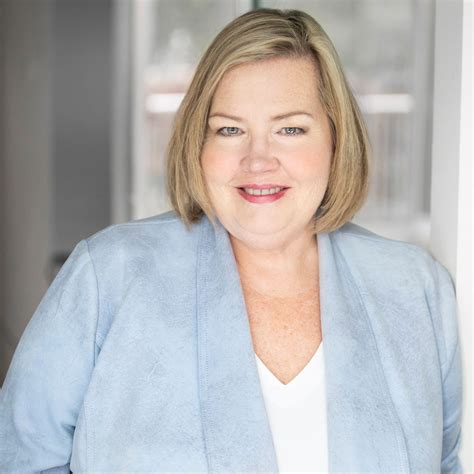
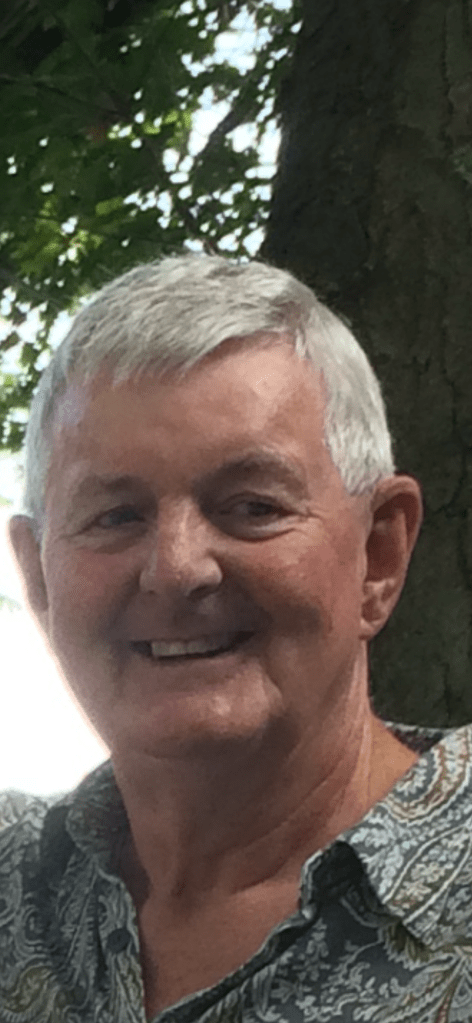
My thanks to Dr. Greg Dubord (pictured inset) for offering to co-authour this blog with me (and doing most of the work). His resume is too long to list but briefly Dr. Dubord is the founder of CBT Canada (www.cbt.ca) and a leading advocate of medical CBT. He completed his training under CBT’s Founder Dr. Aaron T. Beck and was the first Canadian Fellow of the Beck Institute. He has provided medical CBT workshops at many Family Medicine Forums.

In 1911, sociologist Robert Michels observed that most democratic organizations drift toward oligarchy. Given enough time, leaders insulate themselves from member accountability, prioritizing institutional preservation over their founding mandate—thereby betraying the founders’ intent. This is mission inversion: institutions founded to serve a profession end up prioritizing institutional interests over member needs. Michels called this the “Iron Law of Oligarchy,” predicting it would afflict even the most well-intentioned groups.

The iron law helps in understanding the behaviour of the College of Family Physicians of Canada (CFPC). When PGY-3 proposals drew overwhelming opposition at the annual meeting of members (AMM), when member motions achieving 94.78% support were later treated as non-binding, when members face detailed behavioral codes while the bylaws contain no published reciprocal standards, when automatic fee increases are proposed while “only 25% felt annual fees were worth the expense,” and when basic records requests under statutory rights receive no response addressing the request—these aren’t random frustrations. They’re textbook iron law symptoms of an organization completing its evolution from member-serving to self-serving. These observations reflect structural patterns common to many long-standing organizations and are not personal criticism of current leadership.

Which brings us to ten specific reforms. We are submitting ten governance motions for the November 2026 CFPC AMM. Each addresses structural gaps enabling oligarchic drift:

1. Board and committee minute transparency: CFPC bylaw is silent on minute access beyond requiring an annual report. This motion requires board and committee minutes be posted within 30 days of approval, with redactions only for privileged matters requiring board vote and logged publicly. This directly implements Motion 9a from the 2023 AGM, which passed with 95% support but appears unimplemented after two years.

2. Member portal for governance documents: Transparency requires accessibility. This motion creates a searchable digital portal for board minutes, committee records, policies with version history, redlined comparisons showing changes, and board voting records on contested matters. Modern technology makes this standard practice—if CFPC can build CFPCLearn, they can build member transparency.

3. Corporate records access policy: Section 21 of the Canada Not-for-profit Corporations Act (CNCA) grants members statutory rights to corporate records, but CFPC has no public policy operationalizing these rights. This motion establishes response timelines (acknowledgment within two business days, substantive response within 10 days), fee structures capped at reasonable copying costs and appeal mechanisms for denials.

4. Leadership code of conduct: CFPC leadership adopted a detailed member code of conduct in 2025 governing member behaviour toward staff. However, the bylaws contain zero reciprocal standards governing how leadership and staff interact with members. This motion creates a reciprocal leadership code requiring good faith, respect, courtesy, procedural fairness, and timeliness. 

5. Member satisfaction survey transparency: CFPC’s January 2022 member satisfaction survey (as reporting in Canadian Family Physician) showed 25% satisfaction ratings. This survey is no longer publicly available on the CFPC website (but is archived at the National Library of Medicine at this link). No member surveys have been published since. This motion requires annual member satisfaction surveys with published methodology, response rates and complete results, ensuring members can assess whether their mandatory fees produce acceptable value.

6. Policy change documentation and impact analysis: Major policy changes significantly affecting member time burdens or costs currently proceed without documented consultation, needs assessment or alternatives analysis. This motion requires red-lined comparisons showing exactly what’s changing, impact analysis quantifying time and cost implications, documentation of alternatives considered and 90-day member consultation periods before implementation.

7. Member complaint tracking system: Members who raise governance concerns have no way to track whether complaints were received, reviewed or resolved. This motion establishes a tracking system (with anonymized quarterly summaries published) ensuring acknowledgment, investigation timelines, outcome notification and appeal rights. Transparency prevents complaints from disappearing into administrative black holes.

8. Electronic voting for annual meetings: The current annual meeting voting system restricts participation to those who can either attend in person or can navigate proxy procedures. The CFPC’s Lumi platform has supported secure, real-time electronic voting for member meetings for many years—yet CFPC has not consistently activated this functionality for member motions. This motion requires the permanent activation of electronic voting with real-time results display, expanding democratic participation using existing technology. 

9. Member motion submission reform: CNCA Section 163 grants members statutory rights to submit motions 90-150 days before AGMs, but CFPC’s practice has stretched this to 140+ days—effectively disenfranchising members who observe problems after the extended deadline. This motion reduces the submission window to 60 days prior and creates emergency procedures for urgent matters arising after the cutoff, ensuring responsive member democracy.

10. Independent ombudsman with enforcement authority: The nine preceding motions mean nothing without enforcement. This motion establishes an ombudsman structurally independent from CFPC management, with authority to receive confidential complaints, investigate with full document access, issue binding recommendations, and report publicly on systemic patterns. Real accountability requires independent oversight—not self-policing by the same leadership structure these motions address.

These motions aren’t attacks—they’re the structural reforms many organizations need after 70 years of the iron law doing its mischief. A transparent, accountable CFPC could become the powerful advocate physicians need—championing educational excellence, defending professional autonomy, and ensuring Canadian families have access to well-supported, continuously learning family doctors. Details will follow here in the new year, and CFPC members will decide at the November 2026 AGM whether their college serves them—or itself.

Dear Specialist, You’re Awesome, but PLEASE STOP Calling Me A Provider

To my specialist colleagues,

In over 30 years of family practice, when I have been uncertain about a diagnosis you’ve been there. When I needed some advice on best treatments, you’ve been there. You’ve helped me and my patients, and you deserve many many thanks for that.

As with all things, there have been some ups and downs over the years (we really need to talk about the “go see your family doctor to have your staples/sutures removed” thing). Perhaps it’s because I work at a fairly small hospital with generally collegial colleagues, but I genuinely have positive feelings about our relationships and interactions.

There is, however, one thing that is starting to creep in to the vernacular that needs to be addressed before it goes too far. I’ve noticed it increasingly in reports from specialists. It seems to be particularly endemic in notes from the Emergency Medicine specialists and younger specialists.

It is the unfortunate tendency to use the highly offensive and derogatory term “provider” when referring to the family physicians. As in “the patient should follow up with their primary care provider.”

A couple of months ago, I attended the biennial menopause society update (yes, the same one where I discovered family physicians were giving up). At one of the small breakout groups, I happened to sit with a couple of my specialist colleagues. We were talking about how to handle various clinical scenarios, when I noticed both of them using this abhorrent term.

My personal observation (and I suspect I’ll get in trouble for saying this, but I’m going to say it anyway), was that the two of them looked like they weren’t even born when I entered medical school. It’s a credit to them just how involved they were in their hospital and community and patient advocacy at such a young age. As I understand it, they had been told that “primary care provider” was the appropriate new terminology to use.

I don’t really fault them. They were not aware of the negative connotations involved in that term or how objectionable it was. In fact, I credit both of them with being very open to change when I spoke to them about this.

What exactly is the problem you may be wondering? What’s the big deal about using the term provider?

Because language matters. Words matter. Definitions matter. Just as it is highly reprehensible and dehumanizing to use the word “client” when referring to a patient, it’s pretty offensive to use the term “provider” when referring to a family physician.

The term “physician” has meaning. It denotes a person who is entrusted to help you heal. It signifies a sacred bond between the healer and the sick that dates back to Hippocrates. It infers respect and dignity. It attributes professionalism, honour, and morality. It automatically speaks of the implicit trust that patients have.

The term provider, in health care, is egregious and appalling. To quote an excellent article by Jonathan Scarff:

“The word provider does not originate in the health care arena but from the world of commerce and contains no reference to professionalism or therapeutic relationships.”

He goes on to state:

“This terminology suggests that the clinician-patient relationship is a commercial transaction based on a market concept where patients are consumers to be serviced”

I could not agree with him more.

One of the things that the bureaucrats who run health care have long resented is the respect that physicians have from patients. Despite all of the attacks against physicians on social media, and even from official government types like RFK Jr in the States, physicians consistently continue to be shown to be among the most respected professionals out there (yes we are behind nurses). We receive these high rankings based on the proven belief that we are honest and adhere to ethical behaviours and high standards.

I firmly believe this is why bureaucrats have tried to bring in new terminology to describe physicians. They know that if we speak out against their brilliant ideas to “fix” health care, physicians will inherently get more trust than bureaucrats. I’ve seen the resentment of physicians first hand at a bunch of bilateral meetings between the OMA and the Ministry of Health. Trust me, it’s there, both implicitly and in some cases, very explicitly.

So the bureaucrats, under the guise of “inclusivity” or “patient centredness” or some such thing, are now introducing the term “provider” to diminish the significance of our roles. Their goal is to curtail our value in the eyes of the public, so when we call out their (many) mistakes, there will not be implicit trust in what we say. Think about it, which sentence below has more impact:

“Ontario’s providers speak out against government’s health proposal “

or

“Ontario’s physicians speak out against government’s health proposal”

Get the point? I beseech my specialist colleagues to not fall into this trap. Being a physician (as you know) is a sacred responsibility that all of us take seriously. We routinely make life altering suggestions to patients, and have a strong bond with them. Our role in their lives is not a commercial transaction. We do not treat patients as consumers who need to be managed. As the Section of General and Family Practice points out:

This term (provider) devalues the training, expertise, and vital role we play as physicians in the healthcare system. Family physicians are not providers; they are physicians.

So I ask you my specialist colleagues, the next time you write an Emergency Department note, or a consult note, be mindful of what you write. Recognize and respect the value of the person you are sending it to. Ignore the bureaucrats self serving machinations when they try to change the terminology.

Tell the patient to follow up with their FAMILY PHYSICIAN. (Except for the staple/suture removal – you can do that yourself).

Yours truly,

An Old Country Doctor

CFPC Fails to Learn its Lesson, Makes the Same Mistake Again

Here we go again. You know, after all the body blows the College of Family Physicians of Canada (CFPC) has taken over the years, you’d think they’d learn the most basic of lessons. A membership driven organization should not cheese off its members. Do that and bad things will happen. Yet somehow, they never seem to learn this basic principle.

First, you don’t insult your members, you support them. So when someone (anyone) writes an article that criticizes all your members, don’t publish it. Otherwise, you are basically telling people that you know better than them, and that they should do as you tell them. I actually had warned them when they allowed a miserable, hateful missive to be published that they should pull it and apologize to all their members or family physicians would lose confidence in the CFPC. Alas…….

Second, if you are truly concerned that trainees are not getting an adequate experience, you should first focus on improving the current training program instead of automatically extending it by one year. Do residents really need to go for all these “clinical day backs”, “forum days”, “research days” and “retreats”. Shouldn’t they be laying hands on a patient instead? Should they not be taught real life skills like how to run the business side of things? And so on.

And if you really, really believe that the training period needs to be extended, then communicate properly why it’s not possible to improve the program based the current times. Show every thing you’ve done to fix it. Then clearly explain how an extra year would help – don’t just force it down everyone’s throat.

Thirdly, if you need to raise dues, don’t just ram it down the members throats in a ridiculously convoluted manner. Otherwise people will smell a rat and will fight against it. Instead, clearly communicate why it’s necessary and how the membership will benefit from the increase. The fees we pay should be viewed as a value proposition. Yes we paid $X, but in return we get Y services. Prove Y services are worth it.

Alas, despite promising a “humbler and more transparent organization” just two years ago, the CFPC is at it again. They are once again attempting to get around the membership by baking in annual fee increases that do NOT require member approval.

Buried deep in the meeting package for the CFPC annual meeting, is a motion to amend section 10.5 of the bylaws (copied verbatim):

THAT section 10.5 of the CFPC Bylaws be amended as follows: The Members shall pay the annual College membership fees applicable to their class of membership, as determined annually by a majority vote of the Board. If the Board intends to increase the existing membership fees for any class or category of membership by an amount that exceeds the annual Canada Consumer Price Index (as published by Statistics Canada for July of each year), and rounded up to the nearest dollar, such proposed increase must be ratified by an Ordinary Resolution of the Members at the Annual Meeting before it becomes effective. Any increase to the annual membership fees becomes effective on July 1 of the ensuing calendar year. Such membership fees shall subsequently be ratified by a simple majority of the membership eligible to vote at the Annual Meeting. Membership fees shall be directed towards the cost of College programs and activities, as determined by the Board.

In essence, what the CFPC is asking, is to set in place a process where dues go up annually up to the CPI, without any rationale provided to the members. They are guaranteeing themselves annual increases in revenue. To quote a colleague: “It’s really an unprecedented consolidation of power, and removes member centredness from a member centric organization”.

Look, I actually get the need to raise fees (honest!). Contrary to what Ladouceur wrote in his offensive editorial, I actually run my office as a business. I know inflation has taken its toll. My expenses are up. Despite my best efforts at efficiencies, my overhead is higher than it was 5 years ago. I suspect this is the same for the CFPC.

But the solution is not to give the CFPC carte blanche to keep increasing dues. The CFPC needs to show real leadership and say to the members:

“This is what we’ve done with the money. This is the value we bring. These are the efficiencies we’ve implemented. But despite that, this is the increase we need to bring you the organization you deserve.”

And next year, it needs to do the same thing. And the year after. And so on. And that’s how you build an organization worthy of the trust of your members.

In the meantime, if you want to make your voice heard and vote against this nonsense, here’s how to stop it (shamelessly mostly copied from a colleague who gave me permission to do so):

  1. Live, at the Annual Meeting of Members (AMM). Wed Oct 29 from 7-8:30 PM. Details on how to join this were emailed to you by CFPC.
  2. If you cannot attend the AMM, assign a proxy by going here: https://reg.lumiengage.com/cfpc-2025. You will need your unique control number. See the email called “The CFPC’s AMM participation details“.

The bylaw in question is called “Bylaw Amendment Regarding Membership Fees”. Vote “Reject“.

By assigning a proxy, that person you assign does not know your vote, and must submit your ballot as is, so they can’t change your vote. You can assign your proxy to one of the CFPC leadership, or a specific individual with a backup option of CFPC leadership, or a specific individual alone. The danger of the last option is that if that person does not or cannot attend the AMM, your vote does not count. I personally would recommend you assign the CFPC President (who is pretty well guaranteed to attend the meeting) as your proxy.

Let’s stop the CFPC from getting out of hand on this issue. Then we can work on trying to figure out how come the organization never seems to learn its lessons.

Expanded Scope of Practice Will Ultimately Hurt Patients

On October 1, the CBC published an article on how a program to expand the scope of practice of pharmacists in New Brunswick completely fell apart and was cancelled. There’s a litany of reasons why the project died. But the ones that stood out for me were (italicized quotes are lifted from the CBC article):

  • the project promoted a “a convenient new option” as opposed to to focusing on quality health care first
  • the project’s hypothesis – “..every patient getting care at a pharmacy would take pressure off the public system — remained unproven..”
  • there is a lot of focus on the fact that pharmacists need to be able to order bloodwork
  • There is significant mention of the role of Perry Martin, a paid lobbyist for Shoppers Drug Mart pushing for this change. There’s also this line – “the pilot pharmacists were being deluged with patients prescribed point-of-care tests by Maple, the private company operating the eVisit virtual care service.” Curiously, even though Maple referred patients to Shoppers Drug Mart pharmacies, there’s no mention of the fact that Shoppers Drug Mart invested $75 million into Maple. One would think that if company “A” invests in company “B”, and then company “B” sends business to company “A”, and company “A”makes money from the government for that business (though public health insurance), that should get a mention.
  • The provinces physicians feared duplication of tests and fragmenting of care
  • There was significant push back to the statement that letting pharmacists treating minor illnesses led to a 9.2% drop in Emergency room visits in Nova Scotia – “Health officials checked, however, and concluded the drop was because of a combination of several initiatives.
  • Unsurprisingly, the government noted “an Ontario report that surveyed pharmacists who complained of corporate pressure to hit quotas and revenue targets
  • Most importantly to my eyes: “Nicole Poirier, the director of primary care, pointed out the report contained “no conclusive findings” that it reduced pressure on the public system, and did not show better health outcomes for patients.

I bring this up because in Ontario, we continue to fail to heed these warning signs. On Sep 17, the Ontario government announced plans to consider expanding the scope of practice of many allied health care professionals (AHCP).

It’s not just this report from New Brunswick that should raise concerns. There has been a growing body of evidence over the years about how the idea of offloading “minor” illnesses to non-physicians doesn’t achieve the benefits intended.

For example a three year study of expanding Nurse Practitioner (NP) autonomy in US Veteran’s Health Administration hospitals found that:

  • There was a 7% increase in immediate costs to patient care, and an overall 15% in costs for caring for patients when one included downstream costs. This was attributed to NPs taking longer to evaluate patients and ordering more tests.
  • Sub optimal triage of patients was also noted leading to things like under‐admission when needed (leading to worse outcomes and later, costlier interventions) or over‐referral/overuse
  • Patients under NP care had worse decision‐making about hospital admissions and increased return ED visits (which cost more)

It’s not just studies that are opposed to scope expansion that have expressed concerns. In Australia, a generally favourable report to having AHCPs work to their full scope of practice, still mentioned the significant need for training, regulation, and funding to support safe expansion. The training part is important because contrary to what’s being put out, many AHCPs are not trained to recognize a potentially serious issue from a minor one. (You don’t know what you don’t know). The same report also mentioned significant concerns about more fragmented care, waste and higher long term health system costs.

Another generally supportive of scope expansion of NPs study purports to show that NP delivered primary care for patients with multiple chronic conditions show similar outcomes to care delivered by family doctors. BUT, a deep dive into the study showed that the models studied often included physician-NP teams, or limited scope expansions. They did not always include fully independent NPs. Training, team collaboration, and oversight often remained intact.

With respect to AHCPs expanding their scope of practice in general, a number of concerns need to reviewed.

First is antibiotic stewardship. This is a big problem as overprescription of antibiotics is increasingly resulting in more and more virulent and drug resistant strains of bacteria. As I’ve pointed out beforeCANADIAN provinces which allow pharmacists to provide antibiotic prescriptions- have a higher per capita rate of antibiotic prescriptions than others. That’s just reality.

Secondly the reality is that AHCPs will over order diagnostic testing, particularly if they “are not sure” about the diagnosis. We saw that with the Veterans Hospital study above. We will see that if, as suggested, AHCPs will be able to order more and more tests.

Thirdly, there is going to be an increase fragmentation of care. Whether one looks at Japan, Norway, Great Britain, or really any other country, it’s been repeatedly shown than having a consistent family doctor will result in better health care outcomes and reduced costs to the health care systems. Central to this is the family physicians ability to provide a medical home where all of the patients information can be consolidated at one spot, and their ability to help patients understand and navigate health care.

In Ontario our system is so disjointed and disorganized that it is not possible for all of the testing/prescribing done by allied health care providers to get to the family physicians easily. This very quickly will lead to fragmentation of care and will eventually come back to hurt patients. To their credit, both OMA Past President Dr. Domink Nowak and current President, Dr. Zainab Abdurrahman have repeatedly pointed this out.

Finally one thing that has not been discussed is the liability concerns. I don’t see any of the people talking about expanding scope of practice acknowledging that there will be increases in the cost of liability insurance. We’ve already seen in the US that NPs have had increased lawsuits against them. I’m positive that this will happen to other allied health care professionals if these changes go through.

It’s fair to note that much literature also finds benefits (e.g. improved access, equivalent outcomes in many primary care settings, especially for chronic disease management), and some cost savings under certain models. The risk is that decision-makers may generalize from settings where allied expansion worked well under supportive conditions to settings where such supports are weaker. Which appears to be where we are heading in Ontario.

All of which means we should expect a newspaper report in about 2029 showing that expansion of scope of AHCPs has not shown the expected results. Say, isn’t that about the time of the next Provincial Election?

It Appears Family Doctors are Giving Up…

Recently, I attended the Menopause Society’s Biennial National Scientific Conference. I’ve long felt that medicine as a whole has done a poor job on women’s health issues, and wanted to learn more about what I can do to better help my patients. The conference itself was packed (over 600 attendees). Half of them were family doctors like myself. As with all medical conferences, not only did I get the chance to learn some valuable information to benefit my patients, I got a chance to network with colleagues from across the country.

Sadly however, a rather large number of family doctors I met were in a similar state of mind. They were tired, burnt out, and were actively exploring ways to stop practicing family medicine. In short, they were all giving up.

A dear friend of mine is taking 6 months off her practice to re-evaluate her work (despite having helped countless numbers of people over the years). Another physician has found happiness working part time at a specialty clinic and occasionally doing locums (vacation relief work). Another is actively looking to find someone to take over his practice. Another is simply going to close her practice after two years of trying to find someone to take over. Another…….ah, you get the point.

About one -third of the family doctors I spoke to were all at some stage of quitting family medicine. Given that Canada has 6 million people without a family doctor – which is already a disaster- it’s safe to say our health care system won’t survive if this happens.

About the only part of the country where family doctors seemed to want to carry on was Manitoba. They cited a new contract that fairly compensated them for their work, and a reasonably positive working relationship with the government. I guess that’s why Manitoba set a new record for recruiting physicians last year. Paying people fairly and working with them co-operatively will attract new talent? Who knew?

(As an aside, Manitoba is also the only province I am aware of that has a specific billing code for counselling women on issues related to peri-menopause and menopause).

But I digress. The question becomes why are so many family doctors planning on giving up? I would suggest it’s a host of issues. There is an increasing level of burnout in the profession. It’s primarily driven by by the administrative workload which has gotten out of hand. For example, I recently went on vacation to Manitoulin Island, and while waiting for the ferry, I couldn’t help but pull out my laptop and check my lab work and messages. I knew that if I didn’t check my labs every day, the workload on my first day back would be crushing.

Me in my car, waiting to get on the Chi-Cheemon ferry to Manitoulin Island, checking my labs and messages on my Electronic Medical Record (dummy chart on screen)

There’s also the constant delays in getting patients tests and referrals to specialists. The most common message I get from my patients is something along the lines of “I haven’t heard from the specialist/diagnostic test people yet, do you know when it’s going to be?”

And of course there is the ever present “But my naturopath told me you could order my serum rhubarb levels for free” and “I did a search online and it told me I need a full body MRI”.

The worst part of it of course, is that the family doctor becomes the brunt of the frustration and anger that patients express when the health care system doesn’t live up to their expectations. I had to tell three patients (while I was on vacation) that, no, I couldn’t do anything to speed up the specialist appointment. Four more were told that I had in fact called the pharmacy with their prescriptions – and I had the fax logs/email logs to prove it. And so on…

So what can be done?

In the absence of anything else of course, the first thing is to pay family doctors more. Recently, the Ontario Medical Association (OMA) and the Ministry of Health (MoH) have rolled out the “FHO+” model of paying physicians. There is a slight bump in pay (about 4% for the next fiscal year over this year). There is also an acknowledgement that administrative work needs to get paid and some other tweaks. It’s perhaps a start, but in the current system, a 4% raise will not stop the haemorrhaging of family physicians.

What really needs to happen is for Ontario to forcibly, quickly and rapidly move to a modernized, province wide electronic medical records system. I’ve been talking about this for years and years and even presented on this to eHealth Ontario (in 2018!). But I have not been able to explain it as well as my colleague Dr. Iris Gorfinkel did in her recent Toronto Star Op-ed. (It’s a really good read and I encourage you all to read it). To shamelessly quote her:

“A fully integrated, province‑wide, patient‑accessible electronic health record system should no longer be viewed as a luxury, but an essential part of the solution to Ontario’s existing crisis…… It would free family doctors to do the work only we can do.”

Secondly, we need to rapidly move towards team based care with family physicians as the lead of the team. While the MoH is announcing teams proudly in the hopes of connecting patients with doctors, the rollout seems kind of uneven. They amount to a call for proposals as opposed to a specific evidence based structure of how these teams should run. There’s also no specific role guarantees for family physicians in these teams (beyond saying they are important). The process seems slipshod at best.

Finally, at the end of the day we must not shame or diminish those family physicians who have given up. Many of them have spent years, if not decades fighting for better care for their patients. The fact that the unrelenting bureaucracy of our cumbersome health care system finally got to them and made them give up should be cause to shame the people in charge of health care, not the individual physicians.

Let’s hope that message gets across.

Never Ending Arbitration Seems to Be Our Fate

On September 18, 2026, Arbitrator William Kaplan handed down an award for Ontario physicians in their ongoing and seemingly never ending negotiations process. I imagine rather a lot will be written about this. There are already lots of comments on social media, and many rushes to analysis, sacrificing accuracy for expediency. This is sadly true for any hot button news topic these days. I’m going to take my time to review the ruling in detail and probably have some more thoughts on it later. I would prefer to be accurate, not quick.

Photo of Arbitrator William Kaplan, owner of Kaplan Arbitration
Arbitrator William Kaplan

One thing I will say is that physicians are going to be locked into a perpetual negotiations/arbitration process for the next few years. In a previous blog I had commented that all outstanding arbitration issues would be resolved with this ruling. I based that on comments made by the OMA, and by the arbitrator himself. Being a victim of Murphy’s Law on many occasions, I did go on to say that:

“Of course now that I write this there probably will be yet another process announced after this which will mean more negotiation and arbitration”

Unfortunately, it appears that last part is indeed the case. All this ruling really does is set a (too low) dollar value ruling for how much of an increase (general and targeted) physicians are entitled to for the fiscal years April 1, 2025-March 31, 2028. It doesn’t deal with rather a whole lot of implementation issues.

For example, what exactly is going to be the dollar value of each fee code as of April 1, 2026?. The Ontario Medical Association (OMA) has long stated that current fee codes/billing are temporary and the new permanent values for codes will be implemented this coming April 1. The award defers that to the ongoing Physician Payment Committee (PPC) process that is supposed to have fee codes ready by then.

Additionally, the Award mentions the targeted funds for things like Hospital On Call (HOCC)/Unbundling Surgical Codes/Alternate Payment Plans and more – > but not the specifics of how those funds are going to be distributed or billed. Even the OMA’s own “agreed issues document” doesn’t really offer an agreement. For HOCC for example, it states:

“The parties shall conclude negotiations on the revised burden-based HOCC system bilaterally….If agreement cannot be reached by January 1, 2026, either party may refer the matter to mediation/arbitration ….”

Ok – what about things like the constant delay in physicians getting paid for work they do, supposedly due to the inefficient and ancient OHIP computers. The Award doesn’t set out a specifically penalty. It simply directs the OMA/MOH to make it a priority to fix this issue and if they can’t :

“This Board will remain seized in the event that the parties cannot reach agreement, with either, party having the right to return to this Board after January 1, 2026”

Yup, more negotiations and arbitration if the OMA asks for penalties for delayed payments. I hope there’s a good legal reason the OMA didn’t ask for specific penalties in their Arbitration briefs, otherwise it was dumb of them not to. The MOH asked for penalties in the new FHO+ model for family doctors, and that was awarded.

There’s also the fact that this award has funds that should have been already paid to us on April 1 of this year. The award does provide some guidance in terms of saying the increases should be paid retroactively on a lump sum basis, but once again – if the parties can’t agree to the relativity splits for that money – it goes back to……..more Arbitration.

Essentially the award says physicians as a whole are to get 7.3 percent in general increases and 2.2% in targeted increases. The MOH and OMA are to figure out how to split that (mostly through the PPC) – and then go back to the Arbitrator if they can’t agree.

Now the PPC itself is, you guessed it, a bilateral committee of the OMA and the Ontario Government. In fairness to them, they have been working quite hard all this time from what I can tell. They may be further along than we think. But I’m guessing that the government members will have a different overall agenda than the OMA. All it takes is for the government to put their foot down on one issue and the whole thing goes back to Arbitration.

The lawyers are gonna get really really rich……

I will once again state that this Arbitration process is still preferable to having unilateral actions imposed upon physicians by governments. Those of us who lived through the Eric Hoskins/Bob Bell years realize just how much worse things would be with the government acting unilaterally.

BUT – never also forget that this protracted process is also because the current government doesn’t really have the capacity to understand the complexity of the health care system (and the complexity of how physicians get paid). Rather than have a bold vision for transforming health care, and making it clear how they will invest funds to promote that vision, they have opted to simply drag out the contractual process. If the MOH had come to the table in a constructive spirit, all the implementation could be rapidly done. The MOH’s absolute insistence on doing everything in the most drawn out way, regardless of the worsening health care crisis, is where they are really failing the people of Ontario.

Politically, of course, it makes some sense. Instead of negotiating a fair contract right from the start and then getting up and defending that from the usual critics, the government instead has chosen to simply let the Arbitrator make all their decisions . Then the government case say “we did what the Arbitrator told us” and shrug their shoulders if things go bad.

I’m acutely aware that to a certain extent the process benefits the OMA as an organization as well. Look at the new FHO+ model for paying family physicians. Because a couple of elements of the program couldn’t be negotiated – that issue went to Arbitration. Because it’s gone there, family doctors don’t get a chance to actually vote on the model like they would if there was a negotiated tentative agreement. So the OMA can kind of impose a model of payment they feel is acceptable on family physicians, rather than promote it in a free and fair vote.

The unfortunate thing is that I actually do think the FHO+ is a small step forward (not as big as the OMA is making it out to be) and likely would have passed if given to members to vote on. I would have voted for it myself despite my criticism of some aspects of it.

So what does this all mean for physicians? It means that for the next three years (at least) we should all get used to living in an era of constant ongoing negotiations and constant Arbitration, with continual delays in payments because of an intransigent government.

Sigh…

Ten Lessons They Don’t Teach in Medical School (but should)

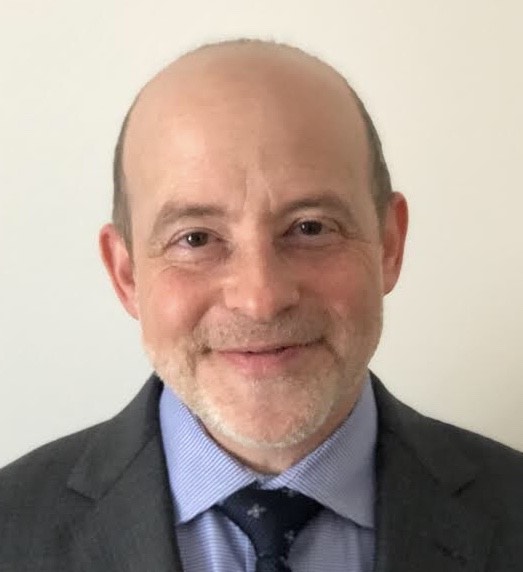
Dr. Ken Milne (pictured inset), an Emergency Room physician for almost twenty years and an associate professor of medicine at the Schulich School of Medicine and Dentistry (among many other things). He wrote an excellent X post recently, based on an interview with Dr. Ross Prager. He has graciously allowed me to republish here as a guest blog. I think the advice he gives is outstanding, and is a must read for all medical students (and frankly some of us older docs too).

For all the new medical students starting this fall there are 10 lessons they don’t teach in medical school (but should):

One – Patients don’t care how much you know, but how you make them feel.

Two – You’re remembered by your worst moments. When stress hits, your true self emerges…that is what people remember. Grace under pressure matters more than glory during routine.

Three – Stop trying to impress people with knowledge.

Four – Being keen is not a crime. Passion is a virtue, not a vice. Don’t hide your enthusiasm…it’s a sign you care.

Five – Medical School and Residency are long job interviews.

Six – Absence of evidence ≠ evidence of absence. Not everything is backed by RCTs (randomized control trials). That doesn’t mean it’s invalid. Clinical observation and physiologic rationale matter. As always, be skeptical of the lack of evidence, too.

Seven – Character is how you treat people who don’t supervise you.

Eight – Focus on diagnosis first, treatment second. Most medical harm arises from misdiagnosis, not mismanagement. Think ten times harder about “what’s going on” before “what should we do?”

Nine – Don’t postpone living until after residency.

Ten – Remember the spark. Recall your first patient: the awe, the uncertainty, the honour. When burnout creeps in, revisit that moment. Reconnect with your “why.” Medicine is not just about answers, it’s about presence. Our best tool is our humanity.

Educating the mind without educating the heart is no education at all. Aristotle quote

So, to all the new medical students…get ready for a great adventure. There will be times of joy and sorrow. If you are struggling at some point, remember, it is ok not to be ok. Reach out to friends, families, mentors or counsellors. Your attending physicians may look like they have it all together, but we have all struggled at some point & needed help. You can read my story here. This is another good episode for students and residents to listen to.

Old Country Doctor’s thoughts: On a personal note I want to welcome all of the new entrants to medical school this year. You will have experience incredible joys during your medical journey, and you will have your share of sorrow. To experience those sorrows is not a failure, it is life. But always remember, by being accepted to medical school, you have already proven you’ve go what it takes to succeed and to help others. You yourself may need help sometimes (we all do) but you’ve got this.

“Medicine cures disease, but only doctors can cure patients” – Carl Jung.

Patient Accountability ESSENTIAL for Health Care Systems

Canadians want a high functioning health care system. This requires (but is not limited to):

  • appropriate funding
  • a seamless electronic medical record
  • strong support for Family Doctors (the back bone of a high functioning health care system)
  • a “Goldilocks” level of oversight to ensure the needs of Canada’s diverse areas are met
  • and much more

But one essential feature that is not talked about nearly enough is patient accountability.

Doctors diagnose and treat patients. More of us (thankfully) are also discussing proactive measures to prevent people from getting sick (appropriate screening, lifestyle tips, advice on menopause/andropause etc).

BUT patients also bear a vital responsibility in their own health outcomes. When patients are accountable—meaning they are informed, engaged, proactive AND use the health system appropriately—health systems perform better. In contrast, passive, non-adherent patients who misuse health care will strain health systems.

What exactly is patient accountability? Partly it’s the degree to which individuals take responsibility for managing their health. This encompasses adherence to prescribed treatments, lifestyle choices, attending medical appointments, following preventive care recommendations and so on.  Certainly patients who adhere to current guidelines for, say, diabetic care, will have fewer complications and wind up in hospital less and use health care resources less overall. This is why investing in proactive teaching for diabetics has been shown to not just improve health care outcomes, but also the cost to the health care system.

Patient accountability cannot exist without adequate health literacy. Patients must understand medical terminology, navigate health systems, and assess risks to make informed decisions. Without health literacy, patients cannot be expected to manage their care effectively. A diabetic patient who learns to read food labels, monitor blood sugar, and adjust insulin levels exemplifies accountability in practice. When one looks at just how disjointed our current health care system is, it is clear we have much work to do to improve health literacy amongst our patients – and that dollars spent to promote this, will be money well spent.

But patient accountability also refers to how patients use the health care system. Our health system is under pressure from growing demand, finite resources, and rising costs. Patient accountability plays a pivotal role in mitigating these challenges.

Non-adherence to treatment alone is estimated to cost billions annually in avoidable hospitalizations, emergency room visits, and disease complications. For example, failure to take antibiotics properly can lead to resistant infections requiring more intensive care. Likewise, patients who frequently miss appointments or use emergency departments for non-urgent needs place undue strain on systems designed for more acute care.

By contrast, when patients manage minor issues at home, access preventive care on schedule, and comply with physician recommendations, they reduce unnecessary utilization of high-cost services. This not only frees up resources for patients with more serious needs but also ensures that funding is directed toward value-based care rather than avoidable interventions.

During my time in practice, I have only seen one government paper that talked about patient accountability – the (in)famous Price-Baker report of 2015. Written by lead authours Dr David Price and Elizabeth Baker, and including luminaries like Dr. Danielle Martin on their expert committee, one of it’s ten principles stated:

“The system is built on joint accountability: Each primary care provider group is responsible for a given population and their primary health care needs. Both provider groups and citizens are expected to use the system responsibly.”

Since then of course I have yet to hear Drs. Price/Martin or any of the other authours talk publicly about patient accountability.

How does this work in other countries?

In Finland, patients are told they have the right to good care that respects their opinions and ensures that there is informed consent with treatment. This onus is on the doctors. BUT, Finland also puts accountability measures on the patients in the form of user fees. They are generally nominal, but they are there, and I would suggest, serve to make patients think about whether they are using the health system wisely.

In Norway a similar concept applies. Health care is heavily subsidized by public health insurance. However there are user fees up to a prescribed annual maximum (currently around $250 if I’ve done the currency conversion correctly). After that, all your health care needs are covered (nobody goes bankrupt if they get cancer).

Then we have the Netherlands. There you are required by law to purchase health insurance (there are many providers apparently). There are various packages from basic to more comprehensive and the costs vary. There is also, unsurprisingly, a deductible, known as Eigen Risico, which you have to pay, before your insurance kicks in. It’s mandatory.

I picked these three countries as examples because not only do have a reputation for providing excellent health care, but because they are often talked about in glowing terms by the two physicians who seem to be driving the change in Primary Care in Ontario, Dr. Jane Philpott (Chair of Ontario’s Primary Care Action Team) and Dr. Tara Kiran (principal investigator for the ourcare.ca project)

Dr. Philpott frequently mentions countries like Finland/Norway, not just in her book (Health for All) but in various interviews. Dr. Kiran has frequently mentioned the Netherlands. They have generally spoken in glowing terms about how well the health system works in those countries and how almost everyone has a family doctor there.

I’ve also never heard them talk about how those countries require patients to be accountable for how they use the health care system.

Currently, our health care system is poorly rated compared to its peers. Canadians want, and deserve a better system. But in order to get that, we need to recognize that preserving our health care system is a shared responsibility. Despite what the politicians say, you should NOT be able just to walk into a health care facility and automatically expect it to be perfect. Rather, we should all recognize that we taxpayers own the system. As owners, we have a responsibility to use it fairly, wisely and appropriately. And yes, that means putting in mechanisms like deductibles to ensure people think about how they use health care.

Or we can carry on with a health system in a perpetual state of crisis. The choice really is up to us.

How the Arbitration Process Works and How it Applies to Family Medicine

picture of the guest blogger today, Dr. Mark Dermer, a retired family physician.

Dr. Mark Dermer (pictured inset) , a recently retired family physician guest blogs for me today. He posted his thoughts about the arbitration process and how it can potentially affect family medicine on a private facebook group. I thought his post was excellent and I’m honoured that he has agreed to allow me to republish his thoughts here, so more people can see it.

A common misconception about how the arbitration decision will be determined is that the arbitrator will choose either the entire OMA submission or the entire MOH submission as the PSA award for 2025-28. While some arbitrations work like that – salary arbitration does – that’s not the case in the OMA-MOH 2017 Binding Arbitration Framework (BAF). As stated in paragraph 18 of that document (in this group’s files section):

“Absent an agreement of the parties, the method of binding interest arbitration to be used shall not be final offer selection. In particular, unless the parties agree otherwise, the arbitration board may, on any issue or issues, select either party’s proposal, choose a middle ground, or issue any award that it determines is appropriate in the circumstances.”

In other words, the arbitration board will issue a decision that is built point-by-point, with quantitative decisions set anywhere on the continuum between the two parties submitted positions. And the choice for each point/issue will be made in the context of the entire Physician Services Agreement (PSA).

For family physicians, there are four points of dispute that await the final PSA arbitration decision:

1) Annual increases to the Physician Services Budget (PSB) in years 2, 3 and 4 (2025-26, 2026-27 and 2027-28) of the present 2024-28 PSA. Note that these overall increases will then be subject to relativity adjustments that are managed within the OMA.

OMA submission: 3.75% in each of the three years for a total of 11.25%

MOH submission: 2.25% year 2, 2% in years 3 and 4 for a total of 6.25%


The arbitration board will award a percentage amount for each of the three years that lies on the range between the two parties submitted figures guided by the information supporting their numbers (the OMA’s justifications for its figures in its submission look to my eyes to be considerably stronger).

2) Continuity of Care Accountability Measure with Financial Consequences – the methodology of the measure has been agreed by the parties. But the question of whether there will be financial consequences and if so, the trigger threshold and financial magnitude, have not.

OMA submission: no financial consequence but if so, trigger threshold should occur only if continuity falls below 70% and penalty should be a 10% reduction in base rate

MOH submission: Trigger threshold is falling below 80% continuity and penalty should be 20% reduction in base rate


The arbitration board must first decide whether there should be a financial consequence and if so, when it should be implemented. For example, it could say that physicians need several quarterly reports to allow them to adapt their practices before the financial penalties start. With respect to the threshold, the arbitration board will likely choose a figure in the 70-80% range, though it is free to choose outside that range and here to, it could make a setting that changes over the three remaining years of the agreement. Same goes with the size of the base rate penalty, which we can assume will be in the 10-20% range if a penalty forms part of the new PSA.

** Note – Continuity of Care and any penalty is assessed at the level of each individual physician’s practice, NOT at the level of the FHO.

3) Increase to FHG premium

OMA submission: Increase from the current 10% to 20%

MOH submission: No change


The arbitration board may choose to keep the FHG premium the same, or increase it by any amount it wishes. Including raising it by more than 20%.

4) $5 per patient visit overhead fee for community practices (up to 40 visits per day; excludes hospital, contract and FHO/FHO+ services)

OMA submission: Newly proposed by OMA

MOH: No response


The arbitration board will have to decide whether to introduce this fee at all and then at what dollar rate to set the fee. Note that this fee applies to community specialist practices as well as to non-FHO family medicine practices.

The bottom line:

There is a wide range of possible financial outcomes of the arbitration board award. That’s why trying to forecast how it will affect you, or plan adaptations, will likely not be a very good use of your time at the moment.

I also think that the past week has demonstrated, yet again, the OMA’s poor member communication skills: it was irresponsible of them to publish scenarios and calculators that neither acknowledge nor take into account the possible continuity of care financial penalties. My recommendation is to generally ignore their messages until the arbitration board issues its decision.

The FHO+ Model Alone Won’t Save Family Medicine in Ontario

Disclaimer: I’ve looked through the OMA page on the FHO+ model and interpreted the data as best I can, BUT, this information should NOT be used by others for their own financial planning – they should review the data for themselves. Additionally, because this is a complex model – if the OMA’s Negotiations Task Force feels there are mistakes – I would be happy to correct those.

Last week, the OMA announced that they and the Ontario government had developed an enhanced model for paying family physicians. In Ontario, the most popular model for paying family physicians is something called the Family Health Organization (FHO). More physicians would choose it, but in typical unthinking and regressive fashion, the bureaucrats at the MOH convinced the government to limit entry into that model in the 2010s – because you know, why would you want people going into family medicine to have their preferred payment model? What were they going to do? Stop working as family doctors? Sigh…..

The OMA website states the new FHO+ is the “Future of Family Medicine” and talks glowingly about how this will “bring back the joy of family medicine, and build a foundation to support recruitment and retention”.

It’s always tough to break things down with a new model, and there are a lot of variables and enhancements to review. I encourage all family physicians to watch my friend Dr. Adam Stewart’s set of truly excellent videos on this new model.

For my part, I consider myself to have a medium sized practice. I therefore looked at Dr. “B” on the OMA’s web page to come up with my thoughts. (Note to OMA – come up with some better names for the doctors!)

  1. How much of an increase in income am I going to get?

According to the OMA site, I should expect an increase of 13% of my gross income. But it’s not clarified what the baseline for that increase is? Is it this year’s income? Last year’s? So I emailed the OMA and was given this answer:

“The base rate the parties agreed to use in our costing was FY2023/24, keeping in mind the last permanent increases were on April 1, 2023, the recent years 2.8%, 9.95% and the monthly relativity for FY2024/25 are all temporary and will end on April 1, 2026.”

Alright, some more math (my apologies). Let’s use fiscal year 22/23 to start. Let’s assume I grossed $X in that year. For FY 23/24 – that was the last year of the previous PSA and we got a 2.8% increase in fees. So I grossed $1.028X that year. FY24/25 was year I of the current PSA and we were awarded 9.95% by the Arbitrator (compounded to the 2.8%). Because there was no agreement on how to divide it up, it was distributed equally among all docs. So I grossed $1.13X.

Still with me? This year, FY 25/26, by mutual agreement, there was a relativity based increase from the original FY 22/23. FHO docs like me got 11.7% so this year, for now, I will be grossing $1.117X. This is down from last year but may change based on whatever happens in Arbitration.

Based on the OMAs reply, if FY 23/24 is the base year they used in their calculations (when I made $1.028X) then and increase of 13% on that will translate to $1.161X. In essence, if FHO+ goes through, it will mean a 4.4% increase for me next year, compared to this year (1.161-1.117) and a mere 3% more than last fiscal year. Better than nothing? Sure. Is it the major dollar influx needed to save family medicine? I think you know the answer to that.

Graph showing a hypothetical growth in gross income for a category “B” family physician who billed $350,000 in FY 22/23

2. How will rural medicine fare?

One of the things that strikes me about this model is that effectively, rural medicine will not do as well. Now, in fairness, there are attachment bonuses for taking on new patients, and those bonuses are higher in rural areas. So there is that. But my understanding is that rural doctors are working overtime anyway and not really able to take more patients right now.

But what should be noted is that in the OMA calculations, the assumption has been made that doctors are getting at least some access bonus currently. So let’s look at Dr. Rustic and Dr. Metro, a rural and urban doc.

Let’s assume they also fall into category “B” as per the OMAs example. It is well known that urban doctors, despite how hard they work, have challenges getting the access bonus. Dr. Metro currently gets an access bonus of $0 because there are five walk in clinics with 15 minutes of her office. This is despite her group working after hours care. Dr. Rustic on the other hand, gets $25K in access bonus, mostly because his group is the only game in town.

With FHO+ the access bonus gone and repurposed to pay for other items (and that is a very good thing as my friend Dr. Mark Linder pointed out) in effect, Dr. Metro’s raise will be $25k MORE than Dr. Rustic’s. I don’t begrudge Dr. Metro the income, she deserves it. But in order to recruit in rural areas, we’re going to have to find a way to bump Dr. Rustic’s income more.

3. What exactly will the Accountability Metric be?

This is of course, the great unknown. These metrics are often presented as “reasonable” and then governments always find a way to make them unreasonable. We won’t know the answer to that until after Arbitration.

Final Thoughts

At the end of the day, I think family doctors as a whole need to realize that FFS family medicine has gone the way of the Dodo bird (I know this will upset some FFS purists). The government also seems to recognize this and as part of the agreement is increasing the number of FHO+ positions.

Dr. FFS, Family Physician

Despite some of the concerns above, I do think that FHOs should migrate to the new model. It is slightly more money, and I do wonder if by tweaking your practice more – the amount can go up. For example, I have about 200 patients whom I have not rostered because of outside use issues – I would now roster them – and this would increase my income even more. So I suspect there is potential to make more than a 4.4% increase if you manage your roster well. Looking at increased shadow billing rates also offers some potential for more growth.

However, saving family medicine requires a multi-pronged approach that requires a single, unified health information system, family practice teams with physicians clearly placed as the leaders of the teams (with funding for leadership roles) and much more than a 4.4% increase in income. So take the money for now, but don’t in anyway shape or form believe that this in and of itself will fix family medicine.