Federal-Provincial Health Care Deal Fails Canadians

This blog has been updated to reflect that the fact that the offer from the federal government has been accepted by the provinces.

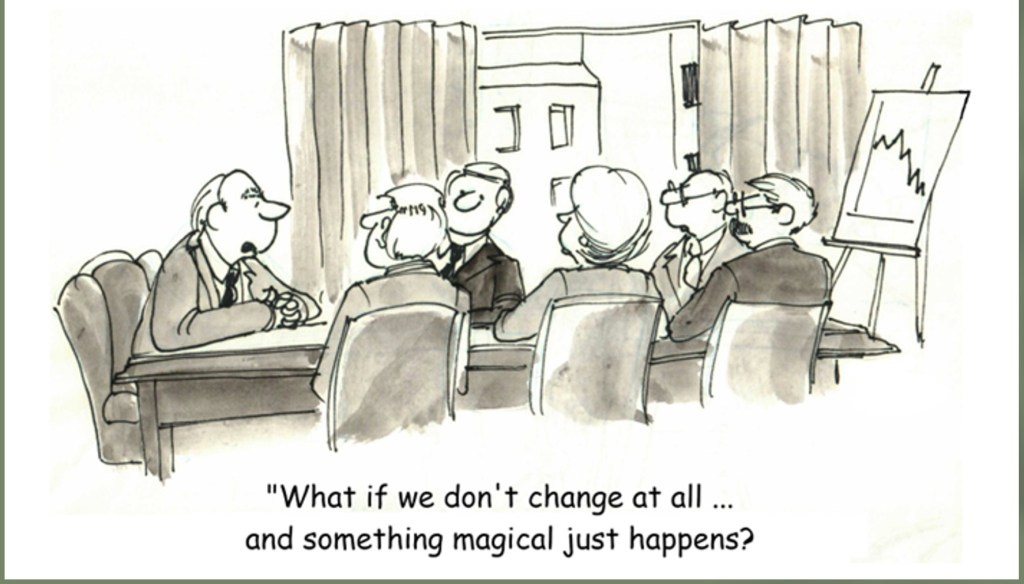
Lots of chatter about what is an agreed upon funding formula for Health Care between the provinces and the federal government. Some astronomical dollars are being thrown around and called investments in health care. But at the end of the day, will this deal mean better health care for Canadians? The sad answer, is likely no.

One of the advantages(?) of being old is that you’ve lived through lots of things, and can see the past repeating itself. Case in point, in 2004 then Prime Minister Paul Martin introduced a health care “accord” that was designed to “fix health care for a generation“. Essentially the federal government ponied up an eye watering amount of money then, and the provinces were to implement targeted programs that would:

  • Reduce wait times
  • reform Primary Care
  • Develop a National Home Care program
  • Provide a National Prescription Drug Program (by 2006!)

Now Primary Care reform did happen in Ontario, with the development of capitation based payments to family physicians. Think of it as a salary with performance bonuses and you get the gist. There was also the implementation of some Family Health Teams. I’m unaware if any of these were implemented in other Provinces. I do note with interest that British Columbia is only now getting around to reforming primary care with their own new payment model for family physicians.

But both of these programs in Ontario were summarily slashed by then Health Minister Eric Hoskins and his servile deputy Health Minister Dr. Bob Bell in 2015. Indeed their unilateral freezing of the capitation model significantly damaged primary care in Ontario, and the effects of their folly are still being badly felt today by the 2 million residents of Ontario without a family doctor.

OMA Board Vice Chair Audrey Karlinsky put it best on Twitter.

Wait times for surgical procedures however, continued to rise, and I have no idea whatever happened to the National Home Care program.

For those of you paying close attention, the same Eric Hoskins who stopped Primary Care reform in Ontario, went on chair a federal advisory council with the goal of creating a National Prescription Drug Program……….in 2018. Which hasn’t been implemented yet. I suppose being 17 years overdue is not bad by government standards.

By the way, this whole process is basically recycling a failed politician to recycle a failed government promise. And politicians seriously wonder why average Canadians like me are so cynical??

So now, 19 years later, Canadians are being told that the provinces have accepted a federal government proposal to put an eye watering $196 billion into health care, according to Prime Minister Trudeau. But wait they were committed to $150 billion anyway so it’s really only $46 billion more, but wait, when you take out the planned budgeted increases it’s only $21 billion more. Whatever.

In return, for however much money it really is, Trudeau promises there will be “tailored bilateral agreements to address“:

  • Family Health Services
  • Health workers and the backlog of health care
  • Mental health and substance abuse
  • Modernized health care system

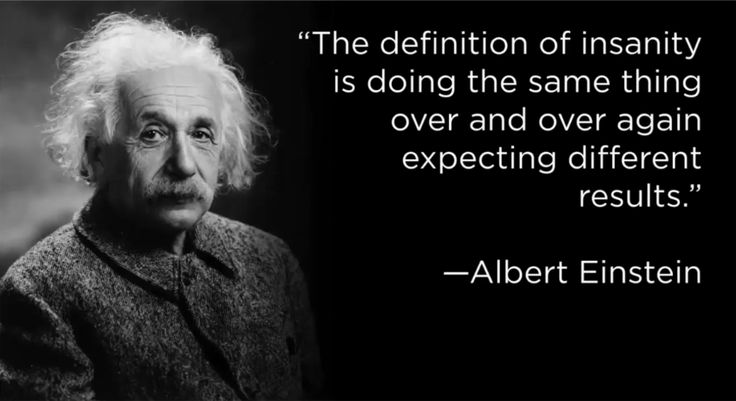
Our politicians need to study Albert Einstein a bit more.

Here’s the sad truth about our health care system that no politician, of any political stripe seems to be willing to admit. The system is dying and in need of radical surgery. It needs a bold, transformative vision that will completely change the way we deliver health care and will leverage technology appropriately. Anything less is simply more of the same, and will not stave off the inevitable collapse of the system.

How then do we achieve this transformation that is essential to the well being of Canadians? I will go into some further thoughts about this in future blogs, but first I would implore our political leaders to stop listening to old voices who have been advising for decades (if their advice had been good we wouldn’t be in this mess). It’s time to seek out some newer voices who have bright ideas on how to restructure health care delivery in Canada.

It’s also time to wrest control of health care data management from the current group of bureaucrats in charge of it. We can’t transform health care in Canada without a robust health care IT infrastructure and the current group simply is not getting it done.

As mentioned, I will put some more though into how, in my opinion, health care can be transformed in the future. But for now, just know that whatever the numbers or promises being tossed around, the blunt reality is that it all amounts to trying to spend you way out of trouble.

When has that ever worked out well?

RePost: Ontario’s Heading For Another Family Doctor Shortage

This is the follow up blog to my last one, originally published in the Huffington Post on June 13, 2017. Reprinted here so that I can keep track of my old blogs, and also to once again point out how warnings of a crisis in Family Medicine were ignored for years.

The Barer-Stoddart report. Ask any physician of a certain age and the immediate reaction is likely to be disparaging. Written in 1991, it purported to help chart the course of the physician workforce into the 21st century. 

While it’s true that much of the report was ignored by the Ontario government of Bob “Super Elite” Rae, it’s still widely remembered for suggesting that the number of physicians in Ontario needed to be cut by 10 per cent. To accomplish this, medical school enrollment was slashed in the early 1990s.

Given that the population of Ontario continued to grow and age, the result was completely predictable. A massive doctor shortage (particularly in family medicine) hit the province at the end of the decade. It has taken the last 15 years to come close to correcting that. We’re not there yet (we still have fewer doctors per capita than Mongolia), but we were improving.

Alas, Ontario Health Minister “Unilateral Eric” Hoskins and Deputy Health Minister Bob Bellwere unable to remember the old saying, “Those who cannot remember the past are condemned to repeat it.”

Former Health Minister Dr. Eric Hoskins

Last week I blogged about how Hoskins and Bell need to support family medicine. Because they are not doing so, many physicians who graduate from family medicine residencies are not starting comprehensive family practices. Instead, they are doing things like hospitalist work, sports medicine and even medical marijuana clinics.

However, the situation is even worse than I thought. It was pointed out to me after my blog was published that the number of medical students applying to family medicine programs has dropped considerably this year. In Canada, to become a practicing physician, you first have to graduate from medical school, then do a residency (essentially a training program) in the specialty of your choice. To choose a residency, you apply to CARMs — which is a Canada-wide program that matches medical school graduates to the residency of their choice.

This year’s CARMs match shows some alarming results for family medicine in Ontario. Ideally, we should have 45 to 50 per cent of all graduates from medical school apply to family medicine for a sustainable workforce. However, only the Northern Ontario School of Medicine achieved that goal. While it’s a great school, it’s still the smallest of Ontario’s six medical schools.

By comparison, only 24 per cent of graduates of University of Toronto applied to family medicine, 27 per cent of Queen’s graduates, 32 per cent of Ottawa’s graduates, etc. Multiple studies show that comprehensive family medicine is responsible for decreased health-care costs, more efficient utilization of the health system, better patient outcomesand decreased hospitalizations. It is essential for a sustainable health-care system to have a strong family medicine component. The fact that so few medical school graduates chose family medicine, on top of the fact that recent graduates are not opening practices, should be setting off alarm bells.

So, why is this happening? First and foremost, it’s because Hoskins and Bell have refused to support family medicine. They have talked loudly about how they want to cut payments to higher paying specialties so that they could fund family medicine. Hoskins even went to the trouble of doctoring (pun intended) a chart to accuse specialists of overbilling. 

(Seriously, see the picture in this article. Notice how he made the pie chart on the right larger — the whole circle, not just the wedge showing percentage of billings. Makes the red area look LARGER than it really is, and makes the specialists look they are billing disproportionately more than they are.)

Unfortunately, while Hoskins and Bell were saying this in public, what they were actually doing is cutting family physicians. They unilaterally cut the number of physicians who could apply to the capitation (salary plus performance bonus) models of funding that I mentioned last week. This is the preferred method for paying physicians for newer graduates, and also for health care bureaucrats who like a predictable budget. Additionally, they cut a number of the performance bonuses family physicians got for looking after complex patients.

Medical students are not dumb. They saw all of this going on, and realized that family practice was no longer preferred by Hoskins and Bell. So they made career choices accordingly.

Currently, the Hoskins/Bell legacy is not a pretty one. It’s one of internecine disputes with doctors, laid-off nurses, hospital deficits, patients in stretchers for days and egregious wait times. At least with family medicine, they have an opportunity to begin to correct this mess by once again allowing new physicians to enter the capitation model, and restoring the various performance bonuses.

Failure to do so will mean that many years from now, as patients struggle to find a family physician, Hoskins and Bell will be remembered with the same disparaging legacy as Barer-Stoddart.

RePost – Hoskins and Bell Need to Support Family Medicine

The following is a reprint of an article that I wrote for the Huffington Post on June 5, 2017. Re-posting here so that we can see how the seeds of declining family physicians was planted by Drs. Eric Hoskins and Bob Bell, and also so that I can refer to it in the future if needed.

For the past 23 years, it’s been my pleasure to be a preceptor with the Rural Ontario Medical Program based out of Collingwood. As a preceptor, I have had the honour of supervising a wide variety of Medical Trainees, from first year Medical Students, all the way up to those in their last year of Residency. 

I often find I learn as much from them as they learn from me (it’s good to be questioned by students about why you do things the way you do). I clearly have some experience on my side, and they have more recent book knowledge. It’s a great combination for patient care.

Unfortunately, I can see that we are once again heading for the same situation as the late 1990s/early 2000s, when many medical trainees stopped going into comprehensive family medicine. The reasons then were due to increased workload, better opportunities in other specialties and an extremely poor relationship with the government of the day. 

At one point, only about 25% of graduates from medical school applied to Family Medicine Residencies. To suggest that there was a crisis in family medicine would be dramatically understating the issue.

However, the Conservative government of Mike Harris finally realized you need to co-operate with doctors if you want to improve patient care. In 2000, Health Minister Elizabeth Witmer rolled out something called Primary Care Reform (PCR) in co-operation with the Ontario Medical Association (OMA). This, over the next few years, led to a revitalization of Family Medicine, and now, close to 40% of medical school graduates are once again choosing Family Medicine as their specialty. 

While not the sole part of the PCR, a major component was a new model of paying physicians known as capitation. Capitation is essentially salary plus performance bonuses. Family Physicians would be paid a certain monthly rate to look after their patients, regardless of how often they saw them. They get bonuses based on how many complex (eg. Diabetic) medical cases they take on. This was in stark contrast to the old system known as Fee For Service (FFS) where physicians were essentially paid piecemeal (only got paid when they saw a patient).

The capitation based models were extremely popular with both Family Physicians and government. For Family Physicians, it allowed them to spend the time needed with patients during just one visit, instead of requiring multiple visits. For the government, it provided a predictable funding envelope. I appreciate this will come as a surprise to a couple of the frequent critics of my articles (in the comments), who have long implied that I was critical of Health Minister “Unilateral Eric” Hoskins because I was allegedly supporting the FFS model, but I actually have been in a capitated model since 2004.

Drs. Bob Bell (left) and Eric Hoskins

Did PCR work? In 2001, the population of Ontario was 11.4 million, and almost 3 million people didn’t have a family doctor. In 2016, the population of Ontario was 13.9 million, and only 800,000 did not have a family doctor. So over 4.5 MILLION people got a family doctor.

Then along came the hapless “Unilateral Eric”, and his widely disliked sidekick, Deputy Minister Bob Bell. “Unilateral Eric” likes to claim that he himself is family doctor. The reality is that he has NEVER provided the cradle to grave care that comprehensive family doctors in Ontario do on an ongoing basis. He does work a day a month at a walk in clinic, and I understand he donates that income to charity – which is good of him, but it’s hardly the same as what comprehensive family doctors do. 

Bob Bell for his part, likes to boast about how he used to be a family doctor back in the 1970s, but he seems to be unable to grasp that family medicine might have evolved since then.

Acting with the same level of competence as Tweedle Dee and Tweedle Dum, the infelicitous duo of Hoskins and Bell unilaterally cut the number of family physicians who could apply to capitated funding models. Again, this is likely a surprise to a couple of the critics of my columns, who have long been demanding that physicians go on salary. Surprise, it was Hoskins and Bell who unilaterally stopped the salary style models, not the OMA. They also unilaterally cut some of the performance bonuses (for things like diabetic care, medical education and so on).

The result was clearly predictable to anyone who understands Family Medicine in the 2010s. Over the past three years newer graduates from Family Medicine programs are avoiding comprehensive care. Many of my trainees are choosing to work solely in areas like emergency, anaesthesia, sports medicine or others. And while there is a need for doctors in all fields, the reality is that it’s comprehensive Family Medicine that leads to health system stability

It’s comprehensive Family Medicine that reduces hospitalizations. It’s comprehensive Family Medicine that when supported properly, reduces costs of health care.

In response to this, the dolorous duo of Hoskins and Bell unleashed something called the New Graduate Entry Program (NGEP) to provide new family medicine graduates with what they claimed was a capitated funding model. Alas they attached so many conditions including a morass of bureaucratic oversight that I understand only two new graduates have taken them up on this offer.

Hoskins and Bell have left a legacy of a crumbling health care system with their arroganceand unilateral cuts

However, they still have the ability, and opportunity to begin to correct one of their most egregious mistakes. A new crop of Family Medicine Residents will graduate on July 1. Hoskins and Bell can unilaterally reverse the cuts to the capitated models and performance bonuses. No one from the OMA will complain.

It’s time for them to recognize the important role of comprehensive Family Physicians, and support that with actions, not just words.

Will Pharmacy Prescribing Improve Health Care?

Pharmacists do a great job as part of a health care team. In hospital and nursing homes, I get expert guidance on dosages of potentially dangerous medications. I am also fortunate to have community pharmacists on a secure electronic messaging platform to discuss issues around medication complications/interactions/dosages and so on for my patients.

But, will it improve health care to let them treat minor conditions?

I expressed my displeasure on Twitter about the recent move to allow pharmacists to treat certain minor ailments:

A few pharmacists were not amused. It was pointed out to me that Ontario is one of the last provinces to allow this, and that it has “worked well” in other provinces.

But what exactly is the definition of “working well”? Politicians love it, mostly because it allows them to say “see we are taking steps to make your life easier.” Patients love it because they can say, “Jee, I think I have a bladder infection, now I can just get the antibiotic when I want.” Of course patient satisfaction will be high.

Unfortunately, as I wrote about a few years ago in the Huffington Post, patient satisfaction does NOT correlate with good health care or outcomes. As counter intuitive as it may seem, higher patient satisfaction scores correlate with a 9% higher cost per patient AND a 12 percent higher hospital re admission rate. Patient satisfaction should not be used as a metric to determine any health care policy.

On Twitter, Nathan McCormick suggested that pharmacists have a lot to offer and linked to an article from New Brunswick on how it’s worked well there. Unfortunately (and I stand to be corrected) the article suggests the diagnosis of urinary tract infections was made without a urine culture, or even a urine dipstick test (which is less accurate but still something). So there’s no way to sort out how many people had a true bladder infection, or simply “felt” like they did, which happens. The article also puts a strong focus on patient satisfaction and convenience, which as mentioned above, is not the same as good health care.

Nardine Nakhla asked me to familiarize myself with an article she wrote about how Ontario developed the process. There’s a lot to like in what’s written there:

  • A recognition of overprescription of antibiotics as a world wide problem
  • a focus on ethical standards based behaviour by pharmacists
  • A minimum amount of training for pharmacists before treatment minor ailments
  • The requirement for pharmacists to contact the family doctor or nurse practitioner when treating a minor ailment

Once again this doesn’t really reflect true health care outcomes. It also references the aforementioned New Brunswick article and specifically stated there was high patient satisfaction there.

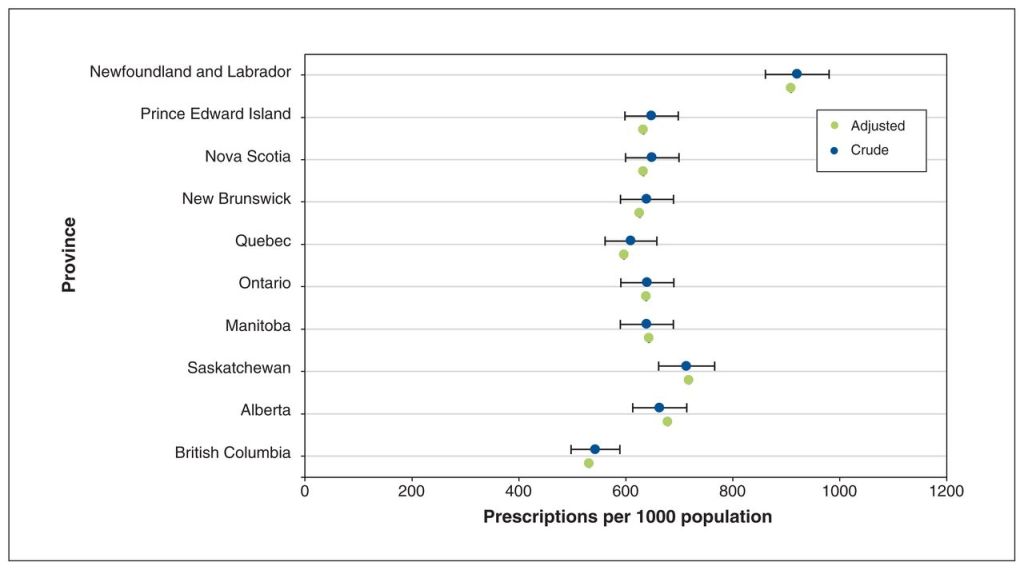
Let’s look at just one area of concern, antibiotic usage.  Global overprescription of antibiotics is a world wide concern.  It leads to increasing antibiotic resistance and the formation of new, drug resistant bacteria.  A look at Canadian data shows that there is intra provincial variation in the number of antibiotic prescriptions.  Newfoundland, where pharmacists have been treating minor ailments for years, has the highest rate of antibiotic prescriptions. British Columbia, where pharmacists are expecting an expansion of their scope this spring, had the lowest.  

From CMAJOpen: Interprovincial variation in antibiotic use in Canada, 2019: a retrospective cross-sectional study

World wide , of the ten countries with the most antibiotic use, Cyprus, Romania, and Greece allow them to be purchased directly from pharmacies. (I stuck to EU countries with more modern health systems for examples).

Kristen Watt wrote a piece in the medical post criticizing physicians for complaining about these new powers and asked me on Twitter to provide evidence from other locations.  She stated that Ontario was “15 years behind the trailblazing Alberta”. And yet the data in the CMAJ article above shows that Alberta has a higher rate of antibiotic prescriptions per capita.

One area I do agree with her is when she wrote:

“the government roll-out video, shot in a noticeable big box pharmacy, didn’t help us”

That big box is Shoppers Drug Mart, and their CEO Jeff Leger is seen promoting this change on the video.   Shoppers Drug Mart recently invested $75 million in Maple, a virtual care company.  Maple’s home page still shows the following:

Screenshot from Maple as of Jan 12, 2023

Gee, if you think you have a sore throat, you can just call a company (that Shoppers invested in), and get an antibiotic without a throat swab (who cares if it’s really strep) and lo and behold, there just happens to be Shoppers nearby that will deliver it to you. Yes, I know patients can request the pharmacy of their choice, but….

Look – there are other aspects of this process that need review.  Accurate diagnosis of a rash for example (several of the new pharmacist powers are for skin ailments). Or communication with the patients family physician about the treatments given.  Probably more.

I WANT pharmacists to help.  I really truly am grateful that so many are willing to step up in a time where our health care system is collapsing faster every day. But I want pharmacists to help in ways that support good health care outcomes.

 Might I offer three suggestions for how pharmacists can do that:

  1. As a group, they can petition Shoppers Drug Mart to put pressure on Maple to change the example on their website.  It’s great marketing (focusing on convenience) but terrible health care.
  2. Get involved with Choosing Wisely, Canada’s leading group looking at all ways to pick the right health care treatments.  There doesn’t appear to be a pharmacist in looking at their leaders.  I think pharmacists could provide extremely valuable information on not just anti-biotic stewardship, but also overall medication management (eg. reducing pill burden in the elderly)
  3. Strongly lobby the government for a unified integrated electronic health system that will allow them secure communication with physicians and access to limited health care data (eg creatinine clearance).  We’ve got this in my neck of the woods, and it’s a huge benefit to physicians, pharmacists and most importantly patients.

In order to save what’s left of our health care system (if that’s even possible now) we need to focus on health care outcomes, and ensuring proper an appropriate care. Doing the three things I listed above would be a big help in that direction.

CMA Should Do What’s Necessary – Advocate for Pensions for Physicians

Both of my loyal readers will know that I have not always been a fan of the Canadian Medial Association (CMA). I was one of the vocal critics of the infamous Vision2020 plan that the CMA developed. Vision 2020 suggested that the main role of the CMA should be to empower patients (and here I thought they were supposed to be a physicians advocacy organization). I also wasn’t really impressed by the sale of MD Management to Scotia Bank either.

Interestingly enough I note that the original links in my blog to the articles on Vision 2020 and the MD Management sale have been deleted from various CMA websites. Such scrubbing suggests the CMA would rather we all forgot about these things too.

It would seem that I am not the only physician who was upset with the CMA. Buried deep in the CBC article on the election of Dr. Alika Lafontaine to the role of CMA President is this line:

“As CMA president, he’ll oversee more than 68,000 member physicians and trainees.”

When Dr. Gigi Osler took over as president in 2018, this Globe and Mail article stated the CMA had 85,000 members. A drop of 17,000 members in four years shows that rather a lot of physicians felt that the CMA betrayed them, not just a loud mouthed old country doctor.

In fairness, since 2018, the CMA has done some things very well for physicians. First, the CMA has had some truly excellent Presidents in Dr. Gigi Osler and most recently Dr. Katharine Smart. While I completely understand the significance of Dr. Alika Lafontaine taking over as President, I was saddened about losing a voice as effective for physicians as Dr. Smart. However, I will say that Dr. Lafontaine knocked it out of the park during his inauguration speech and if he keeps that up it will good news for physicians across Canada.

Drs. Gigi Osler, Katharine Smart and Alika Lafontaine

Secondly, the CMA seems to be making its main priority these days the issue of physician burnout. A brief look at their twitter feed shows them reaching out to multiple media outlets to raise awareness of the alarmingly high burnout rates in the profession.

This is good work and shows an organization that maybe has realized that indeed, there is nothing wrong with advocating for physicians. You cannot have a high functioning health care system without happy, healthy and engaged physicians.

As part of the approach to alleviating the stress on physicians and the broader health care system, the CMA also is advocating for a national licence for physicians. The CMA feels this is a priority and a glance at an advanced search of their twitter feed suggests that they feel this will improve virtual care, increase the ability of physicians to support remote communities and reduce burnout.

Now to be clear, I support a national licence for physicians. But the reality is that this is going to be nigh on impossible to do in the short term. I suspect that this will require an amendment to the Canadian Constitution as Health Care is provincial responsibility. Amending the constitution is a dizzyingly complex process. I suspect that Premiers of what may be considered “have-not” provinces would balk at this, fearing that national licensure would lead to more physicians leaving their provinces for greener pastures.

Instead, I would ask that the CMA employ the philosophy espoused by St. Frances of Assisi:

“Start by doing what’s necessary; then do what’s possible; and suddenly, you are doing the impossible.”

The CMA should advocate for immediate Tax Code changes to allow physicians to have pension plans. This is both necessary and long overdue.

I do feel compelled to point out that it is possible for physicians to set up either retirement plans or individual pensions through corporations. However these programs are extremely variable, not easy to implement, and carry high administrative burdens. They also add to physicians workload to set up, at a time when physicians are so tired from a days work that they don’t really have time to think about such things. I don’t know about you, but when I get home, I want to turn my brain off for a couple of hours (before I log back on to my EMR to review lab work and finish charting). I don’t have the mental bandwidth to think about corporate pension schemes.

Making a few changes to the Tax Code is easy. It can be done at the federal level without involving the Provincial Premiers. Doing it will send an immediate message to physicians by the Federal government that they are doing something right here, right now to make life easier for physicians and reward them for all the extra hours they have worked during the pandemic. It will significantly improve physician morale. As physicians realize that there will be an element of security in retirement planning, it will also reduce the stress level of physicians.

Even better, some provinces have already started retirement planning programs. Ontario for example, has the truly excellent OMA Insurance Advantages Program. (NB – if you are an Ontario physician, you really need to strongly consider enrolling in this program. It’s simple, straightforward and really can take a lot of the usual retirement worry away). If tax code changes came into effect, I’m sure a few lawyers and accountants could convert these programs into true pension plans.

The CMA is a national advocacy organization for physicians. They have made much progress since 2017 in supporting physicians. The next, easiest step for them to make would be to push for physicians pensions. It’s relatively easy to do. If successful, maybe they can turn around the trend of declining membership in their organization.

It’s Time to Open Up Nursing Home Capacity

Recently, I posted what I referred to as a controversial tweet about the need to open up nursing home beds that had been closed during the seemingly never ending Covid pandemic.

While there was not much “controversy” in twitter feed as a result of this, it did lead to some questions being asked during an interview I gave for CTV News.

While I certainly appreciate the professional nature of the reporter (the always adept Kraig Krause), the reality is that 30 second blurb on this topic, in an interview about all things COVID, can’t really do it justice. So let’s delve into this deeper.

It’s no secret that Ontario’s Nursing Homes were hit hard by the Covid pandemic. One nursing home in my region, Roberta Place in Barrie, was ravaged badly by the disease. I still grieve for all of the residents and families there, including those who survived as they likely continue to suffer some of the after effects of what transpired.

In the wake of these and other such stories, the Ontario government quite correctly limited the number of residents in ward beds at nursing homes. Many of Ontario’s nursing homes are very old buildings. The nursing home I’m honoured to be a medical director for has great ownership (private as it happens) and great staff, but the building itself if 52 years old and would not meet newer, more modern standards for nursing homes.

When my nursing home was built, having a ward bed (four residents to a room) was thought to be reasonable. Given that Covid is airborne (like most other respiratory illnesses!) the COVID19 Directive #3 (linked above) for nursing homes limited the number of residents to two per room. This made perfect medical sense at the time, and I certainly supported it then.

The reality however, is that health care is not limited to a single disease. We do have Covid of course, but we have a whole lot of other illnesses that we need to deal with. The Ontario Medical Association has estimated that a minimum of 16 million visits or procedures have been delayed as a result of the pandemic. We can’t keep delaying these. We need to address all the other health care issues that Ontarian’s have, and not just maintain sole focus on Covid.

Right now, I personally have two patients who are in hospital waiting for a nursing home bed. They are not acutely ill. They do not need aggressive medical treatment. They need a nursing home. But they can’t get one because of the massive shortage of nursing home beds. And while I strongly applaud the government for planning to build more beds, they won’t be here for 4-5 years.

At the nursing home I work at, normally 60 patients could be housed, but it’s now limited to 45 because of the rules implemented during the pandemic. I imagine it’s one of many nursing homes that has been limited. While opening up those closed beds (at all the homes) likely won’t be enough, it will help alleviate the stress on hospitals. This is particularly important given (as I write this) no one knows how bad the on coming Omicron wave will be.

But wait – are we not risking increased covid infections in the nursing homes by doing this? We would be increasing, for lack of a better phrase, population density in these homes. The answer is not as straightforward as one would think.

First we now know that three doses of the Covid19 vaccine provides the maximum amount of protection. Just about every resident of a nursing home has had three doses – as have staff. There will never, ever, ever be a vaccine (for any disease) that is 100% effective. But that fact that our most vulnerable patients have had three doses is incredibly reassuring.

Second, we would have to ensure that nursing homes have the funds to put in proper air purifiers (with Hepa Filters) in their facilities. I’m not asking for a complete re-vamp of the HVAC systems (that will take too long). But even small portable air purifiers will make a difference.

Third, we would need to ensure a rapid swab and immunization policy for staff and visitors of nursing homes to further reduce the risk of Covid entering a facility. Just tossing it out there but how about all staff get swabbed once a week regardless of vaccine status, and visitors twice a week?

Fourth, as one of the smartest people I know put it, a bed is just a piece of furniture. We have to ensure that the homes who are short on staff, now have the ability to hire extra staff to take care of the residents in these beds.

The health care system is a behemoth. It is also interdependent on all of its various parts working together. A shortage of nursing home beds, means more people in hospital waiting for nursing homes, which reduces the hospitals ability to provide acute care which leads to further backlogs and delays in medically necessary treatments.

We cannot make nursing homes 100% safe (we can’t make anything 100% safe). But re-opening currently closed nursing home beds in the safest possible manner, will be a small step in the right direction. It will also provide the hospitals with a little bit of extra capacity, should Omicron stress the system more.

Corporatization of Medicine Continues Unabated

Last week, a story came across my feed that seems to have been almost completely ignored by most who are in/or follow medicine and health systems. WELL Health technologies announced that it has purchased 100% of CognisantMD, the developers of the Ocean platform. For those who don’t know, Ocean is a platform that links to various EMRs and allows for securely emailing patients, eReferrals, filling out forms online, and a bunch of other features.

Full disclosure, my practice uses Ocean as well (for now). Personally I find it somewhat clunky and not as smooth as advertised, but there are some positive features to it.

What’s the problem then? It’s a friendly corporate takeover. Happens all the time in the business world.

To understand the concerns, let’s look at what WELL Health does. According to their own website, WELL Health offers a wide array of digital health care solutions. But they also state they are “Canada’s largest outpatient medical clinic owner-operator and leading multi-disciplinary telehealth service provider”. In essence, they run the clinics, and physicians work for them.

A further dive into their strategy, under the “Reinvest” tab states:

“Acquisition of cash generating companies leads to increased cash flows which are re-invested to make additional new cash generating acquisitions.”

Pure and simple – WELL Health is a private, for profit corporation. There is of course, nothing wrong with private corporations. Most people who follow my twitter feed know that I am generally pro-business, and on most issues land on the right side of the political spectrum. I firmly believe we need more, not less, businesses in this country and we need to make it easier for businesses to function.

BUT – acquisitions like these, and the continued take over of clinics by corporations should make us ask legitimate questions about protection of individual health care data. It is no secret that the reasons that companies like Google and Facebook have become so successful is that they found a way to monetize personal data. In much the same way, personal health care data has enormous economic value to companies. Whoever can find a way to properly monetize this, will be the next Jeff Bezos/Mark Zuckerberg and so it’s no wonder that companies are extremely interested in getting into this field.

As I mentioned in a previous blog, Shoppers Drug Mart, for example, recently acquired a stake in Maple, a leading virtual care only provider for $75 million. They continue to advertise on their website (as of Dec 6, 2021) the ability to diagnose strep throat virtually (which personally I find questionable) and then to send antibiotics to a pharmacy near you (I’m guessing there is going to be a Shoppers Drug Mart near you).

Screen shot as of Dec 6, 2021

In a circumstance where a patient contacts Maple, the doctor or NP gets paid to virtually assess a patient, Maple gets a percentage of the fee to cover overhead – which presumably will be reflected in shareholder value to Shoppers. If a prescription gets sent to a Shoppers, well, they make a profit there too. Neat business model.

But it’s not just companies that already have an interest in providing health care related services that are trying to get involved in this field. Amazon is jumping into health care with a telemedicine initiative. Google has long planned to get into health care, and while not terribly successful yet, I doubt they will stop trying. Heck even Uber (!) wants to get involved in health care.

It’s easy to see why everyone wants in. There is a lot of money and potential profit in health care. And while I am all for companies making a profit, that doesn’t mean that we can’t ask some hard questions about the protection of personal health care data such as:

  • How secure is the data that is being held in the servers owned by these corporations?
  • How do we ensure personal health data doesn’t go where it’s not authorized? (eg. supposing the parent company owned a family practice clinic AND an disability insurance company)
  • How do we ensure personal health data is not to be used to monetize other aspects of a business (eg. supposing a walk-in clinic was owned by a pharmacy. A patient attends there for a renewal of cholesterol medications, and then gets ads offering, say, flax seed oil capsules that are helpfully sold by that same pharmacy).
  • How do we ensure aggregate health data housed in those servers is only used to help the community at large (eg. finding communities that may need extra resources for, say opiod addiction).
  • If a physician stops working at a clinic owned by MegaCorp Inc. for whatever reason, how does that physician access their charts after the fact (I’m aware of a number of cases where access to patient records were cut off immediately upon the physician leaving such a clinic).

I’ve just posited a few questions. I’m sure there are many more. I believe that most Canadians strongly value health care privacy. As more and more businesses attempt to get involved in health care delivery, it is vital that we have a framework for oversight that ensures that patients have the absolute right to protect their personal health information. Sadly, I don’t see any organization/government agency out there asking these important questions.

A New Day for the OMA

For many of us 2020 was arguably the worst year we will (hopefully) ever see. The annus horribulus of our lifetimes. But for the Ontario Medical Association (OMA), arguably its worst year was 2016. Reeling from repeated attacks from then Health Minister “Unilateral” Eric Hoskins, the OMA as an organization made a decision to try to play nice by agreeing to a tentative Physicians Services Agreement (tPSA) in an effort to end the war Hoskins started. Unfortunately the deal was substandard, and like everything Hoskins did, was bound to hurt patient care.

Amongst much controversy (which I won’t restate) the tPSA was rejected by physicians. This led to a realization that the OMA needed to change. The organizational structure was archaic, pondering and built on the concept of “politicking” at a large Council meeting of almost 250 people, and passing motions as opposed to developing solutions. A revolutionary change was needed, which required a “disruptor” as leader.

Out of nowhere, in a seemingly vertical career trajectory, came my friend and colleague Dr. Nadia Alam, who wound up becoming the OMA president based on a promise to transform the organization. Her greatest strength was her ability to inspire people that they could be better. Becoming the face of a change agenda, she helped all of us believe that the impossible was possible, and that with hope, and a leap of faith, a better organization could be there for us.

Dr. Nadia Alam, a Past President of the OMA, who became the face of a movement that demanded change for the better.

The first step was to revamp the operational side of the organization. Led by CEO Allan O’Dette, the staff became more organized in cross functional teams, and had a clear purpose delivered to them.

These changes were unquestionably helpful, as seen by the strong response to the COVID19 pandemic. I’ve never heard so many members actually say nice things about the OMA staff as I did over that response. All the staff deserve a great deal of credit for how they came together around this issue, which would not have been possible without the operational re-alignment.

But the governance of the OMA was still antiquated. The bylaws said OMA Council governed the OMA (even though this was a direct contravention of the corporations act). Council has 250 well meaning physicians who give up their own personal time to serve the profession. Unfortunately, trying to secure blocks of votes to pass motions, is simply not a modern way to deal with issues.

The OMA Board had 25 physicians, also well intentioned, who gave up much more personal time and tried to represent the profession as a whole, while mindful of the constituencies that elected them. Twenty-five is just too big for an organization that needs to be nimble, and as dedicated as Board members are, it was apparent that some professional Board Directors were needed to guide the Board so that it could do the best for the profession.

Over the past 18 months, the Governance Transformation Task Force 2020 (GT20) worked overtime to make the OMA a much more modern organization. There were a lot of people involved in GT20, from OMA staff, other physicians, and the consultants. They all are extremely deserving of the thanks of the profession, but to name all of them would use up the word allotment of my blog.

However, I need to make a special mention of the GT20 Co-Chairs, Drs. Paul Hacker and Dr. Lisa Salamon. I have had the opportunity to provide a bit of support to Dr. Salamon, and somewhat more to Dr. Hacker (P.S. Yes, General Manager of OHIP all those K005 claims are legitimate). If not for their dedication and focus, this process could have gone off the rails at multiple occasions.

Drs. Lisa Salamon and Paul Hacker, co-Chairs of the OMA GT20 Task Force and providers of inspirational leadership and dedication the physicians of Ontario

Change is hard. It’s one thing to want change, it’s another to look at proposed changes and realize just how significant they are. Human nature being what it is, many people suddenly had second thoughts or concerns about the transformation at multiple points throughout the consultations and reviews.

But Drs. Hacker and Salamon (and the rest of GT20), stayed the course. They focused on what physicians in Ontario deserve – a leaner, more nimble and strategic organization. An organization where elected leaders come together in a manner that enables them to create positive solutions instead of politicking for votes on motions at a large meeting. An organizational structure that allows for rapid responses when crises inevitably arise.

This past weekend, after many many ups and downs in the process, OMA Council reviewed the proposed changes. As expected, there were lots of well thought out questions about the changes.

However, at the end of the day, one unassailable fact remained. All of the issues that had previously plagued the organization (contracts that paid sub-inflationary increases, not enough progress on relativity, concerns about representation, gender pay gap and much more), would still be around. Yet these were the very things the Council structure had failed to fix.

So the choice for Council was to stick with the old model, or to build a new one. In the end, they followed the advice of someone much smarter than me:

What does this mean for physicians? It means that come May the OMA Board will go from 25 physician members to 8 (plus three non-physician Board members to provide professional guidance). Council has been sunset. In its place, a new model with a Priority and Leadership group (max 125 docs) will exist. The bulk of the policy work and recommendations will be done by Working Groups dedicated to a specific task and which will allow expert members from throughout the profession.

How well will this work? Well it will depend on how much thought members give to the election process. They need to focus on who can represent them best at the various levels. But the reality is that a newer model of representation that is more nimble, strategic and rapidly responsive is finally here for physicians of Ontario. And we all owe a huge vote of thanks to Dr. Alam for starting the change and Drs. Hacker and Salamon for seeing it through.

Integrated Health Care: If Not Now, When?

As always, opinions in the following blog are mine, and not necessarily those of the Ontario Medical Association.

Recently, Canada Health Infoway, a non-profit organization funded by the federal government to develop digital health solutions, announced that their electronic prescription solution, PrescribeIT, was adopted by the Shoppers Drug Mart and Loblaw chain of pharmacies. This followed on the heels of PrescibeIT being accepted by the Rexall chain. PrescribeIT allows physicians to essentially send electronic prescriptions from their Electronic Medical Records (EMRs) to pharmacies directly, eliminating the need for paper prescriptions.

Reaction from many physician leaders was generally positive:

Other reports indicate how solutions like this have helped during the current COVID19 pandemic. In England for example, 85% of prescriptions are now electronic, thus helping with social distancing.

While I’m glad progress is (finally) being made, I’m forced to ask one question. Why did it take so bloody long?

As I’ve mentioned repeatedly to various health care bureaucrats over the years, my region (Georgian Bay) has had electronic prescriptions for ELEVEN YEARS now. We’ve regularly been emailing pharmacies and had them message us with either requests, or further information.

Our project additionally allows for pharmacists to become part of the health care team by allowing them limited access to a few important pieces of health information they need to do their job properly. For example, they are allowed access to the patients kidney function tests (knowing that many drugs are excreted by the kidney). In that way, I have gotten much advice about changing the dosage of medicine based on how someone’s kidneys are working.

Building on this project, our local area has also ensured that the our After Hours Clinic uses the local EMR, so if patients have to go there, the physician on call can easily access their charts. The local hospital allows us to house our server in their IT room (increases security because of all the firewalls). The advantage of this is that hospital physicians can access all the outpatient records if needed, and provide better care for patients. Even our local hospice has access to this so that patients can get the care they deserve during their last days.

We were even able, for a three years to have the nursing homes access and securely message our EMRs. The result was an over 50% reduction in admissions to hospital from the nursing homes. The cost of the project was $35,000 per year, but the government couldn’t find the right pocket of money to fund it (sigh – see here for how the bureaucracy works) and so the project died. If you need a cure for insomnia, my talk with more details of how the project worked is here (skip to 7:28):

This then is the real frustration that I, and many other physicians have with EMRs and other Health IT systems. Can you just imagine how much further we would be if all areas of the Province had what a few isolated regions (like mine) have?

For COVID19 for example, our Covid Assessment Centre is on our EMR which means that I get an automatic notification if someone goes for a test. And if that test is positive, it allows for quick notification of the family physician so we can begin the process of contact tracing. It also allows for easy transmission of information of people with febrile respiratory illnesses so that we can track important information like when the symptoms started and ended.

Dr. Irfan Dhalla wrote an exceptional piece in the Globe and Mail on preparing for the winter in times of COVID19. Unsurprisingly, he called for reducing “untraced spread” of COVID19 (50% of all cases have no known contact) and a large part of that solution is a technological one, namely the Canada COVID alert app (available at both the Apple App Store and the Google Play Store).

While he’s correct about that, the reality is that we have more illnesses that we have to deal with than just COVID19. We need to be able to manage cancer, other infectious disease, heart disease, diabetes, the frail elderly with multiple problems and much more. The better we manage those illnesses, the more we can keep those patients out of hospital, which is great anytime, but particularly when there is a risk of hospitals being overwhelmed by a pandemic.

Again, in our neck of the woods the Home Care case co-ordinators are on our system. I often get messages from them about how one of my patients is doing, and requests for information from them (so much easier than faxing). This allows me to remotely address concerns patients are having sooner, and for frail patients, getting treatments sooner can often prevent a rapid deterioration, which will of course, prevent a hospitalization.

So while I really am glad that many more physicians will have access to PrescibeIT, I reluctantly point out that in its current iteration it only does about 65% of what our solution does. I suppose that’s better than 0% which people had before, but it is a testament to the failure of a wide swath of health care bureaucrats over the years that this is the best we have.

Even our system is not perfect. I get miserable situations like some of my COVID19 results come in through OLIS (Ontario Lab Information System) and others through HRM (Hospital Report Manager) and yet others get faxed (!) to me. The auto-categorization in HRM is really a complete joke. I dictated a note on one of my hospital inpatients, and the system classified me as a combined General Surgeon, Anaesthetist and Paediatrician – and while I’m glad the system thought I was that smart, the reality is I now have to go through all this data and spend extra time categorizing it properly.

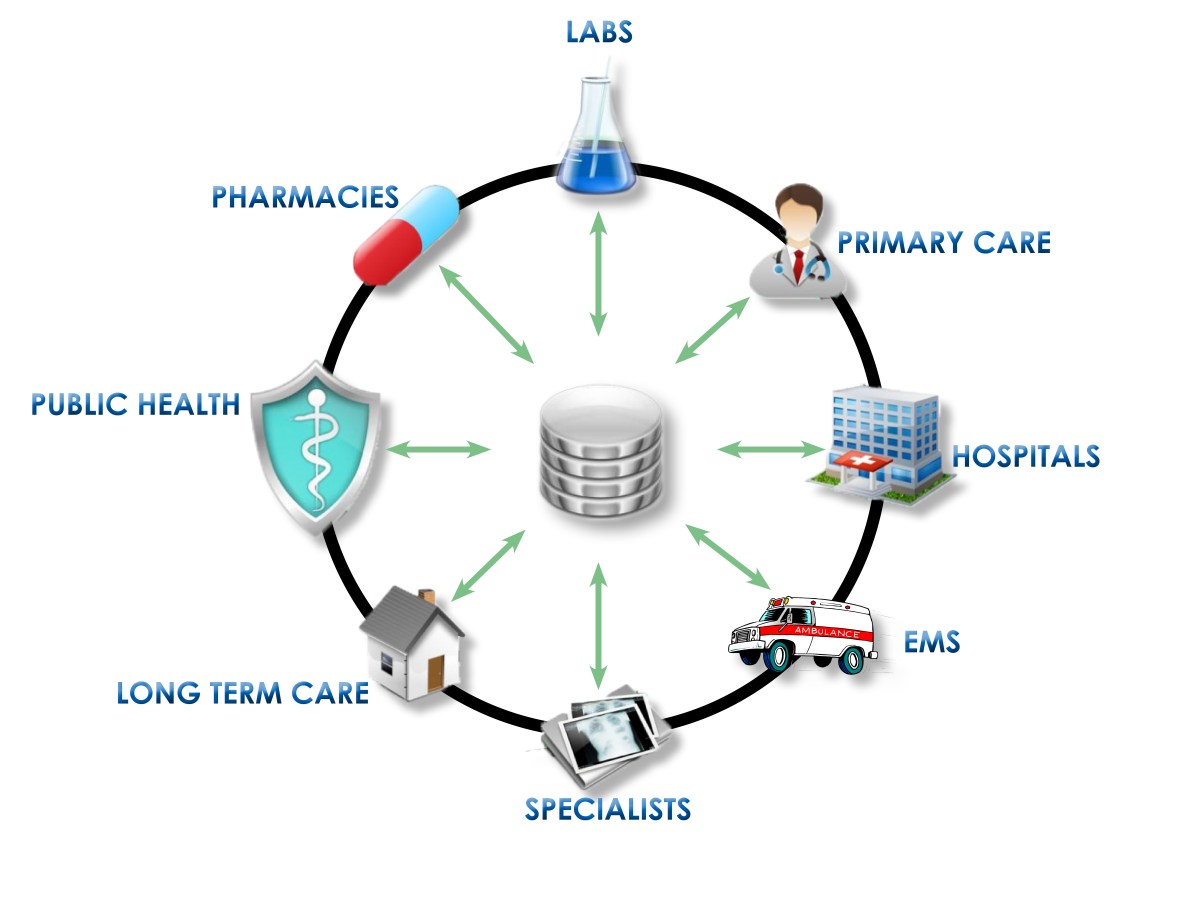
eHealth Ontario, Ontario MD, Health Quality Ontario, the Ministry of Health and its various digital health teams were all to work co-operatively to build a strong Health Information System. But the reality is that these individual systems do not share information in a way that benefits patients.  The shared vision for health IT in the province (integrated health systems IT) still only exist in pockets around the province. There are lessons to be learned here and steps that should be taken.  All of which would really be beneficial now as we head into a potential second wave of COVID19.

Which leads this old country doctor to wonder: If knowing that a potentially huge crisis is coming our way in health care, will no one step up with a vision to fix Health IT Systems and Integrate Health Care information once and for all? And if not now, WHEN?

Critical Decisions Looming for Health Care

The past three months have seen us undergo a stress like we’ve never seen before in our lives. People have lost their jobs, been socially isolated, and, importantly, non COVID healthcare has been delayed significantly. It’s estimated that 12,200 hospital procedures are delayed each week in Ontario alone. (Back of napkin math suggests 125,000 procedures have been delayed since the start of the pandemic).

In Ontario, these sacrifices have had the desired effect. The number of patients with serious complications from COVID has been trending down. Because we are not able to test everyone, I look at the number of patients who are in hospital due to COVID, and especially those who are on a ventilator, as an indication of how widespread the disease is. Because Canadians did what was necessary to protect others, our hospitals have not been as overwhelmed as many had feared.

However, we are now facing another critical situation in healthcare. The complications that are arising in the people who had their healthcare delayed are reaching alarming proportions. Even at the best of times, our healthcare system was overburdened and overwhelmed. To add to all of that this additional backlog, and the fact that many of those patients have deteriorated and are sicker, and, well, you understand the dilemma we are facing.

I don’t have a degree in biostatistics, like current Ontario Medical Association (OMA) President Dr. Samantha Hill. I can’t crunch all the numbers and give you a statistically valid analysis of what we are facing. I can only speak to what I’m seeing in my own practice.

  1. a patient with significant stomach pain who had scans delayed for a month, only to discover cancer
  2. a patient who I diagnosed with melanoma, who still hasn’t gotten the required wide excision, and lymph node biopsy 8 weeks later
  3. a patient who sent me an email clearly indicating the desire to commit suicide because of the mental health effects of this pandemic (I got a hold of them and appropriate measures have been taken)
  4. a patient with a cough since January who still hasn’t seen a specialist
  5. a sharp increase in patients requesting counselling or medications for the stress and depression directly caused by the effects of the pandemic
  6. at least 5 patients who were already waiting for joint replacement surgery now delayed even more

Keep in mind that I am just one comprehensive care family in doctor in a province that has almost 10,000, and you get a sense of the scope of how much these delays are going to affect people.

This is why there is a real dilemma for those who make decisions about when and how to open up health care (and everything else). If we loosen restrictions, start opening the economy, and allow scenes such as what happened at Trinity Bellwood’s park, the number of patients with COVID will increase. But if we don’t, other people will die, or at least suffer life altering illnesses, from non-COVID related diseases.

In cold, unfeeling numbers, the worry by people like my esteemed colleague Dr. Irfan Dhalla is that we will accept between 10-40 deaths per day from COVID in Ontario. But the reality is that about 275 people a day die in Ontario from a myriad of causes (cancer, heart disease, stroke, suicide etc). What if the price of lowering the 10-40 numbers to zero, is to increase the 275 to 325? To be clear, I don’t know if we are at that point, and even more frankly, I doubt Ontario’s archaic health data systems could even help us figure it out. I just know that has to be a critical concern going forward.

So what can be done? The OMA has released a document on emerging from the lockdown, referred to as “The Five Pillars” paper. This is an excellent paper and it is worth reading. I would, however, add the following thoughts.

First, it’s obvious now, that wearing face masks going forward is essential. A look at Japan shows they did everything wrong, except wear masks, and they have one of the lowest COVID rates around. (And yes, I and others told people not wear masks before and in hindsight that information was wrong). This is particularly important to mitigate the expected second wave of COVID in the fall.

Second, we need to move procedures out of the hospitals where possible. Many procedures like colonoscopies, cataract surgeries, diagnostic imaging, minor surgeries and so on, can be done outside of hospitals. Ontario has an Independent Health Facilities Act which licences these premises and ensures that they follow a high level of standards. They tend to operate more efficiently than hospitals and can see more patients than hospitals (whole bunch of reasons why). Previous Ontario Health Minister, “Unilateral” Eric Hoskins stopped licensing them, and it’s a decision that desperately needs to be reversed.

Third, we need to get our health data collection done properly. In Ontario, the plan was to develop Ontario Health Teams (OHTs) throughout the province that would allow the different agencies that cared for a patient (hospital, home care, physicians etc) to co-ordinate care. As Drs. Tepper and Kaplan point out, “fighting this pandemic requires collaboration from every part of the system and the patient voice. That is the promise of OHT.” To do this properly requires seamless electronic integration of a patient’s health record, and this should also serve as the basis for collecting COVID data. A system like this could also aid with contact tracing if done properly.

For the sake of the health care of all Ontarians, we need to open up health care and the economy, and we need to do that sooner rather than later. With a little bit of vision and forward thinking, it’s possible to do this in a safe manner. Let’s hope that’s what we see in the next few weeks.